
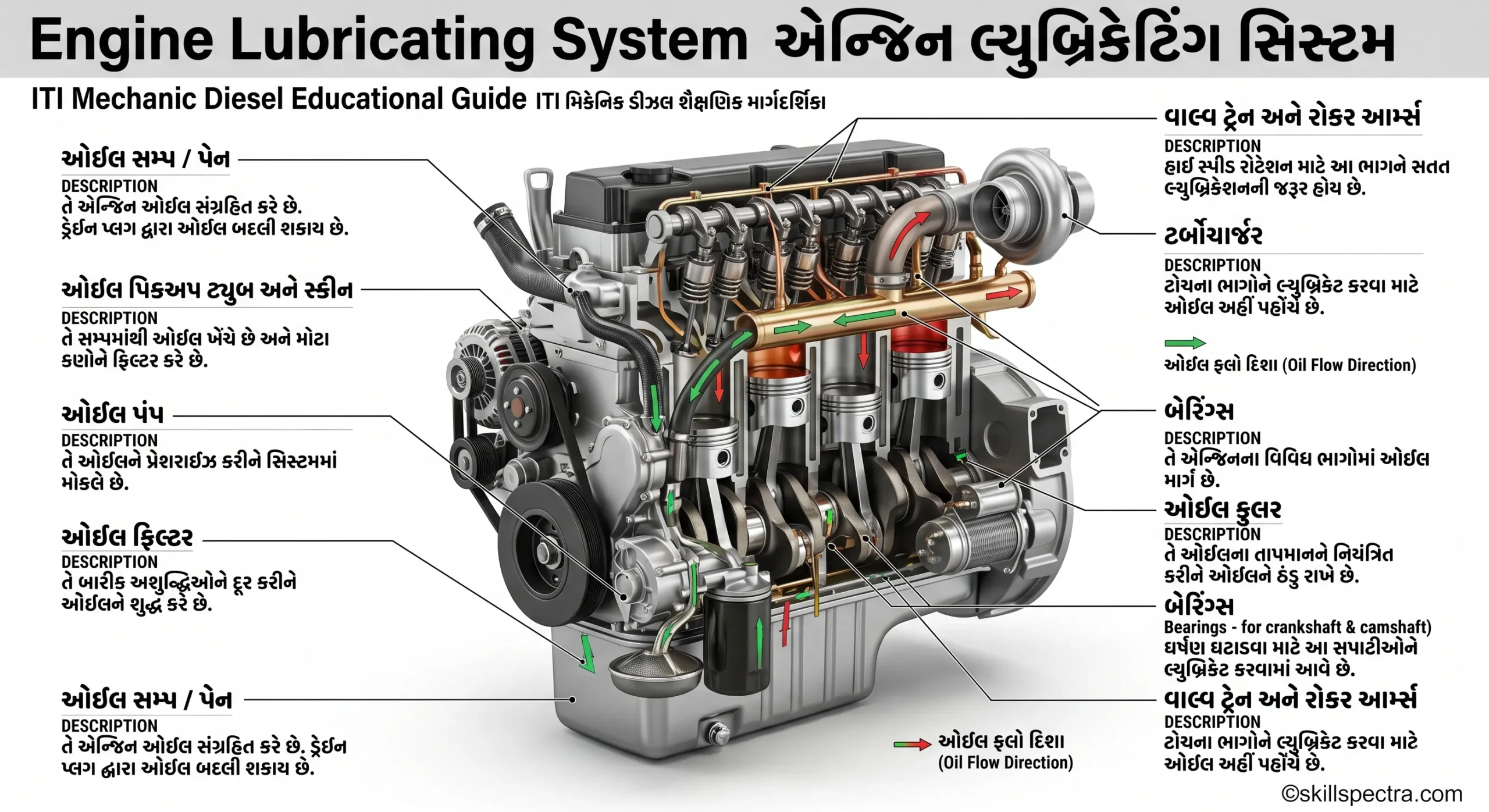
🛢️ Engine Lubricating System (એન્જિન લ્યુબ્રિકેટિંગ સિસ્ટમ)
🎯 Objectives (ઉદ્દેશ્યો):
આ લેસનના અંતે તમે નીચેની બાબતો શીખી શકશો:
- વિવિધ પ્રકારની engine lubricating systems ના નામ જણાવવા.
- દરેક system નું કાર્ય સમજાવવું.
- Engine block માં oil circulation path દોરવો.
- Pressure relief valve નું કાર્ય અને તેના પ્રકારો જણાવવા.
- Crankcase ventilation ના પ્રકારો અને positive crankcase ventilation સમજાવવું.
⚙️ Types of Lubricating System:
એન્જિનમાં મુખ્યત્વે નીચેના પ્રકારની સિસ્ટમ્સ વપરાય છે:
- Petrol-oil lubrication
- Dry sump lubrication
- Splash lubrication
- Pressurized lubrication
- Combined lubrication
1. Petrol-oil lubricating system (Fig 1):
આ system માં lubricating oil ને petrol (2) સાથે મિક્સ કરવામાં આવે છે. Petrol અને oil નો ratio 20:1 હોય છે. જ્યારે બળતણ crankcase chamber (1) માં જાય છે, ત્યારે તે crankshaft bearings અને cylinder walls પર ચોંટી જાય છે અને ઊંજણ (lubrication) પૂરું પાડે છે. આ સિસ્ટમ મોટે ભાગે two-stroke engines માં વપરાય છે.
2. Dry sump lubricating system (Fig 2):
આ સિસ્ટમમાં lubricating oil ને એક અલગ tank (1) માં રાખવામાં આવે છે. Oil pump (2) દ્વારા તે ફરતા ભાગો સુધી પહોંચાડવામાં આવે છે અને પાછું oil sump (3) માં જાય છે. ત્યાંથી scavenging pump (4) દ્વારા તેને ફરીથી ટાંકીમાં મોકલવામાં આવે છે. આમાં વાહન ચઢાણ પર હોય ત્યારે પણ lubrication ને અસર થતી નથી. 🚜
3. Splash type lubricating system (Fig 3):
આમાં તેલ oil sump (4) માં સંગ્રહિત હોય છે. Connecting rod ના નીચેના છેડે એક dipper (1) લગાવેલ હોય છે. જ્યારે crankshaft ફરે છે, ત્યારે આ dipper તેલમાં ડૂબે છે અને cylinder walls પર તેલના છાંટા (splashes) ઉડાડે છે.
🚀 Pressure Lubricating System (Fig 4)
આ સિસ્ટમમાં, lubricating oil ને oil pump (1) દ્વારા દબાણ હેઠળ (under pressure) એન્જિનના તમામ ફરતા ભાગોમાં ફેરવવામાં આવે છે.
- Process: Oil sump (3) માંથી તેલ strainer (8) અને suction pipe દ્વારા ખેંચાય છે. Strainer ધૂળના રજકણોને ફિલ્ટર કરે છે.
- ત્યાંથી તેલ main gallery (4) માં જાય છે. Main gallery માંથી તેલ crankshaft main journals (5) અને camshaft bushes (6) માં વહે છે.
- Crankshaft main journal (5) માંથી તેલ crankpin (7) માં વહે છે. Camshaft bush માંથી તે cylinder head સુધી જાય છે અને rocker bushes ને લ્યુબ્રિકેટ કરે છે.
- જ્યારે crankshaft ફરે છે, ત્યારે connecting rod bearings માંથી તેલ ઉછળે છે અને piston rings તથા liner ને લ્યુબ્રિકેટ કરે છે.
🚦 Relief Valve & Gauge: Oil pump અને filter ની વચ્ચે એક relief valve આપવામાં આવે છે જે સિસ્ટમમાં તેલનું મહત્તમ દબાણ (maximum pressure) મર્યાદિત કરે છે. તેલનું દબાણ દર્શાવવા માટે gauge અથવા indicating lamp હોય છે.
🤝 Combined Lubricating System (Fig 5)
તે splash lubrication અને pressure lubrication સિસ્ટમનું મિશ્રણ છે.
- કેટલાક ભાગો જેમ કે cylinder wall (1) અને camshaft bearings (2) splash system દ્વારા લ્યુબ્રિકેટ થાય છે.
- બાકીના ભાગો pressure lubricating system દ્વારા લ્યુબ્રિકેટ થાય છે.
🛡️ Pressure Relief Valve
Pressure relief valve નો ઉપયોગ તેલના મહત્તમ દબાણને મર્યાદિત કરવા માટે થાય છે. જ્યારે તેલનું દબાણ નિર્ધારિત મર્યાદા કરતા વધી જાય, ત્યારે આ વાલ્વ ખુલે છે અને તેલને સીધું oil sump માં પાછું જવા દે છે.
⚙️ નીચેના પ્રકારના Relief Valves વપરાય છે (Following types of relief valves are used):
- Ball type (બોલ ટાઈપ)
- Plunger type (પ્લન્જર ટાઈપ)
🔵 Ball type (Fig 6):
આ પ્રકારના relief valve માં એક spring-loaded ball (1) હોય છે. જ્યારે તેલનું દબાણ (oil pressure), spring ના જોર (spring force) કરતા વધી જાય છે, ત્યારે આ બોલ ખુલી જાય છે અને return channel (2) સાથે કનેક્શન બનાવે છે. આનાથી વધારાનું તેલ (oil) return channel દ્વારા પાછું oil sump માં વહી જાય છે. 🛢️
📍 Plunger type relief valve (Fig 7):
આ પ્રકારનું relief valve, ball type જેવું જ હોય છે, માત્ર તફાવત એટલો છે કે અહીં ball ને બદલે plunger (1) નો ઉપયોગ કરવામાં આવે છે. પ્લન્જર (1) માંથી પસાર થયેલા તેલને પાછું oil sump માં જવા દેવા માટે leakage oil return passage આપવામાં આવે છે. 🛠️
🌬️ Crankcase Ventilation (Fig 8)
Crankcase માં રહેલું ઓઈલ (oil) પાતળું (dilute) થઈ જાય છે, કારણ કે તેમાં blow by gases, carbon particles, metallic particles, રેતી, ધૂળ, કચરો અને exhaust gas condensation થી બનેલા એસિડ (જેમ કે sulphuric acid અને phosphoric acid) ભળે છે. 🧪 આના કારણે lubrication પર અસર પડે છે અને sludge (ગંદા તેલનો જથ્થો) જમા થાય છે. આથી વારંવાર ઓઈલ સાફ કરવું અને બદલવું પડે છે. આ સમસ્યાને દૂર કરવા માટે Crankcase Ventilation આપવામાં આવે છે. ✅ Open type crankcase ventilation: આમાં તાજી હવા (Fresh air) ને crankcase માં આવવા દેવામાં આવે છે, જે પાછળના ભાગમાં રહેલા breather pipe (1) દ્વારા બહાર નીકળી જાય છે. આ ગોઠવણને open type crankcase ventilation કહેવામાં આવે છે. 💨
🔄 Positive Crankcase Ventilation (Fig 9)
એન્જિનમાંથી બહાર નીકળતા exhaust gases અને અન્ય કણો ઝેરી (toxic) હોય છે અને જાહેર સ્વાસ્થ્ય માટે હાનિકારક હોય છે. આ સમસ્યાના ઉકેલ માટે Positive Crankcase Ventilation અથવા Closed type ventilation આપવામાં આવે છે. 🚫😷 આ વ્યવસ્થામાં, એન્જિનના crankcase માંથી બહાર નીકળતી બધી જ હવાને પાછી inlet manifold (1) માં ખેંચવામાં આવે છે અને ફરીથી એન્જિનમાં મોકલવામાં આવે છે. આના કારણે ઝેરી વાયુઓ એન્જિનની બહાર હવામાં ફેલાતા અટકે છે. 🌍✨
🔹 Function of sump (સમ્પનું કાર્ય) 🛢️
Oil sump is the lowest part of the crank case (Engine). Oil sump એ ક્રેન્ક કેસ (Engine) નો સૌથી નીચેનો ભાગ (lowest part) છે. It provides a covering for the crankshaft and contains oil in it. તે crankshaft માટે એક કવર (covering) પૂરું પાડે છે અને તેમાં તેલ (oil) સમાયેલું હોય છે. In unit sump lubricating system, the oil is taken out from the sump and after lubricating different parts oil drops in oil sump. Unit sump lubricating system માં, sump માંથી તેલ લેવામાં આવે છે અને એન્જિનના અલગ-અલગ ભાગોને લુબ્રિકેટ (lubricating) કર્યા પછી, તેલ પાછું oil sump માં પડે છે. It is made of steel pressing/aluminium/cast iron. તે steel pressing, aluminium અથવા cast iron માંથી બનેલું હોય છે. It contains drain plug at its lowest part to drawn out the oil. તેના સૌથી નીચેના ભાગમાં તેલને બહાર કાઢવા માટે એક drain plug હોય છે. In dry sump lubricating system the oil is condensed in a separate oil tank. Dry sump lubricating system માં, તેલ એક અલગ oil tank માં એકઠું (condensed) કરવામાં આવે છે.
🔹 Oil collection pan (ઓઇલ કલેક્શન પેન) 🥘
Oil pan is the lowest part of the engine. Oil pan એ એન્જિનનો સૌથી નીચેનો ભાગ છે. In dry sump lubricating system oil pan is collect the oil after lubricating different parts, oil drops in an engine and then oil is sent back to the oil tank by a separate delivery pump. Dry sump lubricating system માં, એન્જિનના વિવિધ ભાગોને લુબ્રિકેટ કર્યા પછી oil pan તેલ એકત્રિત કરે છે; તેલ એન્જિનમાં પડે છે અને પછી એક અલગ delivery pump દ્વારા તે તેલ પાછું oil tank માં મોકલવામાં આવે છે.
🔹 Oil tank (ઓઇલ ટેન્ક) 🛢️🧤
In dry sump lubrication system, two oil pumps are used one for feed the oil from tank to lubricating system and another pump delivery pump is sent oil from dry sump to oil tank. Dry sump lubrication system માં, બે oil pumps નો ઉપયોગ થાય છે: એક પંપ ટેન્કમાંથી લુબ્રિકેટિંગ સિસ્ટમમાં તેલ ફીડ (feed) કરવા માટે અને બીજો delivery pump, જે dry sump માંથી oil tank માં તેલ મોકલે છે. In this system oil is not stored in oil sump. આ સિસ્ટમમાં તેલનો સંગ્રહ oil sump માં કરવામાં આવતો નથી.
🔹 Pick up tube (પિક અપ ટ્યુબ) 🧪
In dry sump lubricating system pick up tube is connected between delivery pump and oil tank, to pick up the oil from sump to oil tank. Dry sump lubricating system માં, pick up tube એ delivery pump અને oil tank ની વચ્ચે જોડાયેલ હોય છે, જેથી sump માંથી તેલ ઉપાડીને oil tank માં પહોંચાડી શકાય. In wet sump system pick up tube is connect the strainer and oil pump. જ્યારે Wet sump system માં, pick up tube એ strainer (ગળણી) અને oil pump ને જોડવાનું કામ કરે છે.
Oil pump and filter 🛢️⚙️
Objectives (ઉદ્દેશ્યો):
🎯 આ પાઠના અંતે તમે નીચેની બાબતો શીખી શકશો:
- List out the types of oil pump (ઓઇલ પંપના પ્રકારોની યાદી બનાવવી)
- List out the type of oil flow system (ઓઇલ ફ્લો સિસ્ટમના પ્રકારોની યાદી બનાવવી)
- Purpose of the oil cooler (ઓઇલ કૂલરનો હેતુ સમજવો)
Oil level indicator (ઓઇલ લેવલ ઇન્ડિકેટર) 📏
Oil level indicator: આ એક steel stick છે જેના આગળના છેડા પર graduations (માપ) હોય છે, જેનો ઉપયોગ sump માં રહેલા ઓઇલનું લેવલ (જથ્થો) માપવા માટે થાય છે. Dipstick ના નીચેના છેડા પર “Full”, “Half”, અને “Low” ના માર્કસ આપવામાં આવે છે. આ માર્કસ દર્શાવે છે કે ઓઇલ જરૂરી ફૂલ લેવલ પર છે, હાફ લેવલ પર છે કે લેવલ ઘણું ઓછું (low) છે. ઓછું ઓઇલ લેવલ (Low oil level) એ એન્જિનના આયુષ્ય (engine life) માટે જોખમી બની શકે છે. ઓઇલ લેવલ માપવા માટે, એન્જિનમાંથી stick બહાર કાઢો, તેને સાફ કરો અને ફરીથી oil sump માં ડુબાડો. ત્યારબાદ તેને ફરી બહાર કાઢીને જુઓ કે ઓઇલનું ગ્રેજ્યુએશન (નિશાન) ક્યાં સુધી આવ્યું છે.
Oil pressure indicator (ઓઇલ પ્રેશર ઇન્ડિકેટર) 🚨
Oil pressure indicator: ડેશબોર્ડ પર Oil pressure gauge અથવા oil warning light આપવામાં આવે છે જે લ્યુબ્રિકેશન (lubrication) દર્શાવે છે. એન્જિન ચાલતું હોય ત્યારે ઓઇલનું દબાણ (Oil pressure) આના દ્વારા જાણી શકાય છે.
Oil pressure gauge (ઓઇલ પ્રેશર ગેજ) 📉
આ pressure lubricating system થી સજ્જ હોય છે જે એન્જિન ઓપરેટરને ચેતવણી આપે છે કે એન્જિનમાં ઓઇલનું પ્રેશર કેટલું છે. ઓઇલ પ્રેશર ગેજ નીચે મુજબના પ્રકારના હોય છે:
- Pressure expansion type
- Electric type
- (a) Balancing type
- (b) Bimetal thermal type
Oil pressure indicating light (ઓઇલ પ્રેશર ઇન્ડિકેટિંગ લાઇટ) 💡
જ્યારે ignition switch ચાલુ કરવામાં આવે અને ઓઇલ પ્રેશર ઓછું હોય ત્યારે આ લાઈટ ચાલુ થાય છે. આ સર્કિટ four stage diaphragm switch નો ઉપયોગ કરે છે, જે એન્જિનની અલગ-અલગ સ્પીડ માટે જરૂરી ઓઇલ પ્રેશર મુજબ વોર્નિંગ લેમ્પ (warning lamp) ઓપરેટ કરે છે. આ સ્વિચ oil main gallery પર સ્થિત હોય છે. તેનું કનેક્શન warning light સાથે ignition switch દ્વારા હોય છે. જ્યારે સિસ્ટમ કામ કરતી હોય અને પ્રેશર સિસ્ટમમાં પૂરતું ઓઇલ પ્રેશર હોય, ત્યારે ઇન્ડિકેટિંગ લાઇટની સ્વિચ ઓપન (open) રહે છે કારણ કે તેના પર ઓઇલ પ્રેશરની અસર થાય છે, અને લાઇટમાં કોઈ કરંટ જતો નથી. આ સમયે warning light બંધ (OFF) રહે છે. જ્યારે સિસ્ટમમાં કોઈ ખામી (breakdown) સર્જાય અથવા એન્જિન બંધ થઈ જાય અને પ્રેશર સિસ્ટમ નિષ્ફળ જાય, ત્યારે warning light switch બંધ (closed) થઈ જાય છે અને લાઈટ ચમકવા (glowing) લાગે છે.
Components of the lubrication system (લ્યુબ્રિકેશન સિસ્ટમના ઘટકો) 🛠️
Oil pumps (ઓઇલ પંપ)
Oil pump નો ઉપયોગ ઓઇલને oil sump માંથી ખેંચીને ચોક્કસ પ્રેશર સાથે oil galleries માં પંપ કરવા માટે થાય છે. તે crankcase માં આવેલું હોય છે અને તેને camshaft દ્વારા ચલાવવામાં (driven) આવે છે. મુખ્યત્વે ચાર પ્રકારના ઓઇલ પંપ વપરાય છે:
- Gear type oil pump
- Rotor type oil pump
- Vane type oil pump
- Plunger type oil pump
1. Gear type oil pump (Fig 1) ⚙️
આ પ્રકારમાં, પંપ હાઉસિંગ (1) માં બે ગિયર્સ ફિક્સ કરેલા હોય છે. ગિયર્સ (2) અને પંપ હાઉસિંગ (1) વચ્ચે થોડી જગ્યા (clearance) હોય છે. જ્યારે ગિયર્સ ફરે છે, ત્યારે કેસિંગમાં વેક્યૂમ (vacuum) સર્જાય છે. ઓઇલને inlet (3) દ્વારા અંદર ખેંચવામાં આવે છે અને outlet (4) દ્વારા ઓઇલ ગેલેરી (oil gallery) માં પંપ કરવામાં આવે છે.
2. Rotor type oil pump (Fig 2) 🔄
Rotor type oil pump માં એક inner driving rotor (1) અને એક outer drive rotor (2) હોય છે જે પંપ હાઉસિંગ (3) માં મુક્તપણે ફરે છે અને… [Text ends here as per image] 🔄 Eccentric Rotation (એકસેન્ટ્રીક રોટેશન): આ સિસ્ટમમાં, આઉટર રોટર (outer rotor) એ ઇનર રોટરના (inner rotor) રિલેશનમાં eccentrically (એટલે કે કેન્દ્રથી થોડું અલગ રહીને) ફરે છે. આના કારણે બંને રોટર વચ્ચે જગ્યામાં ફેરફાર થાય છે. 🛢️ Oil Suction and Discharge (ઓઈલ ખેંચવાની અને બહાર કાઢવાની પ્રક્રિયા):
- The oil is sucked into the pump: ઓઈલ પંપની અંદર તે બાજુએથી ખેંચાય (suck થાય) છે જ્યાં rotor teeth (રોટરના દાંતા) વચ્ચેનું volume (જગ્યા) વધે છે. 📈
- The oil is pumped out: અને ઓઈલ તે બાજુએથી બહાર નીકળે છે (pump out થાય છે) જ્યાં volume (જગ્યા) ઘટે છે. 📉
🌀 3. Vane Pump (Fig 3)
Vane pump માં rotor (1) એ pump housing (5) માં eccentrically (એટલે કે કેન્દ્રથી સહેજ અલગ) ફરે છે.
- Working: આમાં spring-loaded vanes (2) હોય છે જે pump housing ની દીવાલો સાથે ઘસાઈને (slide થઈને) ચાલે છે.
- Suction: જ્યારે rotor (1) ફરે છે ત્યારે vanes (2) દ્વારા suction (ખેંચાણ) ઊભું થાય છે.
- Oil Flow: આ suction ના કારણે તેલ inlet duct (3) દ્વારા અંદર ખેંચાય છે અને discharge duct (4) દ્વારા બહાર ફેંકાય (discharge) છે.
⚙️ 4. Plunger Type Oil Pump (Fig 4)
આ પ્રકારના પંપમાં એક plunger (1) હોય છે જે cylinder માં up and down (ઉપર-નીચે) ગતિ કરે છે.
- Operation: આ પંપ એક special eccentric cam (2) દ્વારા ચલાવવામાં આવે છે.
- Valves: આ પંપમાં બે non-return ball valves (3) અને (4) હોય છે, જે spring-loaded balls ધરાવે છે. આમાંનો એક valve suction side (ખેંચવાની બાજુ) પર હોય છે.
- Upward Stroke: જ્યારે plunger ઉપર જાય છે ત્યારે valve (3) દ્વારા તેલ અંદર ખેંચાય (suck થાય) છે.
- Downward Stroke: જ્યારે plunger નીચે આવે છે ત્યારે non-return valve (3) બંધ થઈ જાય છે.
- Delivery: બીજી બાજુનો non-return valve (4), જે delivery side પર છે, તે ખુલે છે અને તેલને પંપમાંથી બહાર વહેવા દે છે.
- Usage: આ પ્રકારના plunger pump નો ઉપયોગ medium અને high pressure lubricating systems માં કરવામાં આવે છે.
🛢️ Oil Filter (તેલનું ફિલ્ટર)
એન્જિનના આયુષ્ય માટે તેલ ચોખ્ખું હોવું ખૂબ જરૂરી છે. તેના માટે બે મુખ્ય સિસ્ટમ વપરાય છે:
🔄 Full Flow Oil Filter System (Fig 5)
આ સિસ્ટમમાં, બધું જ તેલ (all the oil) main oil gallery માં પહોંચતા પહેલા filter માંથી પસાર થાય છે.
- Safety Feature: ફિલ્ટરમાં એક bypass valve આપવામાં આવે છે. જો ક્યારેક ફિલ્ટર ચોક (choke/block) થઈ જાય, તો આ valve તેલને સીધું main oil gallery માં પહોંચાડે છે જેથી એન્જિનને તેલ મળતું બંધ ન થાય.
🛣️ Bypass Oil Filter System (Fig 6)
આ સિસ્ટમમાં, એન્જિન ઓઈલનો માત્ર એક અમુક ભાગ (only a part) જ ફિલ્ટરમાં પ્રવેશે છે.
- Filtering: ફિલ્ટર થયા પછી, તેલ સીધું oil sump માં પાછું જાય છે.
- Main Flow: બાકીનું તેલ (remaining oil) સીધું જ main oil gallery માં લુબ્રિકેશન માટે જાય છે.
📄 Filter Element
Filter elements વિવિધ મટિરિયલના બનેલા હોય છે જેમ કે:
- Felt (કાપડ જેવું મટિરિયલ)
- Cotton waste
- Cloth (કાપડ)
- Paper (કાગળ)
Maintenance Tip: એન્જિન ઉત્પાદક (manufacturer) દ્વારા સૂચવ્યા મુજબ, ચોક્કસ કિલોમીટરના વપરાશ પછી Oil filters ને બદલવા (replace કરવા) ખૂબ જ જરૂરી છે. 🛠️
🔹 Oil coolers (Fig 7)
Oil cooler (Fig 7): Oil cooler બે ભાગો (two halves) (1) નો બનેલો હોય છે. તેલના પરિભ્રમણ (oil circulation) માટે cooler ના બે અડધા ભાગો વચ્ચે Passages (2) આપવામાં આવે છે. જરૂરી oil pressure જાળવવા માટે એક Ball valve (3) આપવામાં આવે છે. આ Cast iron માંથી બનાવવામાં આવે છે. Oil cooler નો મુખ્ય હેતુ engine oil માંથી cooling water માં ગરમી (heat) ટ્રાન્સફર કરવાનો અને engine oil ને ઠંડુ કરવાનો છે. 🌡️❄️ Oil cooler ની અંદરની દીવાલ (inner wall) cooling water ના સંપર્કમાં હોય છે. Engine oil, જે oil cooler માં આપેલા passages દ્વારા પરિભ્રમણ (circulate) કરવા માટે બનાવવામાં આવે છે, તે પોતાની ગરમી engine block (4) માં ફરતા ઠંડા પાણી અને oil cooler ની અંદરની દીવાલ પર ટ્રાન્સફર કરે છે. આ પ્રક્રિયા engine નું તાપમાન (temperature) જાળવી રાખે છે. 🔄
🔹 Oil cooler purpose (Fig 8)
Oil cooler purpose (Fig 8): Oil cooler નો હેતુ heavy duty engines માં lubricating oil ને ઠંડુ કરવાનો છે. જ્યાં તેલનું તાપમાન (oil temperature) ઘણું ઊંચું થઈ જાય છે, ત્યાં lubricating system માં તેલને ઠંડુ રાખવું અનિવાર્ય છે. 🚛⚙️ એક oil cooler સાદા heat exchanger જેવું જ છે. તેને radiator ના ઠંડા પાણી દ્વારા ઠંડુ કરી શકાય છે. Starting ના સમયે જ્યારે પાણી તેલ કરતા ગરમ હોય છે, ત્યારે તેલને ગરમ કરવામાં આવે છે જેથી system માં તેલનું પૂરેપૂરું circulation થઈ શકે. જ્યારે તાપમાન વધી જાય (higher temperatures) અને તેલ પાણી કરતા ગરમ થઈ જાય, ત્યારે પાણી તેલને ઠંડુ કરવાનું કામ કરે છે. 🌡️💧 Water type oil cooler, સામાન્ય રીતે એવી ટ્યુબ્સ (tubes) ધરાવે છે જેમાં તેલ ફરે છે. પાણી cooler ના casing માં ટ્યુબની બહારની બાજુએ ફરે છે. તેલની ગરમી ફરતા પાણી દ્વારા દૂર કરવામાં આવે છે.
🔹 Spurt holes and main gallery
Engine ના ભાગોને pressure feed હેઠળ લુબ્રિકેટ કરવામાં આવે છે. Oil pump, oil strainer દ્વારા તેલ લે છે અને તેને 2.4 kg/cm² ના દબાણે (pressure) main gallery માં પહોંચાડે છે. 🛢️🚀 ત્યારબાદ, આ દબાણયુક્ત તેલ (pressurised oil) અલગ-અલગ સાઈઝના spurt holes દ્વારા main bearing, camshaft bearing, crank pin, rocker arm અને valves સુધી પહોંચે છે. Main gallery એ engine ના ફરતા ભાગો (moveable working parts) માં તેલના વિતરણ (oil distribution) માટે એક hub (કેન્દ્ર) તરીકે કાર્ય કરે છે. 🔧🔩
🧪 Main oil additives (મુખ્ય ઓઈલ એડિટિવ્સ)
એન્જિન ઓઈલની કાર્યક્ષમતા વધારવા માટે તેમાં કેટલાક કેમિકલ્સ ઉમેરવામાં આવે છે, જેને Additives કહેવામાં આવે છે:
- Pour point depressants: ❄️ ઓઈલને ઓછા તાપમાને પણ વહેતું રાખવામાં મદદ કરે છે.
- Oxidation inhibitors: 🛡️ ઓઈલનું ઓક્સિડેશન થતું અટકાવે છે જેથી ઓઈલ જલ્દી બગડે નહીં.
- Corrosion and rust inhibitors: ⚙️ એન્જિનના ભાગોને કાટ (rust) અને ક્ષાર (corrosion) સામે રક્ષણ આપે છે.
- Foaming resistance: 🫧 ઓઈલમાં ફીણ (foam) થતા અટકાવે છે.
- Detergents dispersants: 🧼 એન્જિનની અંદરનો કચરો અને કાર્બન સાફ રાખવામાં મદદ કરે છે.
- Extreme pressure resistance: 💪 જ્યારે એન્જિન પર વધારે લોડ (pressure) હોય ત્યારે પણ ઓઈલ પોતાનું પડ (layer) જાળવી રાખે છે.
⚗️ Synthetic oil (સિન્થેટીક ઓઈલ)
Synthetic oils એ કુદરતી તેલ (crude oil) સિવાયના અન્ય પદાર્થોમાંથી લેબોરેટરીમાં બનાવવામાં આવે છે.
- Synthetic oils are made from substances other than crude oil: સિન્થેટીક ઓઈલ એ ક્રૂડ ઓઈલ વગર અન્ય રાસાયણિક પદાર્થોમાંથી બનાવવામાં આવે છે. 🧪
- They can be made from vegetable oils: તે વનસ્પતિ તેલ (vegetable oils) માંથી પણ બનાવી શકાય છે. 🌱
📂 Types (પ્રકારો)
- Polyalkylene glycols and their derived: આ એક પ્રકારનું કેમિકલ કમ્પાઉન્ડ છે જેમાંથી સિન્થેટીક ઓઈલ બને છે.
- Silicon which are manufactured from coal and sand: કોલસો અને રેતીમાંથી બનાવેલ સિલિકોનનો પણ ઉપયોગ થાય છે. 🏖️
📈 Application (ઉપયોગ અને ફાયદા)
a) આ ઓઈલ લાંબી સર્વિસ લાઈફ આપે છે, ઘર્ષણ (friction) ઘટાડે છે અને સાદા ઓઈલ કરતા સારી એવરેજ (fuel economy) આપે છે. b) તેની કિંમત સામાન્ય SAE ગ્રેડેડ ઓઈલ કરતા વધારે હોય છે. 💰
📊 SAE oil grade (SAE ઓઈલ ગ્રેડ ટેબલ)
નીચે આપેલ ટેબલ દર્શાવે છે કે વાતાવરણના તાપમાન મુજબ કયા પ્રકારનું ઓઈલ વાપરવું જોઈએ: Table: Recommended Engine Oil Based on Atmospheric Temperature (વાતાવરણના તાપમાન પ્રમાણે ભલામણ કરેલ એન્જિન ઓઈલ)
| જ્યારે અંદાજિત વાતાવરણનું તાપમાન હોય | સિંગલ વિસ્કોસિટી ગ્રેડ ઓઈલ | મલ્ટી વિસ્કોસિટી ગ્રેડ ઓઈલ |
|---|---|---|
| Below minus 10° F (માઈનસ 10° F થી નીચે) | SAE5W | SAE 5W-20 |
| Above minus 10° F (માઈનસ 10° F થી ઉપર) | SAE10W | SAE10W-20, or SAE10W-30 |
| Above plus 10° F (પ્લસ 10° F થી ઉપર) | SAE20W | SAE 20W-30 or SAE10W-30 |
| Above 32° F (32° F થી ઉપર) | SAE20 or 20 W / SAE 30 Some manufacturers | SAE 20W-30 or SAE10W-30 |
| Above 90° F (90° F થી ઉપર) | SAE 30 / SAE 30 Some manufacturers | SAE 20W-30 or SAE 10W-30 |
🔍 Optimization Details
Post Title: 🔧 Engine Oil Additives and Synthetic Oil Guide in Gujarati | SAE Oil Grades Table Meta Description: Learn about main engine oil additives, synthetic oil benefits, and the SAE oil grade chart for Diesel Mechanics in a simple Gujarati-English mix language. Keywords: Engine Oil Additives Gujarati, Synthetic Oil types, SAE Oil Grade Chart, Mechanic Diesel NSQF Notes, Automotive Engine Oil Lesson, Difference between Single and Multi Viscosity Oil, Diesel Mechanic Theory Gujarati, What is SAE 10W30, Lubrication system additives. For Keyword: SAE Oil Grades
240 | Automotive : Mechanic Diesel (NSQF – Revised 2022) Related Theory for Exercise 1.9.72-79
Keywords 🌐
- Oil pump and filter Mechanic Diesel
- Types of Oil Pumps in Gujarati
- Lubrication system components in Gujarati
- Gear type oil pump working
- Oil pressure gauge and indicator
- Mechanic Diesel NSQF study material
- How to check engine oil level dipstick
- Automotive lubrication system Gujarati guide
🗝️ Words:
Engine Lubricating System Gujarati, Mechanic Diesel Notes, Pressure Lubrication System Fig 4, Splash Lubrication Explained, Dry Sump vs Wet Sump Gujarati, Types of Lubrication in IC Engine, Thermo Switch Function, Automotive Engineering Gujarati, ITI Mechanic Diesel
Keywords:
- Mechanic Diesel Lesson Gujarati
- Relief Valve Types in Gujarati
- Ball type relief valve explanation
- Plunger type relief valve working
- Crankcase Ventilation in Gujarati
- Positive Crankcase Ventilation (PCV) explained
- Automotive Engine Lubrication System
- Diesel Mechanic Theory NSQF Level
- Open type vs Closed type ventilation
- Engine Sludge and Oil Dilution