Automotive: Mechanic Diesel – Fastening and Fitting 🔧
Bolts, studs and nuts (બોલ્ટ્સ, સ્ટડ્સ અને નટ્સ) 🔩
Objectives:
At the end of this lesson you shall be able to: (આ પાઠના અંતે તમે નીચેની બાબતો શીખી શકશો:)
- State the situations in which bolts and nuts are used. (બોલ્ટ્સ અને નટ્સ કઈ પરિસ્થિતિમાં વપરાય છે તે જણાવો.)
- State the advantages of using bolts and nuts. (બોલ્ટ્સ અને નટ્સ વાપરવાના ફાયદાઓ જણાવો.)
- Name the different types of bolts. (જુદા જુદા પ્રકારના બોલ્ટ્સના નામ આપો.)
- State the applications of the different types of bolts. (જુદા જુદા પ્રકારના બોલ્ટ્સના ઉપયોગો જણાવો.)
- State the situations in which studs are used. (સ્ટડ્સ (Studs) કઈ પરિસ્થિતિમાં વપરાય છે તે જણાવો.)
- State the reason for having different pitches of threads on stud ends. (સ્ટડના છેડા પર અલગ-અલગ પિચના થ્રેડ્સ રાખવાનું કારણ જણાવો.)
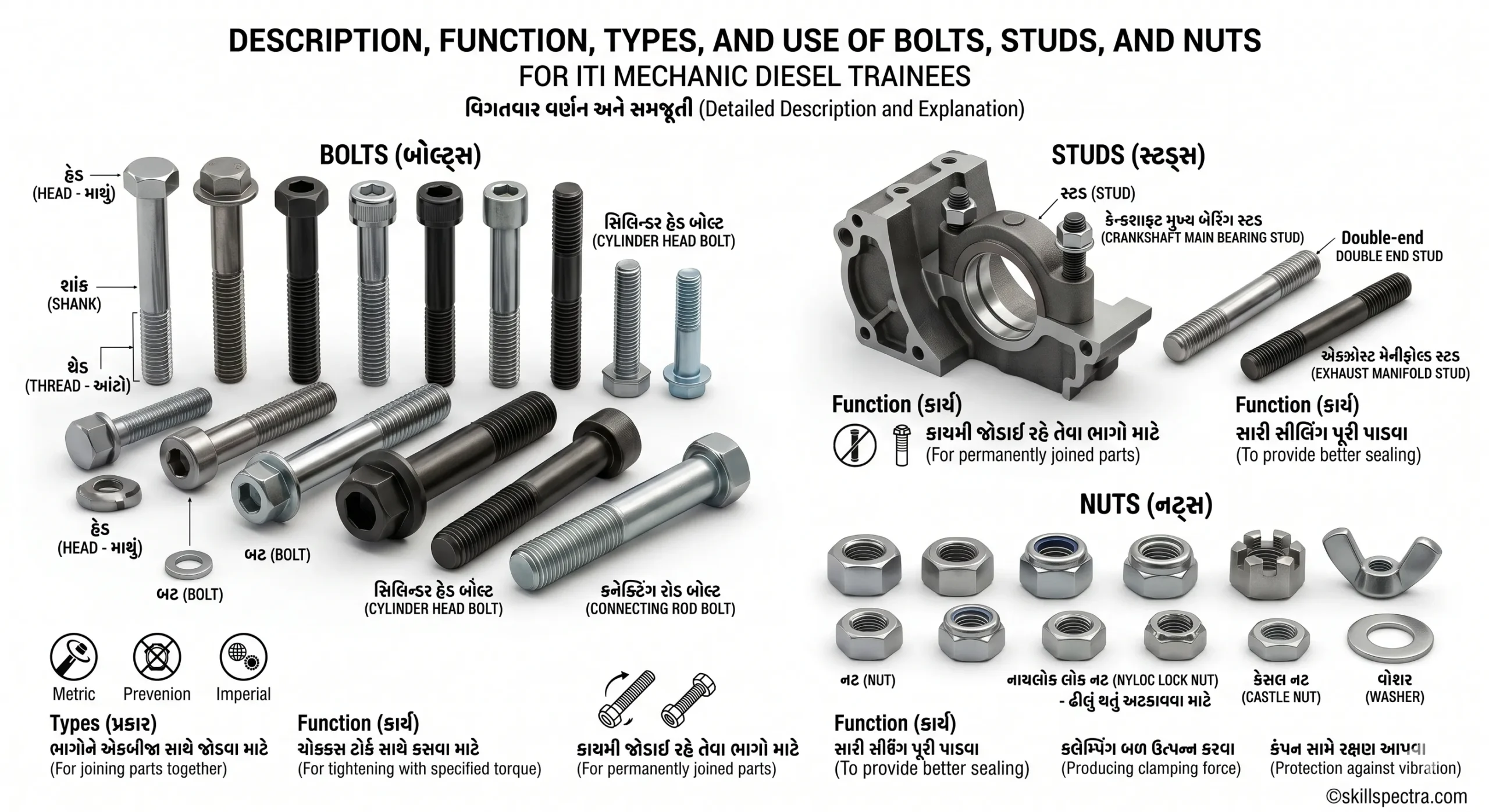
Bolts and nuts (Fig 1) 🔩🤝
These are generally used to clamp two parts together. (આ સામાન્ય રીતે બે ભાગોને સાથે જોડવા (clamp) માટે વપરાય છે.) When bolts and nuts are used, if the thread is stripped, a new bolt and nut can be used. (જ્યારે બોલ્ટ અને નટનો ઉપયોગ થાય છે, જો તેના આંટા (thread) ઘસાઈ જાય, તો નવો બોલ્ટ અને નટ વાપરી શકાય છે.) But in the case of a screw directly fitted in the component, when threads are damaged, the component may need extensive repair or replacement. (પરંતુ જો સ્ક્રૂ સીધો કમ્પોનન્ટમાં ફિટ કરેલો હોય અને થ્રેડ ડેમેજ થાય, તો કમ્પોનન્ટને મોટા રિપેરિંગ અથવા બદલવાની જરૂર પડી શકે છે.)
Depending on the type of application, different types of bolts are used. (એપ્લિકેશનના પ્રકાર પર આધાર રાખીને, વિવિધ પ્રકારના બોલ્ટ્સનો ઉપયોગ થાય છે.)
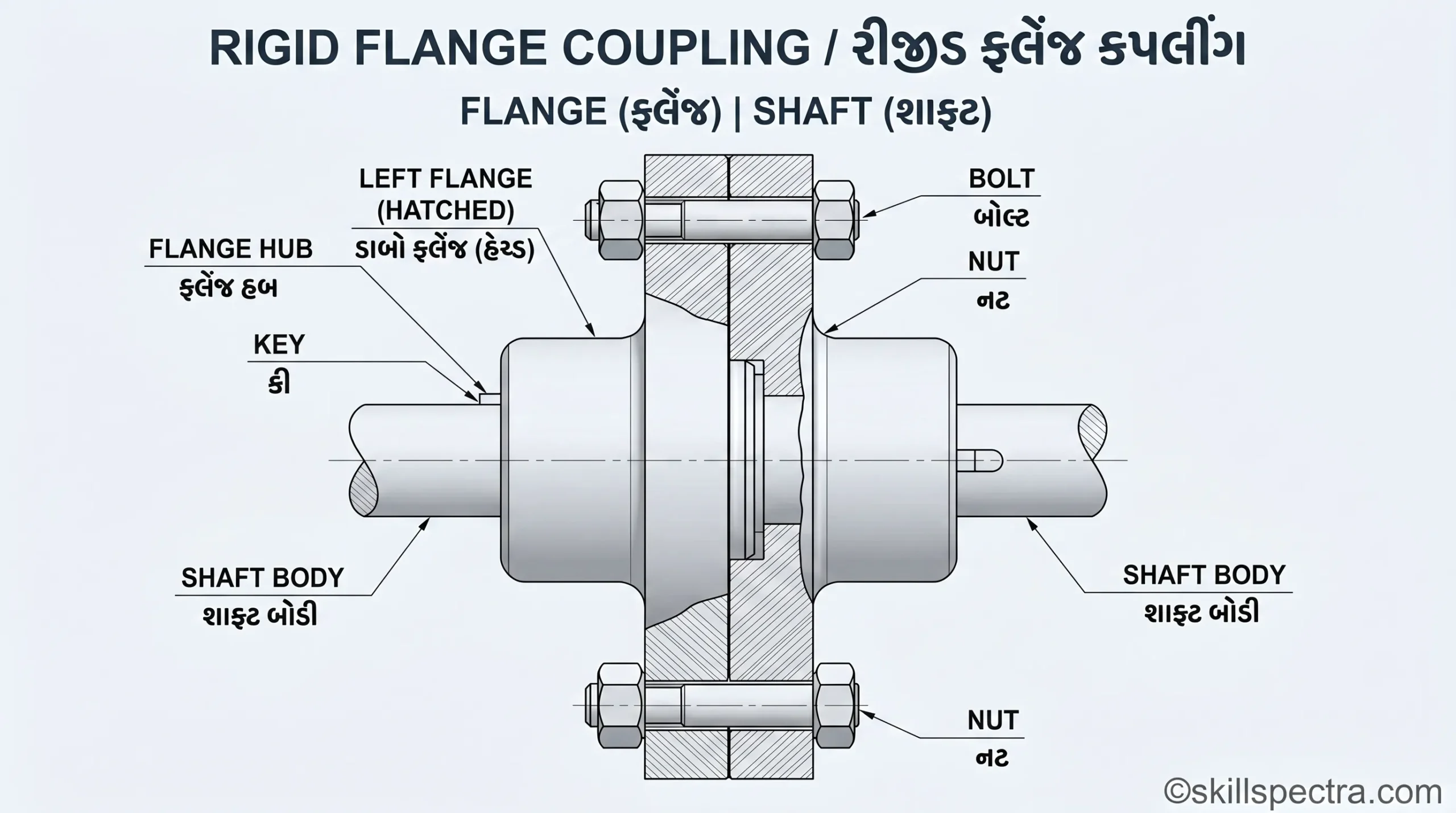
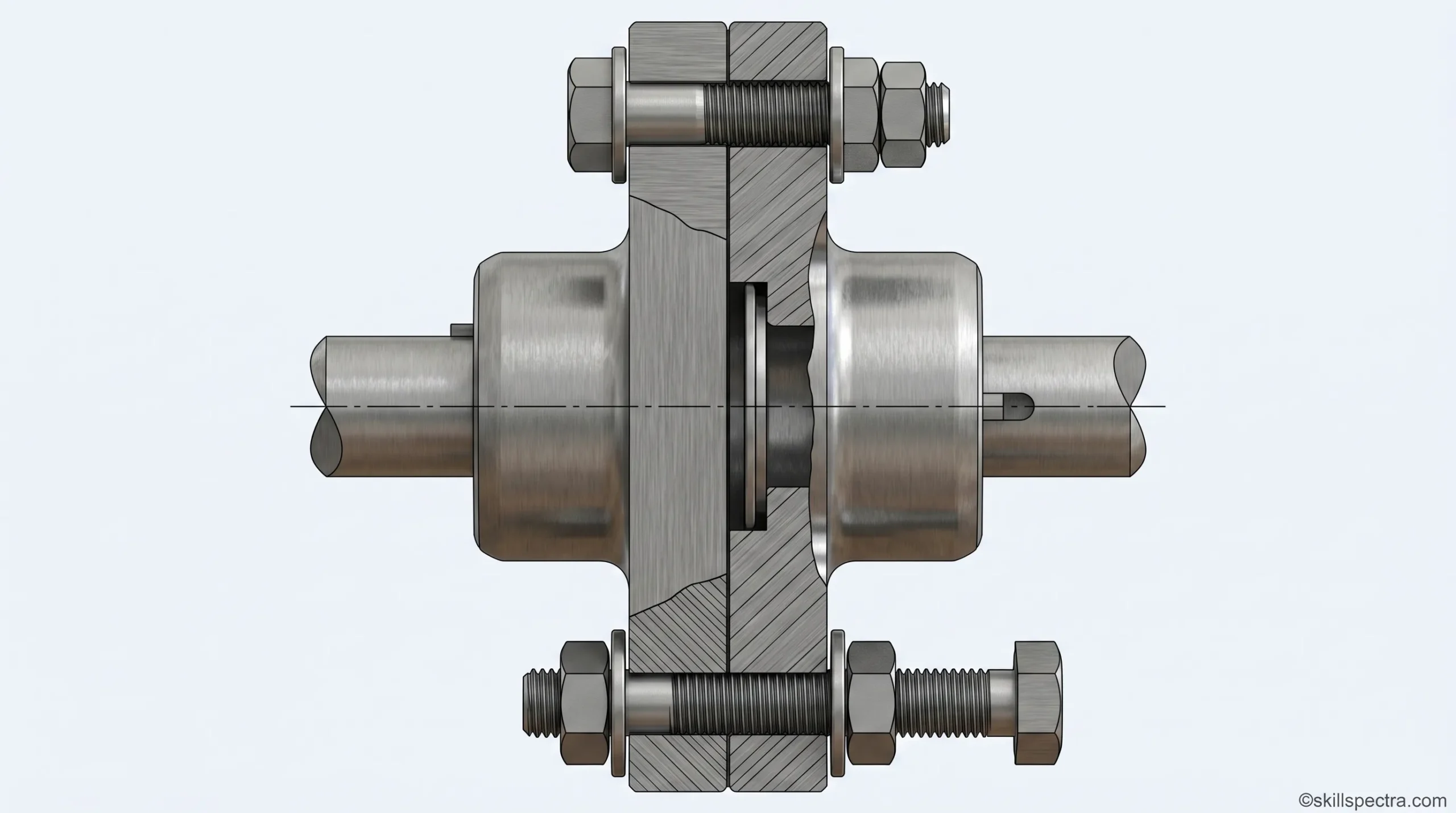
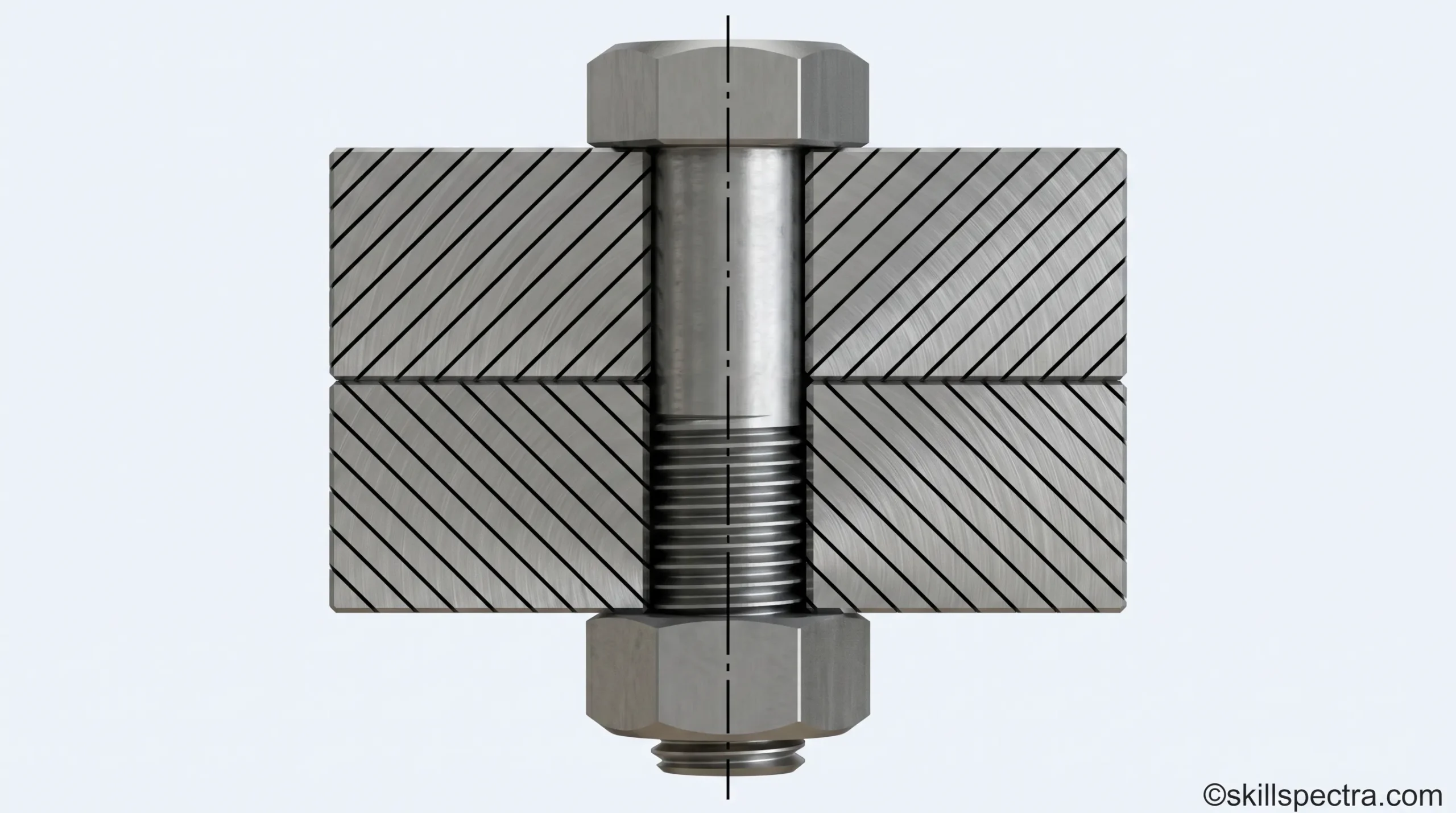
Bolts with clearance hole (Fig 2) 🕳️
This is the most common type of fastening arrangement using bolts. (બોલ્ટ્સનો ઉપયોગ કરીને ફાસ્ટનિંગ કરવાની આ સૌથી સામાન્ય પદ્ધતિ છે.) The size of the hole is slightly larger than the bolt (clearance hole). (હોલની સાઈઝ બોલ્ટ કરતા થોડી મોટી હોય છે જેને ‘ક્લિયરન્સ હોલ’ કહેવાય છે.) Slight misalignment in the matching hole will not affect the assembly. (મેચિંગ હોલમાં જો થોડું મિસ-અલાઈનમેન્ટ હોય, તો પણ તે એસેમ્બલીને અસર કરતું નથી.)
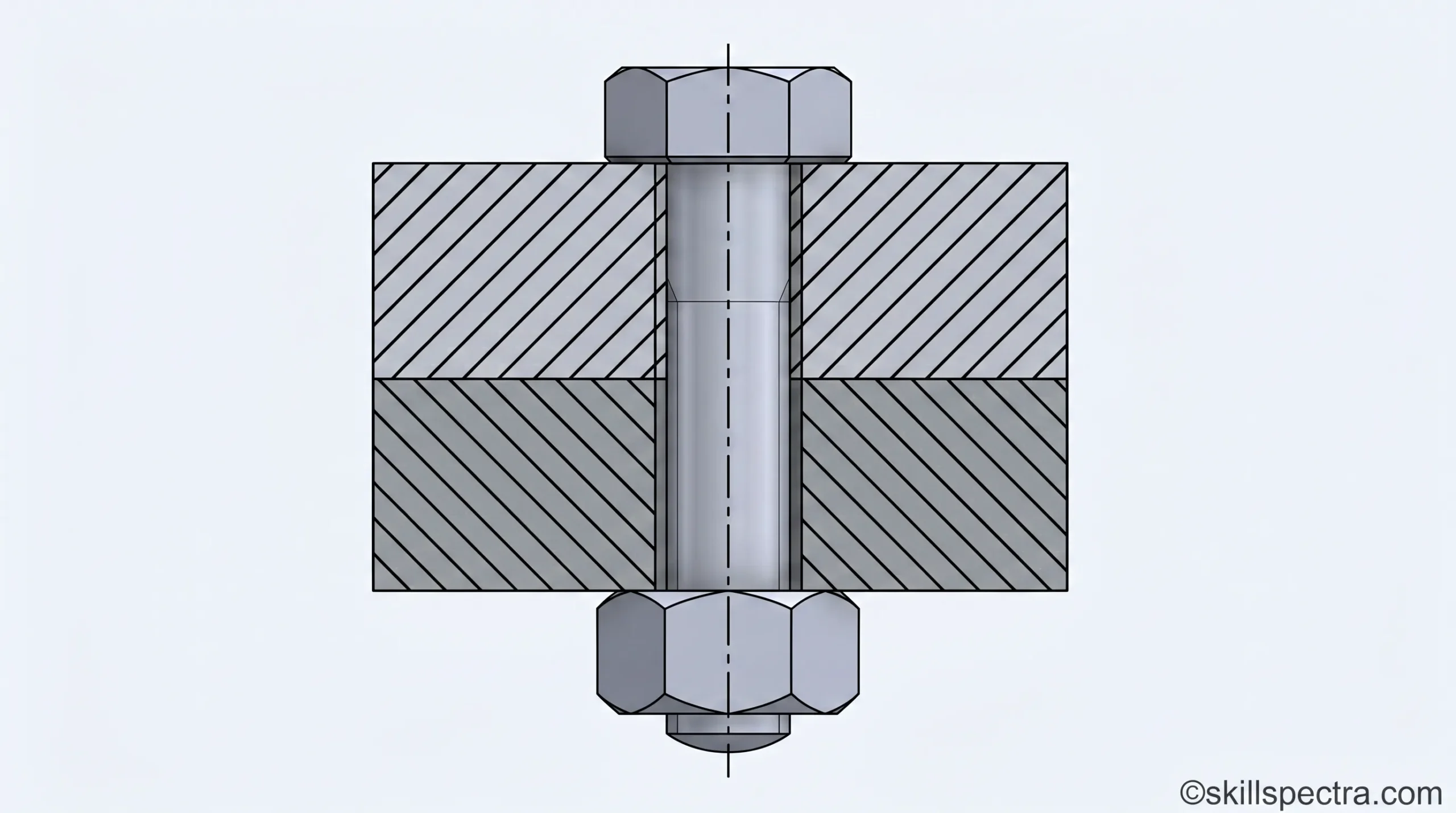
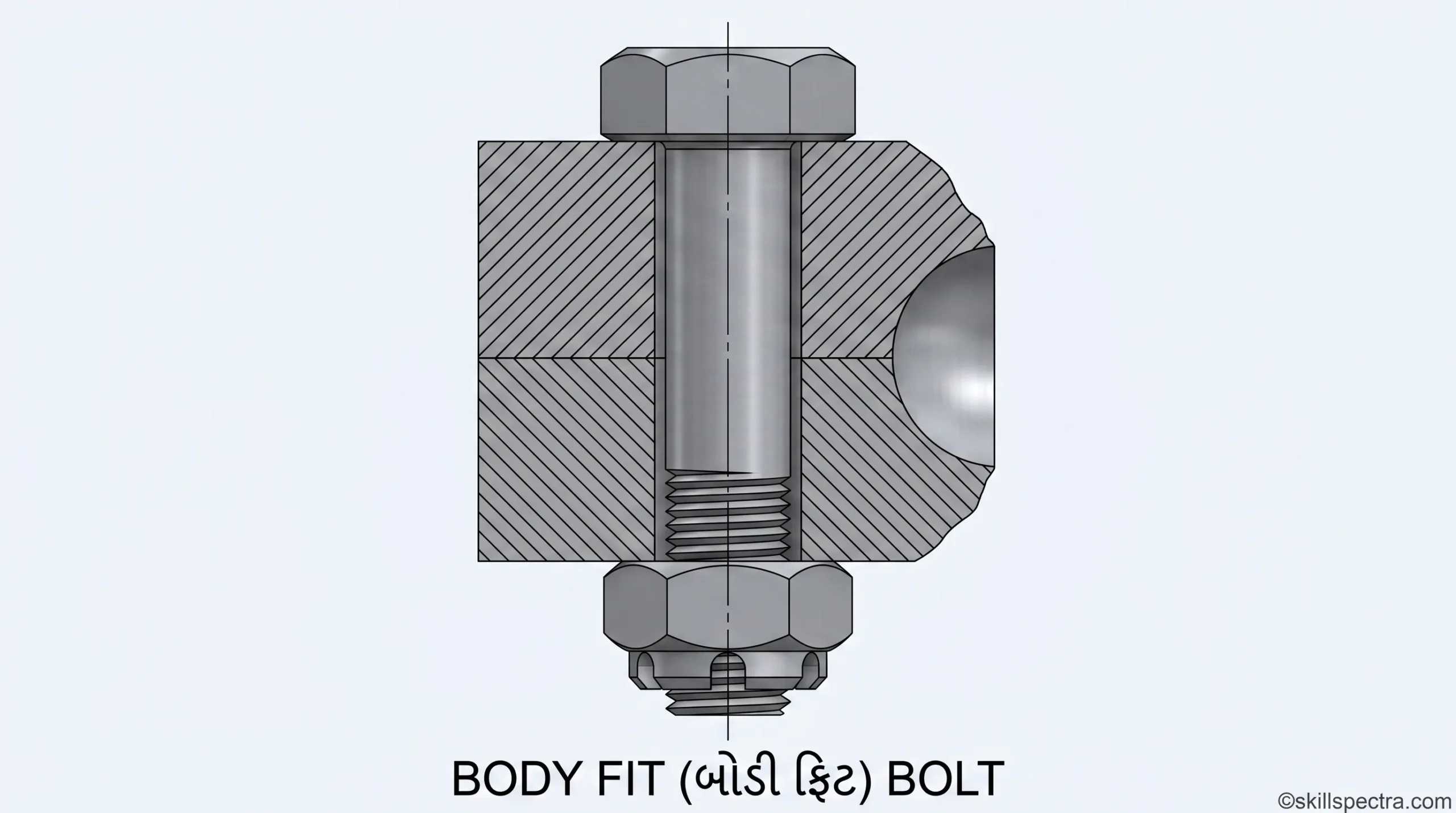
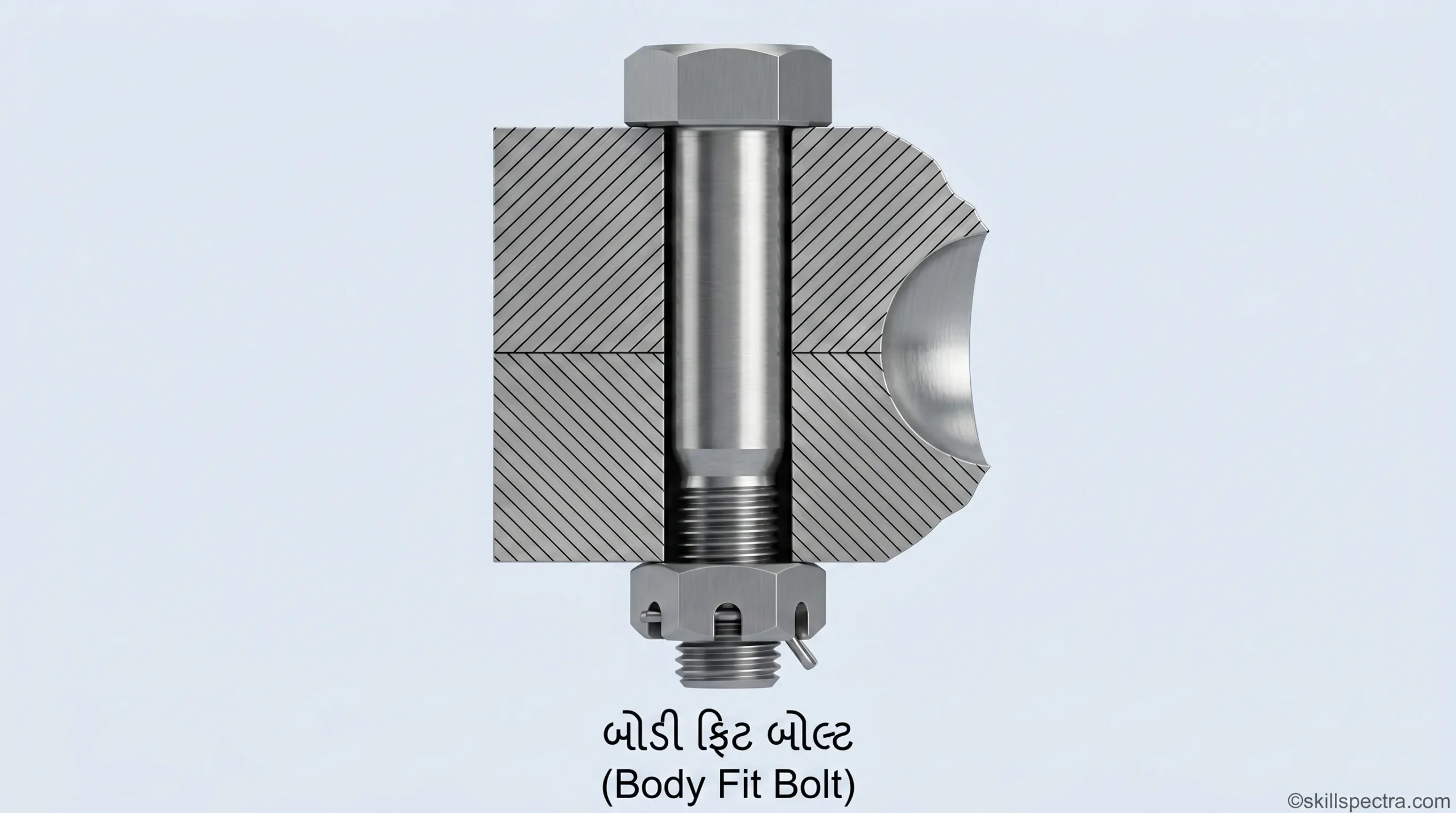
Body fit bolt (Fig 3) 📐
This type of bolt assembly is used when the relative movement between the workpieces has to be prevented. (જ્યારે વર્કપીસ વચ્ચેની સાપેક્ષ હિલચાલ (relative movement) રોકવાની હોય ત્યારે આ પ્રકારના બોલ્ટનો ઉપયોગ થાય છે.) The diameter of the threaded portion is slightly smaller than the shank diameter of the bolt. (બોલ્ટના થ્રેડેડ ભાગનો વ્યાસ તેના શેન્ક (shank) વ્યાસ કરતા થોડો નાનો હોય છે.) The bolt shank and the hole are accurately machined for achieving perfect mating. (પરફેક્ટ ફિટિંગ માટે બોલ્ટ શેન્ક અને હોલને સચોટ રીતે મશીન કરવામાં આવે છે.)
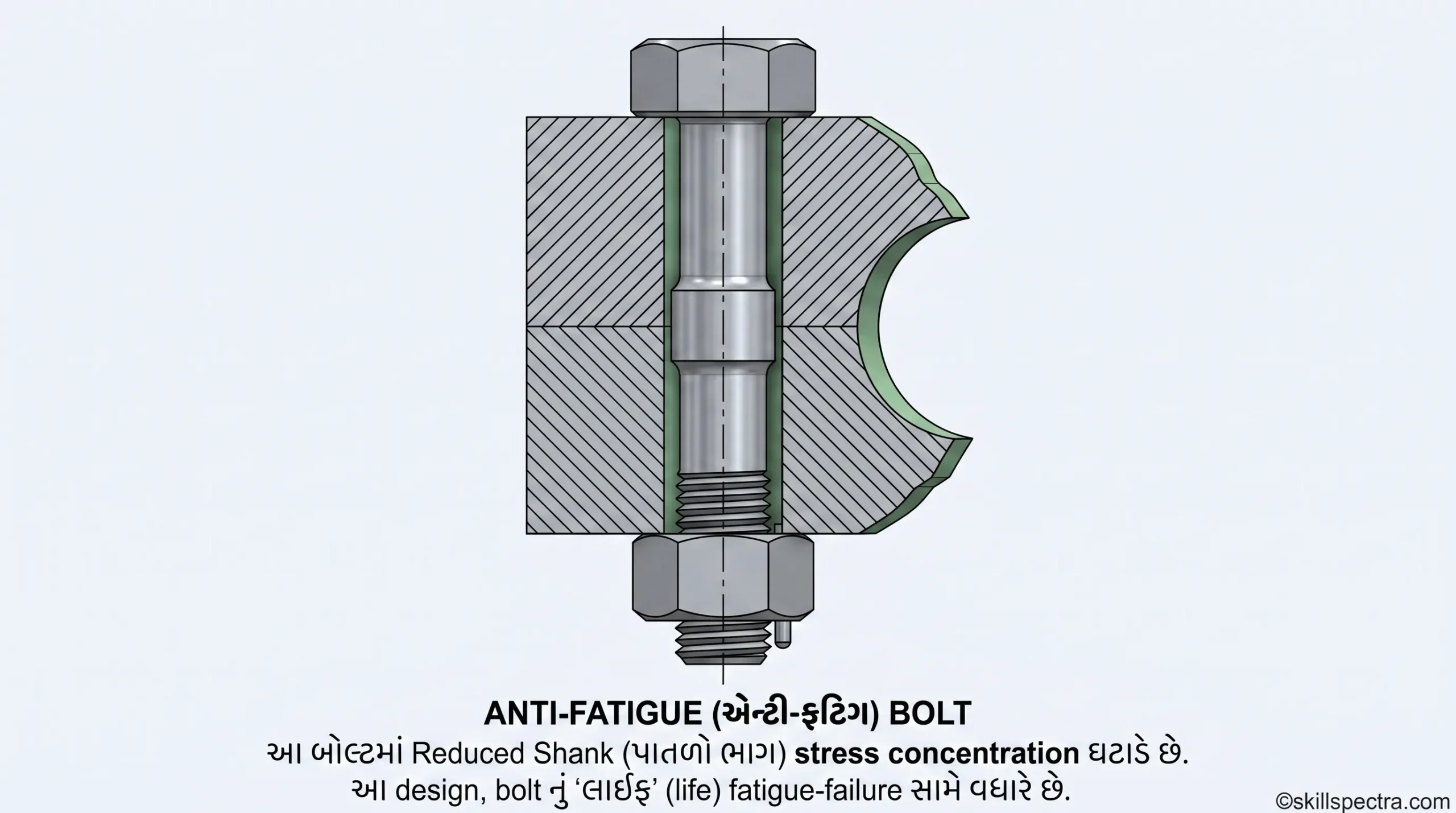
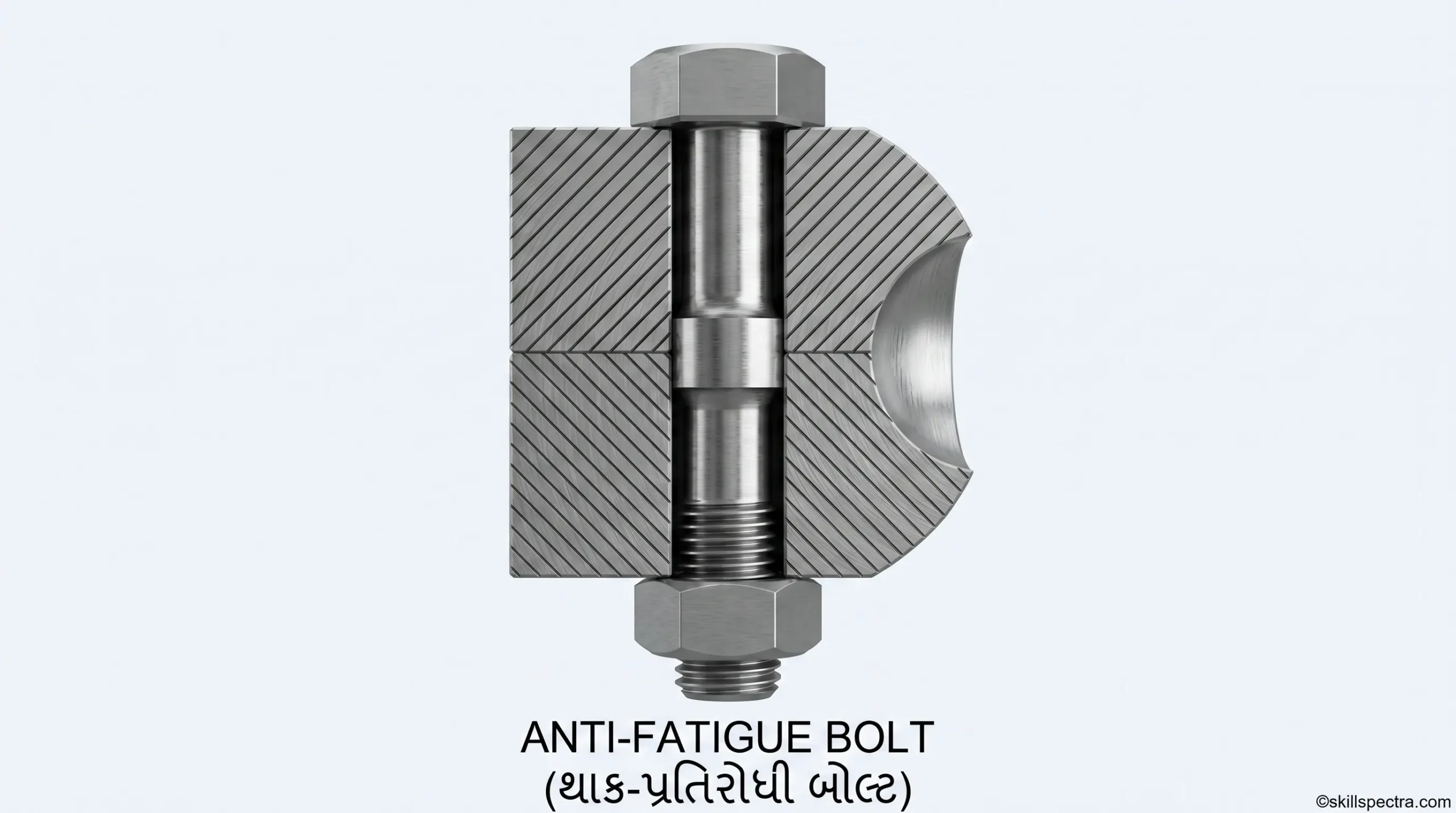
Anti-fatigue bolt (Fig 4) ⛓️
This type of bolt is used when the assembly is subjected to alternating load conditions continuously. (જ્યારે એસેમ્બલી પર સતત બદલાતા લોડ (alternating load) આવતા હોય ત્યારે આ બોલ્ટ વપરાય છે.) Connecting rod big ends in engine assembly are examples of this application. (એન્જિન એસેમ્બલીમાં કનેક્ટિંગ રોડના બિગ એન્ડ્સ આના ઉદાહરણો છે.) The shank diameter is in contact with the hole in a few places and other portions are relieved to give clearances. (શેન્કનો વ્યાસ થોડીક જગ્યાએ હોલના સંપર્કમાં હોય છે અને અન્ય ભાગોમાં ક્લિયરન્સ આપવામાં આવે છે.)
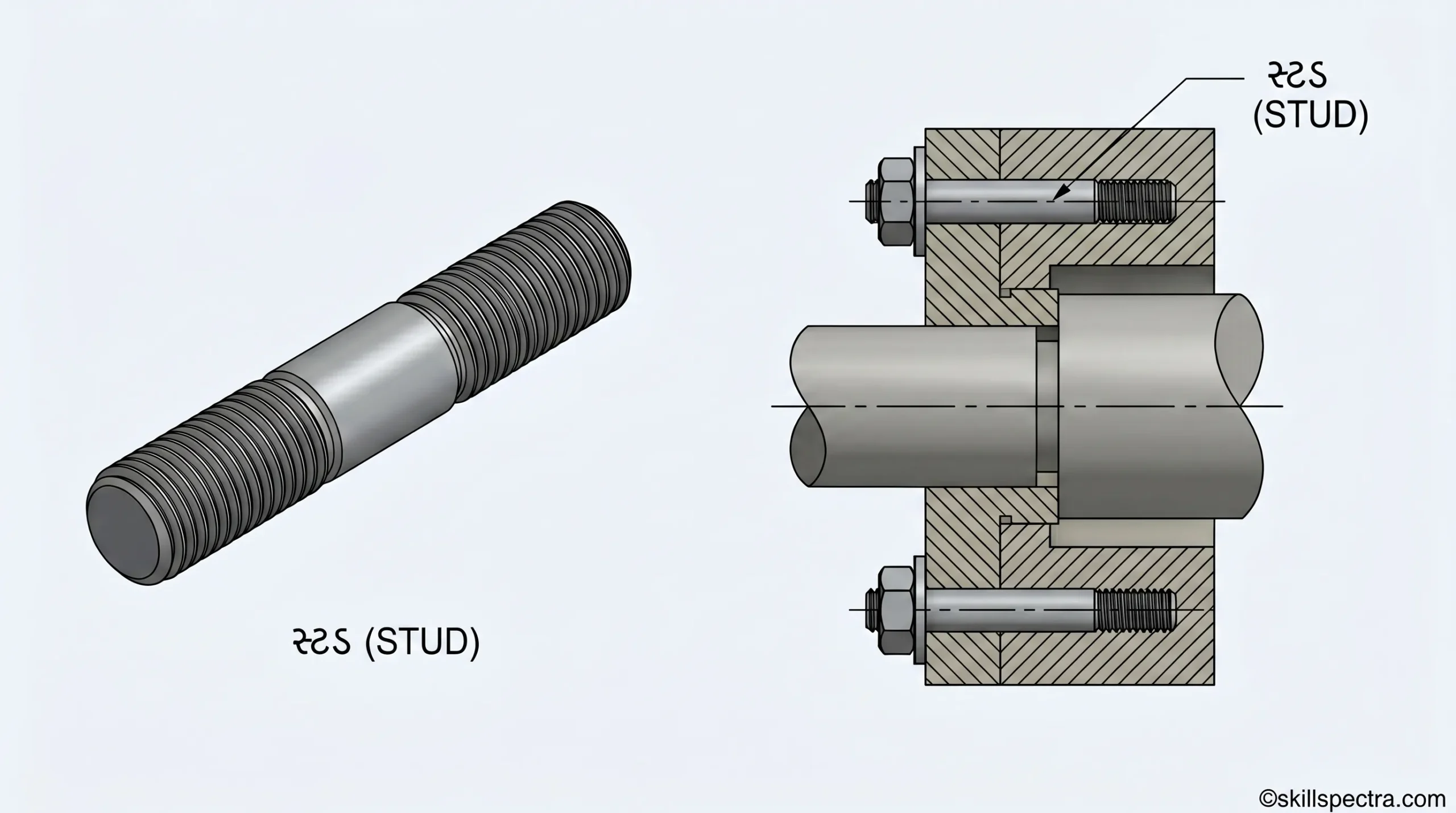
Studs (Fig 5) 🔩📏
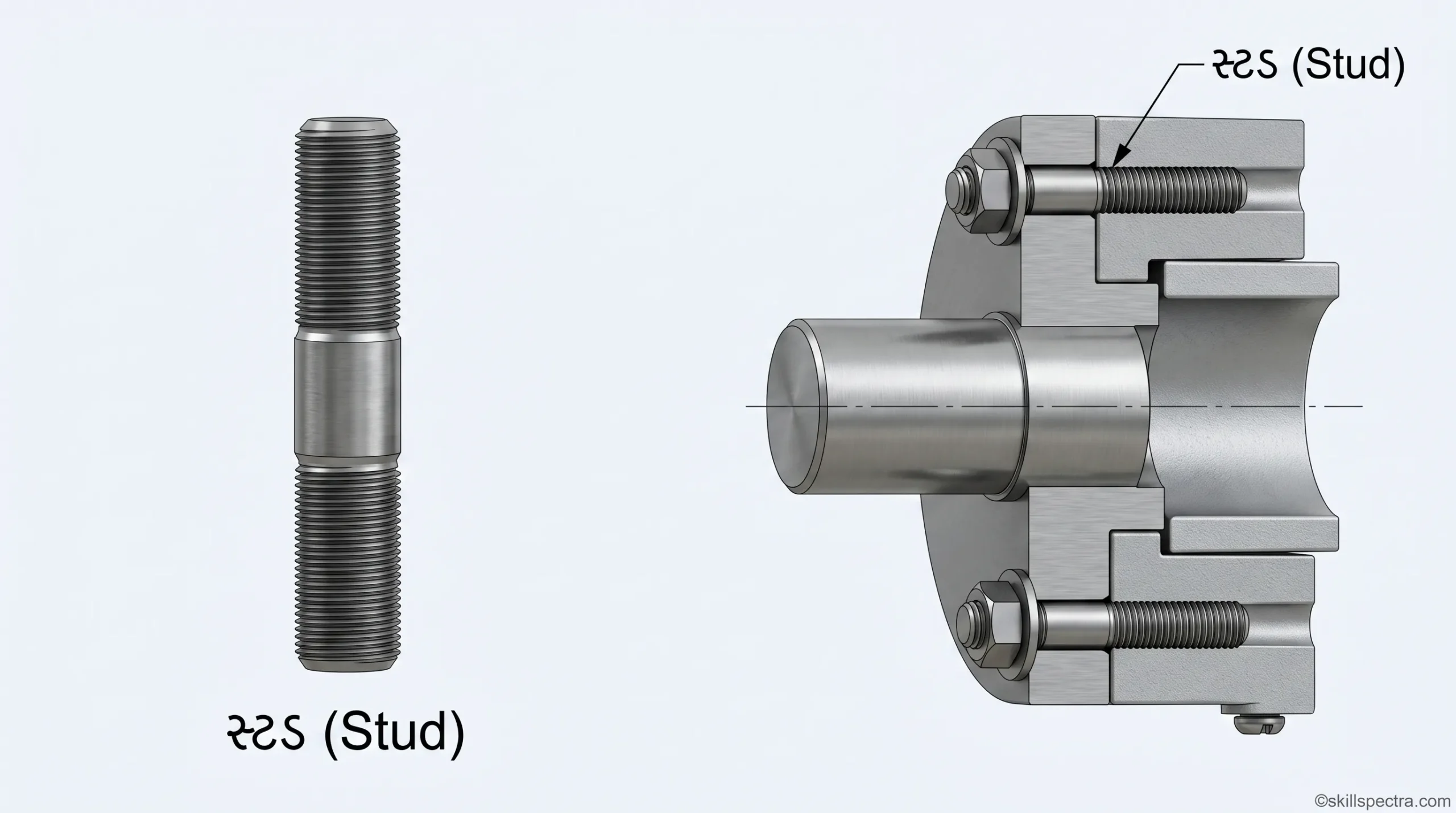
Studs are used in assemblies which are to be separated frequently. (સ્ટડ્સનો ઉપયોગ એવી એસેમ્બલીમાં થાય છે જેને વારંવાર છૂટી પાડવાની જરૂર હોય છે.) When excessively tightened, the variation in the thread pitch allows the fine thread or nut end to slip. (જ્યારે વધુ પડતું ટાઈટ કરવામાં આવે છે, ત્યારે થ્રેડ પિચમાં તફાવતને કારણે ફાઈન થ્રેડ અથવા નટનો છેડો સરકી શકે છે.) This prevents damage to the casting. (આ કાસ્ટિંગને નુકસાન થતું અટકાવે છે.)
Designation of bolts as per B.I.S. specifications 📑
Hexagon head bolts shall be designated by name, thread size, nominal length, property class and number of the Indian Standard. (હેક્સાગોન હેડ બોલ્ટ્સને તેના નામ, થ્રેડ સાઈઝ, નોમિનલ લંબાઈ, પ્રોપર્ટી ક્લાસ અને ભારતીય માનક (IS) નંબર દ્વારા દર્શાવવામાં આવે છે.)
Example: 📝 A hexagon head bolt of size M10, nominal length 60mm and property class 4.8 shall be designated as: Hexagon head bolt M10x60 – 4.8-IS: 1363 (Part 1)
Explanation about property class
The Part of the specification 4.8 indicates the property class (mechanical properties). (સ્પેસિફિકેશનનો 4.8 ભાગ તેની પ્રોપર્ટી ક્લાસ અથવા મિકેનિકલ ગુણધર્મો દર્શાવે છે.) In this case it is made of steel with minimum tensile strength = 40kgf/mm2 and having a ratio of minimum yield stress to minimum tensile strength = 0.8. (આ કિસ્સામાં તે સ્ટીલનો બનેલો છે જેની લઘુત્તમ ટેન્સાઈલ સ્ટ્રેન્થ 40kgf/mm2 છે.)
NOTE: 💡 Indian standard bolts and screws are made of three product grades – A, B, & C, ‘A’ being precision and the others of lesser grades of accuracy and finish. (ભારતીય માનક બોલ્ટ્સ અને સ્ક્રૂ ત્રણ ગ્રેડમાં બને છે – A, B અને C, જેમાં ‘A’ સૌથી ચોક્કસ (precision) હોય છે.)
For more details on the designation system, refer to IS: 1367, Part XVI 1979.
Locking devices (લોકિંગ ડિવાઈસ) 🔒
Objectives:
At the end of this lesson you shall be able to:
- State what is a locking device. (લોકિંગ ડિવાઈસ શું છે તે જણાવો.)
- Name the effect, if proper locking devices are not employed. (જો યોગ્ય લોકિંગ ડિવાઈસ ન વાપરવામાં આવે તો શું અસર થાય તે જણાવો.)
- Name the various types of locking devices. (વિવિધ પ્રકારના લોકિંગ ડિવાઈસના નામ આપો.)
- State the uses of the commonly used locking devices. (સામાન્ય રીતે વપરાતા લોકિંગ ડિવાઈસના ઉપયોગો જણાવો.)
Locking devices:
A locking device is used to lock the threaded fasteners to prevent them from loosening. (લોકિંગ ડિવાઈસનો ઉપયોગ થ્રેડેડ ફાસ્ટનર્સને ઢીલા થતા અટકાવવા માટે થાય છે.) Due to vibration in the moving part, there is a tendency for the threaded fastener to get slack and to slip off. (ગતિશીલ ભાગોમાં વાઈબ્રેશનને કારણે ફાસ્ટનર્સ ઢીલા થઈને નીકળી જવાની શક્યતા રહે છે.) Then the assembled part will get loose and cause damages. (ત્યારબાદ એસેમ્બલ કરેલા ભાગો ઢીલા થઈ જશે અને નુકસાન પહોંચાડશે.)
In Automotives, the lock-nut avoids the loosening of the assembled part. (ઓટોમોટિવમાં, લોક-નટ એસેમ્બલ કરેલા ભાગોને ઢીલા થતા અટકાવે છે.)
Classification of lock-nuts: 🗂️
Lock-nuts are classified into two categories:
- Positive locking device (પોઝિટિવ લોકિંગ ડિવાઈસ)
- Frictional locking device (ફ્રિક્શનલ લોકિંગ ડિવાઈસ)
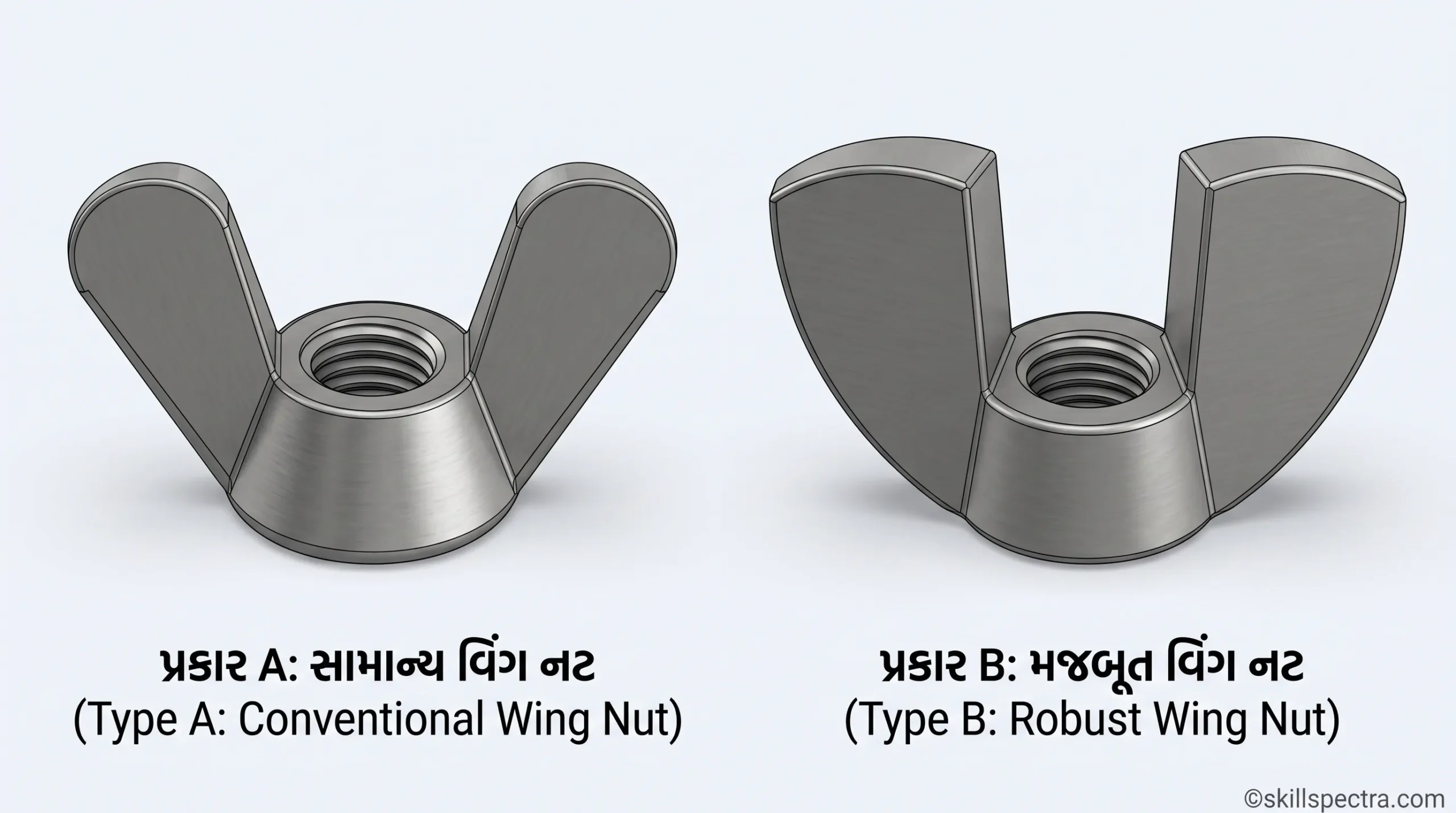
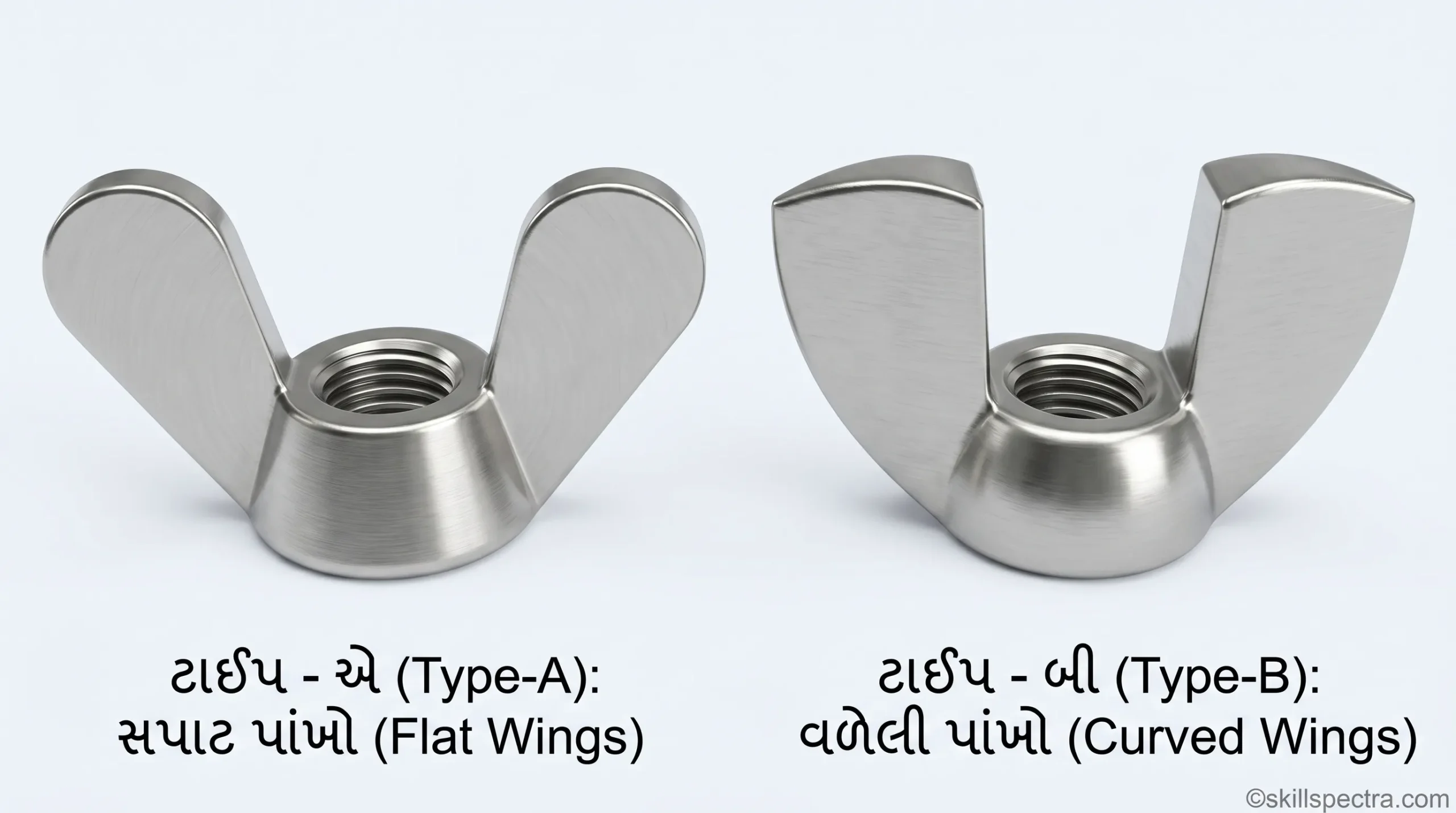
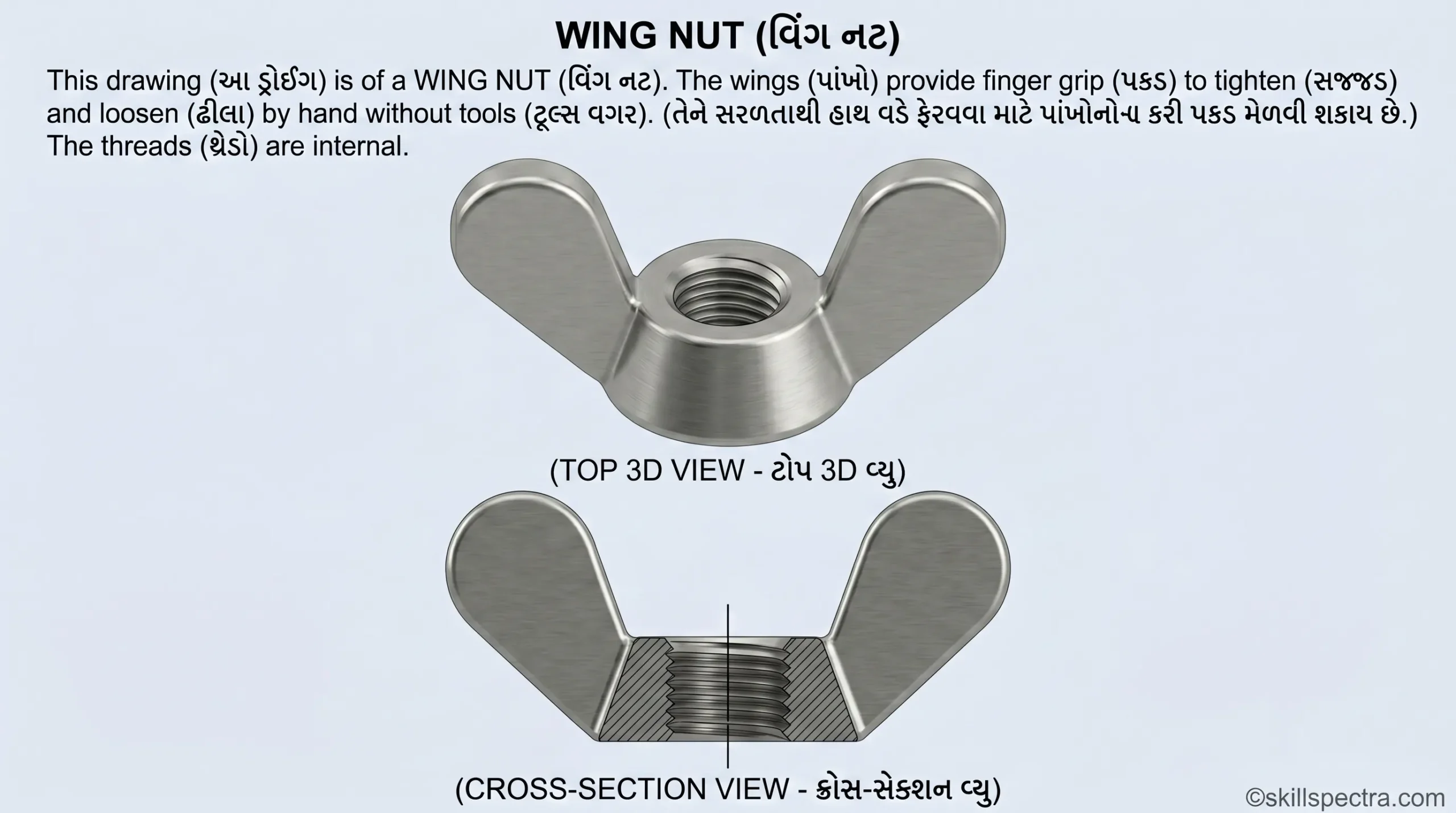
Wing-nuts (Fig 1) 🦋
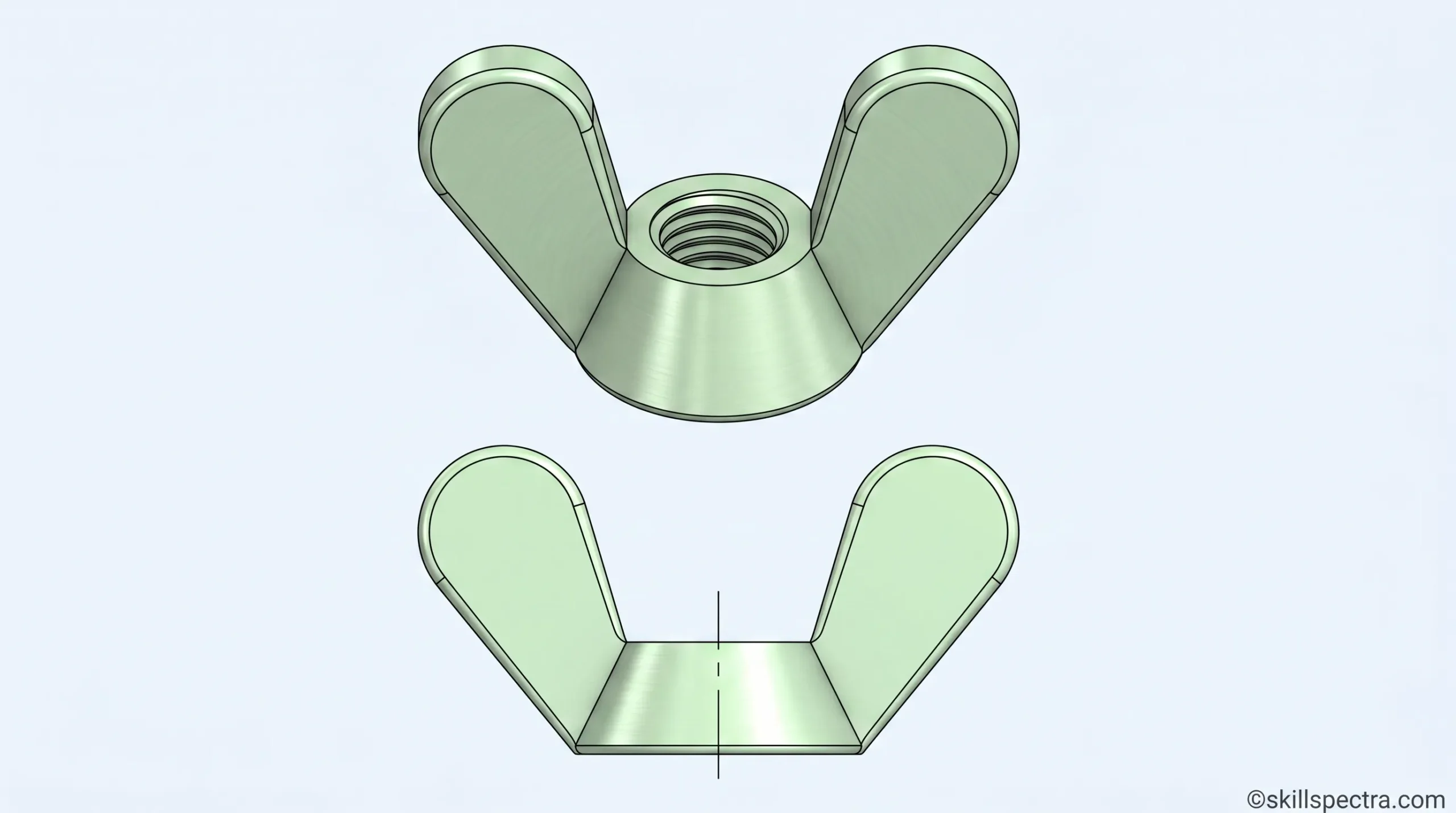
Wing-nuts are used in light duty assembly which require frequent removal and fixing. (વિંગ-નટ્સનો ઉપયોગ હળવા કામની એસેમ્બલીમાં થાય છે જ્યાં વારંવાર ખોલવા અને ફિટ કરવાની જરૂર હોય.) These are available as hot forged/cast (Type A) and cold forged (Type B). (આ હોટ ફોર્જ્ડ/કાસ્ટ અને કોલ્ડ ફોર્જ્ડ એમ બે પ્રકારમાં મળે છે.)
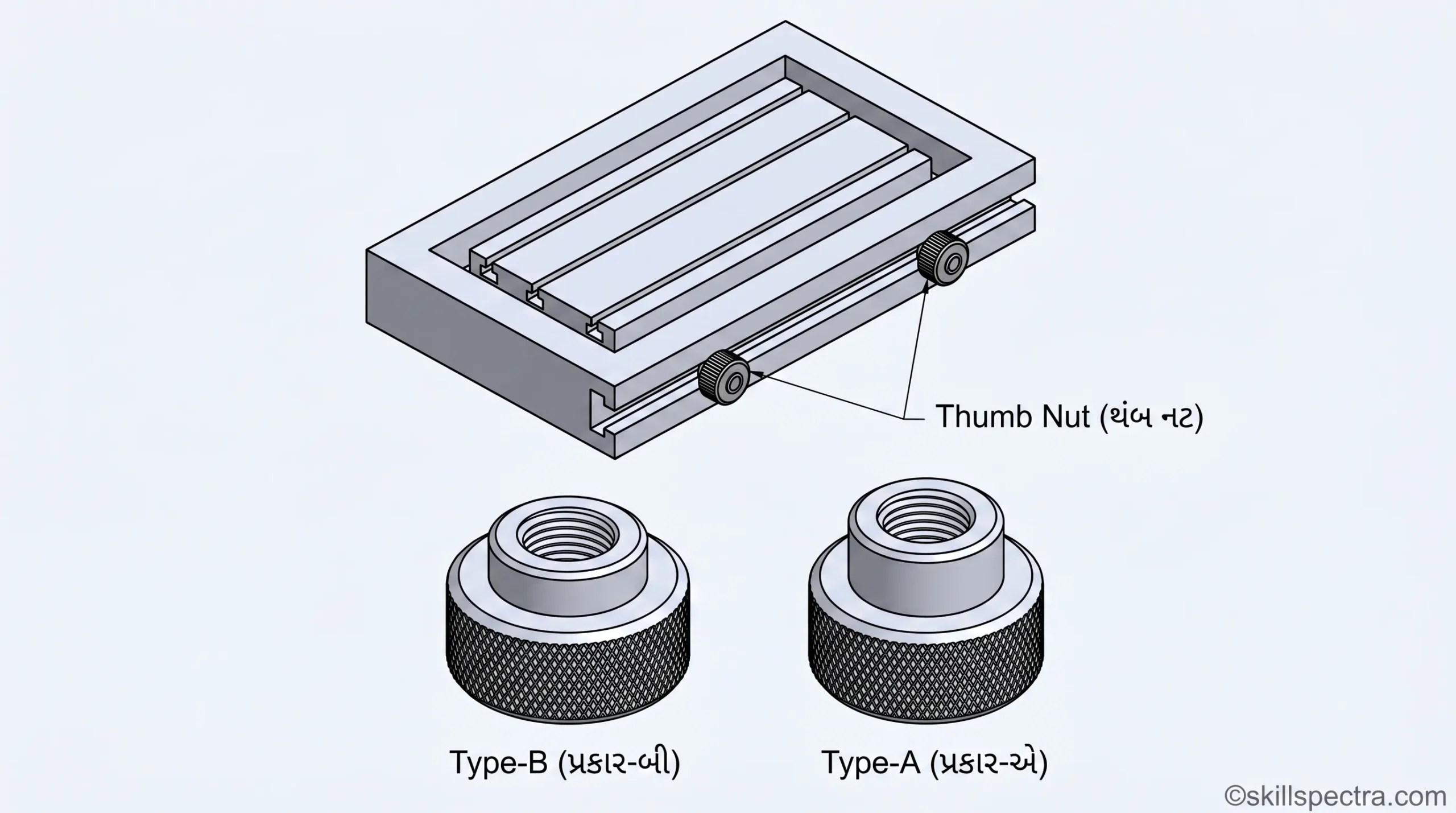
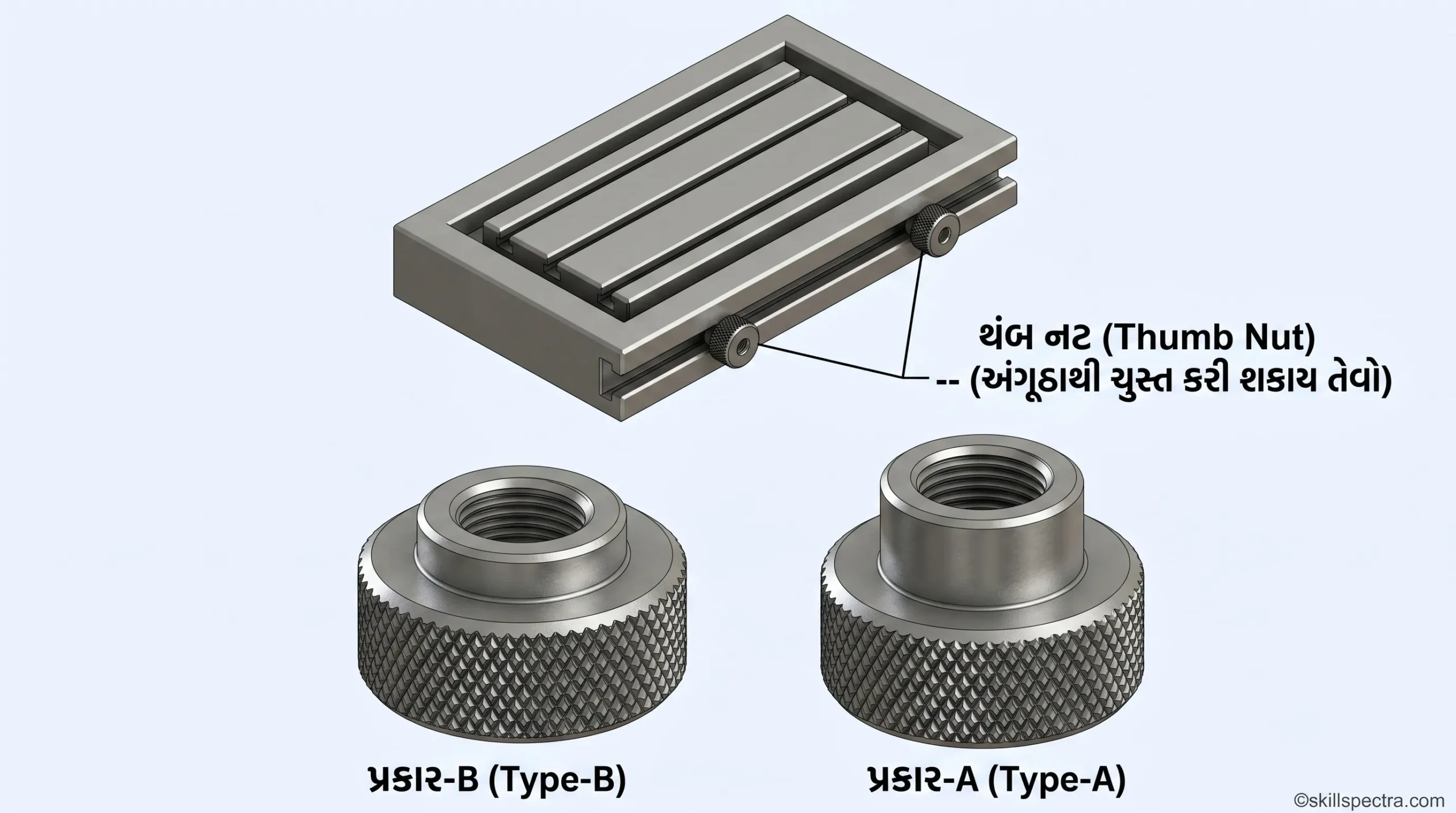
Thumb-nut (Fig 2) 👍
These are used in places where frequent adjustments are required and mere finger tightening is enough. (આનો ઉપયોગ એવી જગ્યાએ થાય છે જ્યાં વારંવાર એડજસ્ટમેન્ટની જરૂર હોય અને માત્ર આંગળીઓથી ટાઈટ કરવું પૂરતું હોય.) They are available in two types – Types A & Type B.
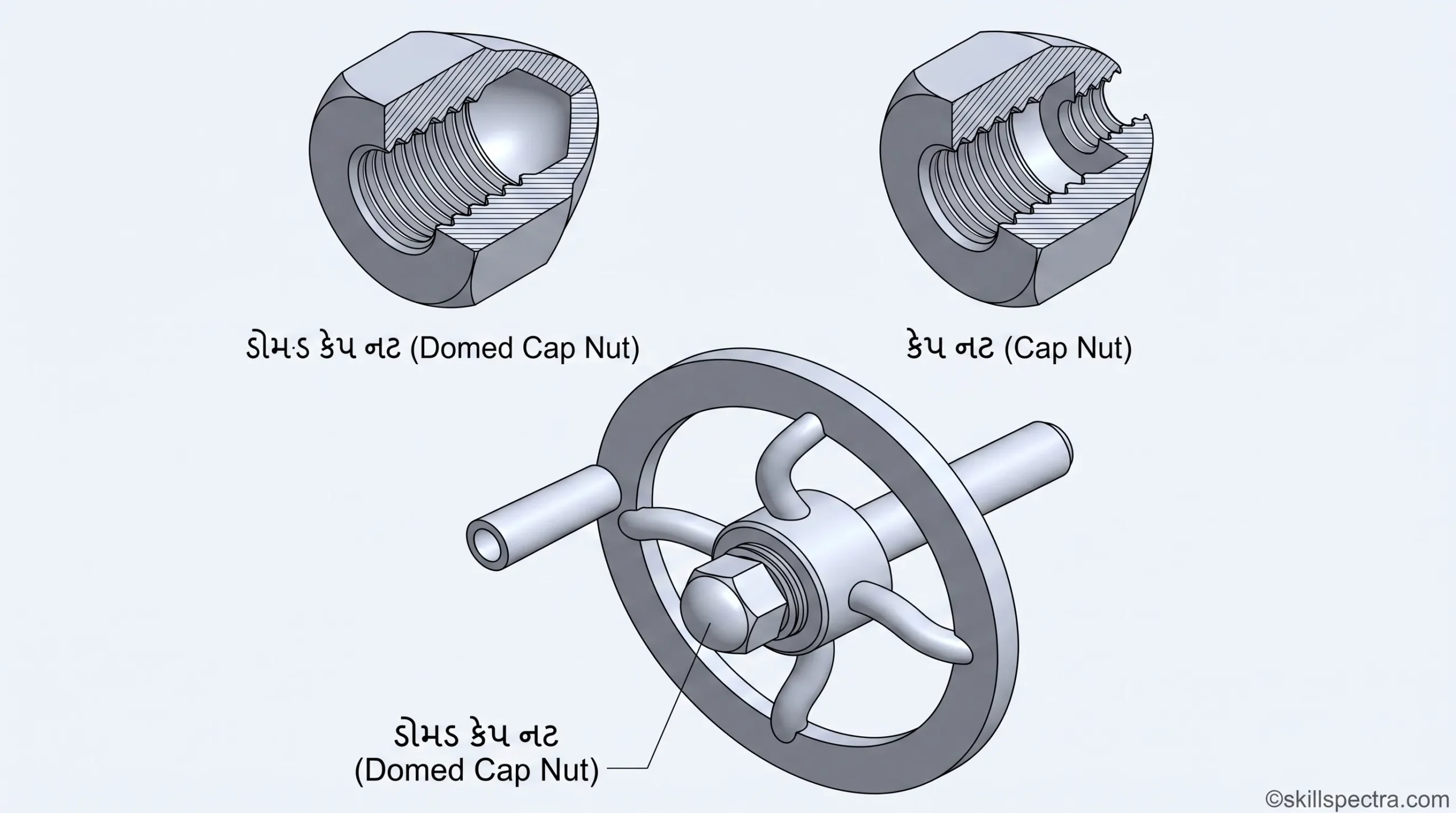
Cap nut (Fig 3) 🧢
These are used to protect the bolt end threads from damages and also as a protector for safe working. (આ બોલ્ટના છેડાના થ્રેડને નુકસાનથી બચાવવા અને સુરક્ષિત કામગીરી માટે વપરાય છે.) They serve to provide a decorative appearance. (તે સુશોભન દેખાવ પણ આપે છે.)
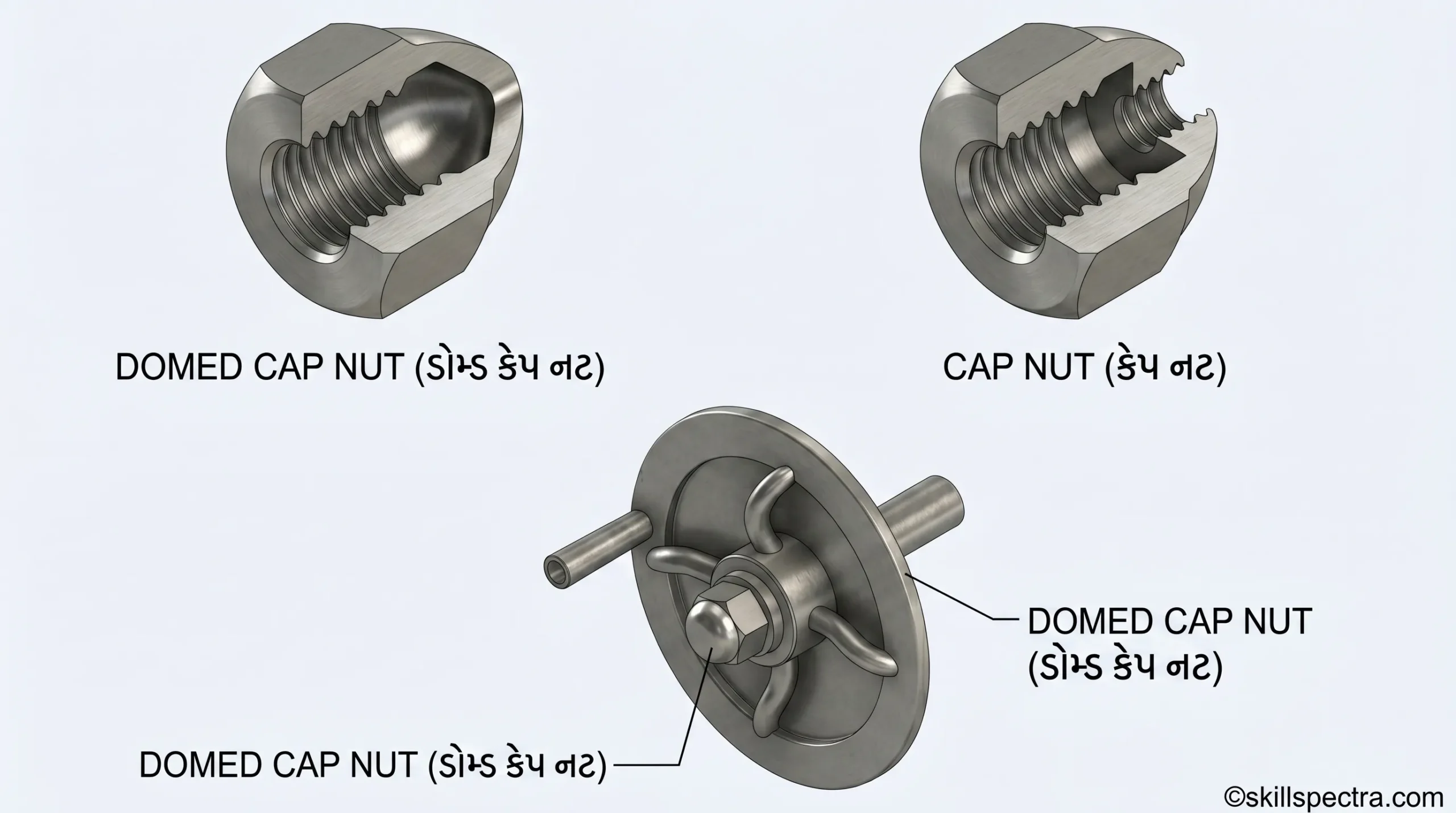
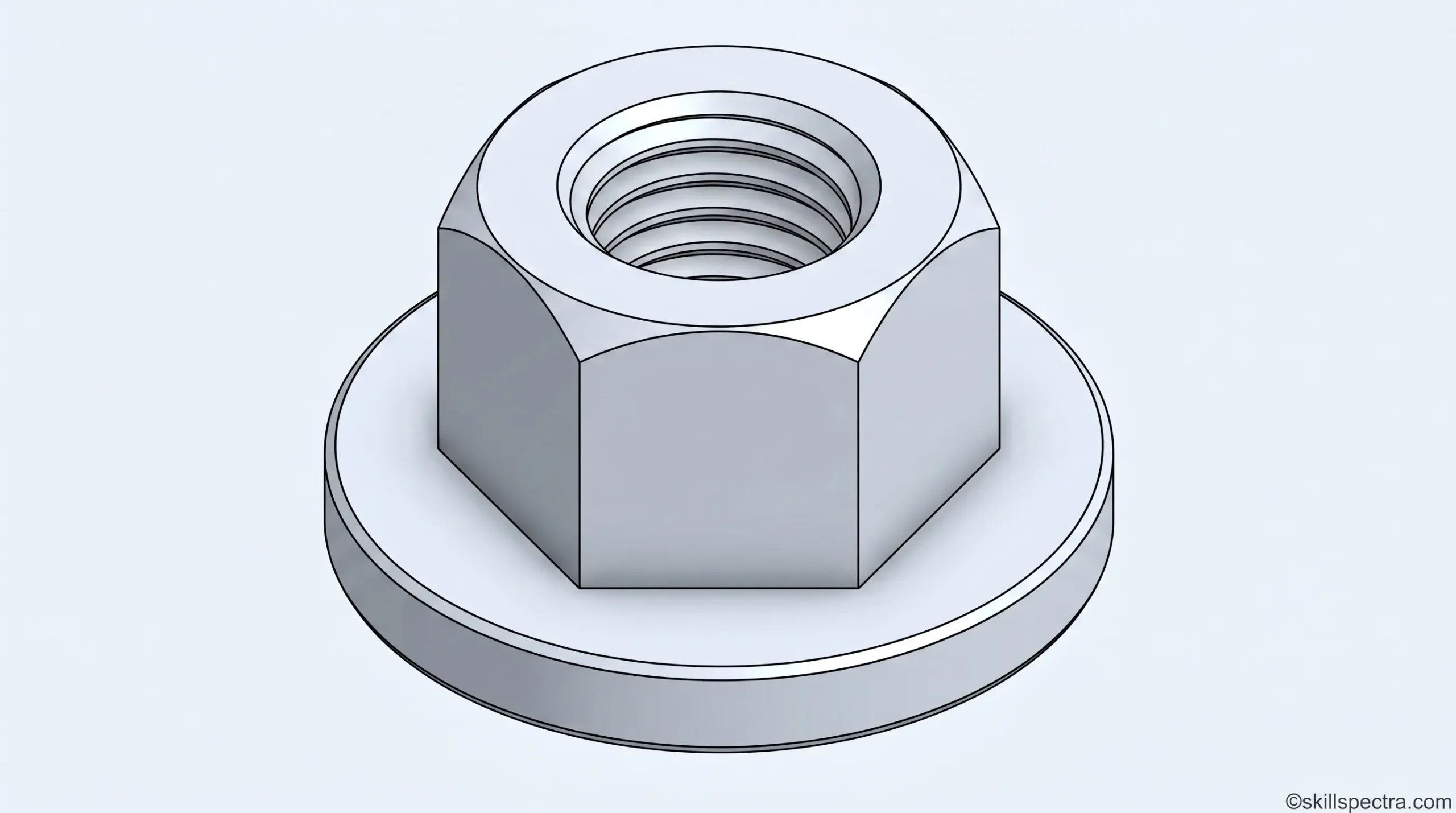
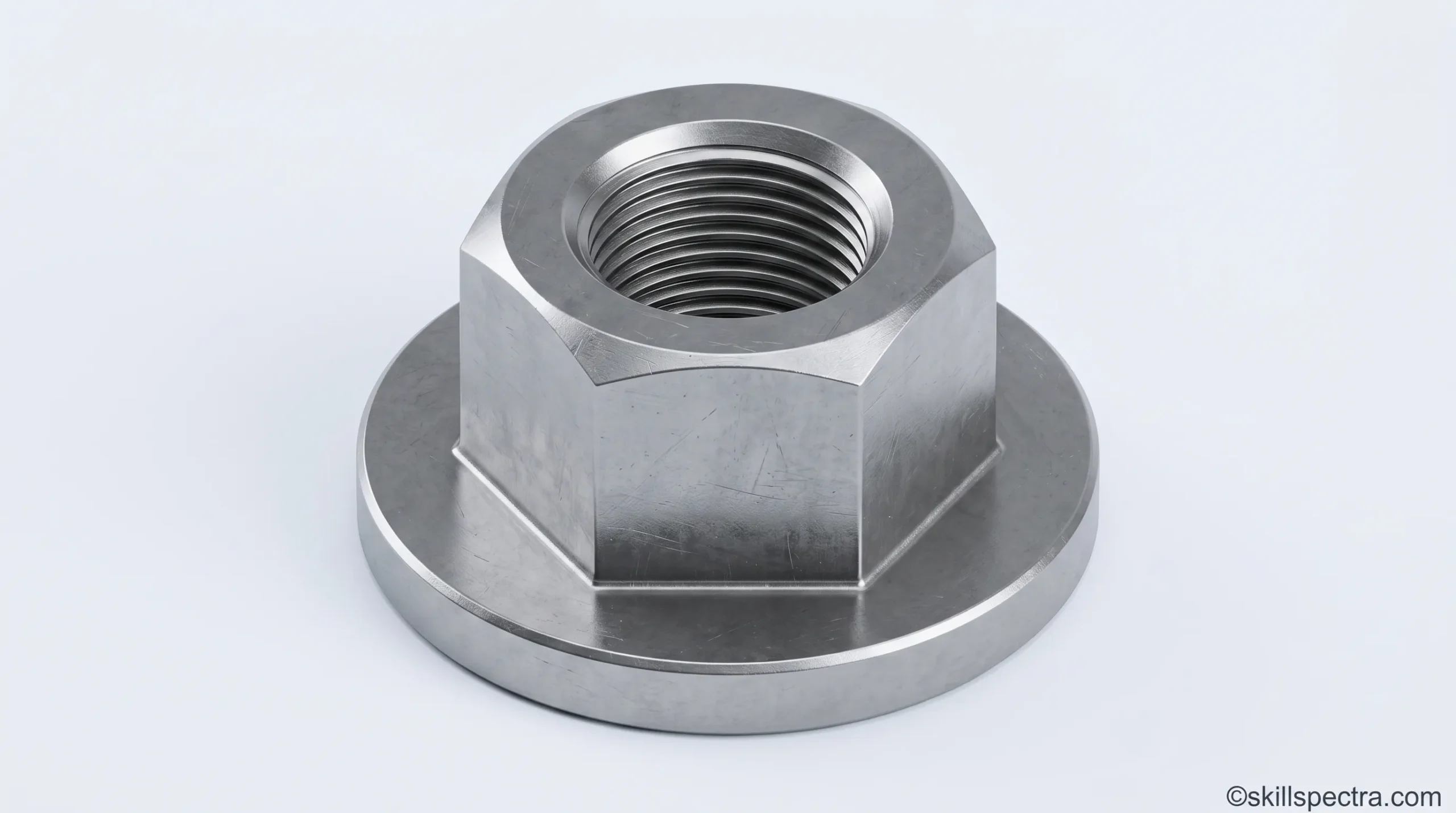
Hexagonal nuts with collar (Fig 4): ⚙️
These nuts have a machined collar on one end. (આ નટના એક છેડે મશીન કરેલ કોલર હોય છે.) This provides additional bearing surface in assembly. (આ એસેમ્બલીમાં વધારાની બેરિંગ સરફેસ પૂરી પાડે છે.) The collar acts like a washer. (આ કોલર વોશરની જેમ કામ કરે છે.)
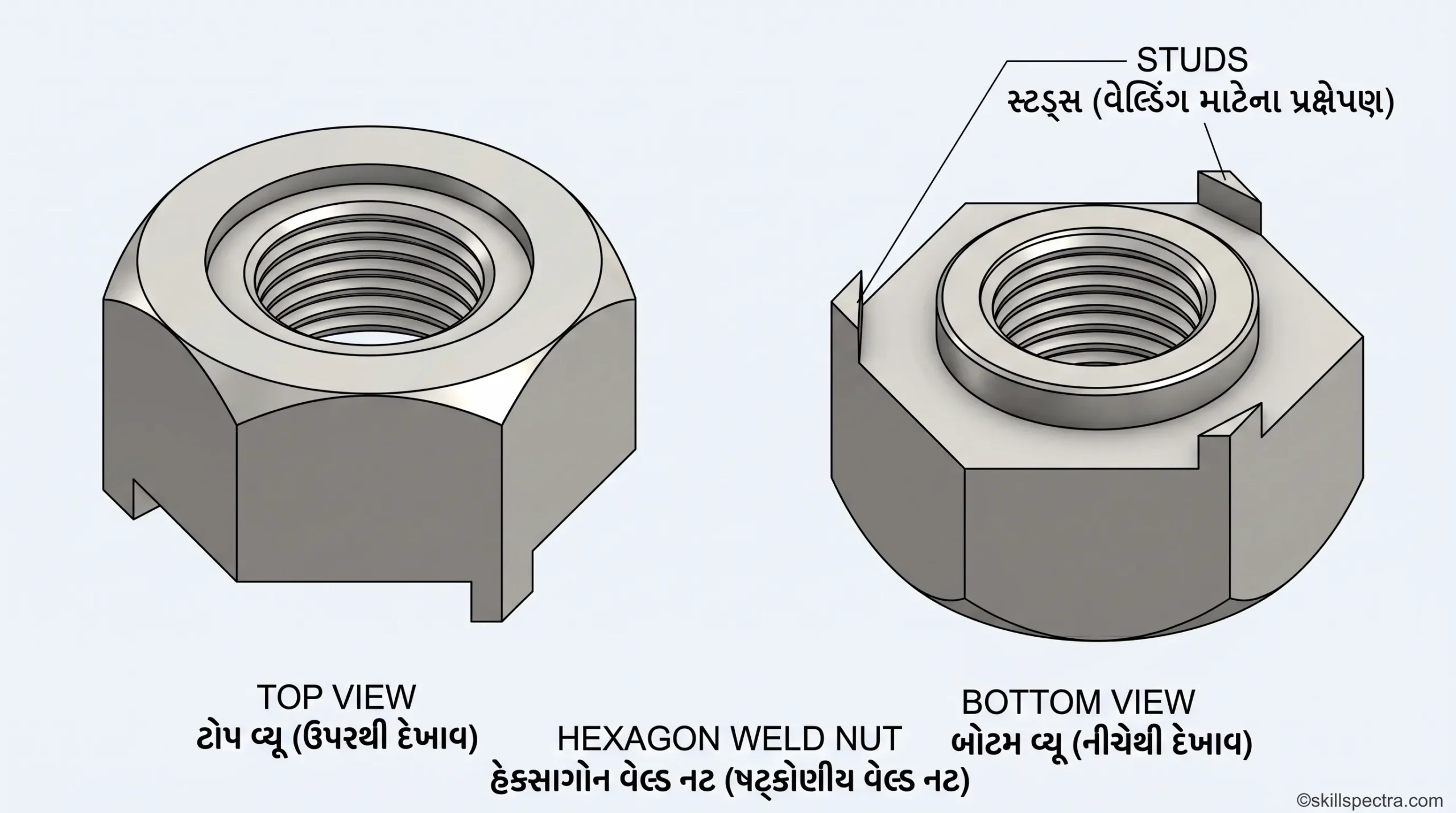
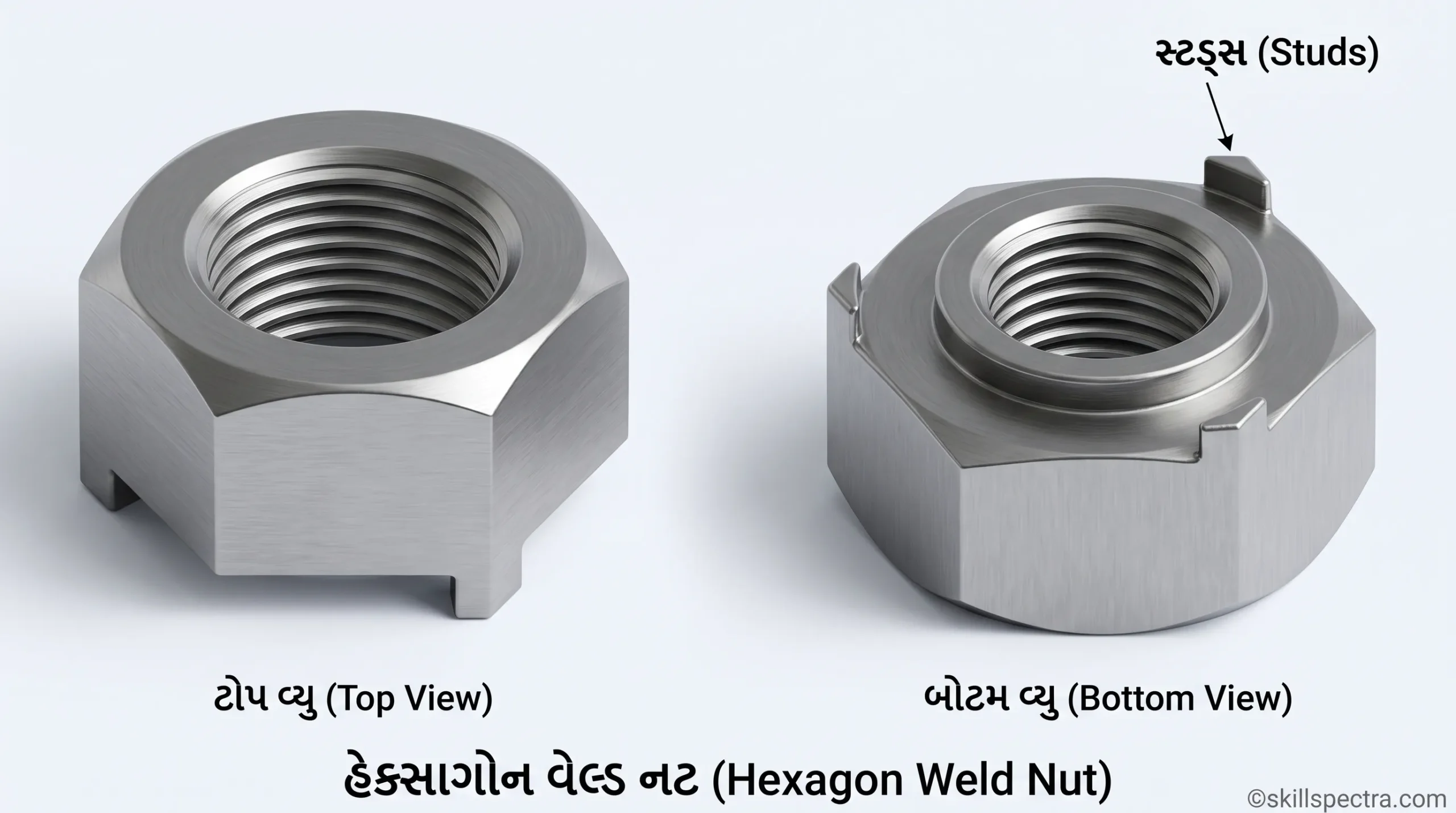
Hexagonal weld nuts (Fig 5): 👨🏭
These are nuts used for welding on the plate work. (આ નટ્સ પ્લેટ વર્ક પર વેલ્ડિંગ કરવા માટે વપરાય છે.)
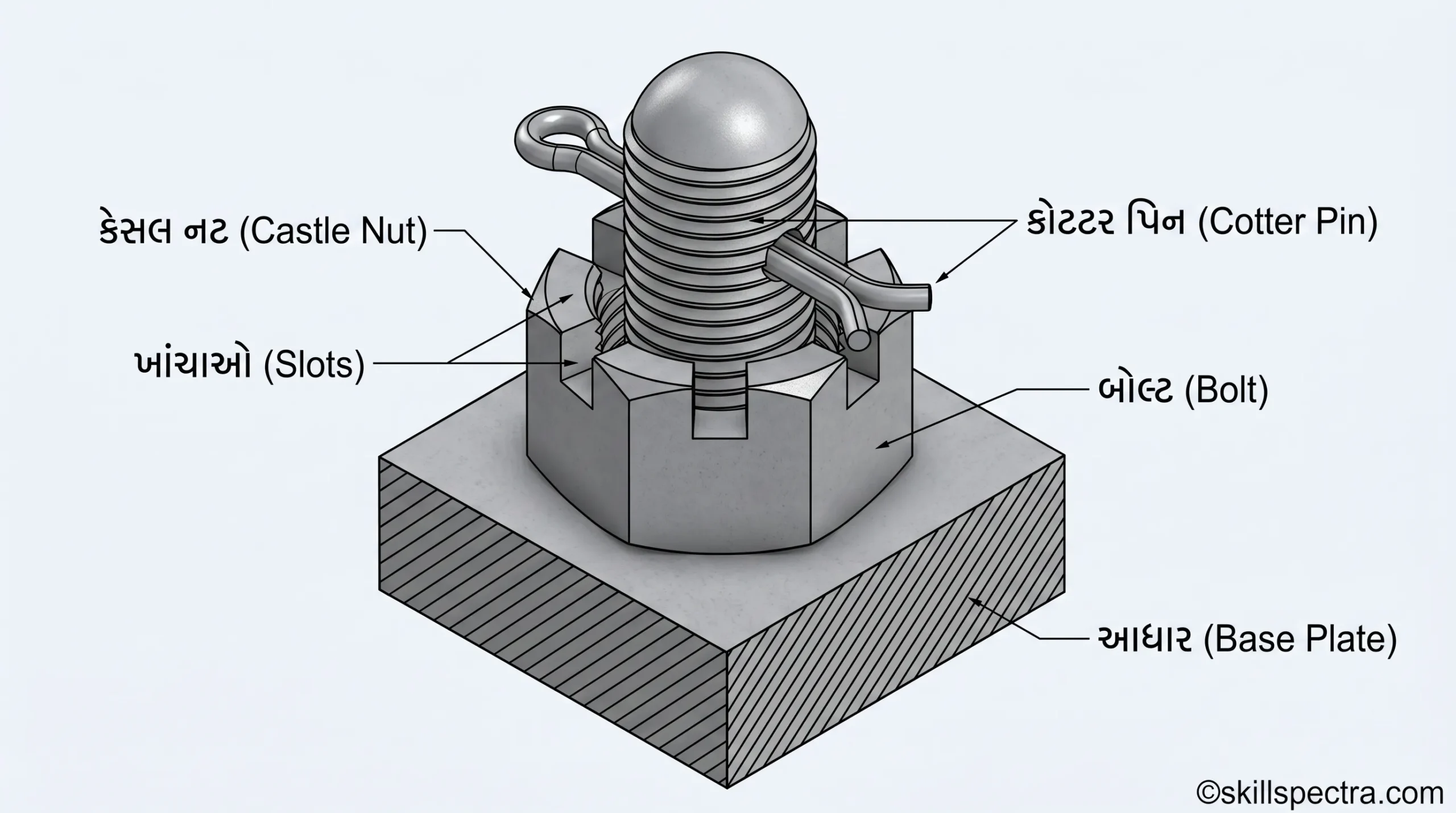
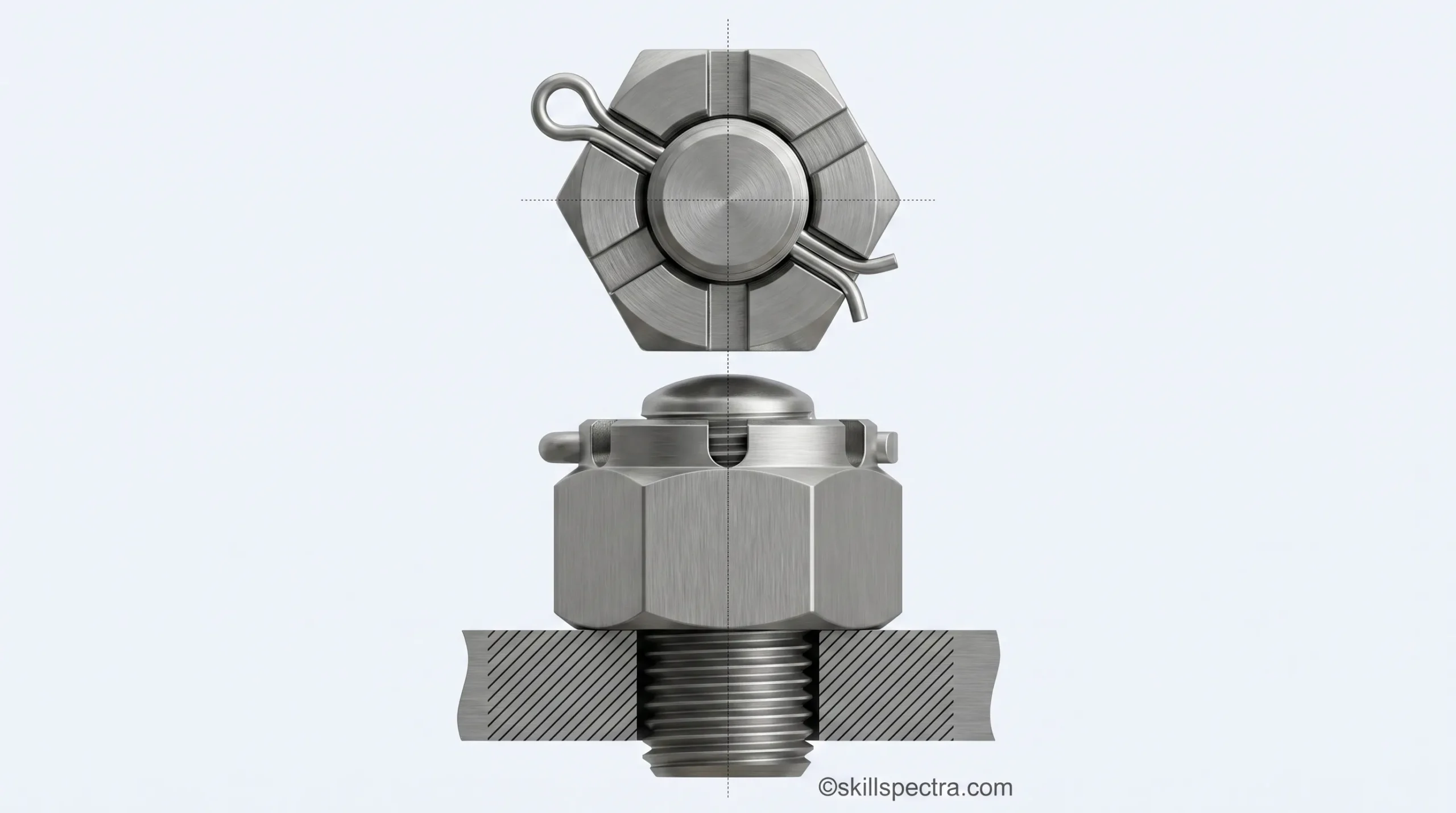
Castle nuts (Fig 6): 🏰
Castle nuts are widely used in automotives and locomotive engines to avoid sudden shock and vibration. (કેસલ નટ્સનો ઓટોમોટિવ અને એન્જિનમાં આંચકા અને વાઈબ્રેશન સામે રક્ષણ મેળવવા વ્યાપક ઉપયોગ થાય છે.)
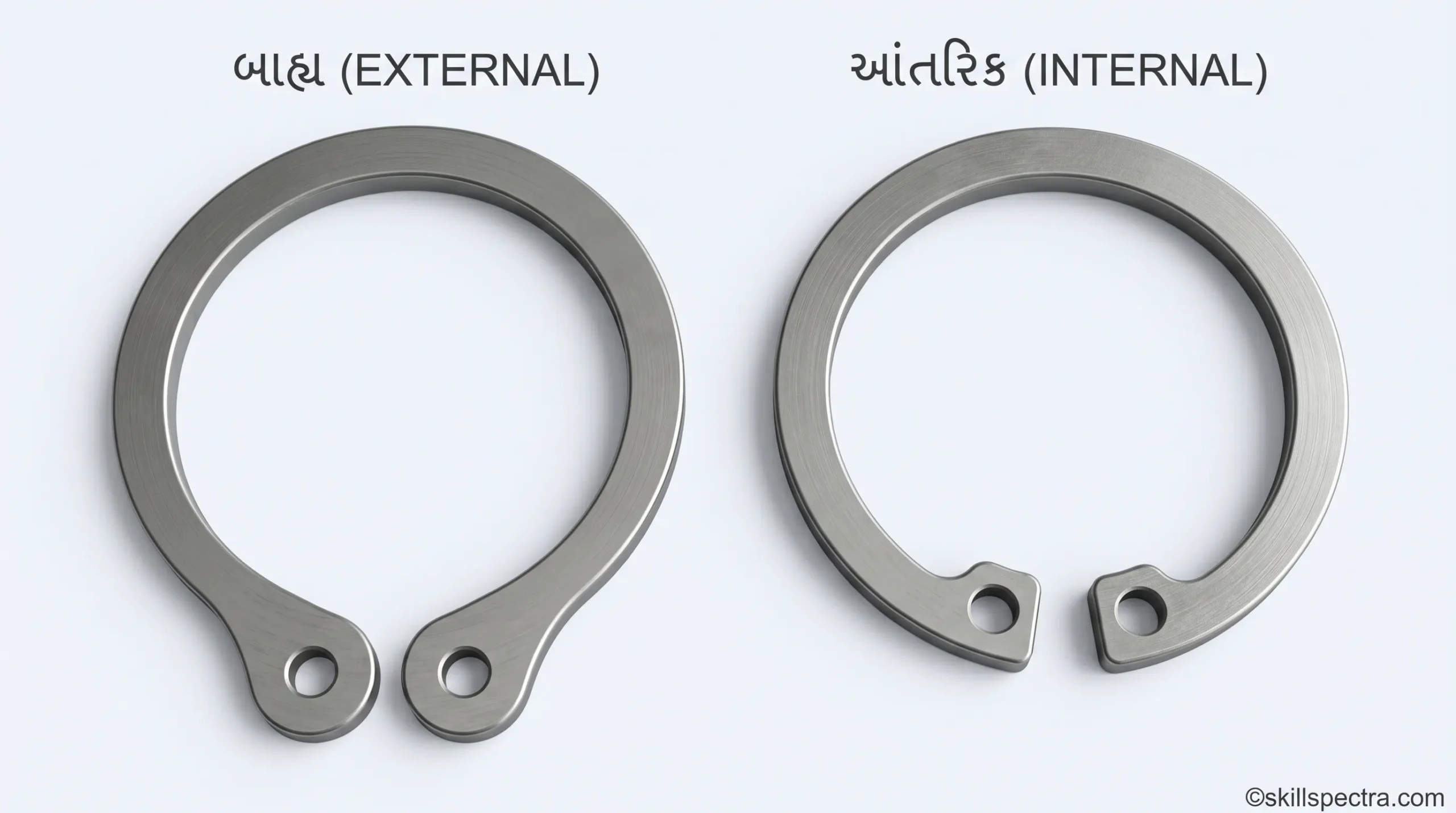
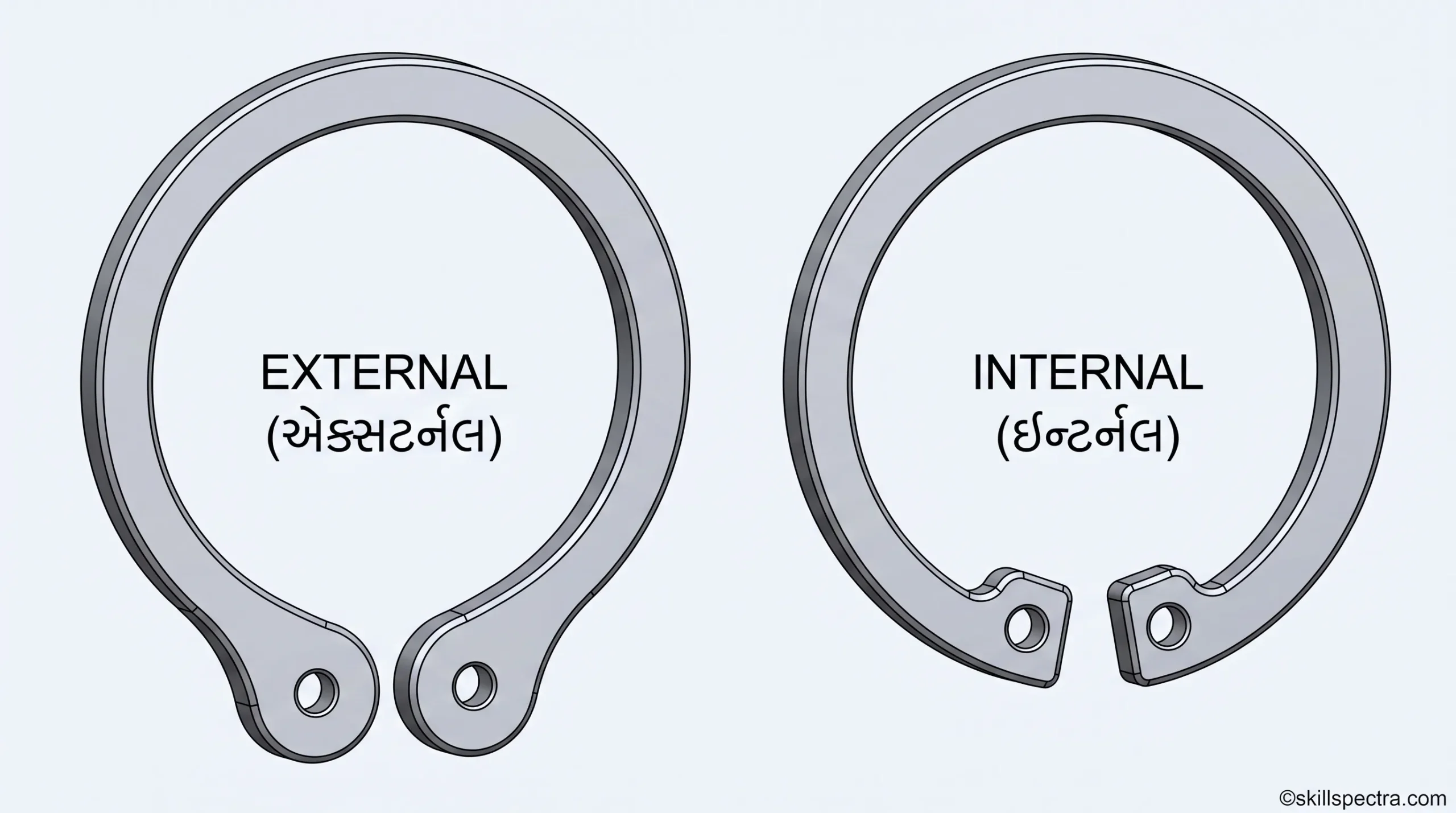
Circlip (Fig 7) 💍
These are widely used to retain the component on a shaft or in a bore. (શાફ્ટ અથવા બોર પર કમ્પોનન્ટને પકડી રાખવા માટે આનો વ્યાપક ઉપયોગ થાય છે.) Seating of these circlips in a slot by using a special type of pliers facilitates rapid assembly and disassembly. (સ્પેશિયલ પ્લાયરની મદદથી તેને સ્લોટમાં બેસાડવાથી એસેમ્બલી ઝડપી બને છે.)
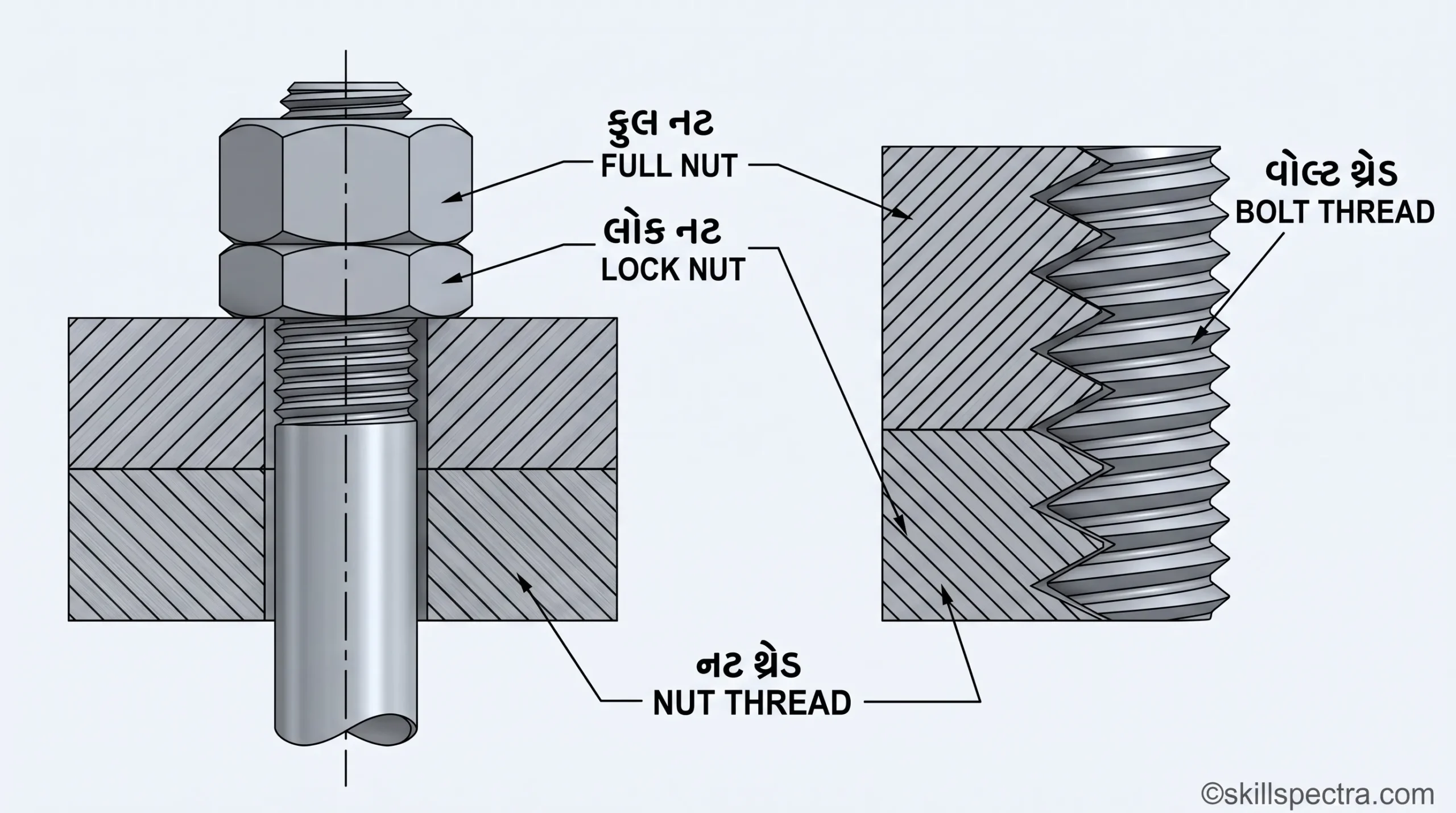
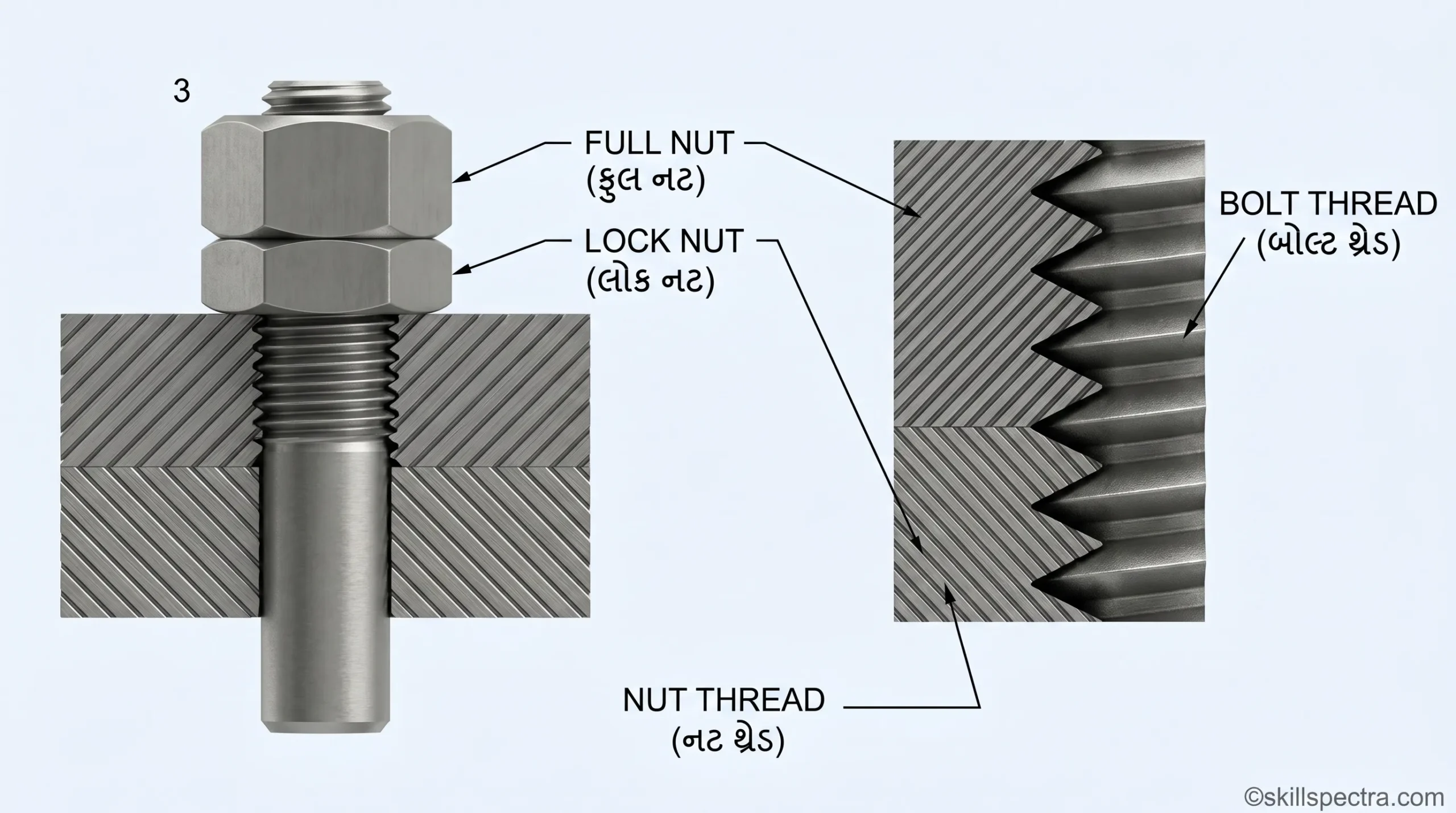
Chuck nut (Fig 8) 🔩🔩
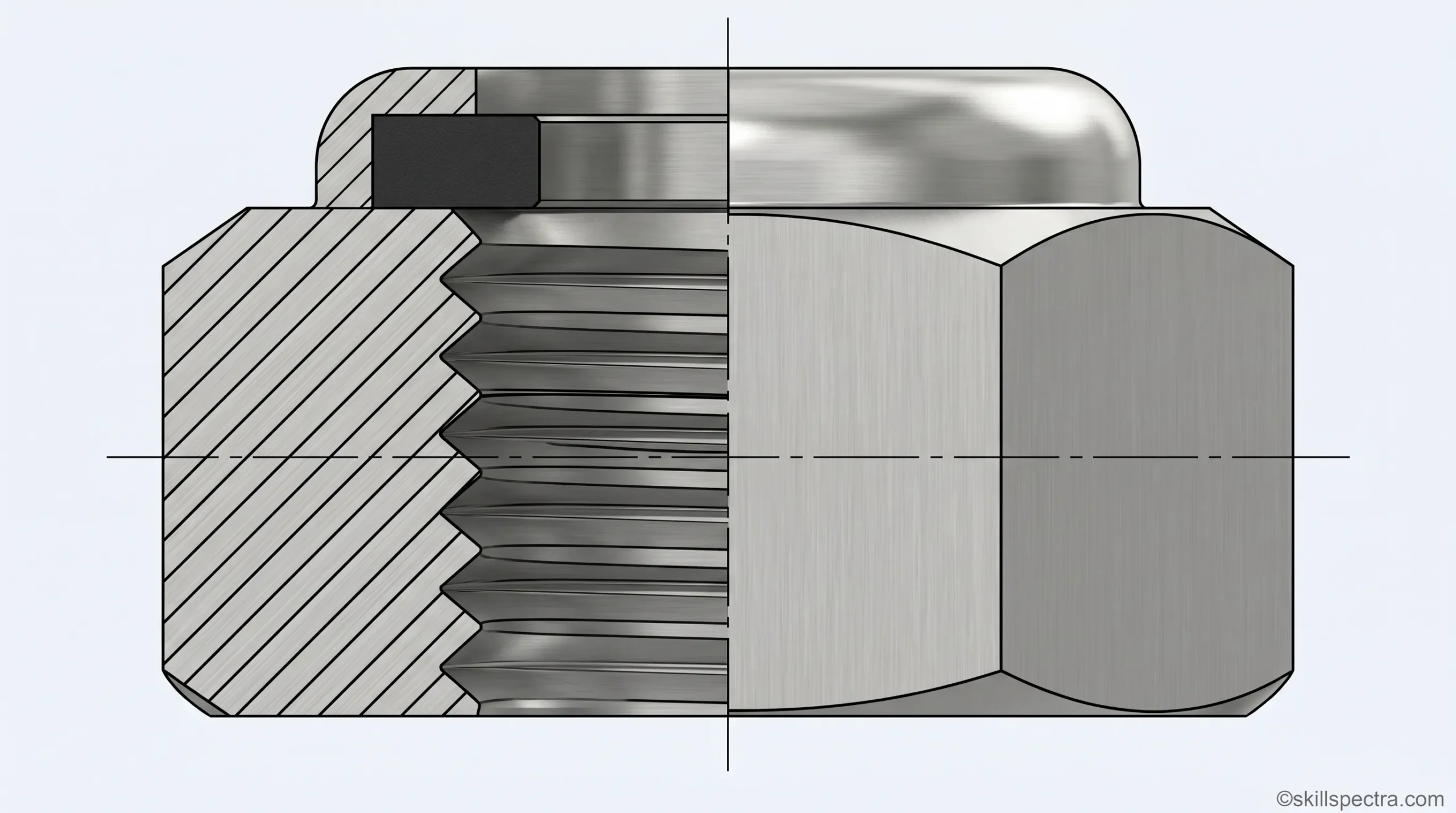
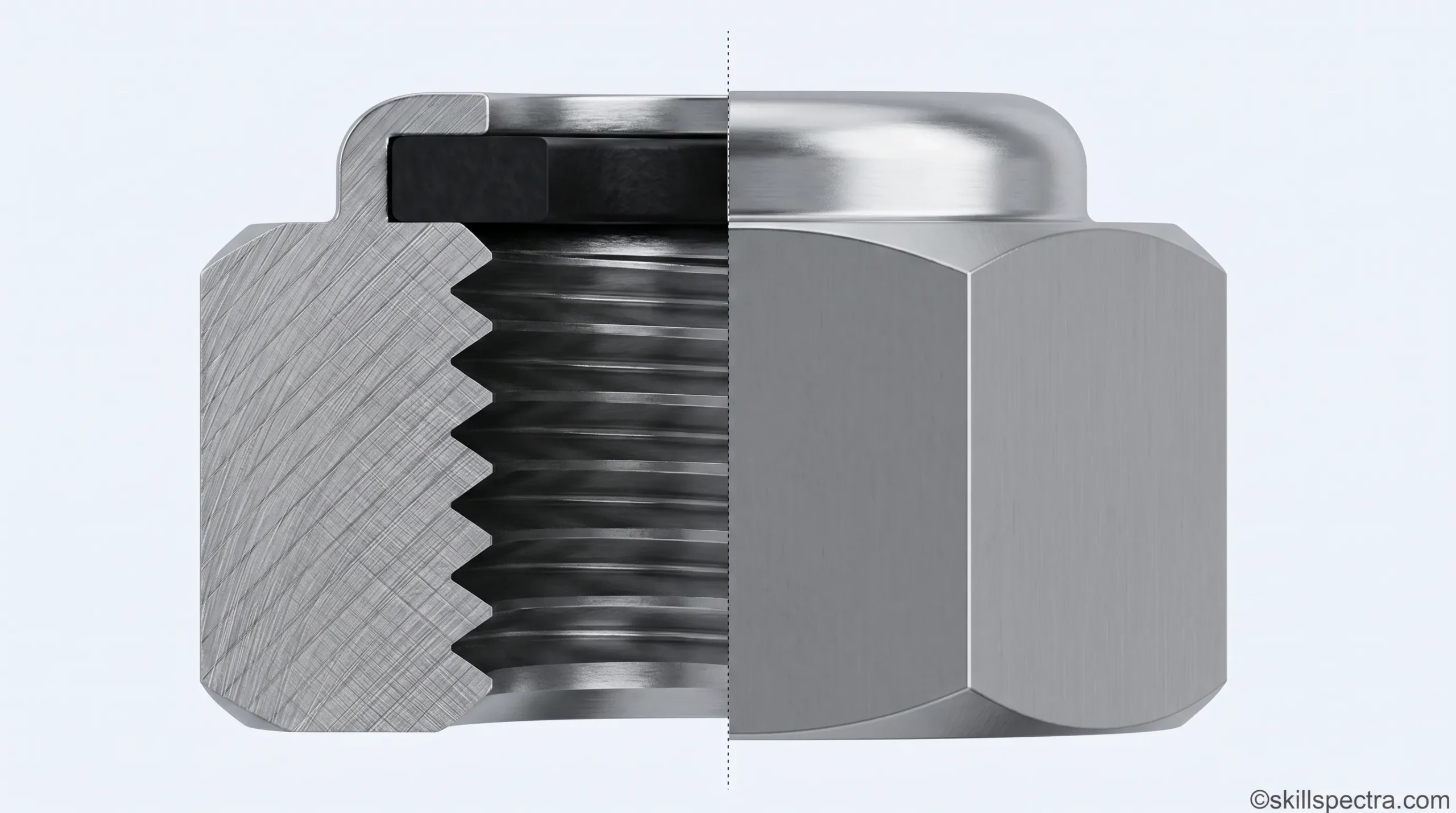
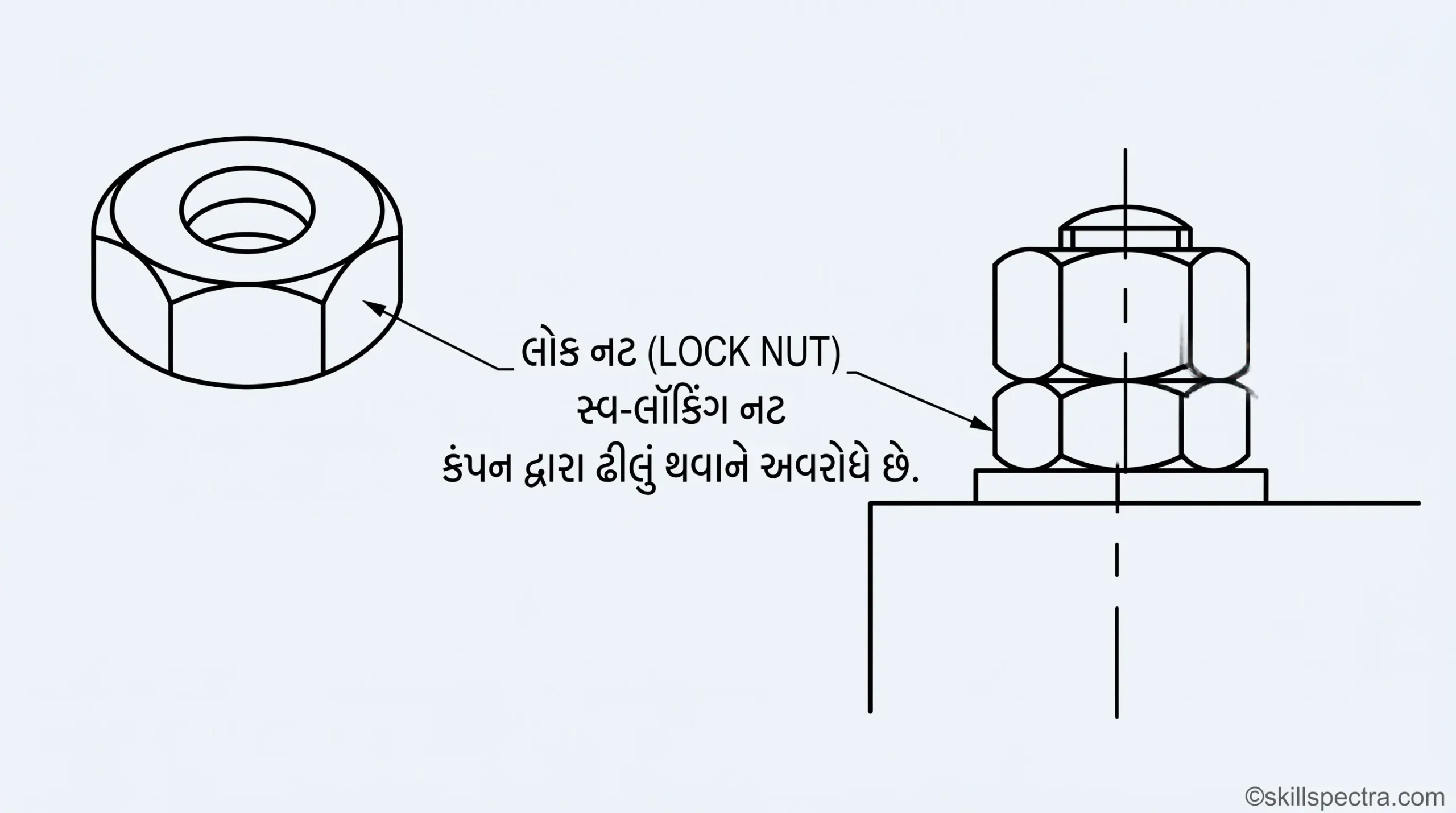
Self-locking nut (Fig 9) 🔒🔩
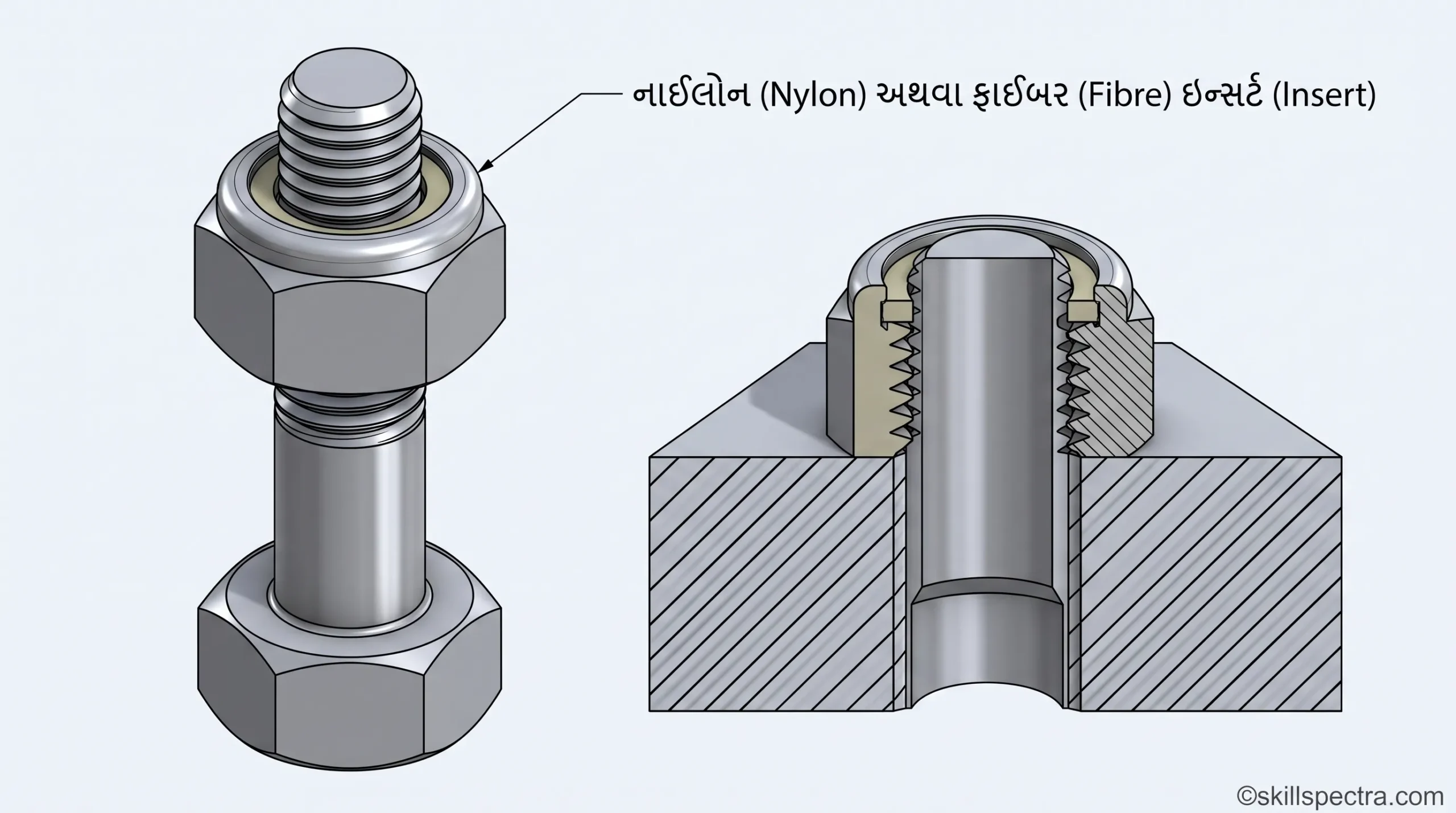
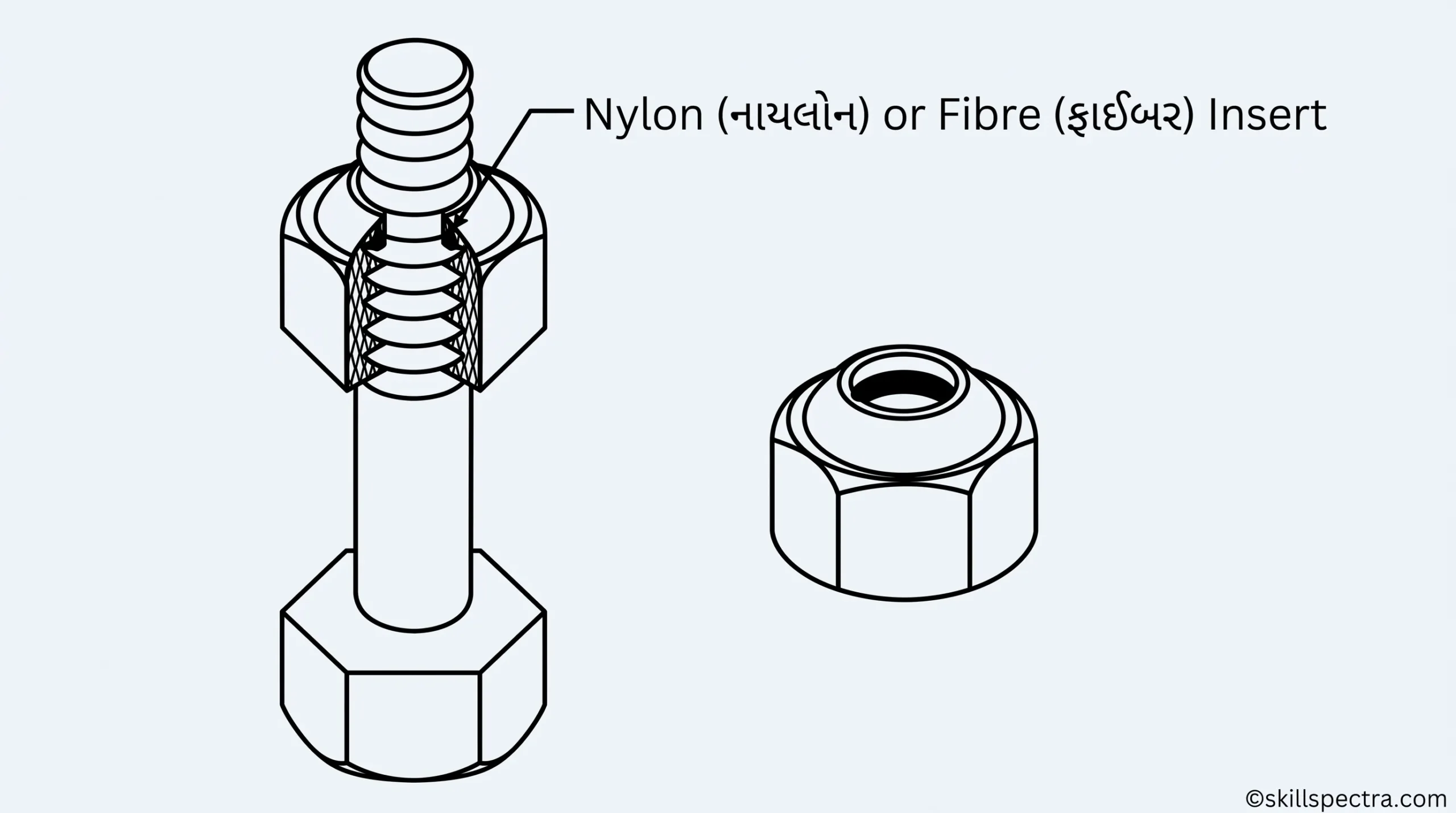
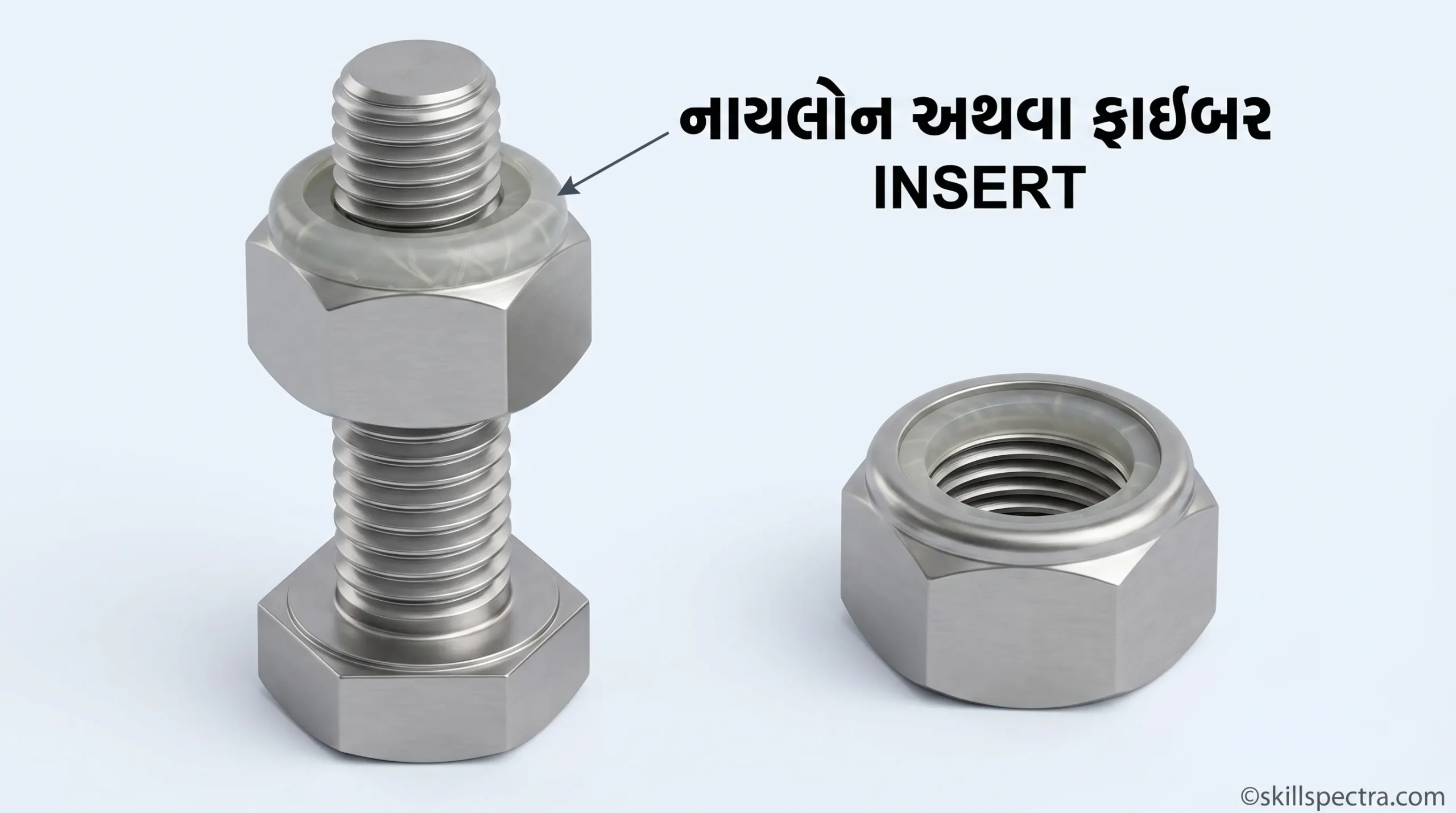
Self-locking nut will have a nylon insert to prevent the loosening of the nut from shock, vibration and temperature. (સેલ્ફ-લોકિંગ નટમાં નાયલોન ઇન્સર્ટ હોય છે જે શોક, વાઈબ્રેશન અને તાપમાનને કારણે નટને ઢીલો પડતો અટકાવે છે.)
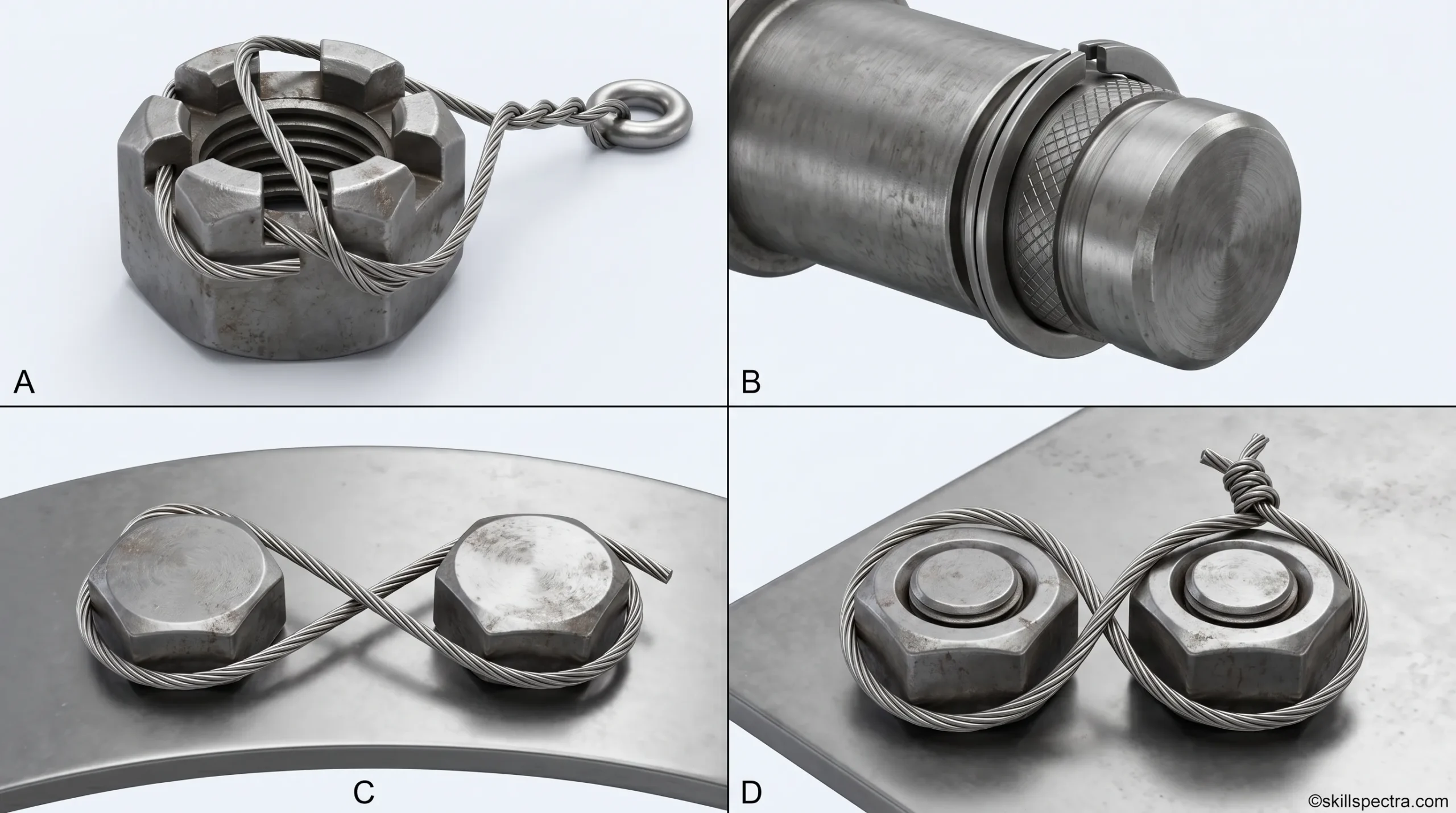
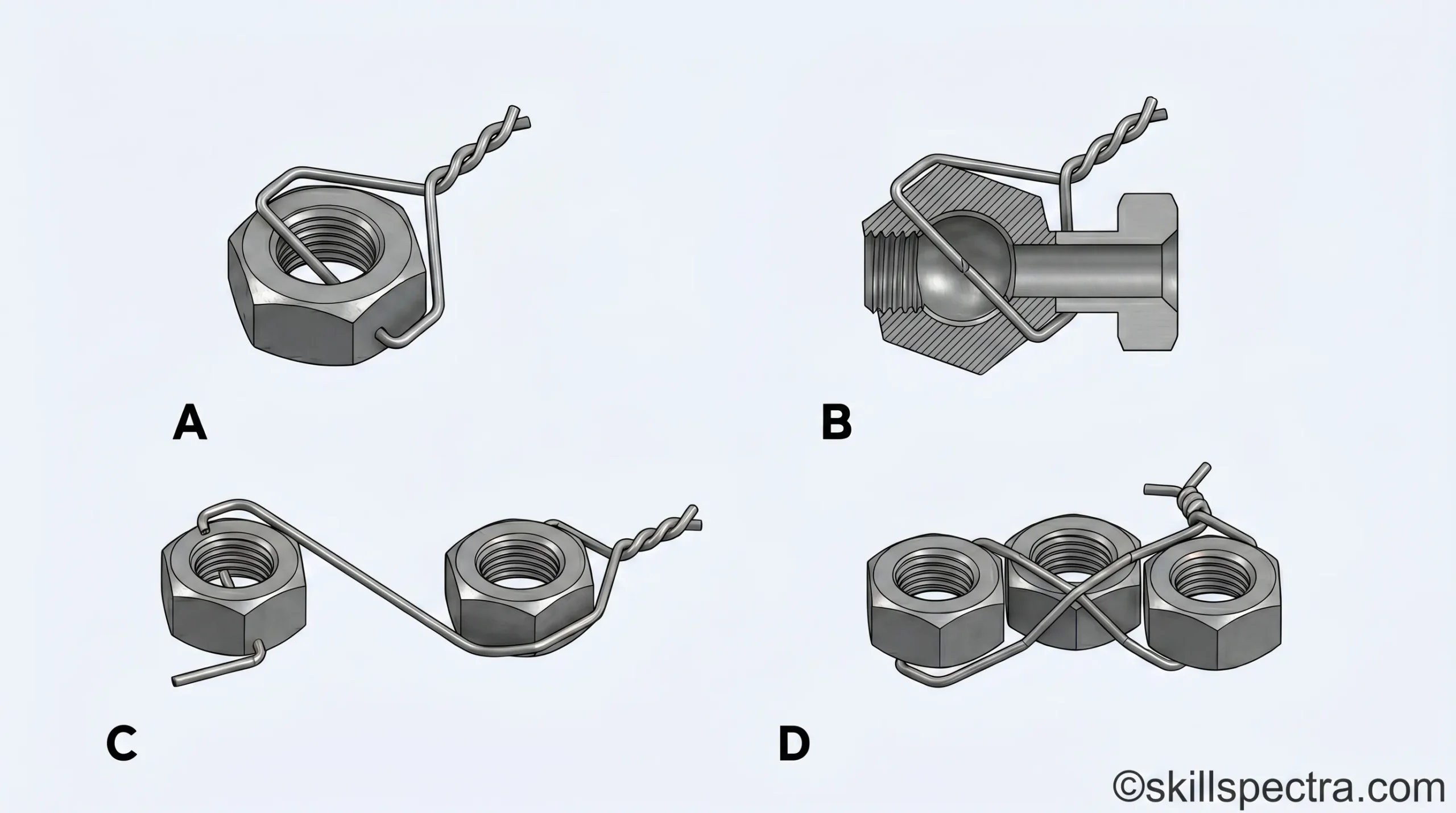
Wire lock (Fig 10) 🧶
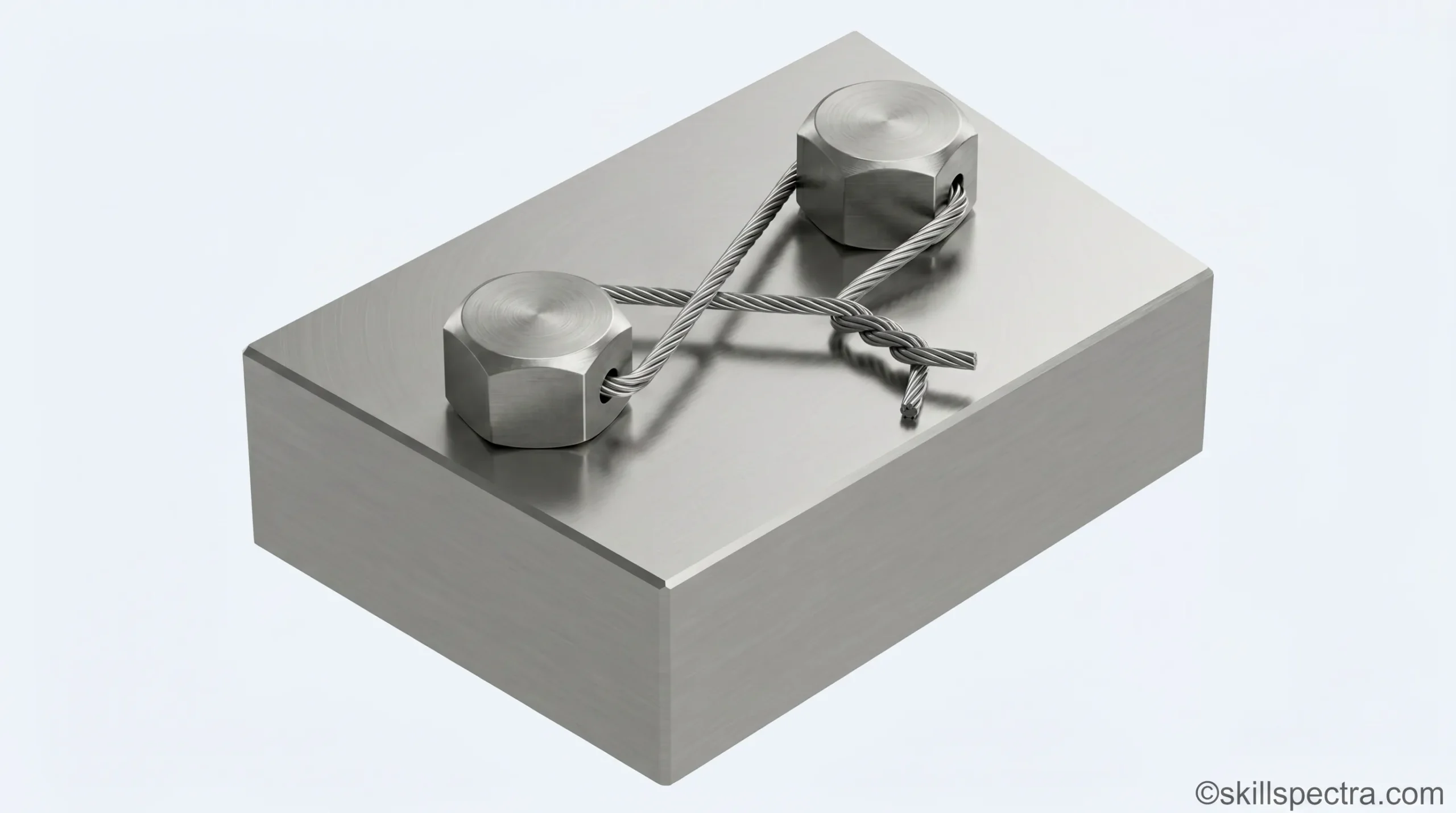
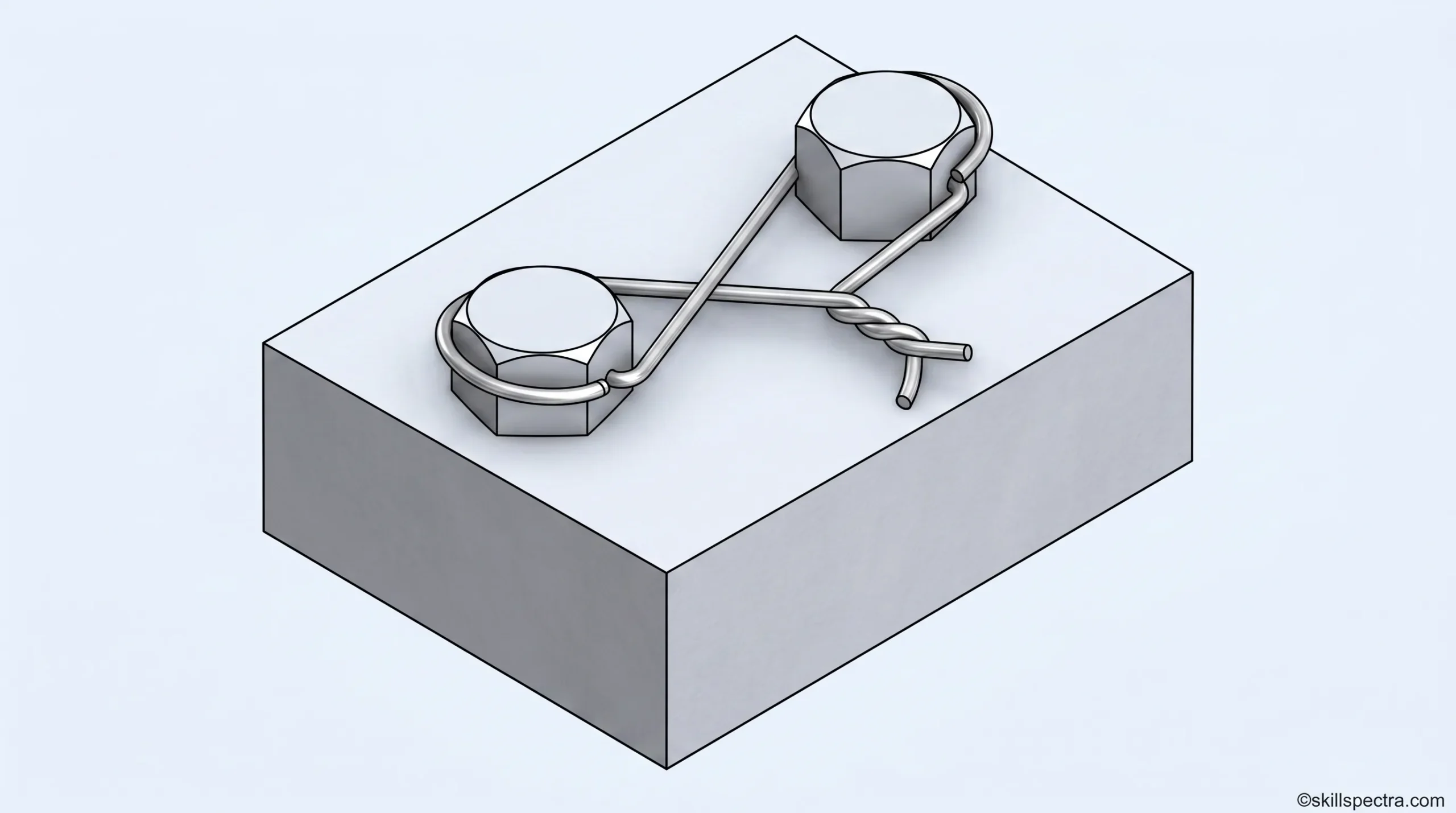
Wire locks are used for light engineering works. (વાયર લોક હળવા એન્જિનિયરિંગ કામો માટે વપરાય છે.) The wire is passed through the groove. (વાયરને ગ્રુવમાંથી પસાર કરવામાં આવે છે.)
Nut applied with a sealant 🧴
These locking devices are for permanent locking in light works. (આ લોકિંગ ડિવાઈસ હળવા કામમાં કાયમી લોકિંગ માટે વપરાય છે.)
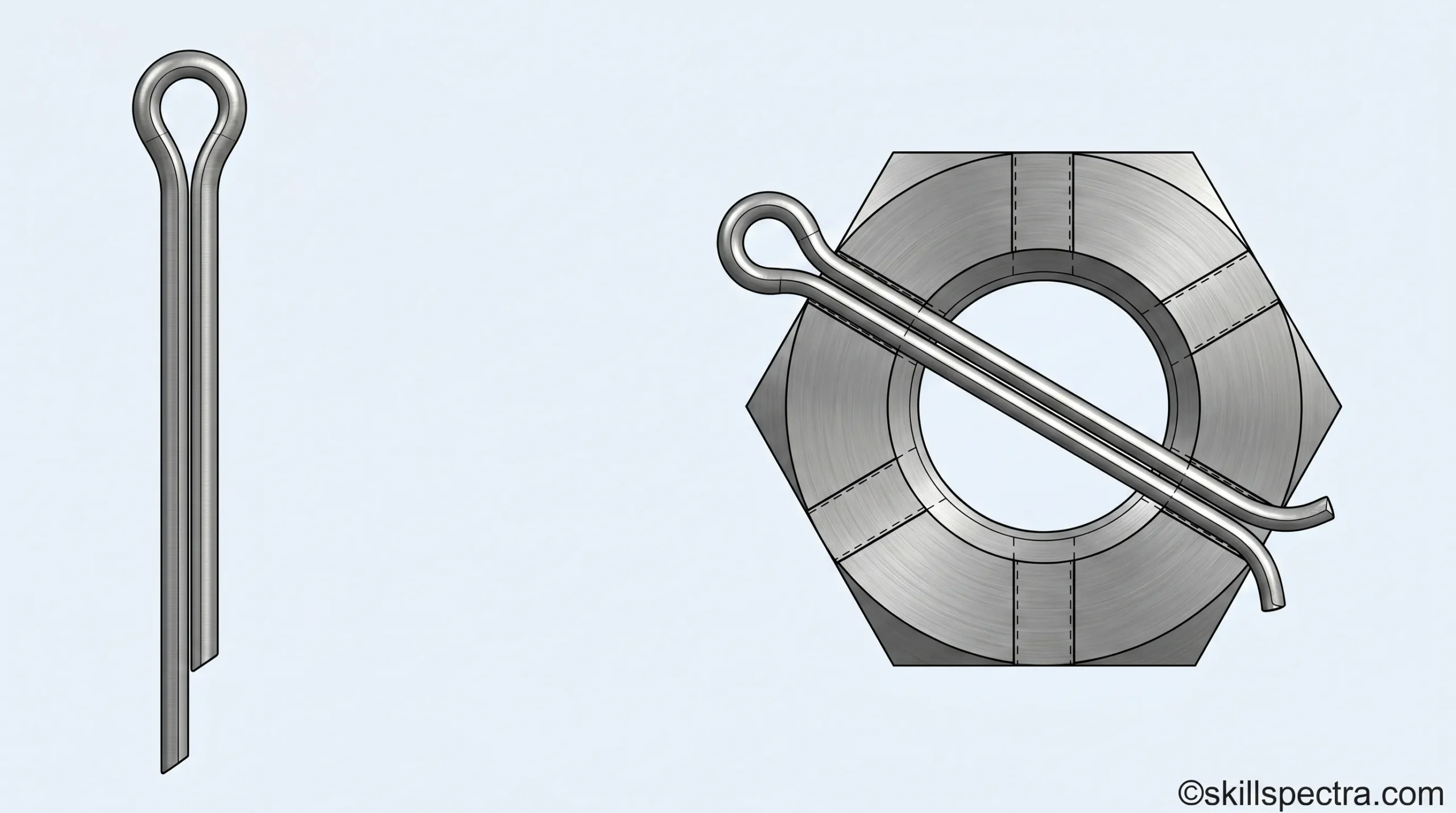
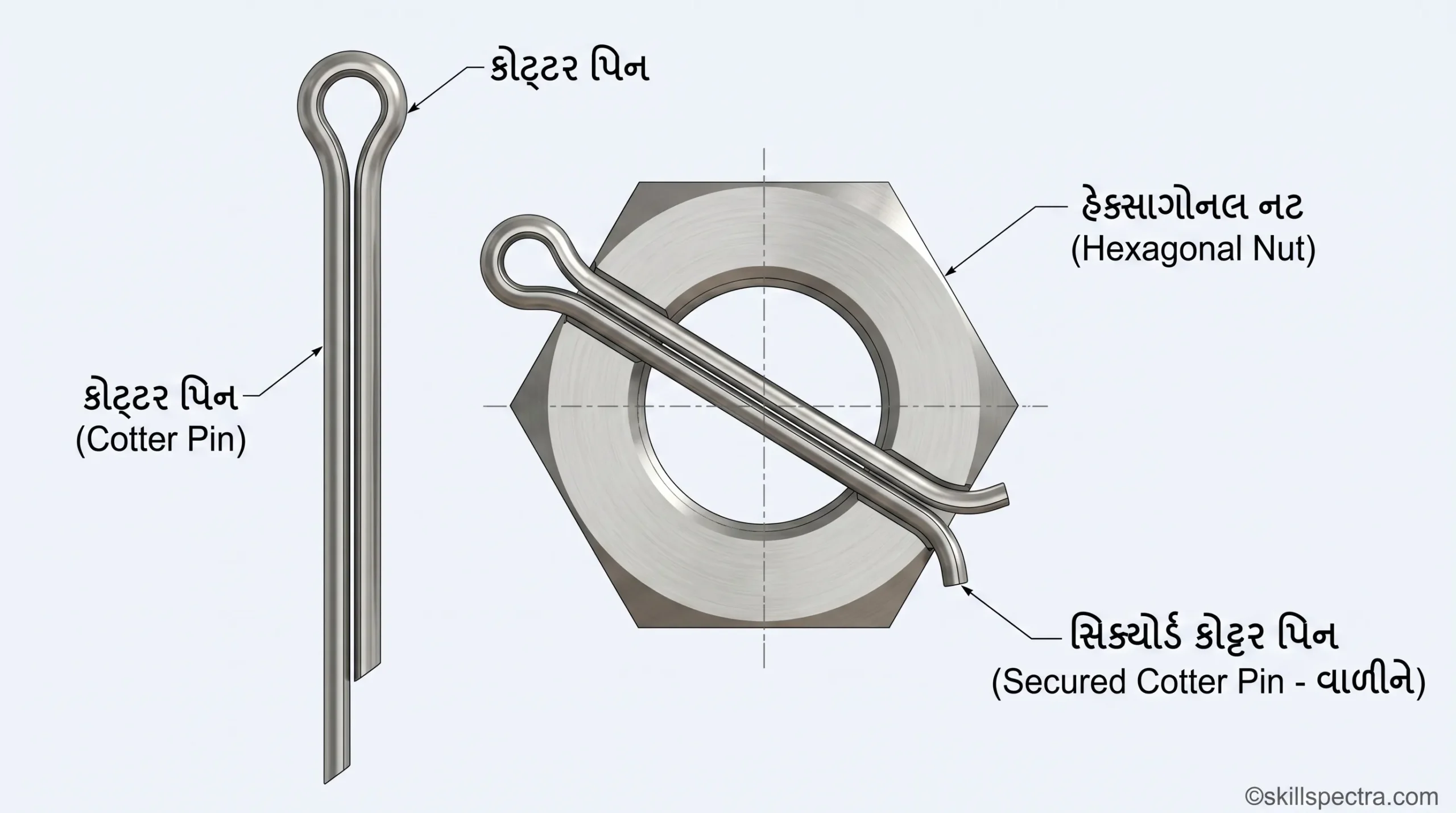
Split pin (Fig 11) 🖇️
A split pin is made from a steel wire of semicircular cross section. (સ્પ્લિટ પિન અર્ધવર્તુળાકાર ક્રોસ સેક્શનવાળા સ્ટીલ વાયરમાંથી બનેલી હોય છે.) It is inserted in a hole drilled in the bolt so that it exerts pressure on the top face of the nut to prevent it from turning. (તેને બોલ્ટમાં પાડેલા હોલમાં નાખવામાં આવે છે જેથી તે નટને ફરતો અટકાવવા દબાણ કરે.)
Sawn nut (Wiles nut) 🪚
In this locking device, a slot is cut half way across the nut. (આ લોકિંગ ડિવાઈસમાં નટની વચ્ચે અડધે સુધી સ્લોટ કાપવામાં આવે છે.) Tightening of the nut provides positive locking for the nut. (નટને ટાઈટ કરવાથી પોઝિટિવ લોકિંગ મળે છે.)
Positive locking device (Fig 12) ✅
In the positive locking device, the locking action is positive. (પોઝિટિવ લોકિંગ ડિવાઈસમાં લોકિંગની ક્રિયા ચોક્કસ હોય છે.) This locking device is difficult to fit and may take more time. (આ લોકિંગ ડિવાઈસ ફિટ કરવું મુશ્કેલ છે અને વધુ સમય લઈ શકે છે.) But it is very essential to use this type of locking device in critical joints where failure could cause serious accidents. (પરંતુ જટિલ જોઈન્ટ્સમાં જ્યાં નિષ્ફળતા ગંભીર અકસ્માત સર્જી શકે, ત્યાં આનો ઉપયોગ અત્યંત જરૂરી છે.)
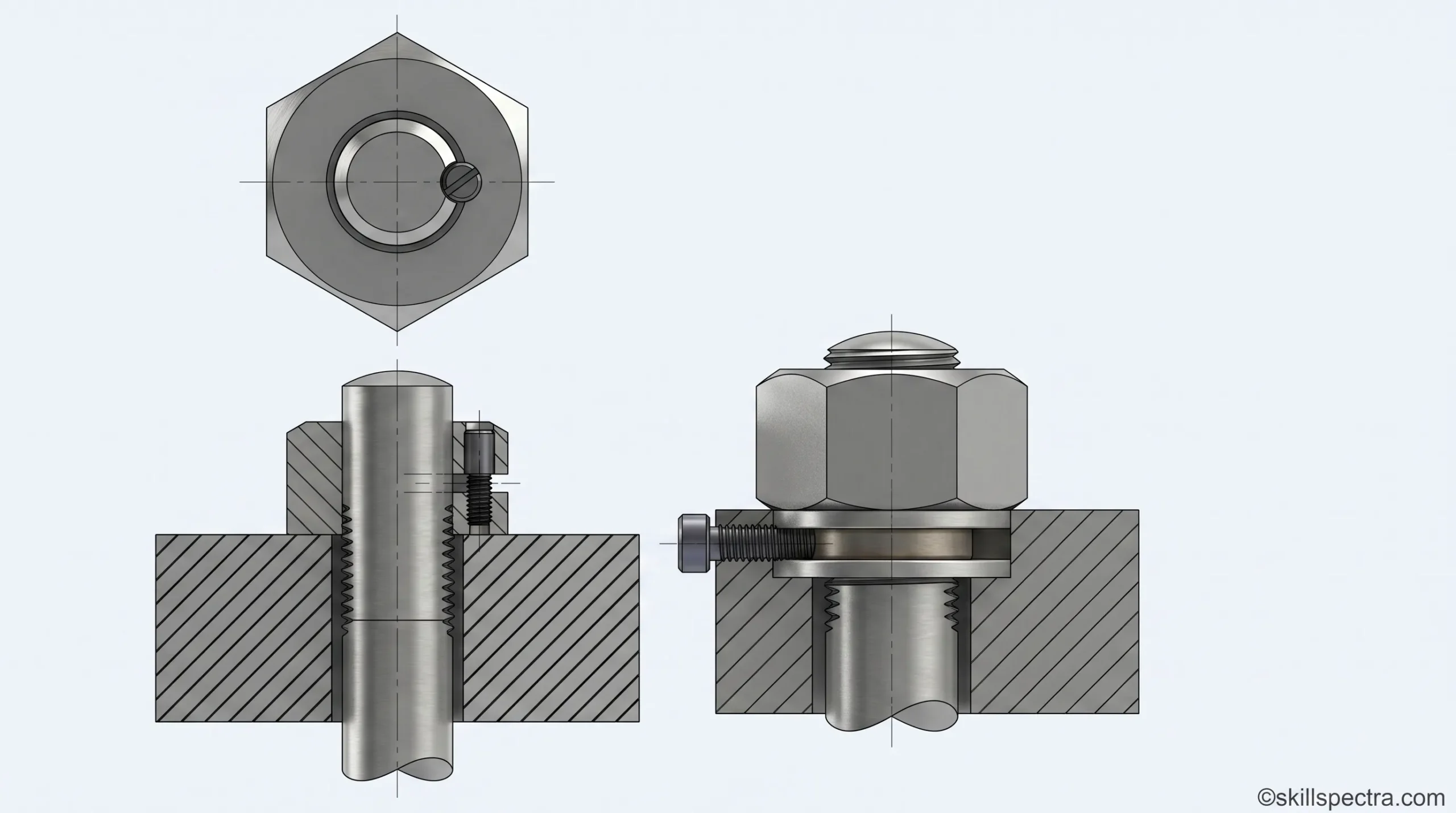
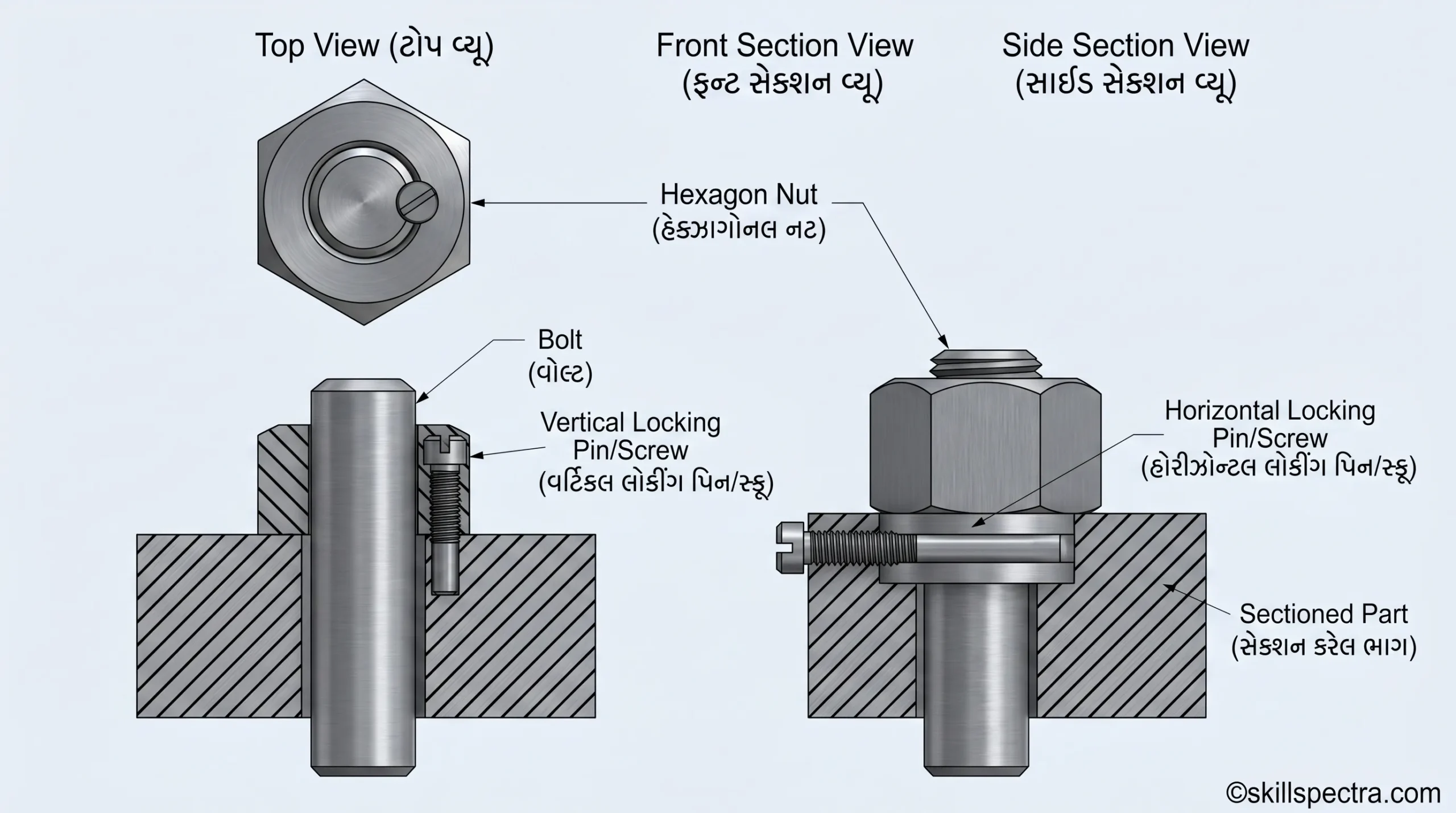
Eg. Clutches, brakes, controls etc. (દા.ત. ક્લચ, બ્રેક્સ, કંટ્રોલ્સ વગેરે.)
The positive locking devices are:
- Standard hexagonal nut, cross-drilled and pinned.
- Standard slotted nut.
- Standard castle nut.
- Hexagonal nut and locking plate.
- Wiring bolt heads.
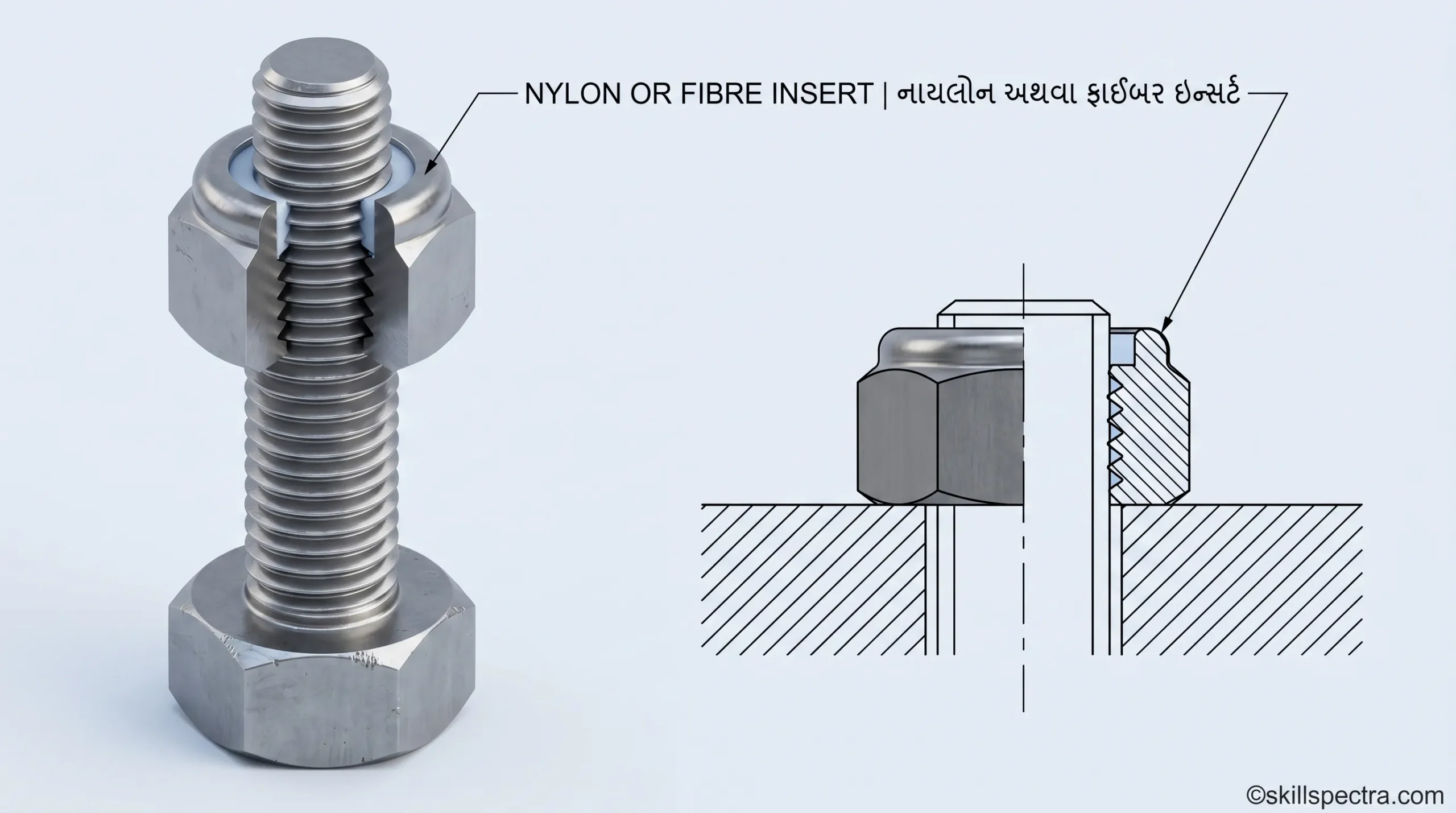
⚙️ Frictional locking devices (Fig 13):
આ lock nuts ફીટ કરવા માટે સરળ છે અને ઓછો સમય લે છે. frictional locking devices માં નીચેનાનો સમાવેશ થાય છે:
- Lock-nut (chuck nut)
- Wedge lock bolt
- Spring washer
- Simmonds lock-nut
- Nylon or fiber insert: આમાં નટની અંદર નાયલોન અથવા ફાઈબરનું ઇન્સર્ટ હોય છે જે બોલ્ટને મજબૂતીથી પકડી રાખે છે.
🛠️ Commonly used locking devices
1. Wing-nut (Fig 15): 🦋 Wing-nut નો ઉપયોગ ત્યાં થાય છે જ્યાં વારંવાર adjustment અથવા removal (કાઢવાની) જરૂર હોય. તેને પાના (wrench) વગર હાથથી ઝડપથી ઢીલું કે ટાઈટ કરી શકાય છે. આ નટ્સ એ જ મટિરિયલમાંથી બને છે જેમાંથી બોલ્ટ્સ બને છે.
2. Thumb-nut: 👍 Thumb-nut નો ઉપયોગ ત્યાં થાય છે જ્યાં spindle ની મૂવમેન્ટને લોક કરવાની હોય, જેમ કે micrometer માં. Spindle ની મૂવમેન્ટને અટકાવવી સાચું રીડિંગ લેવા માટે જરૂરી છે.
3. Locking ring: 💍 Locking ring નો ઉપયોગ lathes ના taper nose spindles માં chuck ને લોક કરવા માટે થાય છે.
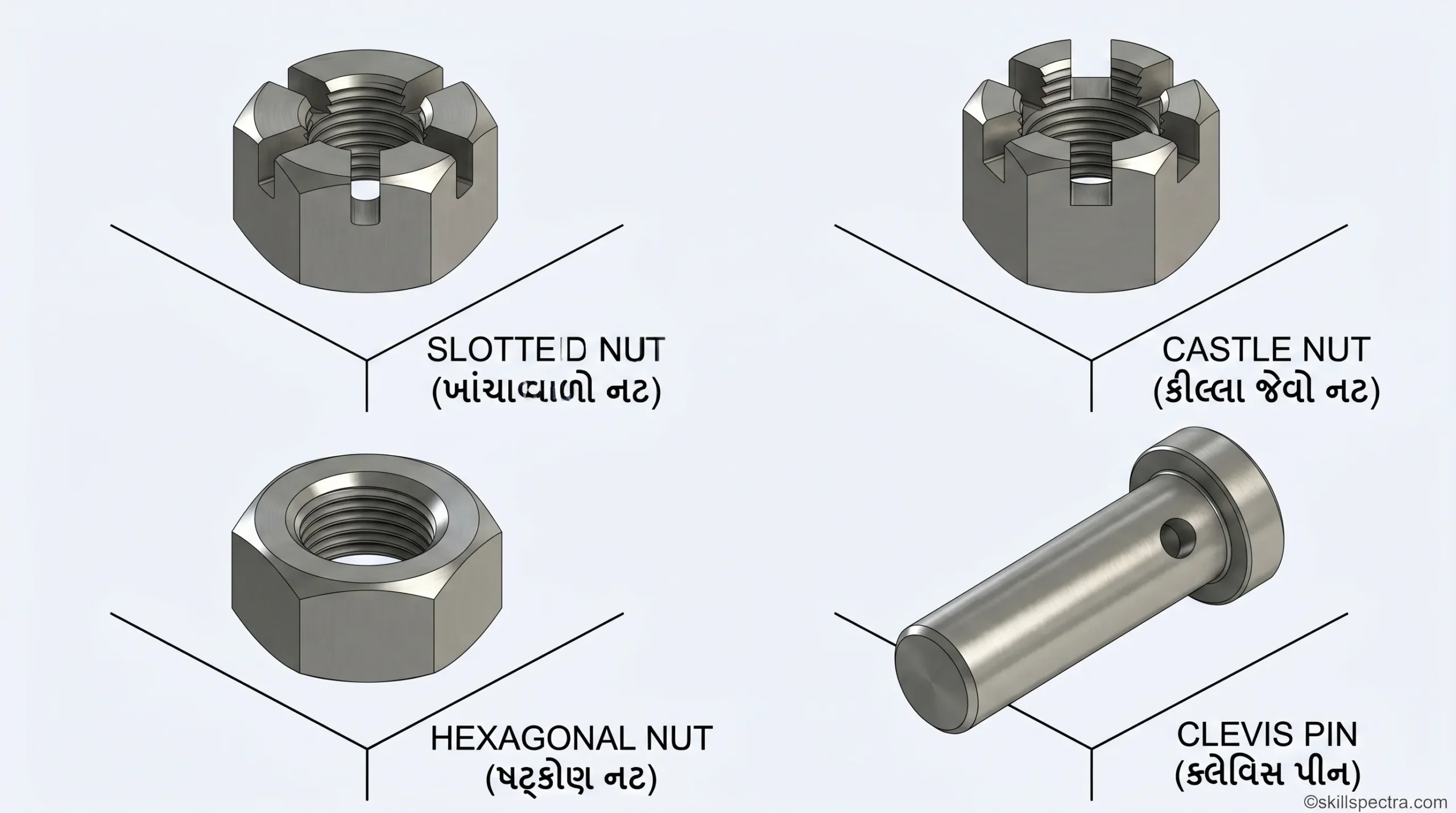
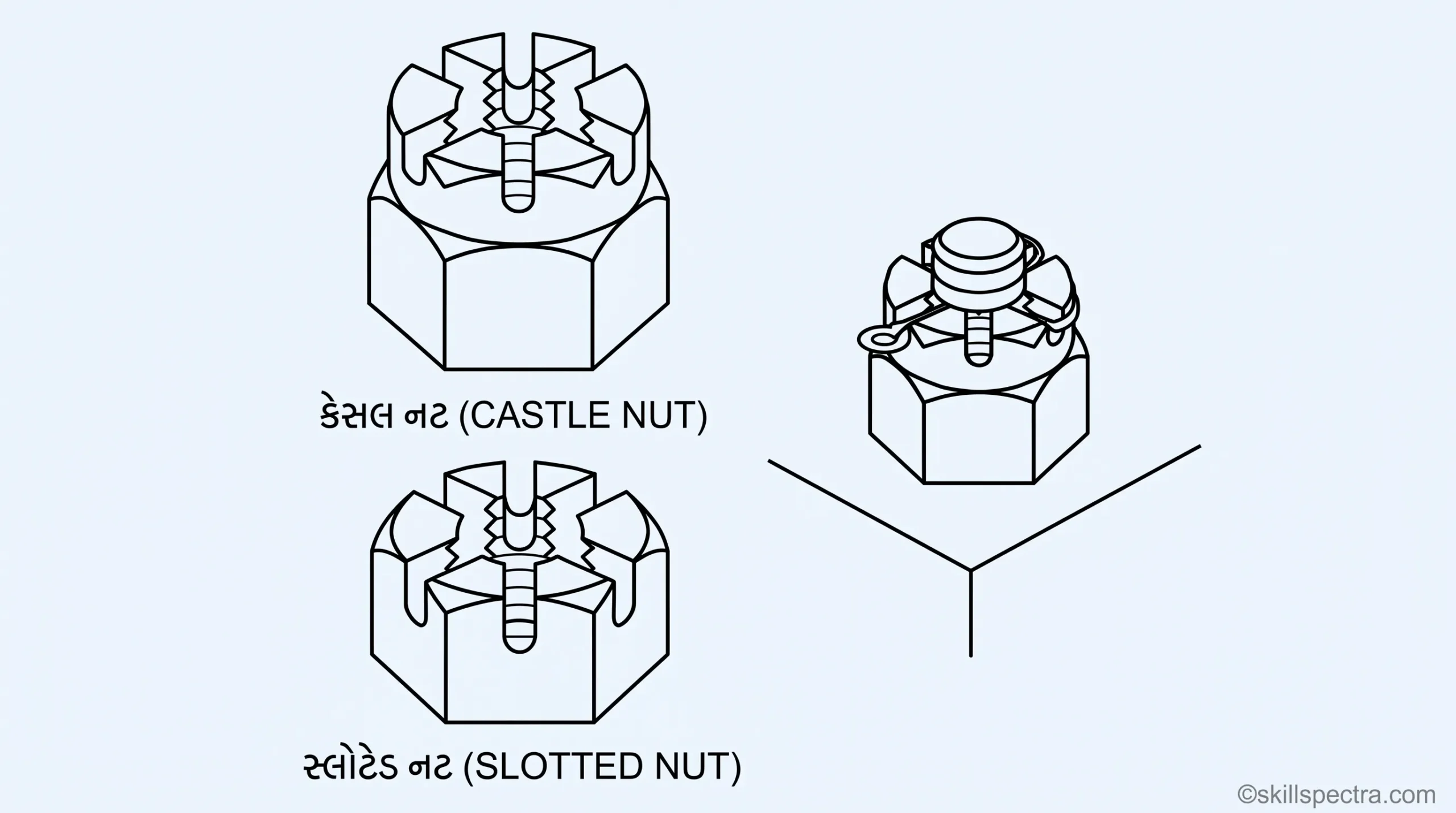
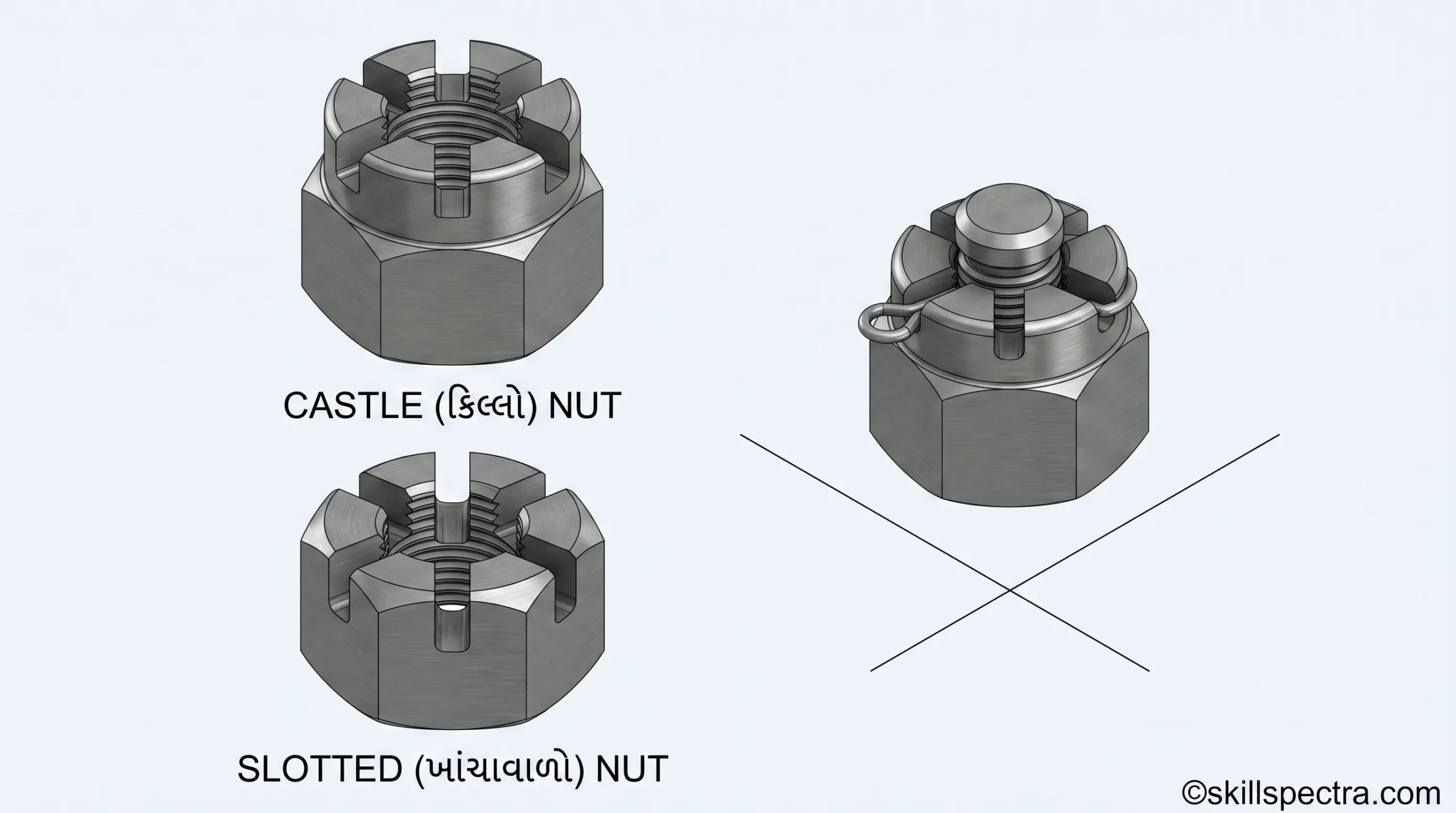
4. Castle nut (Fig 16): 🏰 Castle nut માં નટની ઉપરના નળાકાર કોલરમાં સ્લોટ્સ (slots) કાપેલા હોય છે. આ slotted nut ની ખામીઓને દૂર કરે છે અને મજબૂત લોકીંગ પૂરું પાડે છે.
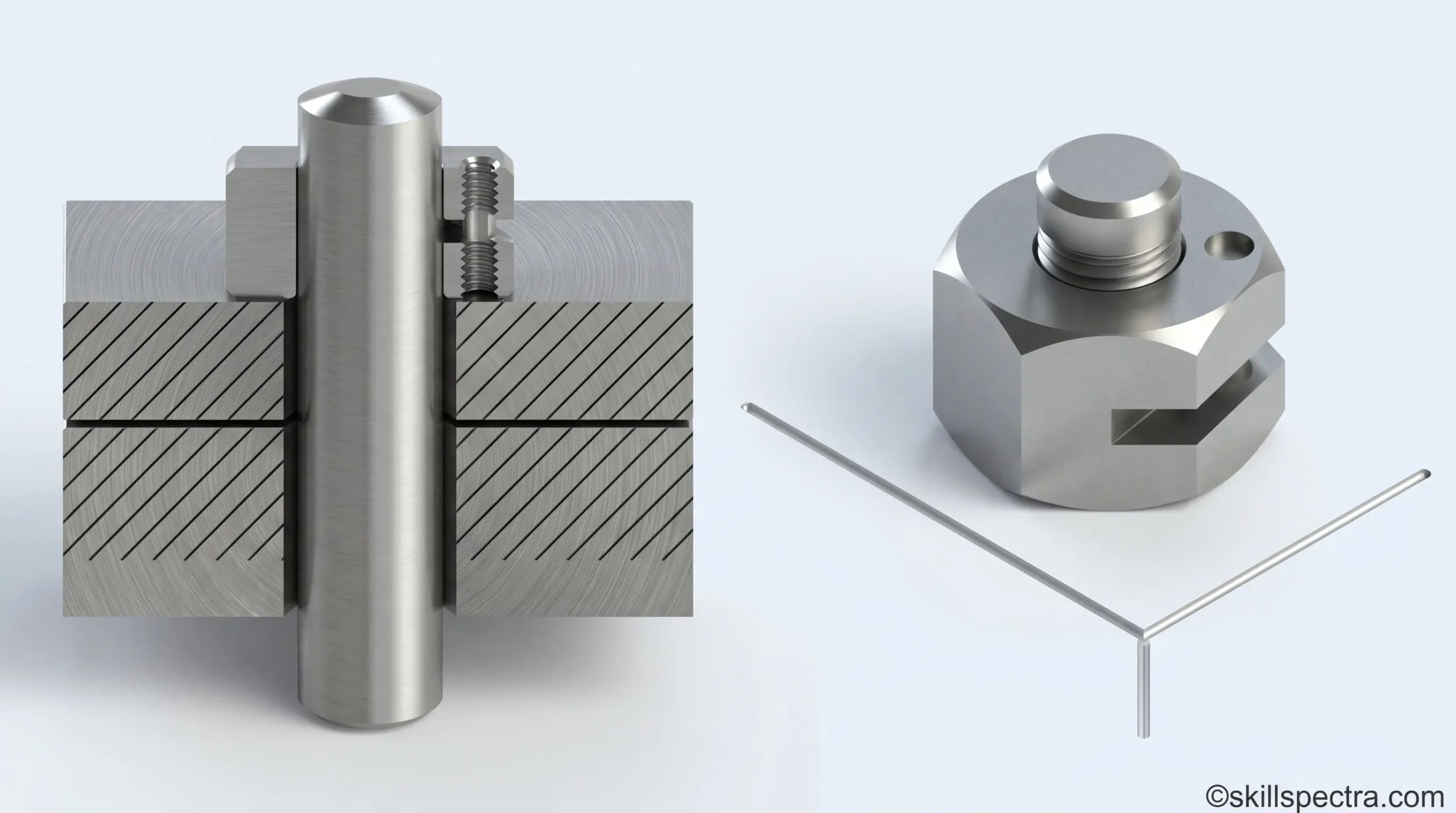
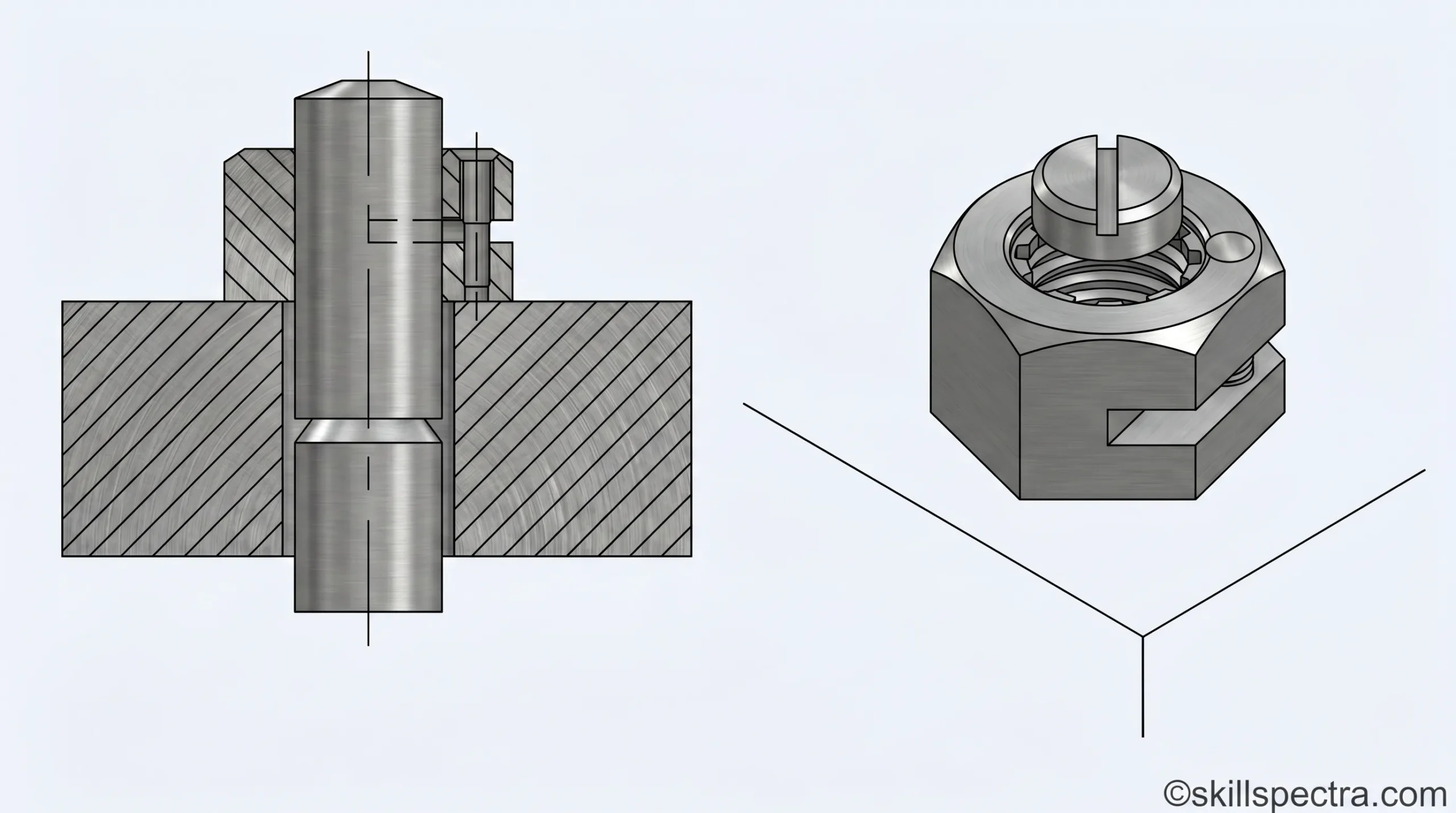
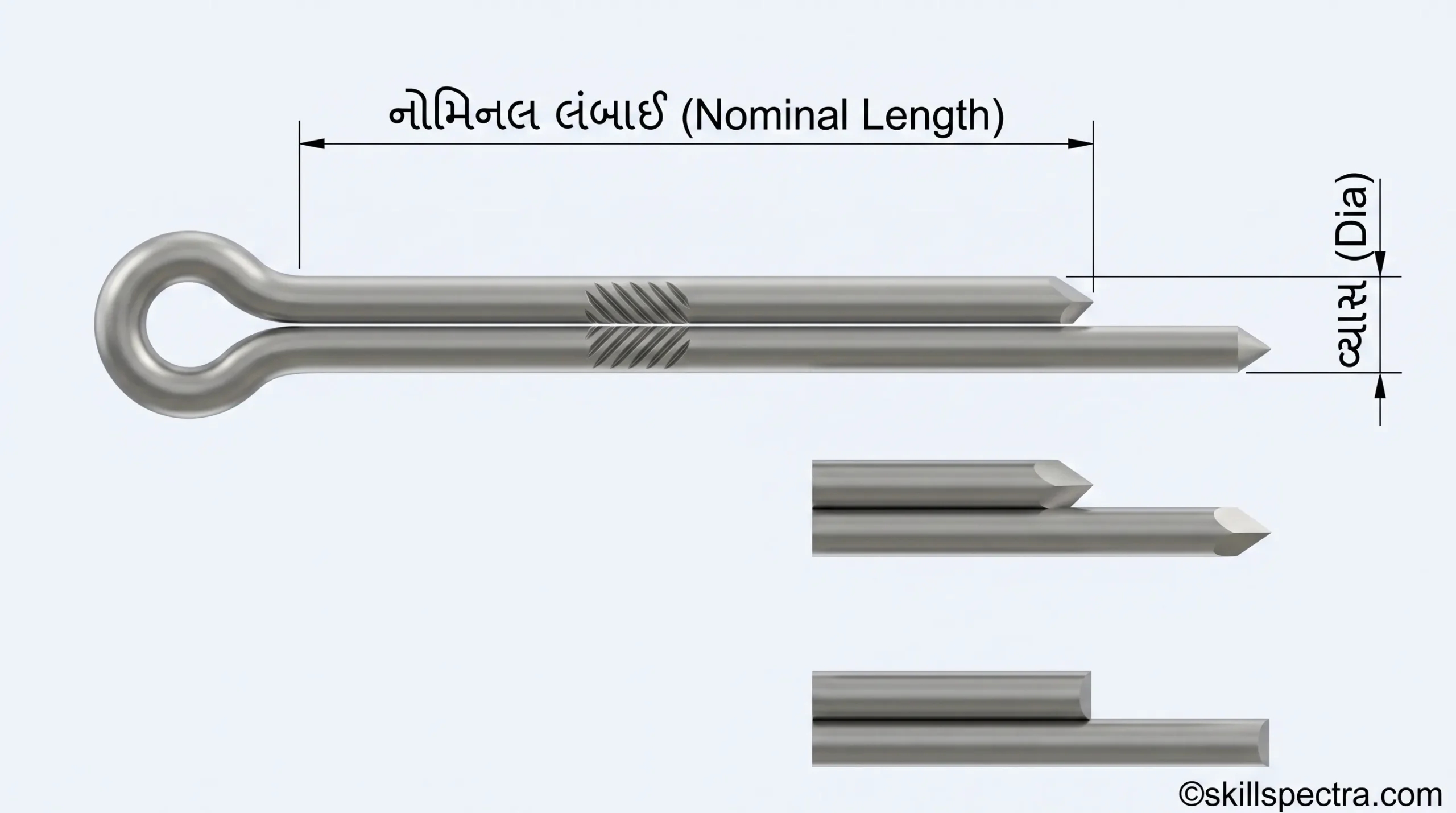
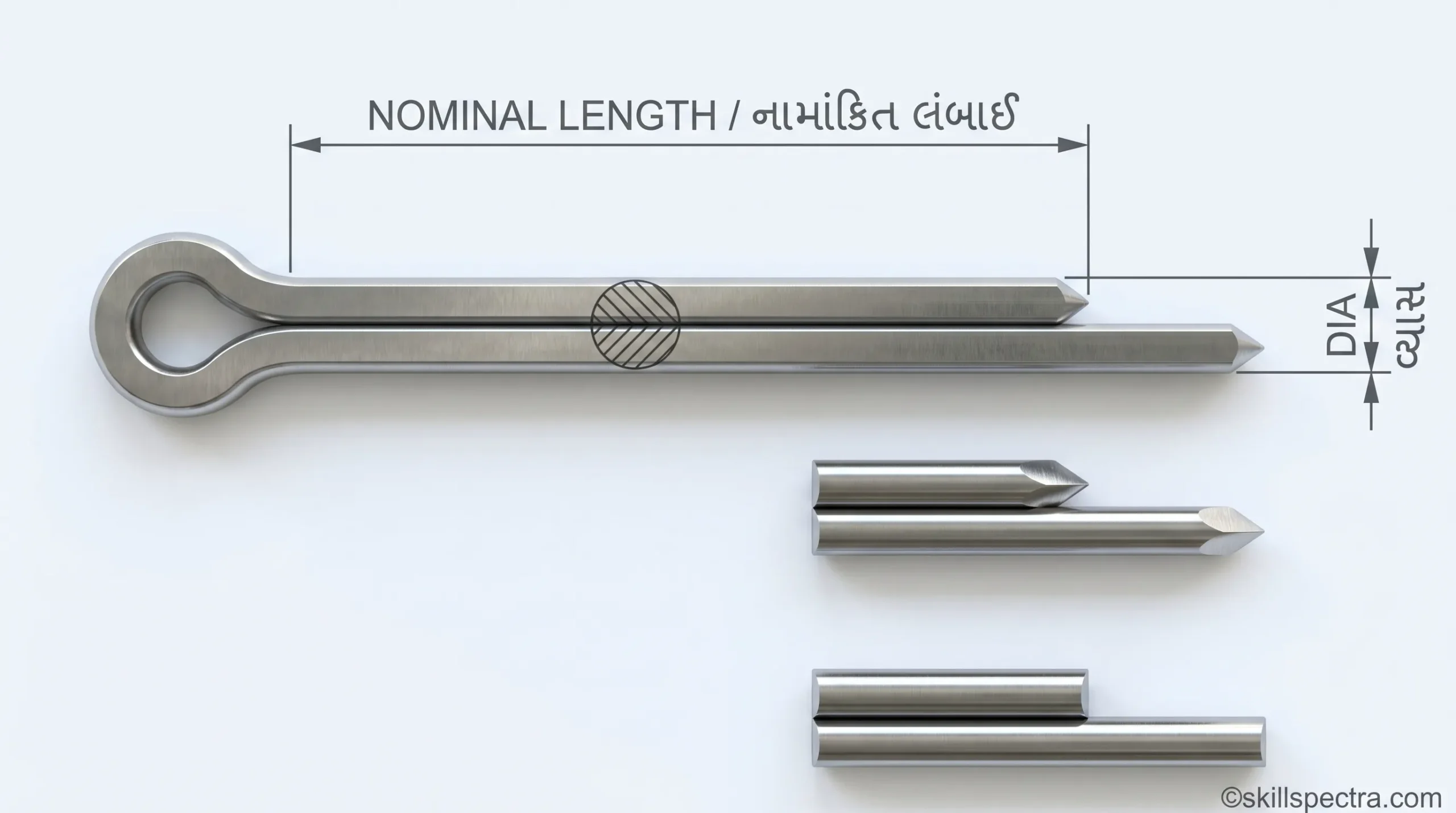
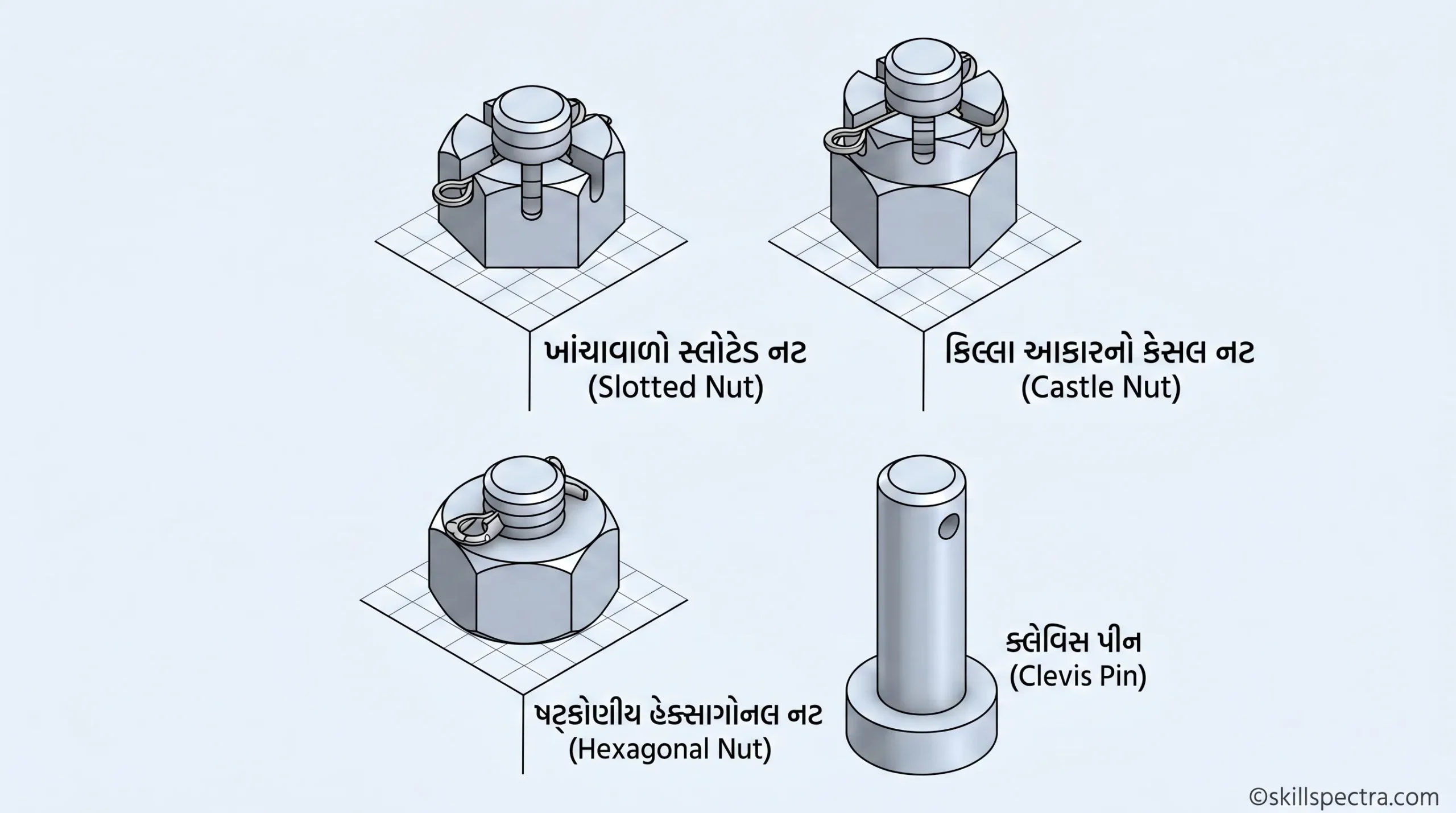
5. Slotted and castle nut with a split pin (Fig 17 & 18): 📍 Split pin નો ઉપયોગ કરીને નટની પોઝિશન લોક કરી શકાય છે. Split pins ને તેમના nominal size, nominal length, Indian Standard નંબર અને મટિરિયલ દ્વારા ઓળખવામાં આવે છે.
- Nominal length: આ લંબાઈ eye ની નીચેની બાજુથી ટૂંકા પગ (short leg) ના છેડા સુધીનું અંતર છે.
🔩 Additional Locking Methods (બીજી લોકીંગ પદ્ધતિઓ)
Split pins નો ઉપયોગ slotted nuts, castle nuts, hexagonal nuts, clevis pins વગેરેને લોક કરવા માટે અલગ અલગ રીતે થાય છે.
Grooved nut (Penning nut) (Fig 19): 🛠️ આ એક hexagonal nut છે જેનો નીચેનો ભાગ નળાકાર (cylindrical) હોય છે. આ નળાકાર સપાટી પર એક ગલી (recessed groove) હોય છે જેમાં નટને લોક કરવા માટે set screw નો ઉપયોગ થાય છે.
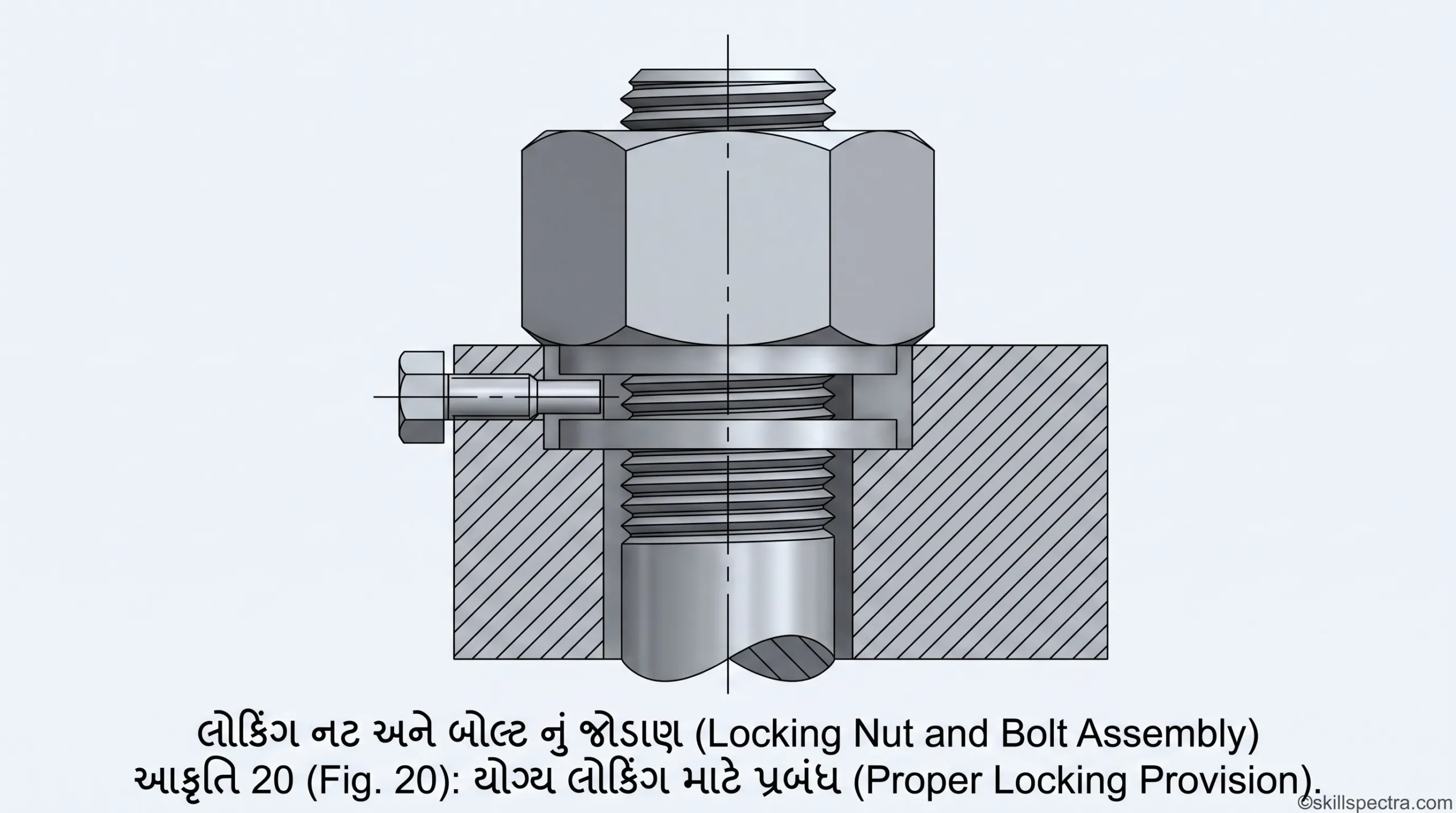
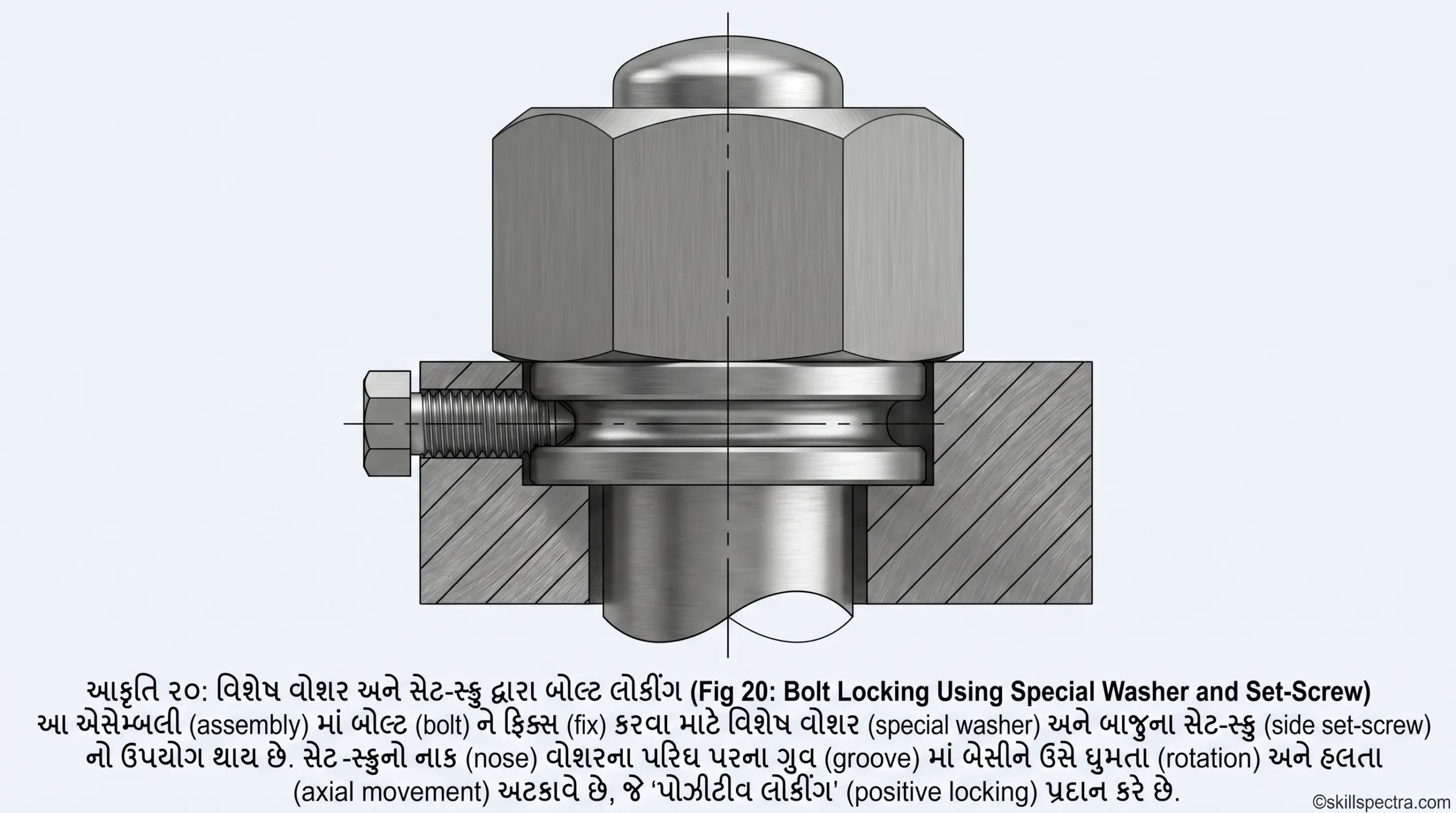
Locking plate (Fig 20): 🛡️ નટને ઢીલો પડતો અટકાવવા માટે, hexagonal nut ની બહારની બાજુએ locking plates ફિક્સ કરવામાં આવે છે.
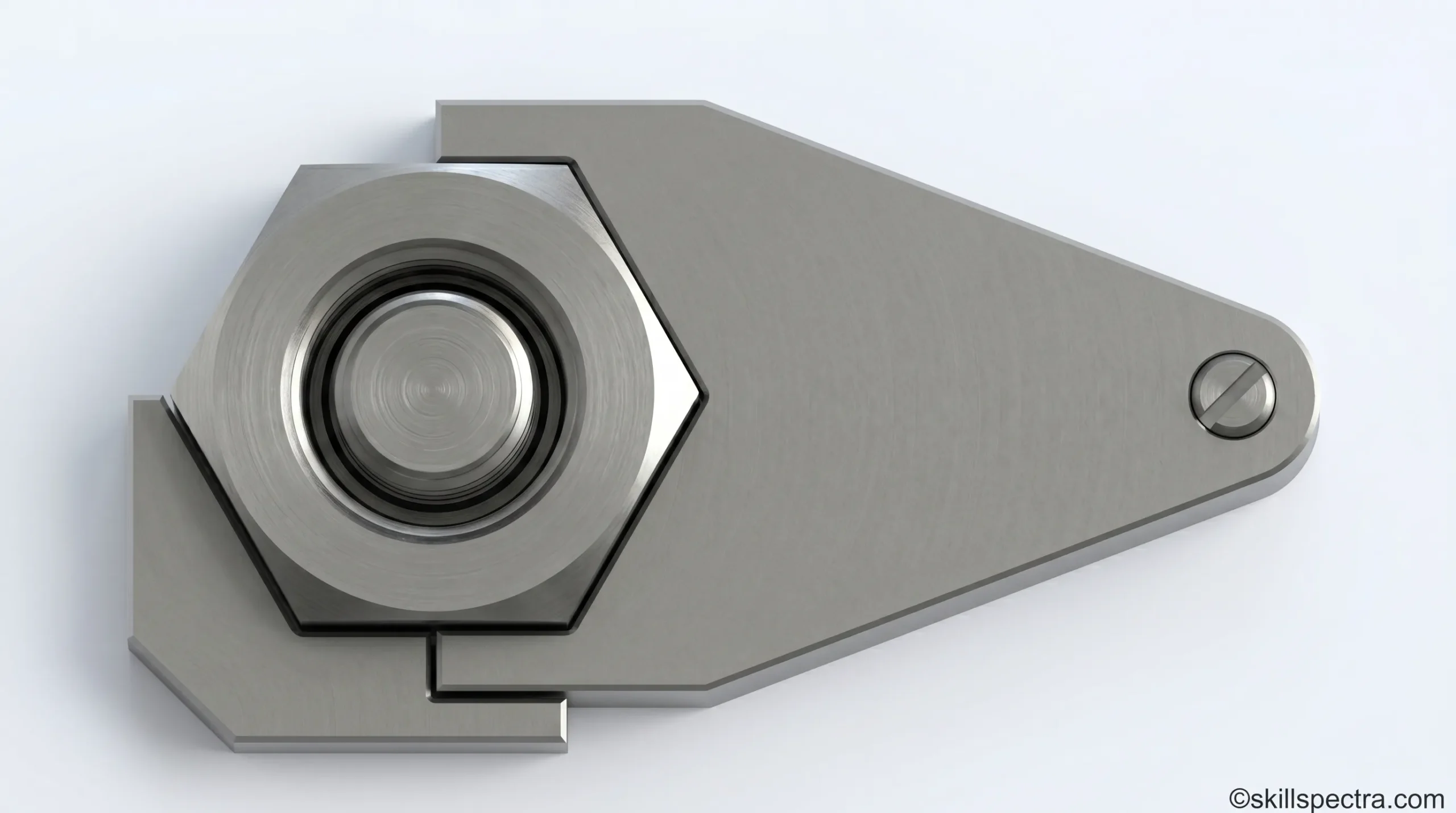
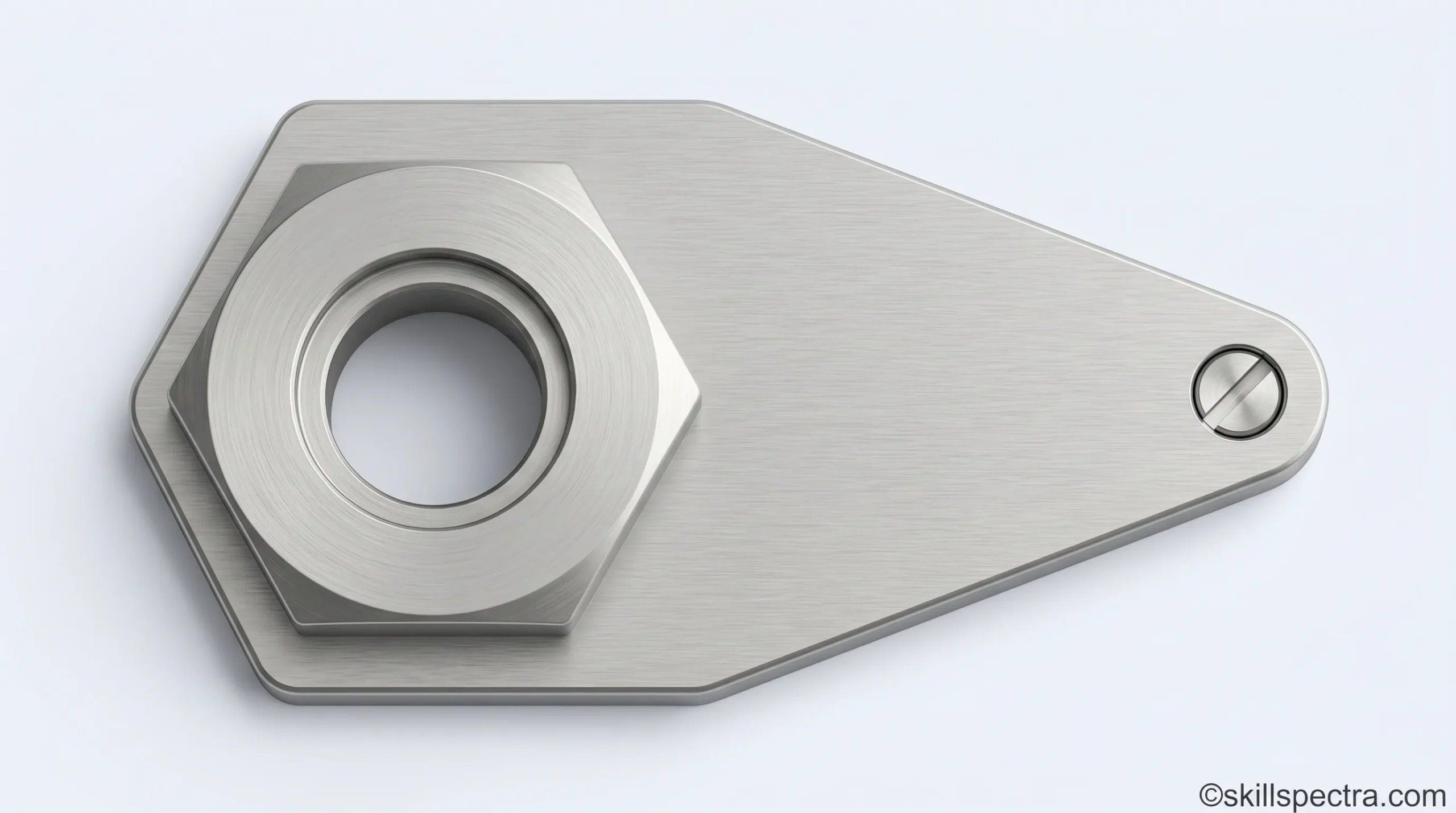
Lock washers with lug (Fig 21): 📎 લોકીંગની આ વ્યવસ્થામાં, lug ને બેસાડવા માટે એક હોલ ડ્રિલ કરવામાં આવે છે. વોશરને નટની સામે વાળી (folding) દેવાથી નટની મૂવમેન્ટ અટકી જાય છે.
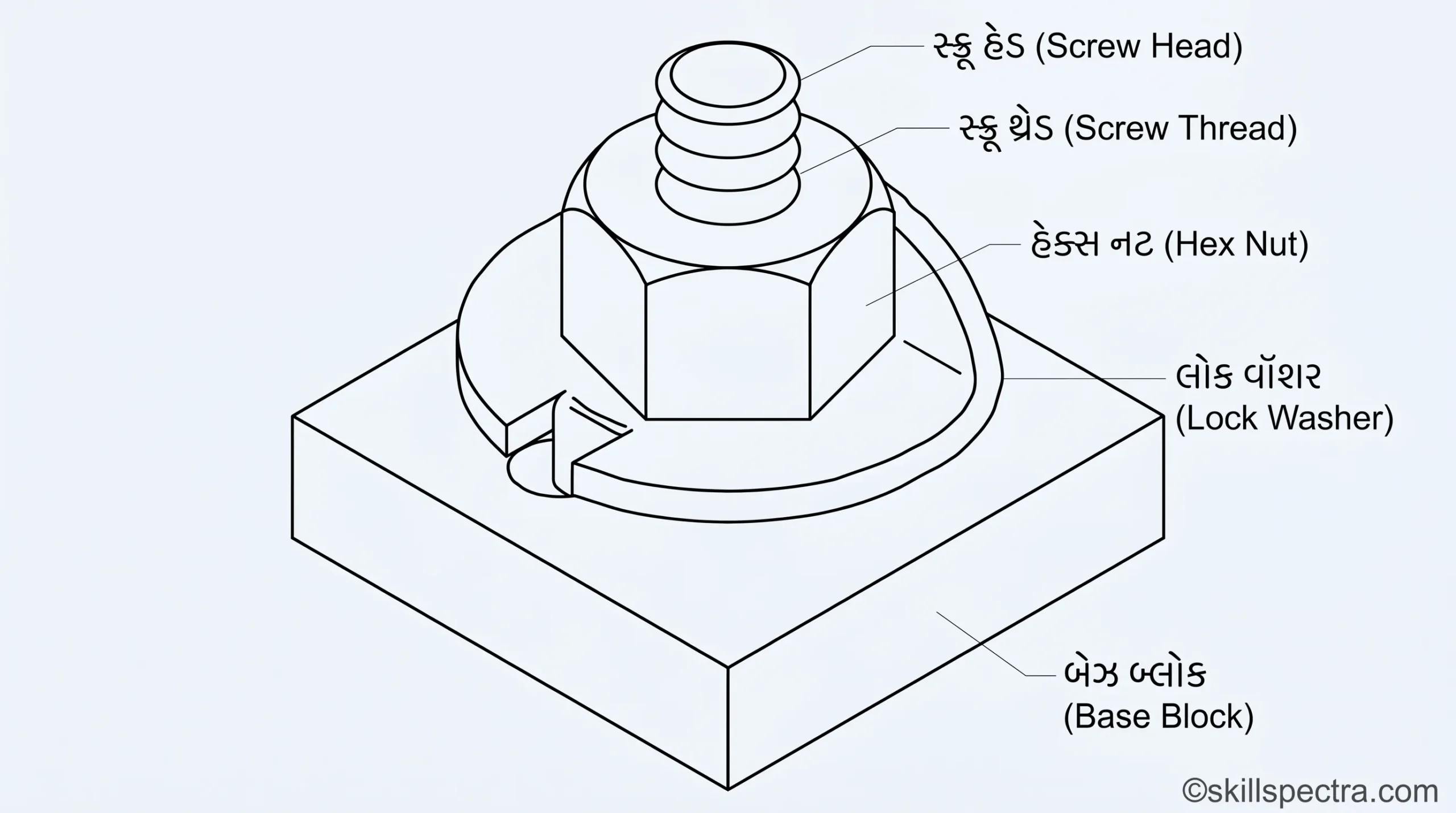
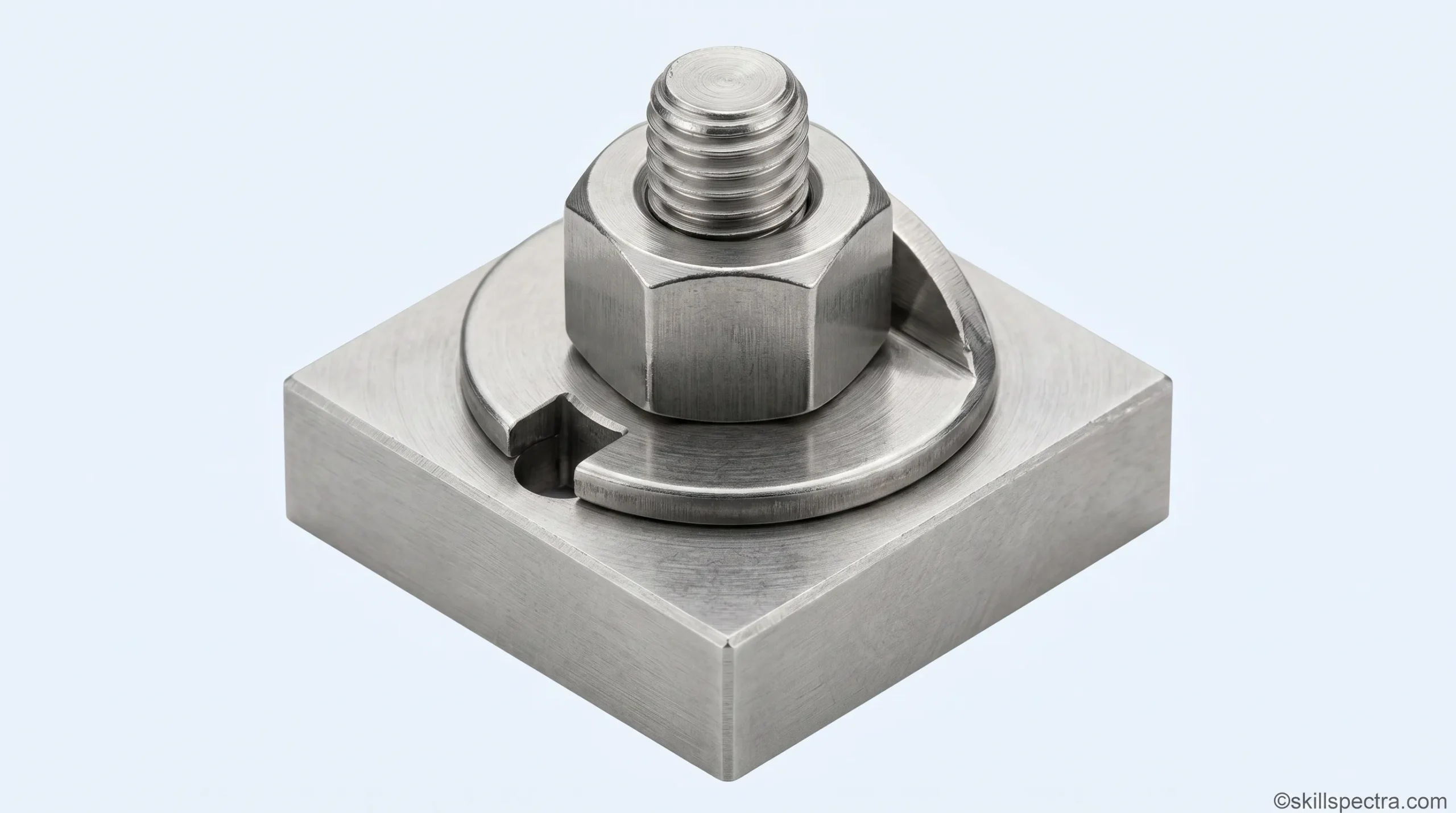
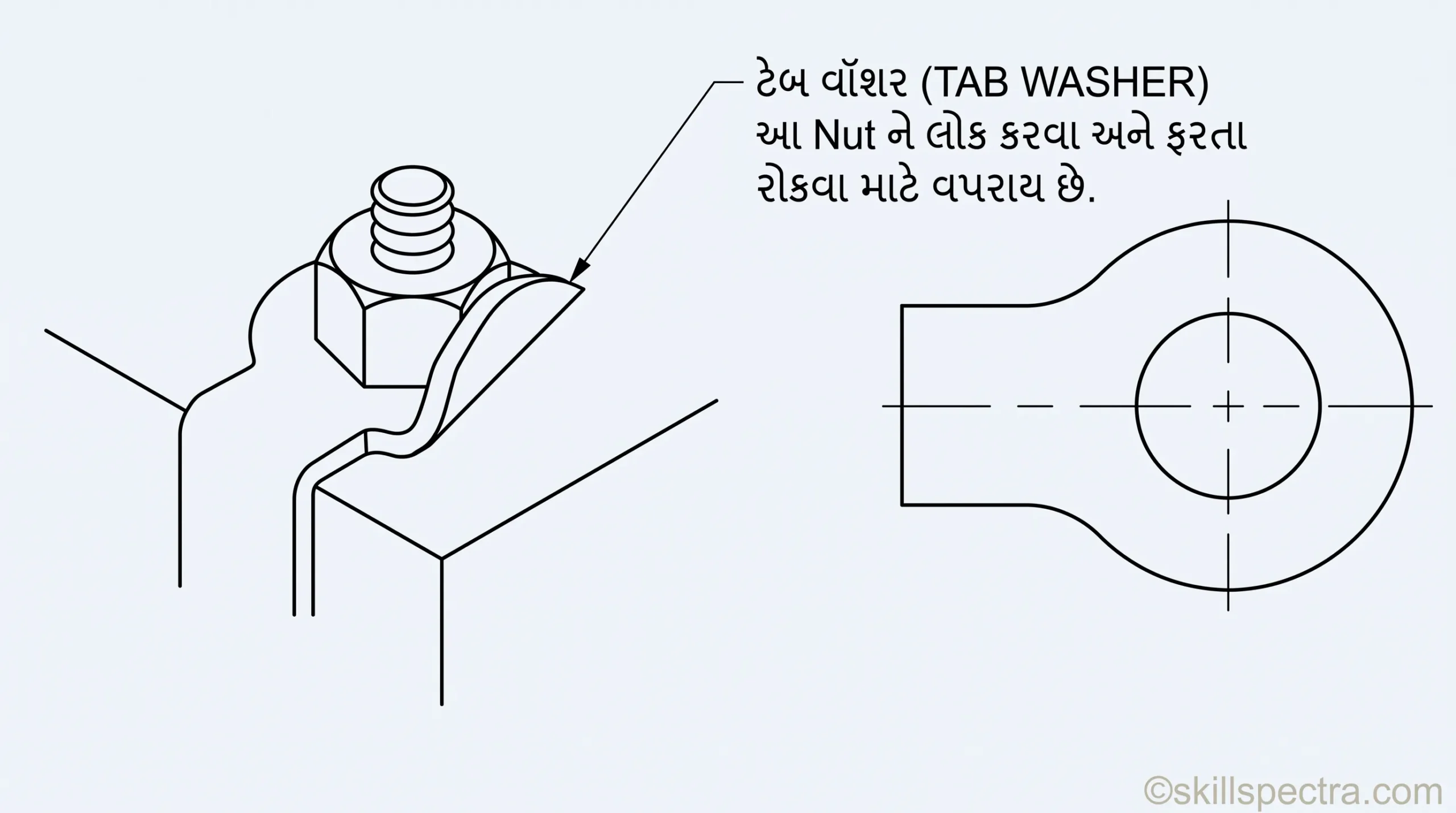
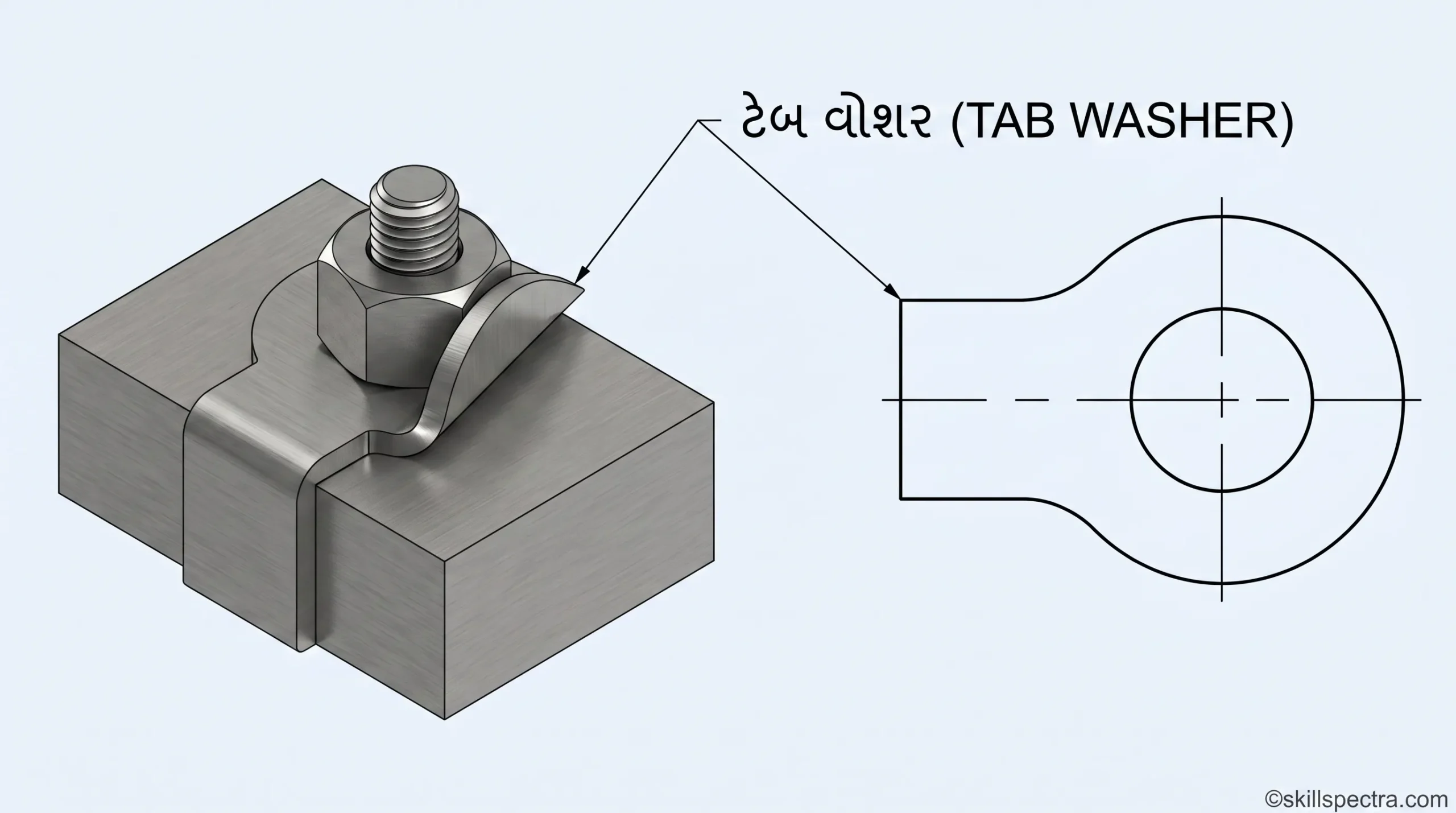
Tab washers (Fig 22): 🏷️ Tab washers નો ઉપયોગ કોઈ ધાર (edge) કે ખૂણા (corner) પાસે આવેલા નટ્સને લોક કરવા માટે થાય છે.
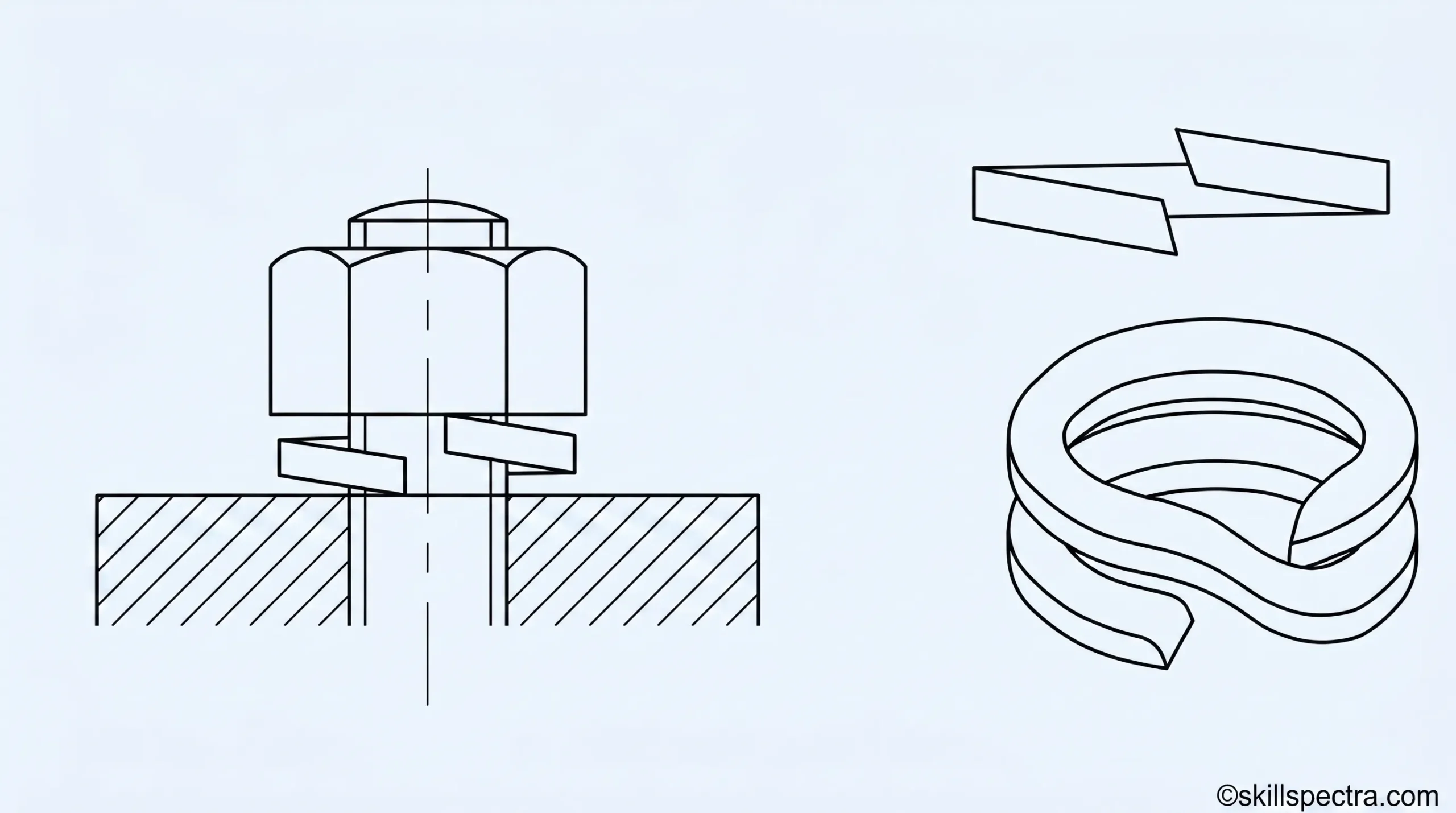
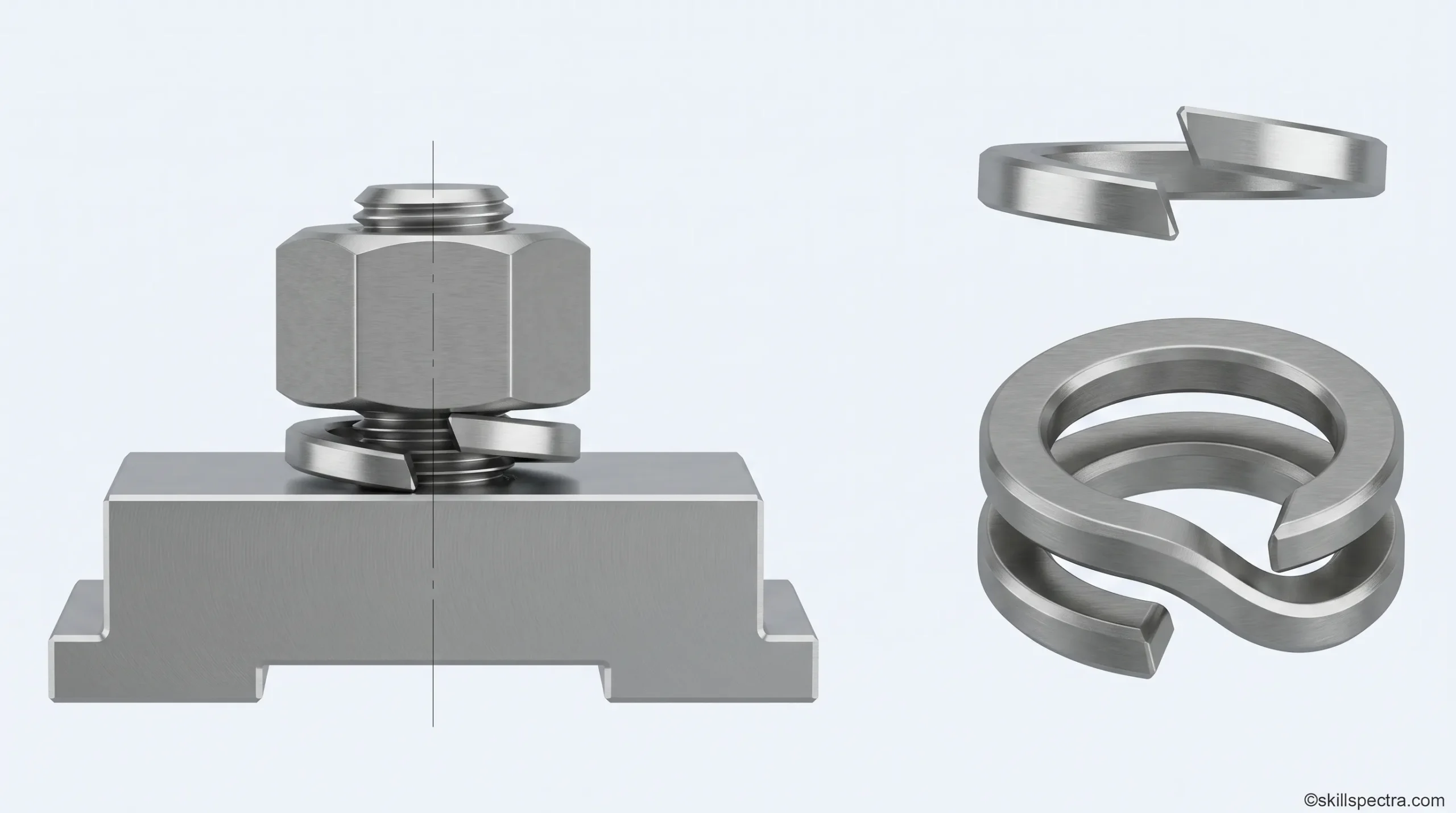
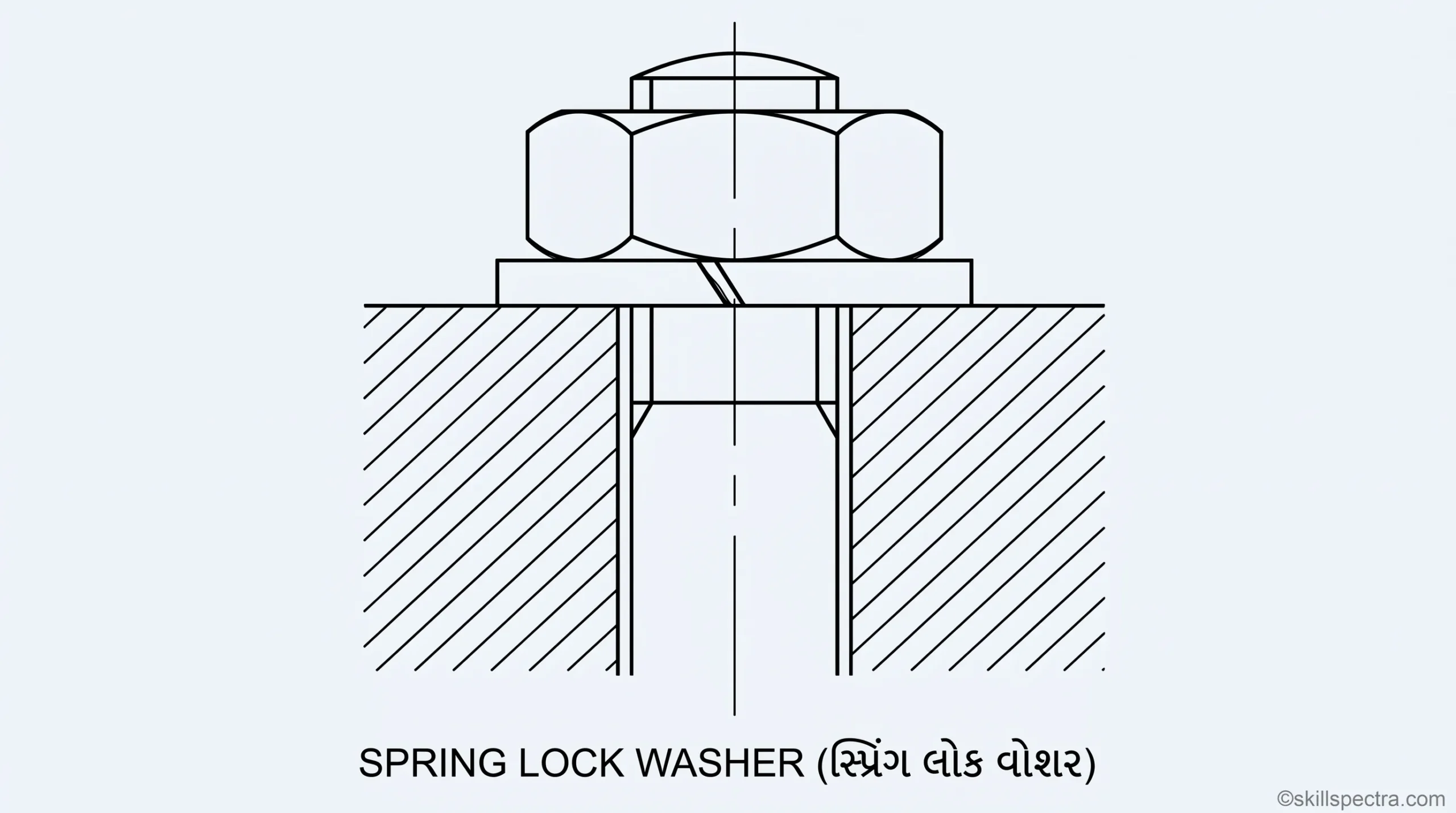
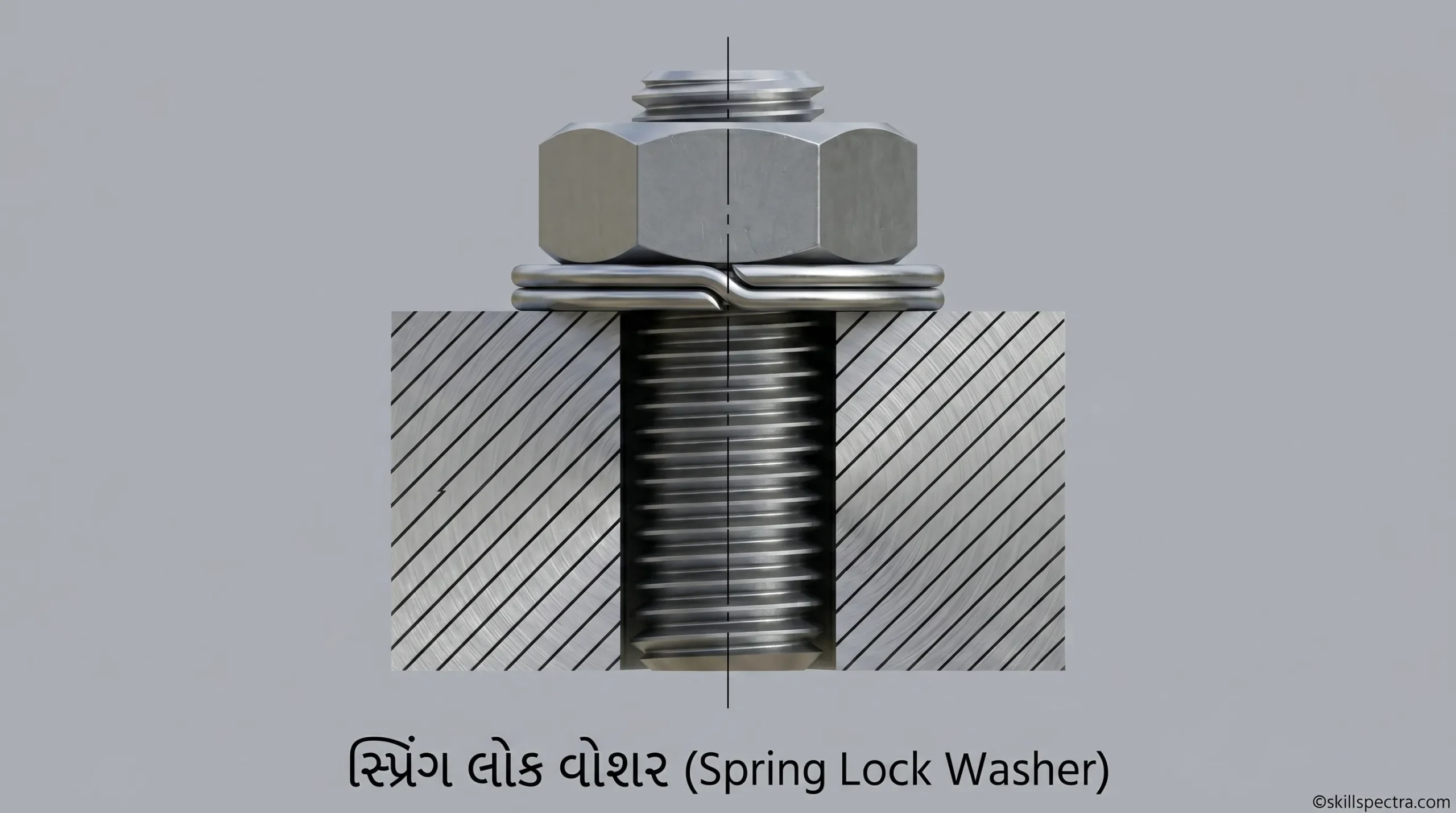
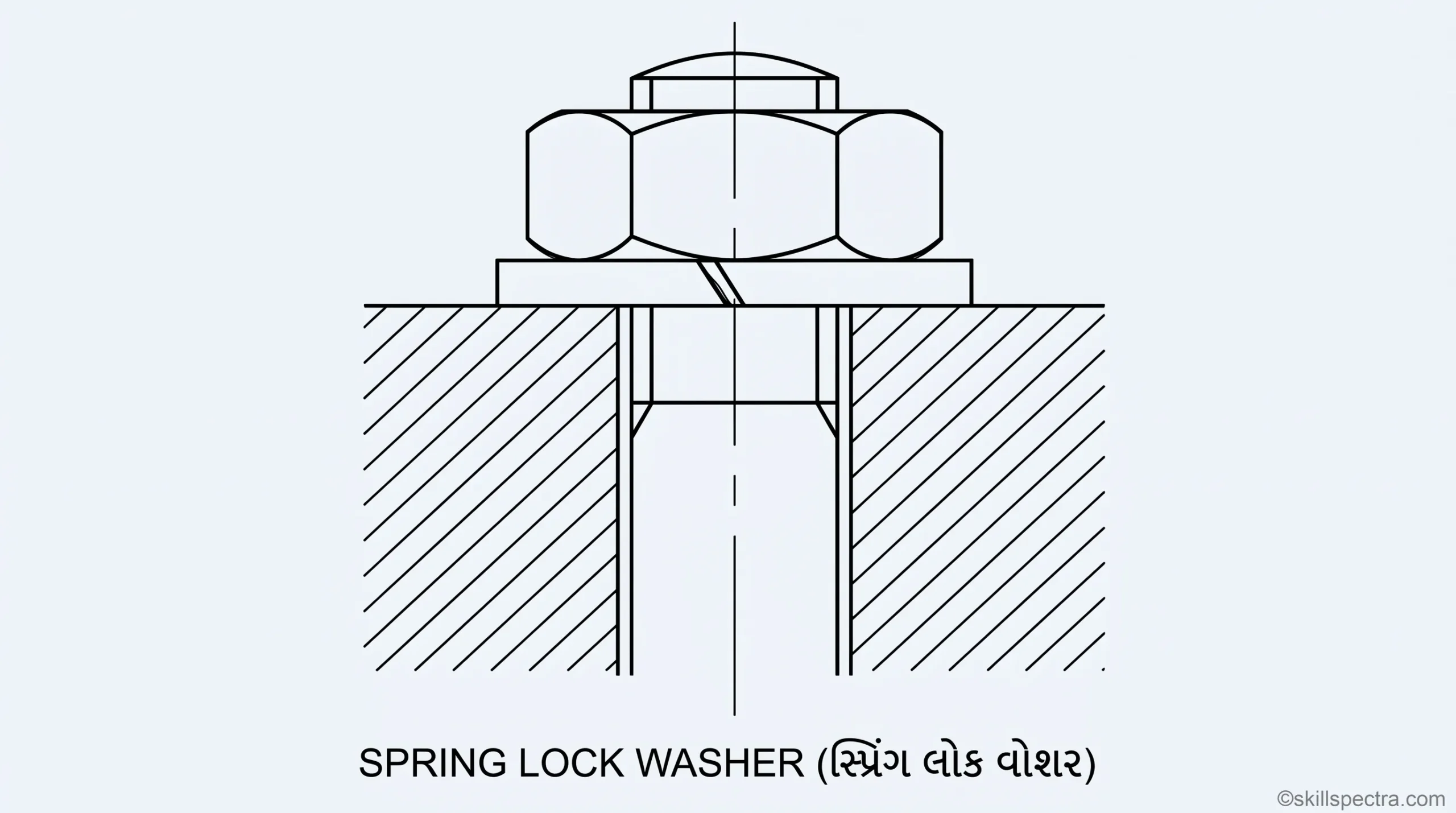
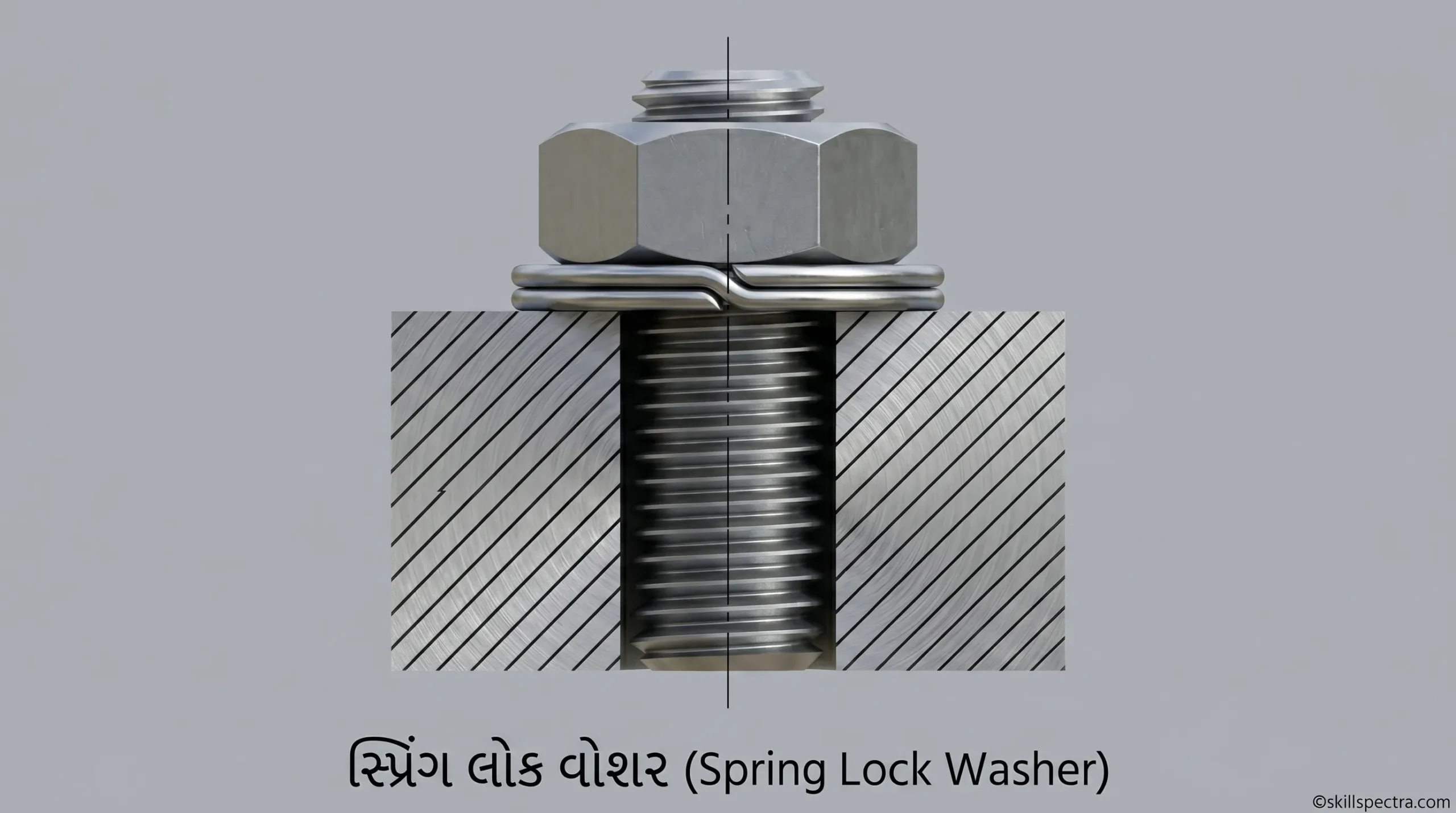
Spring washer (Fig 23): 🌀 Spring washers સિંગલ અથવા ડબલ કોઈલ (coils) માં ઉપલબ્ધ છે. આને એસેમ્બલીમાં નટની નીચે વોશર તરીકે મૂકવામાં આવે છે. વોશર દ્વારા નટની સપાટી પર આપવામાં આવતો સખત પ્રતિકાર (stiff resistance) તેને ઢીલો થતો અટકાવે છે.
🔑 Keys and Splines (કીઝ અને સ્પલાઇન્સ)
Objectives (ઉદ્દેશો):
આ લેસનના અંતે તમે:
- Transmission માં વપરાતી વિવિધ પ્રકારની keys ના નામ જાણી શકશો.
- દરેક પ્રકારની keys ના ફીચર્સ (લાક્ષણિકતાઓ) જણાવી શકશો.
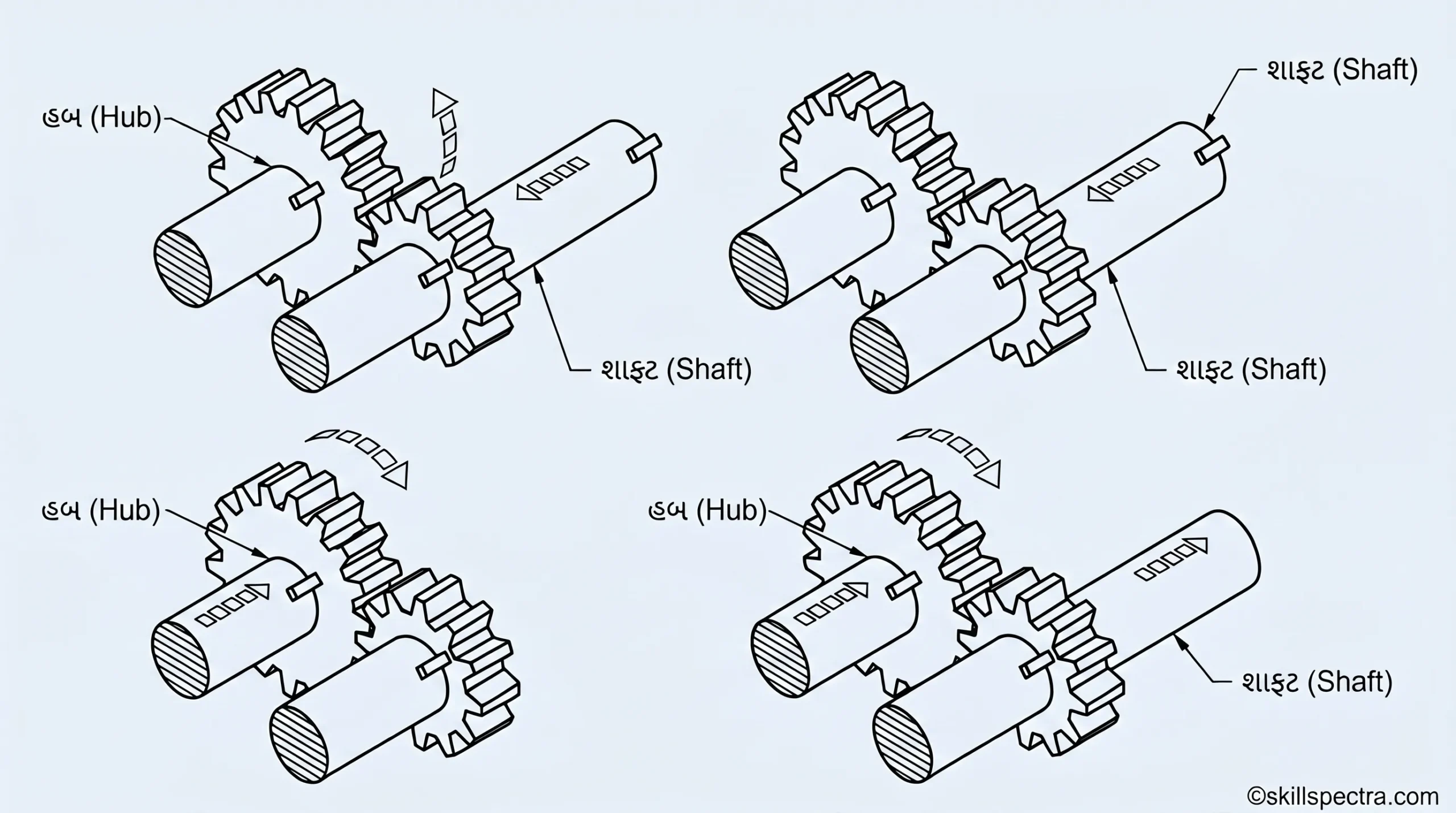
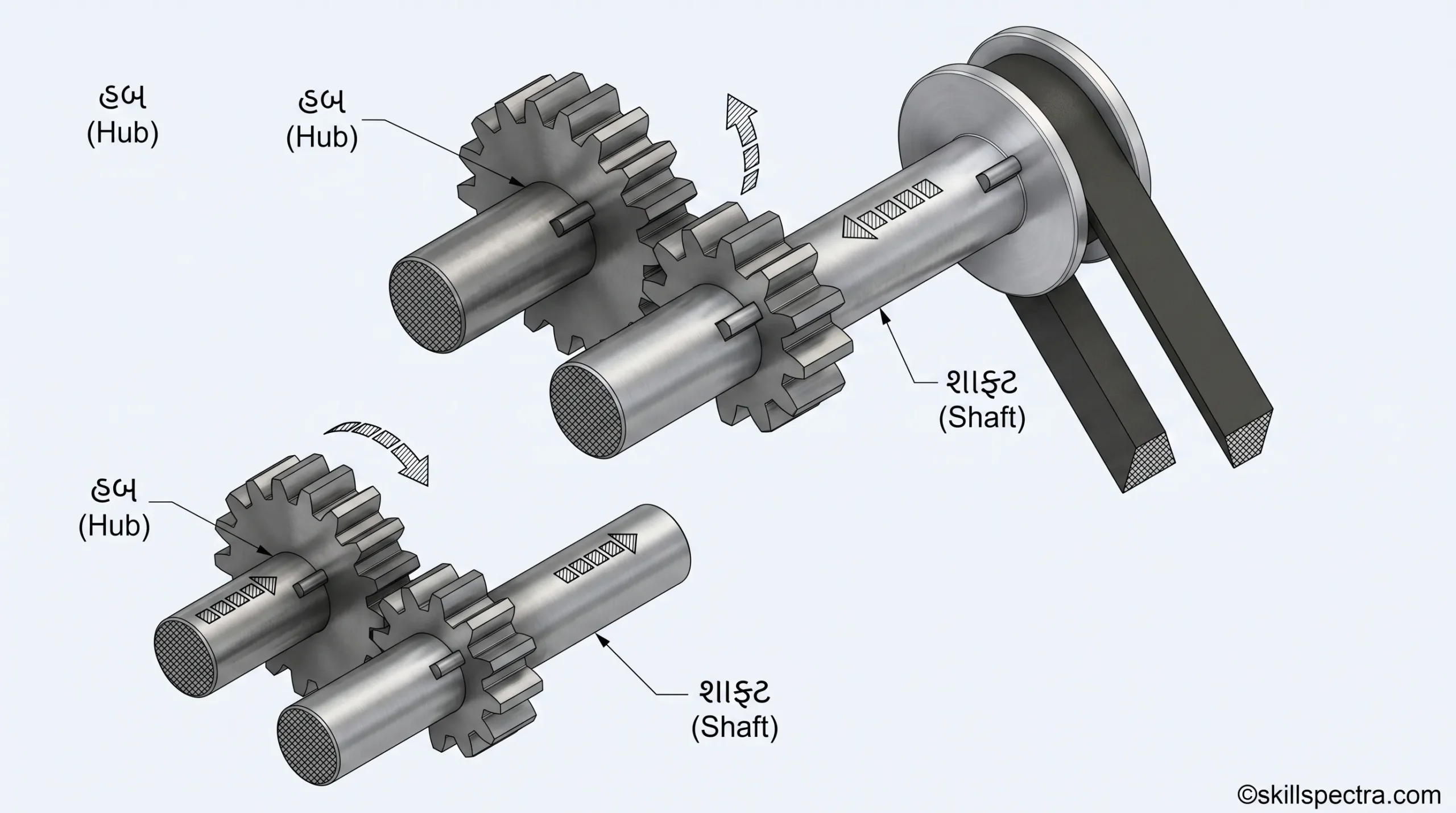
Keys and splines: 🗝️ Keys નો ઉપયોગ ફરતા shaft માંથી hub/wheel માં અથવા hub/wheel માંથી shaft માં torque (ટોર્ક) ટ્રાન્સમિટ કરવા માટે થાય છે. (Fig 1). ટ્રાન્સમિશનની જરૂરિયાત મુજબ અલગ અલગ પ્રકારની keys વપરાય છે.
Types of Keys:
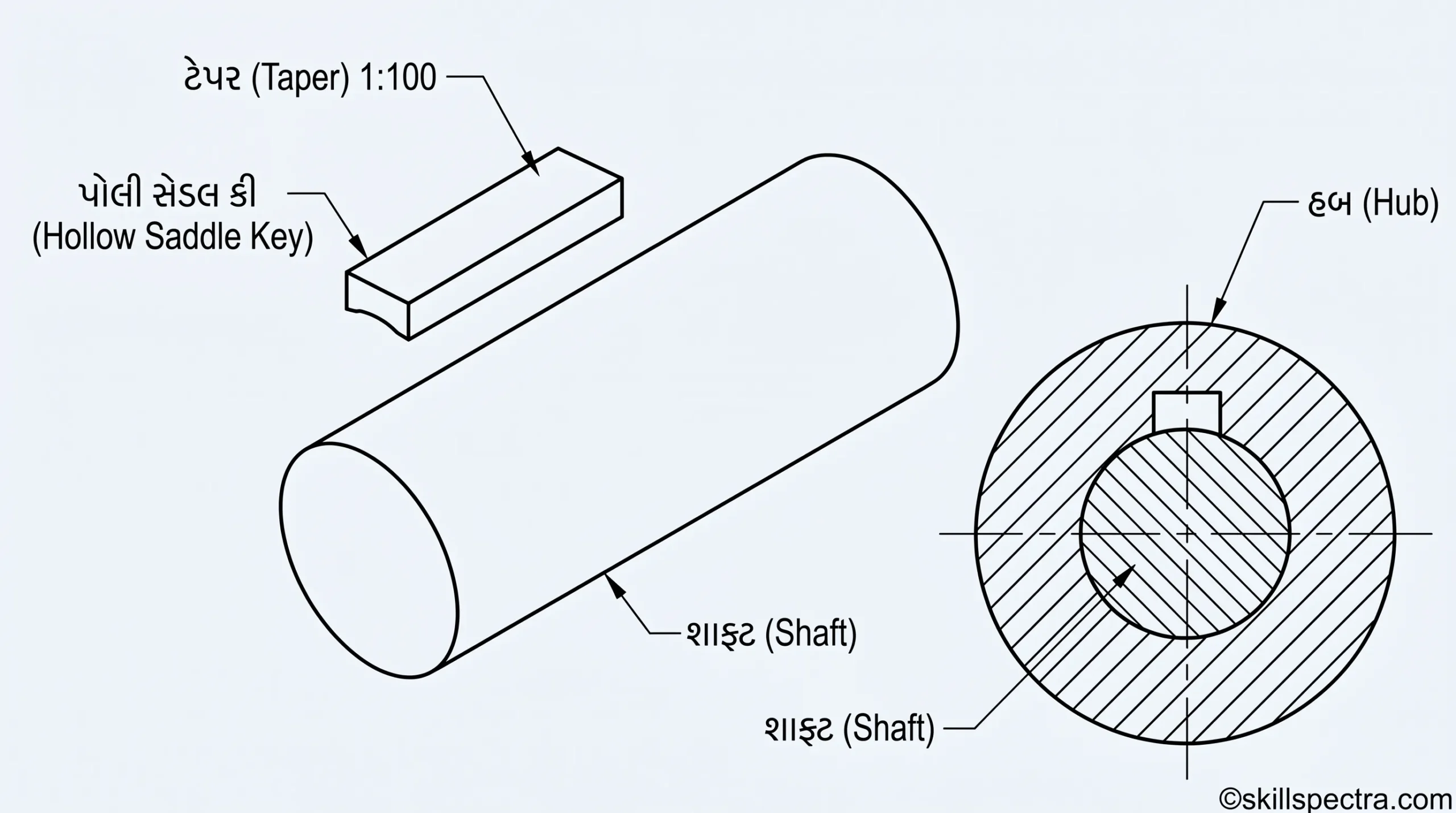
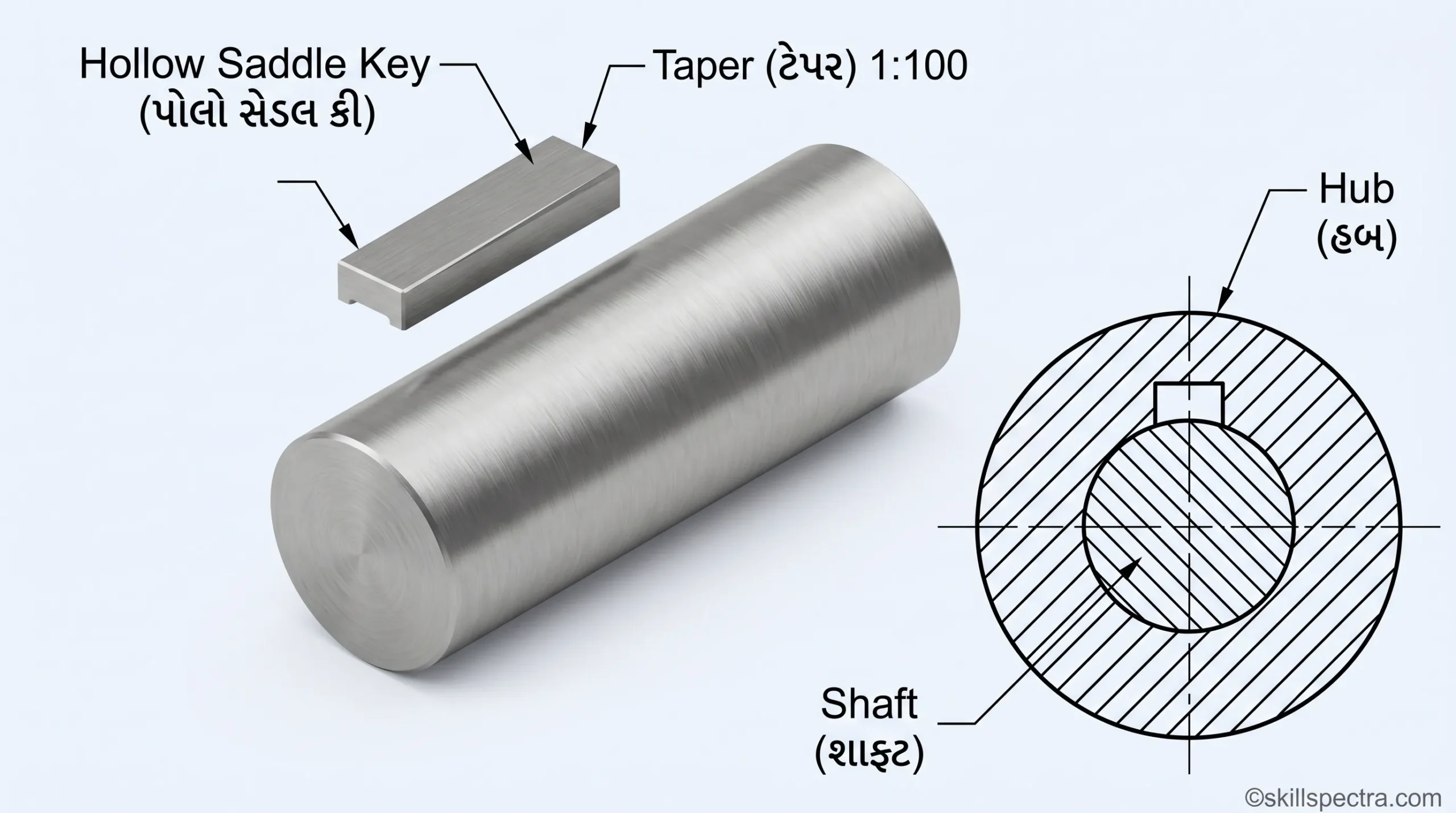
1. Hollow saddle key: 🕳️ આ કીની એક સપાટી shaft ની સપાટી સાથે મેચ થાય તેવો વળાંક (curvature) ધરાવે છે. તેમાં 1 in 100 નો taper હોય છે અને તેને keyway દ્વારા અંદર નાખવામાં આવે છે (Fig 2). Hub ઘર્ષણ (friction) ને કારણે shaft પર ટકી રહે છે. આ કી ફક્ત light duty transmission (હળવા કામ) માટે ઉપયોગી છે.
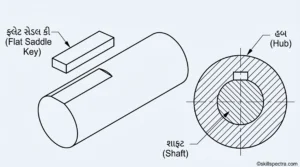
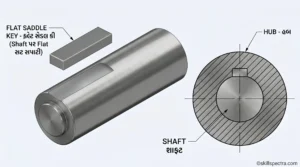
2. Flat saddle key: 📏 આ કીનો આડો છેદ (cross-section) લંબચોરસ હોય છે. આ કી બેસાડવા માટે shaft પર એક સપાટ સપાટી (flat surface) મશીનિંગ કરીને બનાવવામાં આવે છે (Fig 3). કી ને shaft ની સપાટ સપાટી અને hub ના keyway ની વચ્ચે મૂકવામાં આવે છે. આને hollow saddle key કરતા વધુ મજબૂત માનવામાં આવે છે, પરંતુ તે heavy duty transmission માટે યોગ્ય નથી.
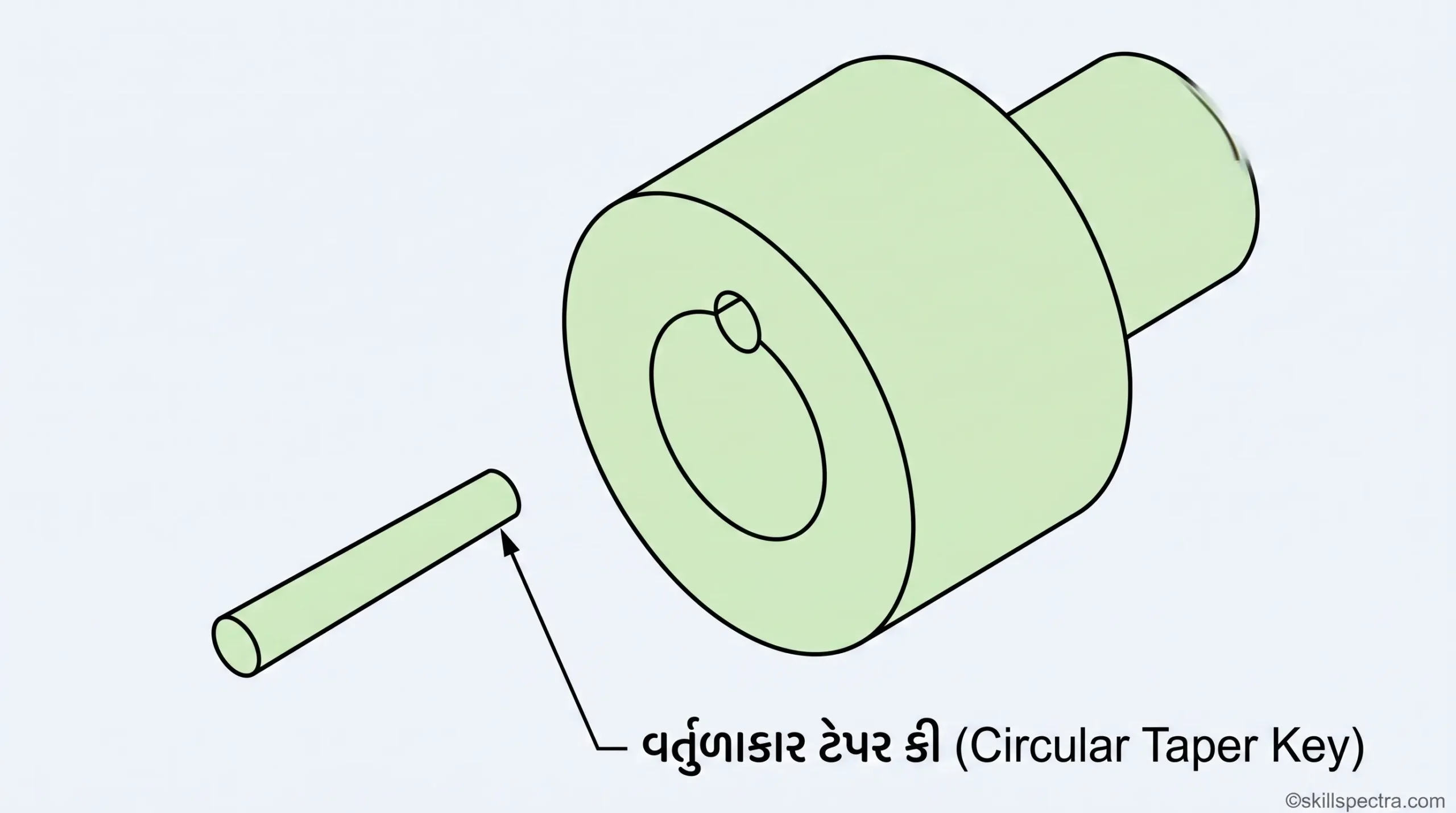
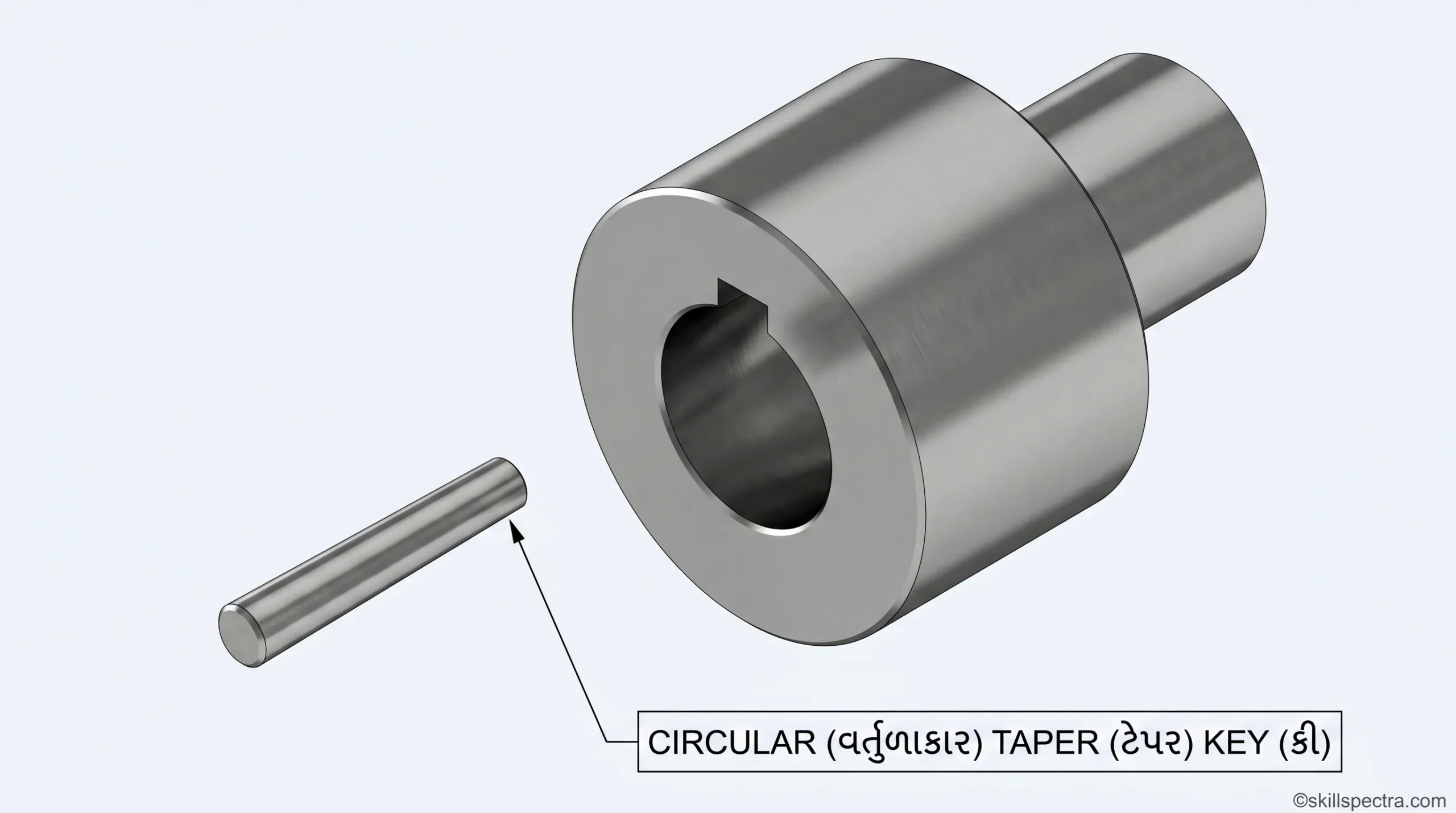
3. Circular taper key (Fig 4): ⭕ આ કિસ્સામાં shaft અને hub બંને પર અર્ધવર્તુળાકાર (semicircular) keyways કાપેલા હોય છે. એસેમ્બલ કરતી વખતે taper key ને અંદર ફિટ કરવામાં આવે છે. આ કી પણ ફક્ત light transmission માટે યોગ્ય છે.
4. Sunk key (Fig 5 & 6): ⚓ આ કીનો cross-section લંબચોરસ હોય છે અને તે shaft અને hub બંને પર કાપેલા keyway માં ફિટ થાય છે. Sunk keys કાં તો સમાંતર (parallel) હોય છે અથવા taper હોય છે.
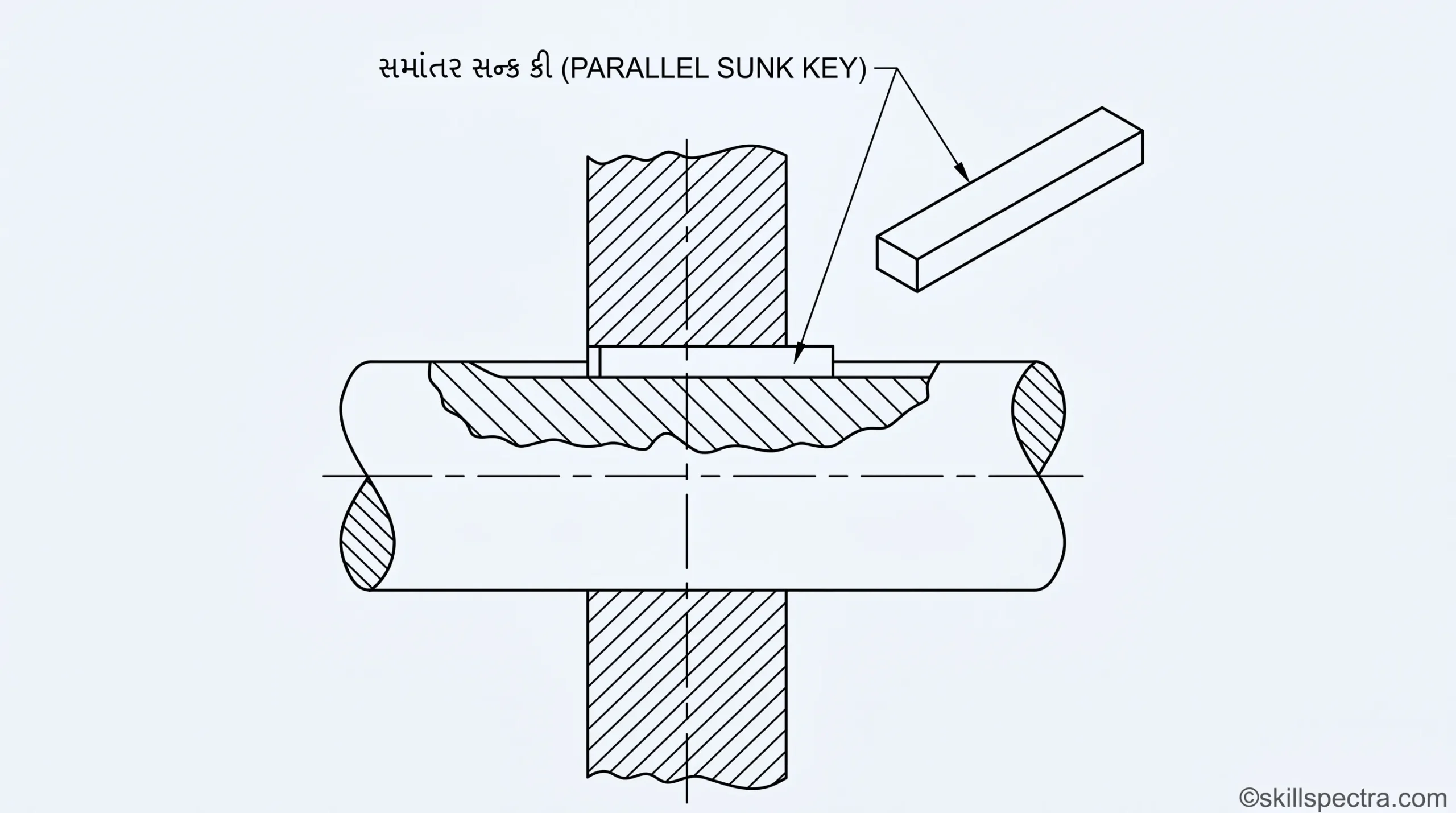
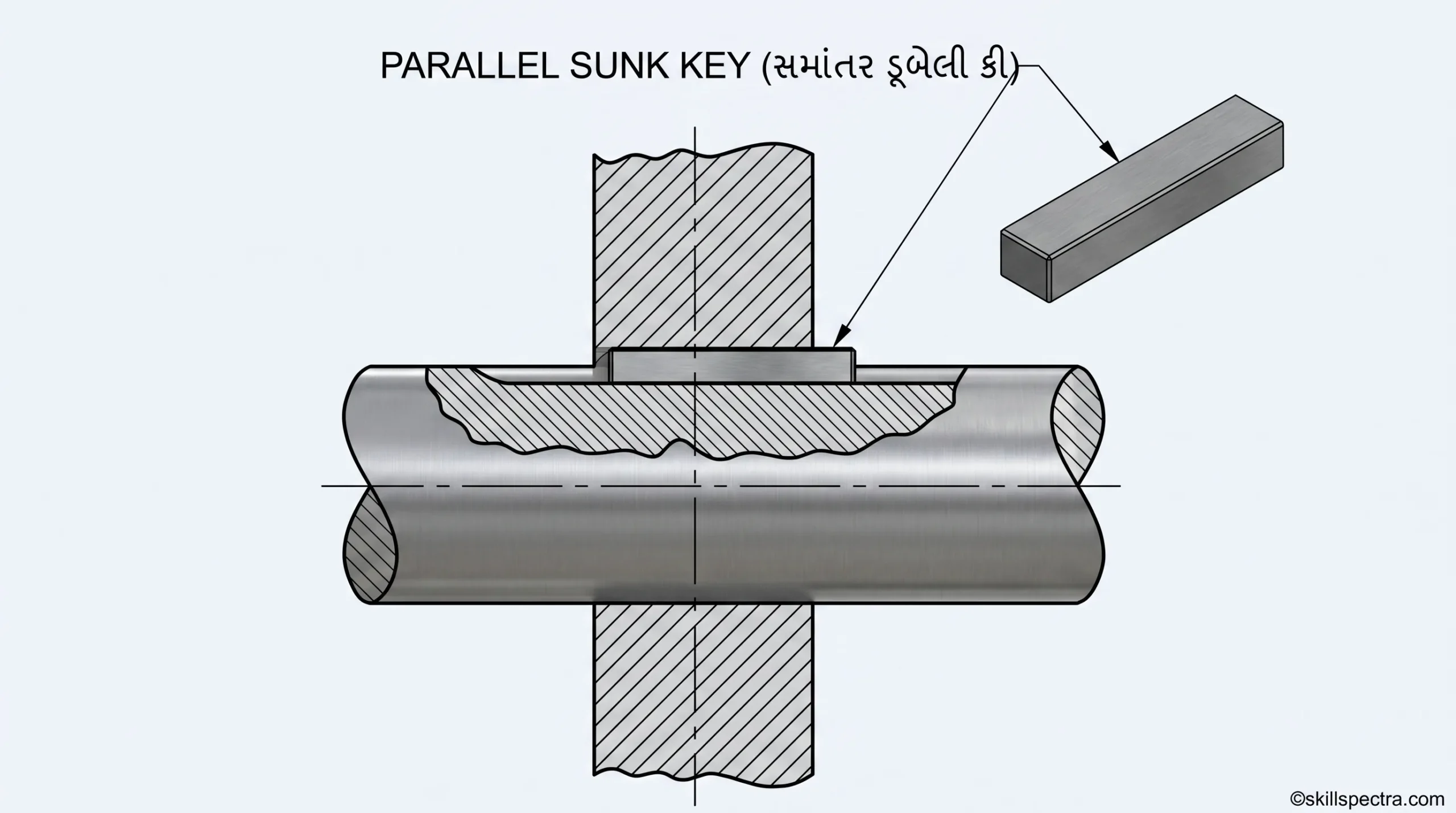
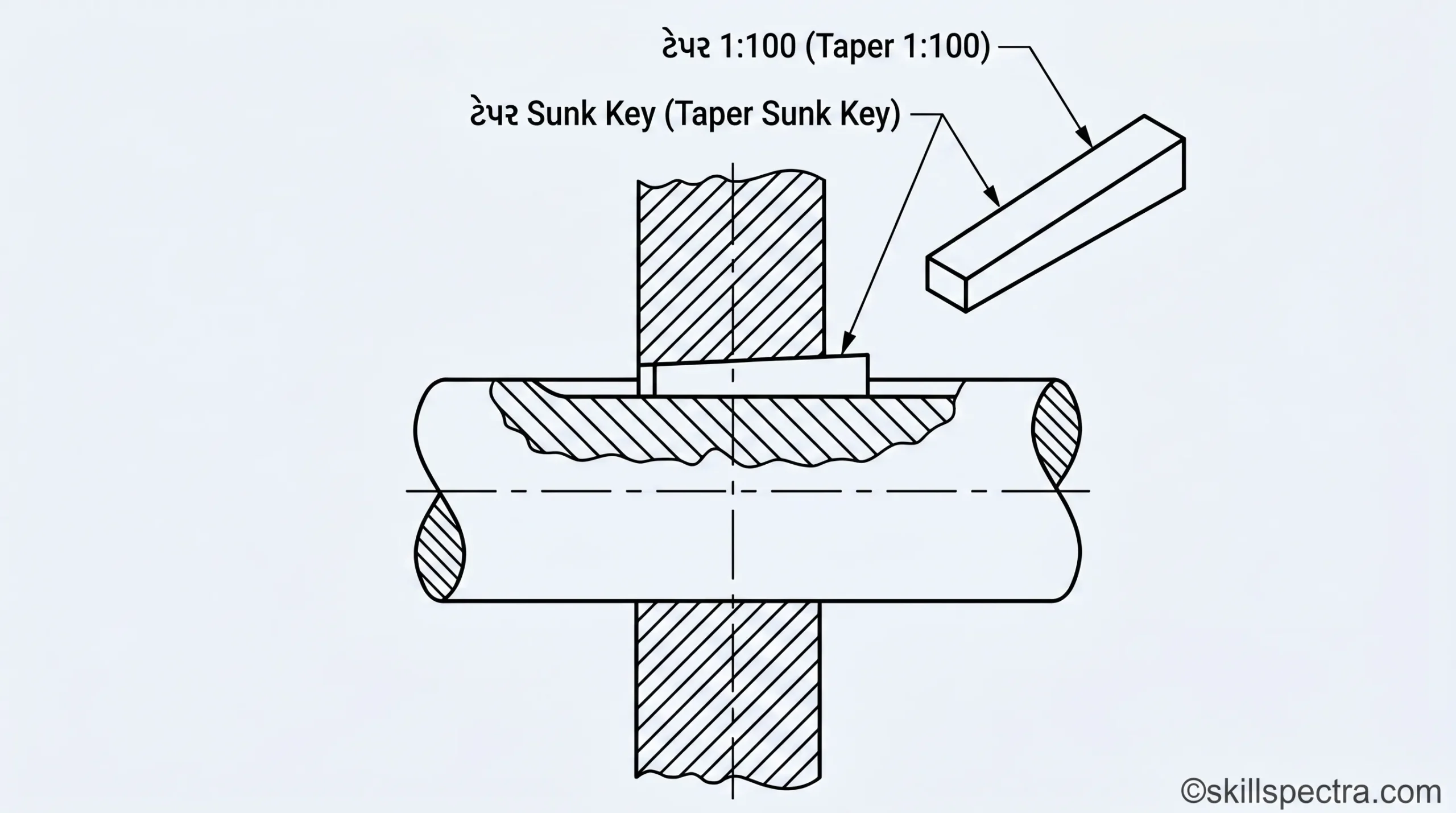
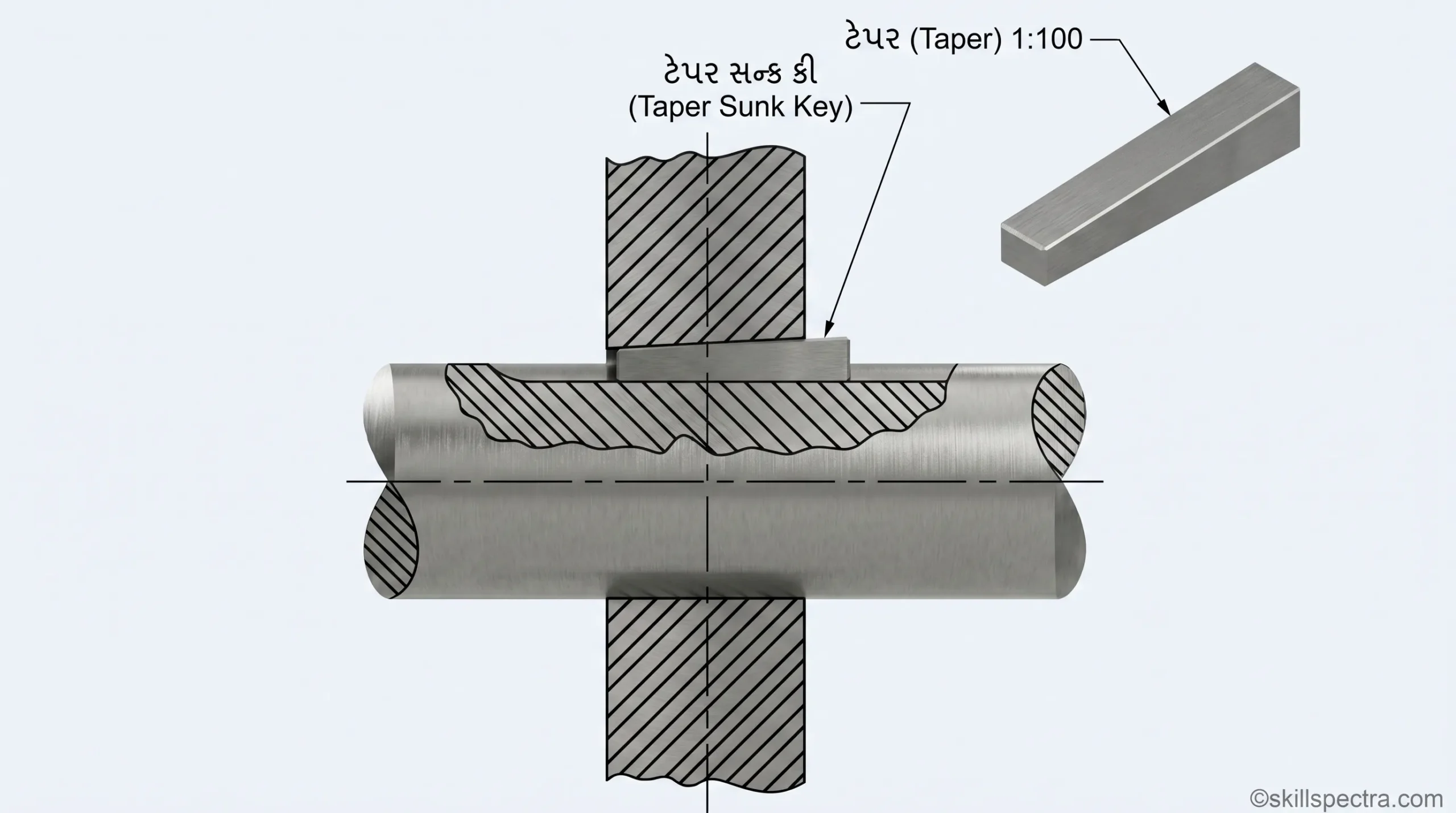
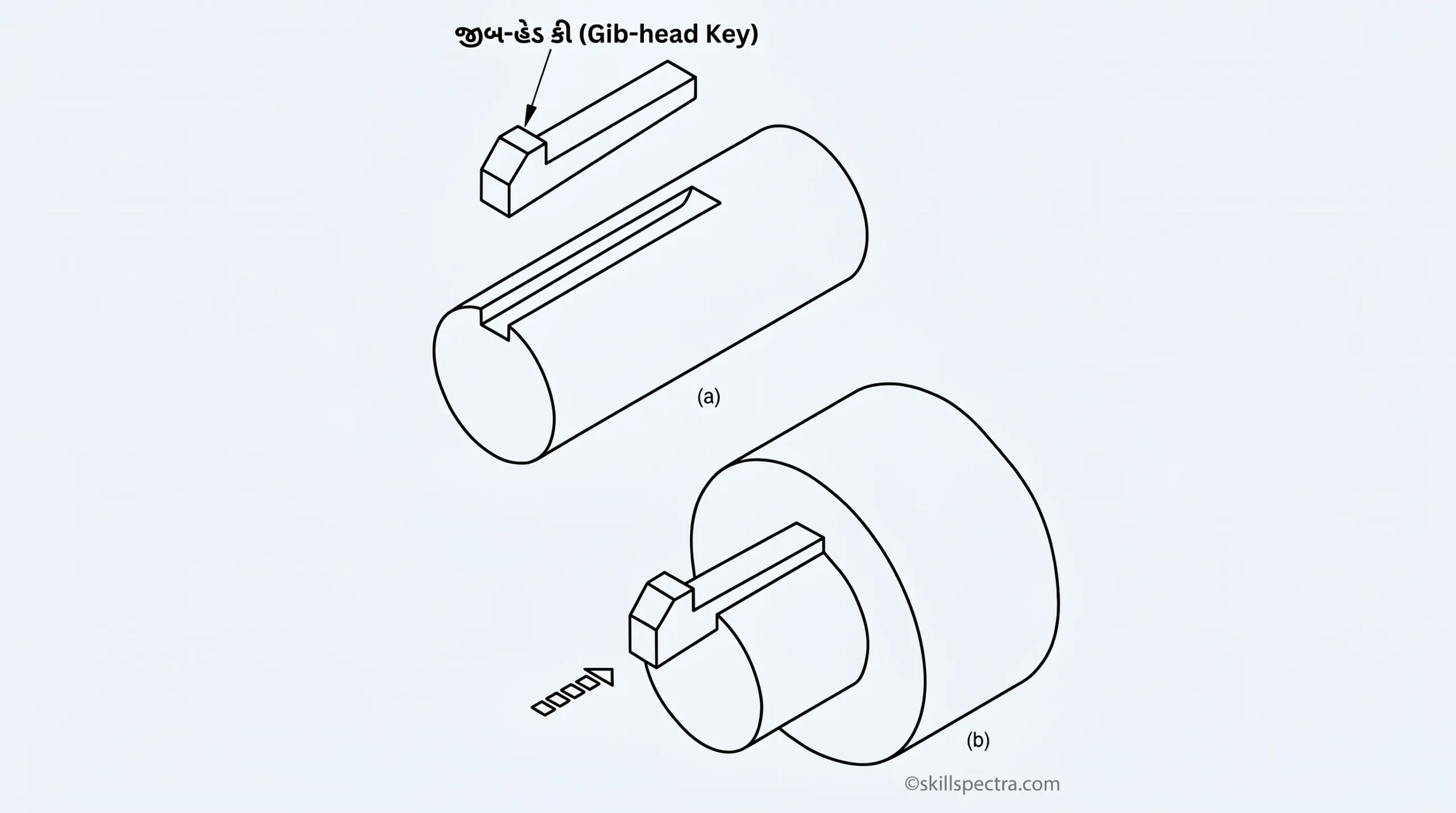
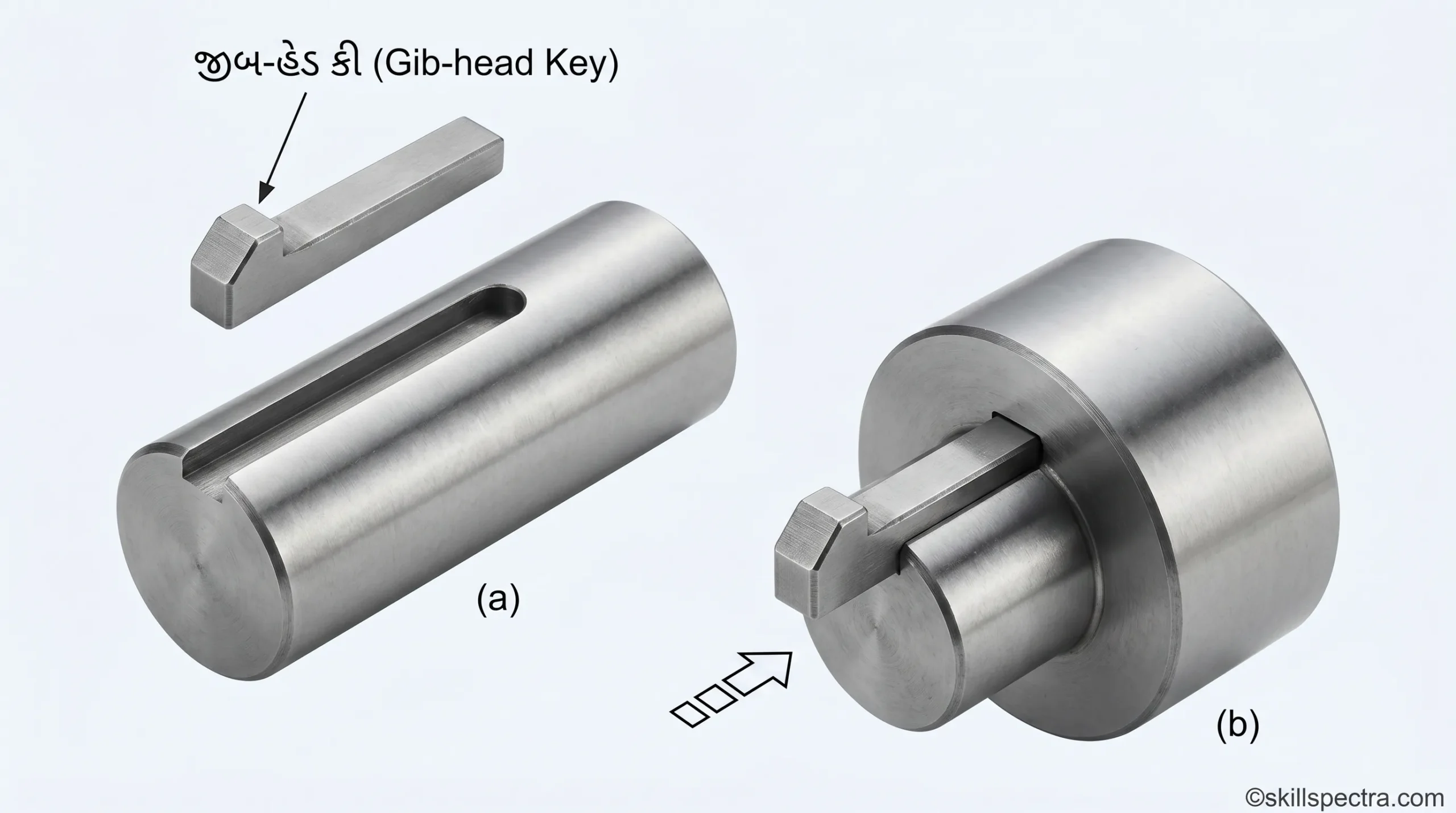
5. Gib-head key (Fig 7): 📐 આ એક પ્રકારની sunk key જ છે. આમાં keys ને ફિક્સ કરવા અને કાઢવામાં મદદરૂપ થાય તે માટે ‘gib-head’ આપેલી હોય છે.
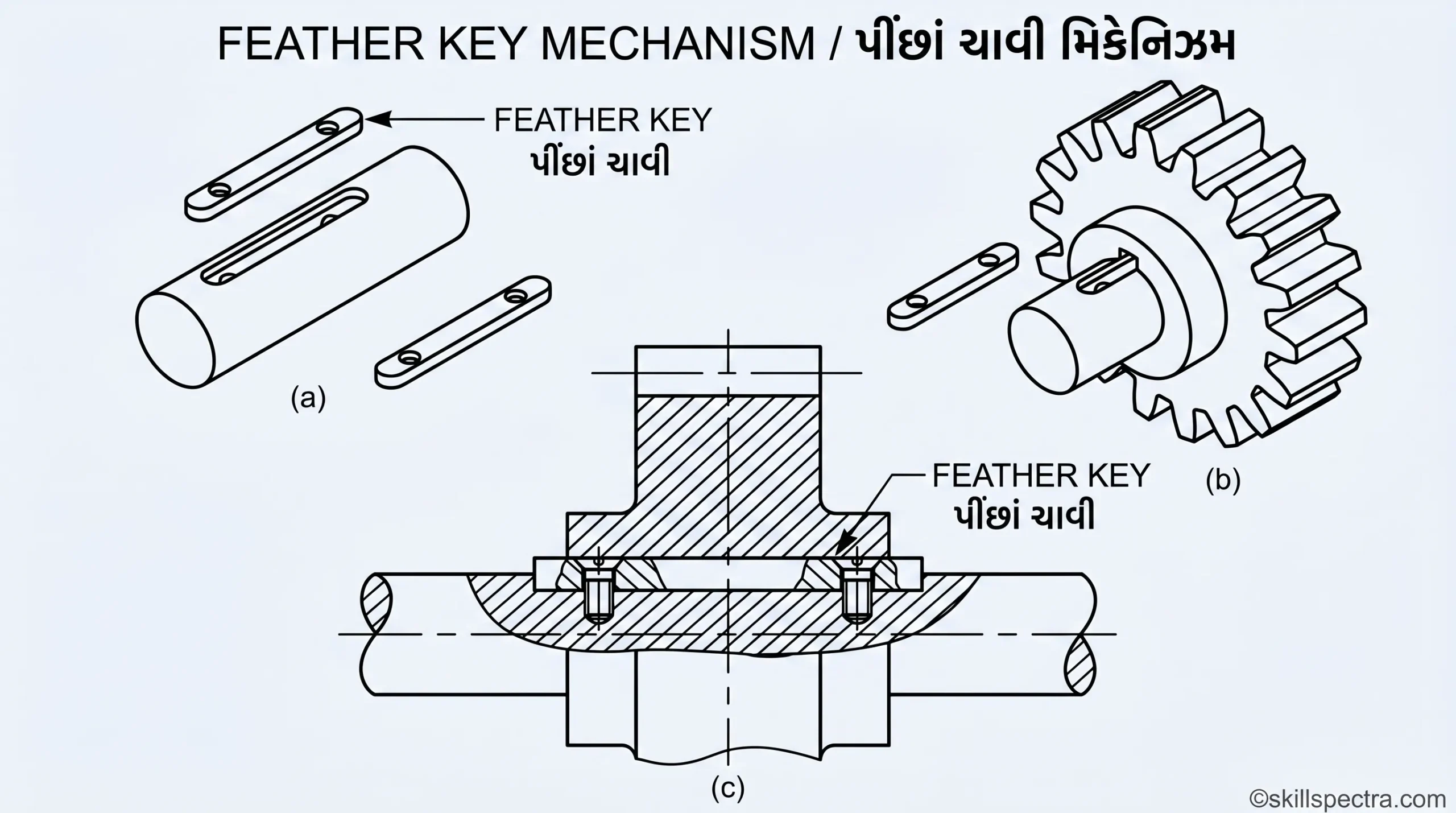
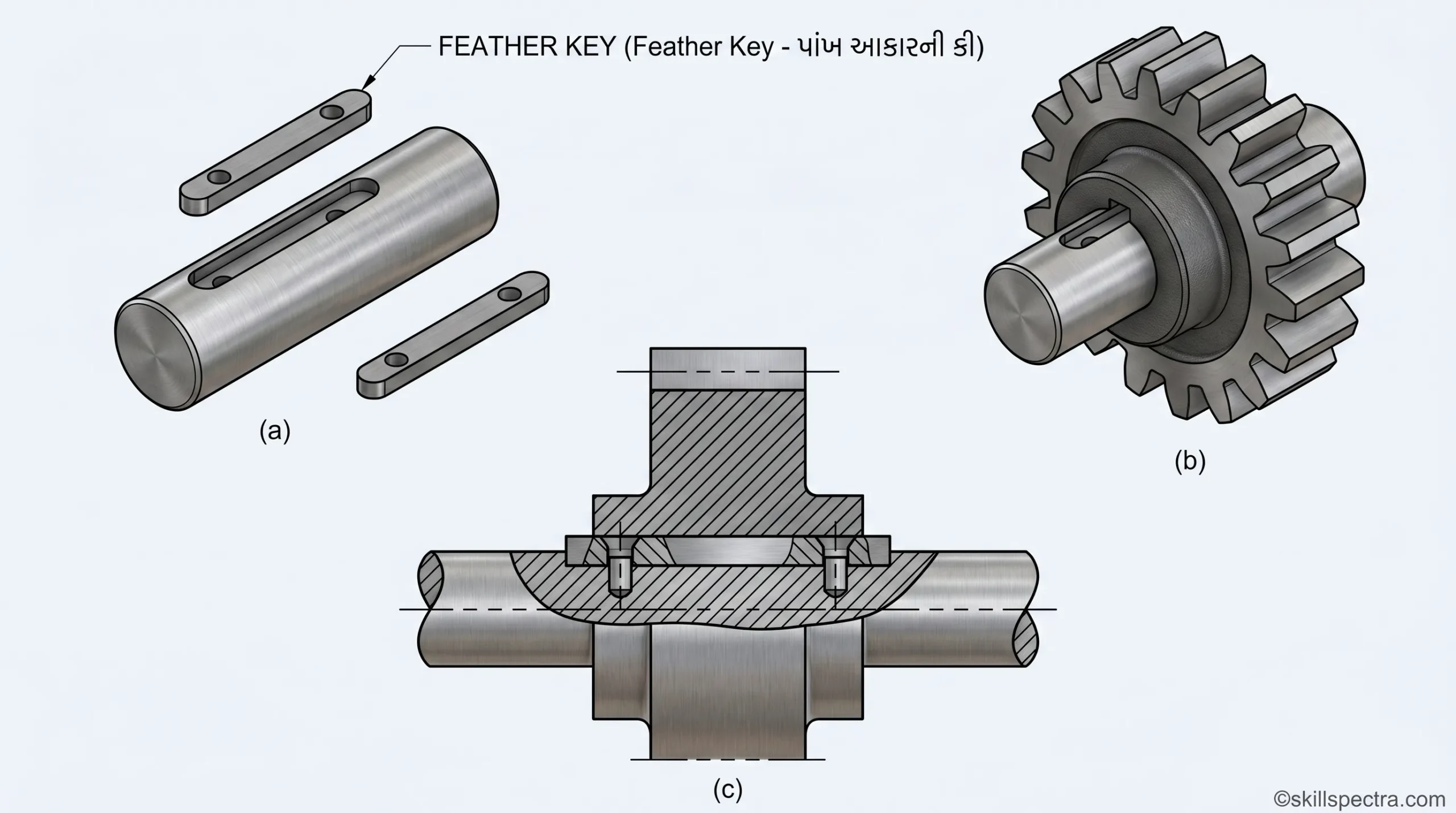
6. Feather key (Fig 8): 🪶 આ ગોળાકાર છેડાવાળી સમાંતર કી (parallel key) છે. જ્યારે hub/pulley ને shaft પર અમુક અંતર સુધી સરકવું (slide) પડે ત્યારે આ ઉપયોગી છે. આ કી keyway માં ચુસ્ત રીતે ફિટ કરેલી હોય છે અથવા સ્ક્રૂ કરેલી હોય છે.
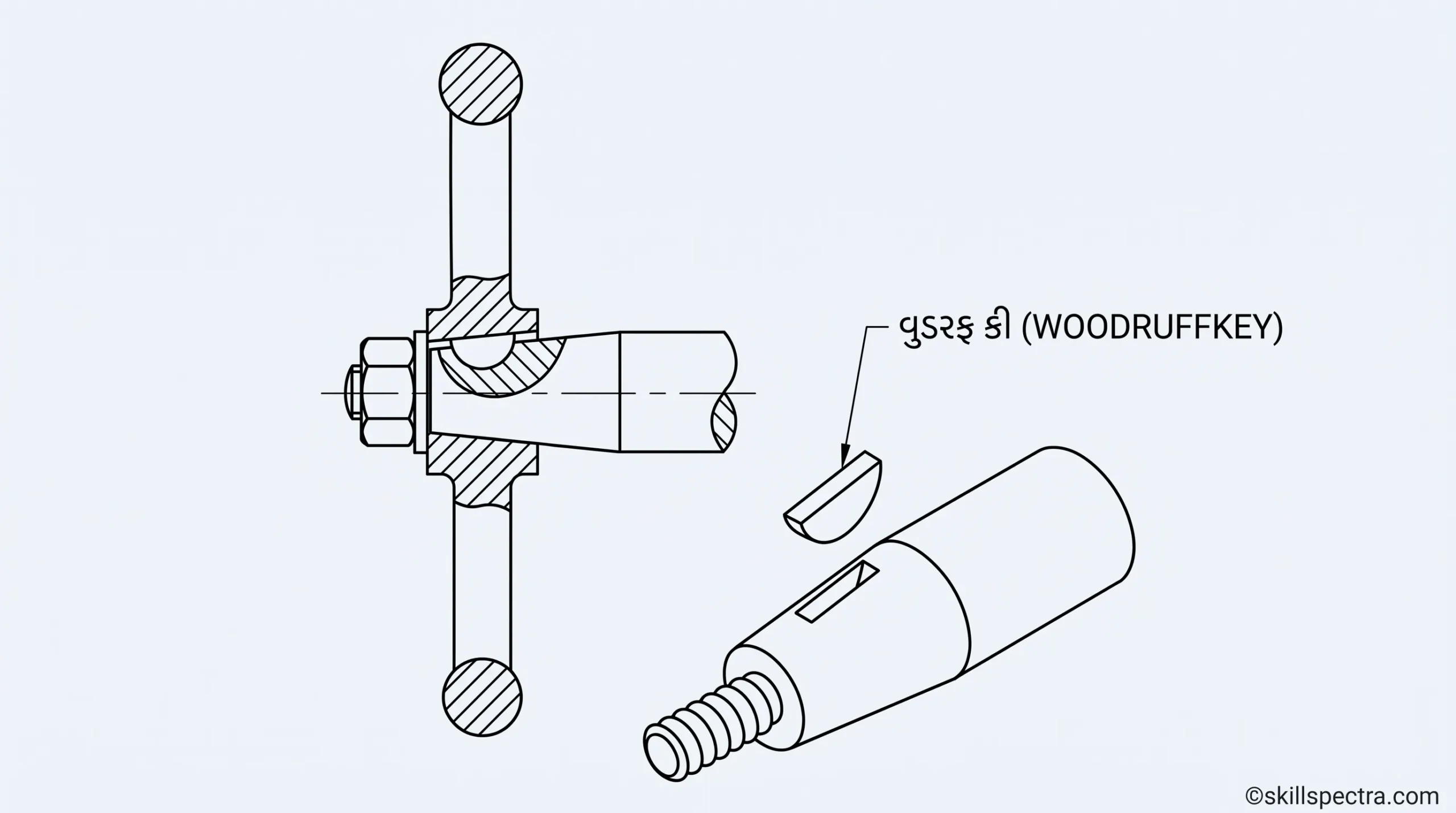
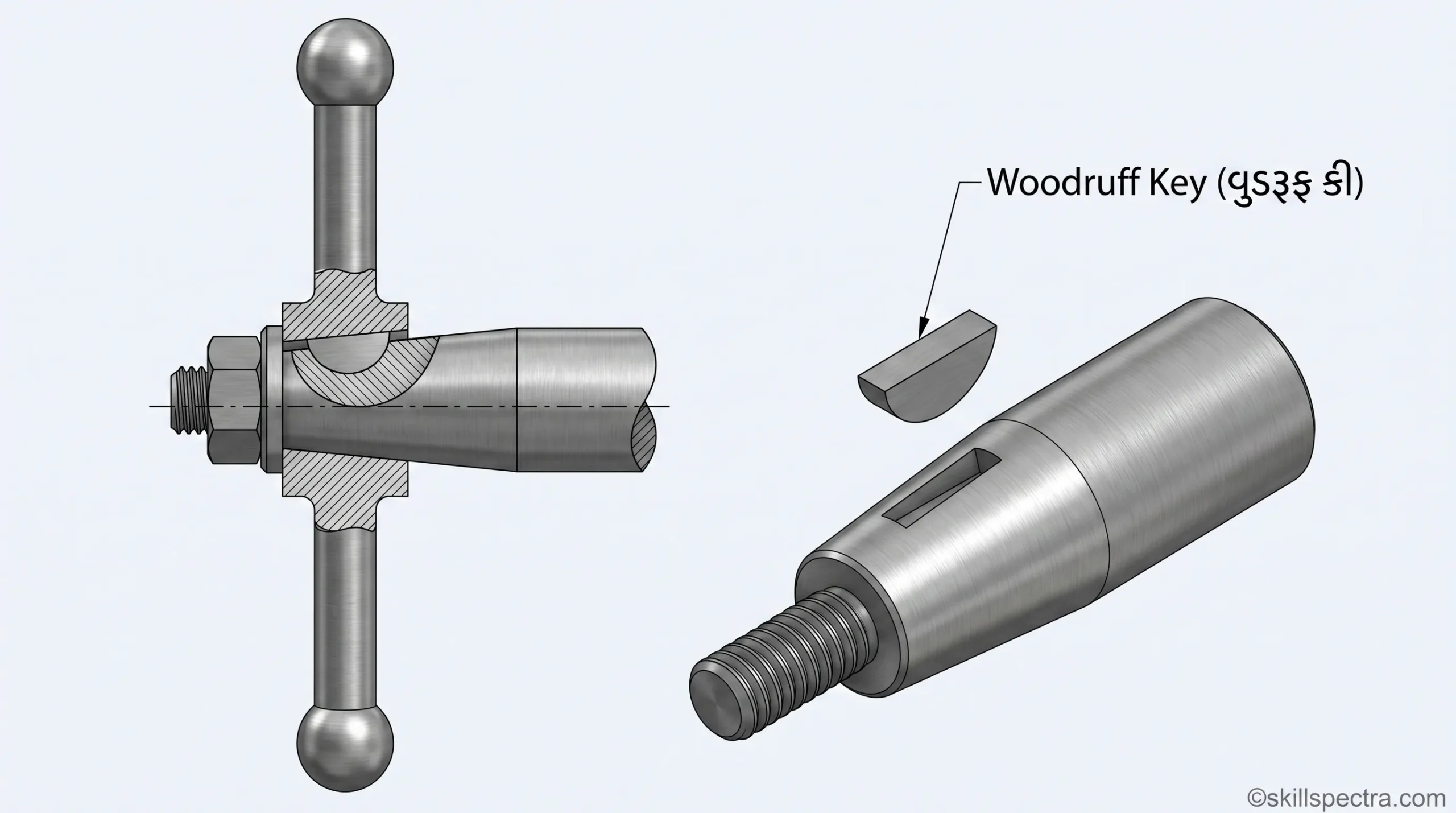
7. Woodruff key (Fig 9): 🪵 આ અર્ધવર્તુળાકાર (semicircular) કી છે અને તે shaft પર કાપેલા મેચિંગ ખાંચામાં ફિટ થાય છે. કીનો ઉપરનો ભાગ બહાર નીકળેલો હોય છે અને તે hub પર કાપેલા keyway માં ફિટ થાય છે. આ કી ખાસ કરીને shafts ના tapered fittings પર ઉપયોગી છે.
⚙️ Splined shaft and serrated shaft
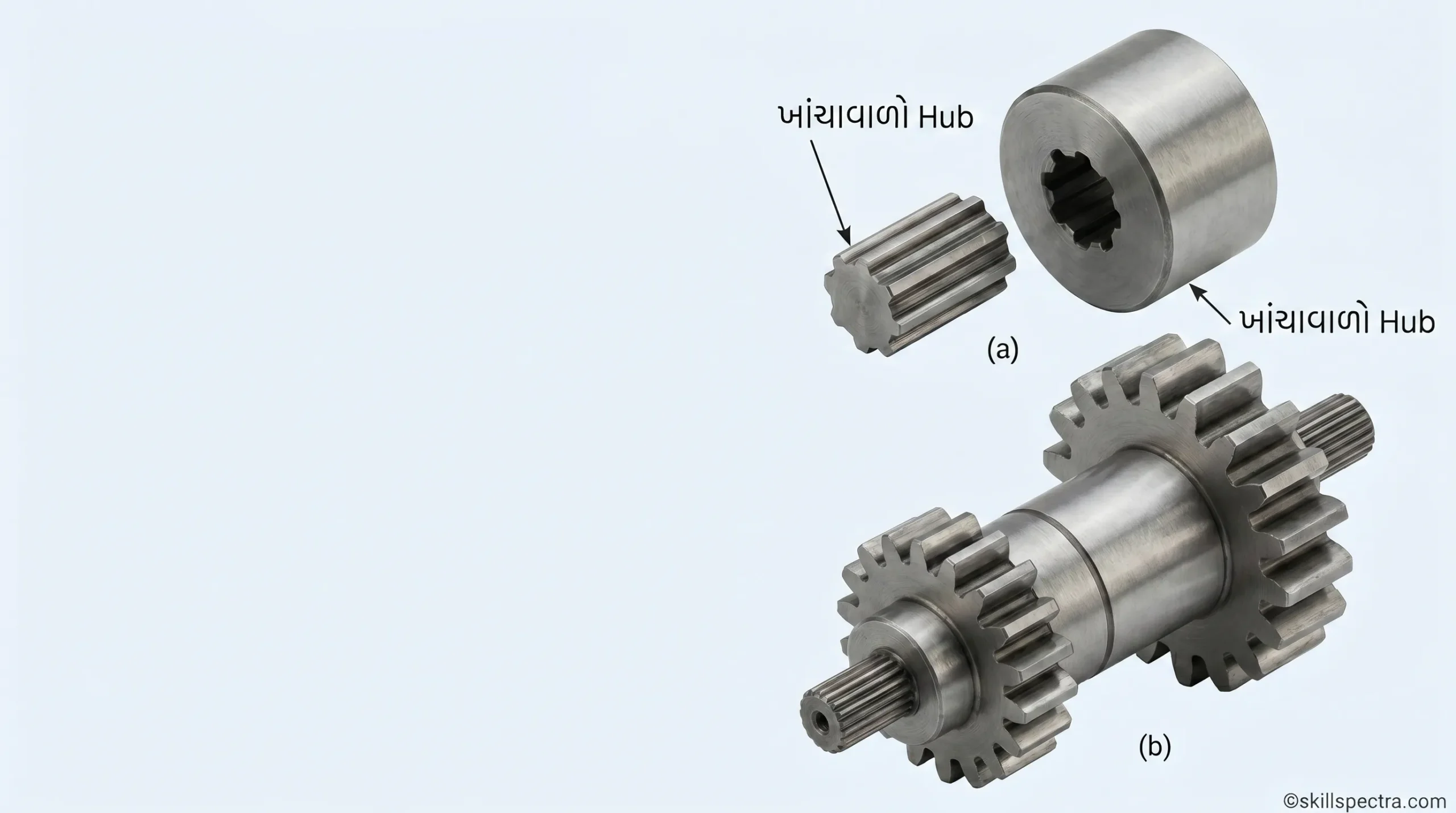
Splined shafts (Fig 10): Splined shafts નો ઉપયોગ ખાસ કરીને મોટર ઉદ્યોગ (motor industry) માં splined hubs સાથે થાય છે. જરૂર પડે ત્યારે splined hub shaft પર સ્લાઇડ (સરકી) પણ શકે છે.
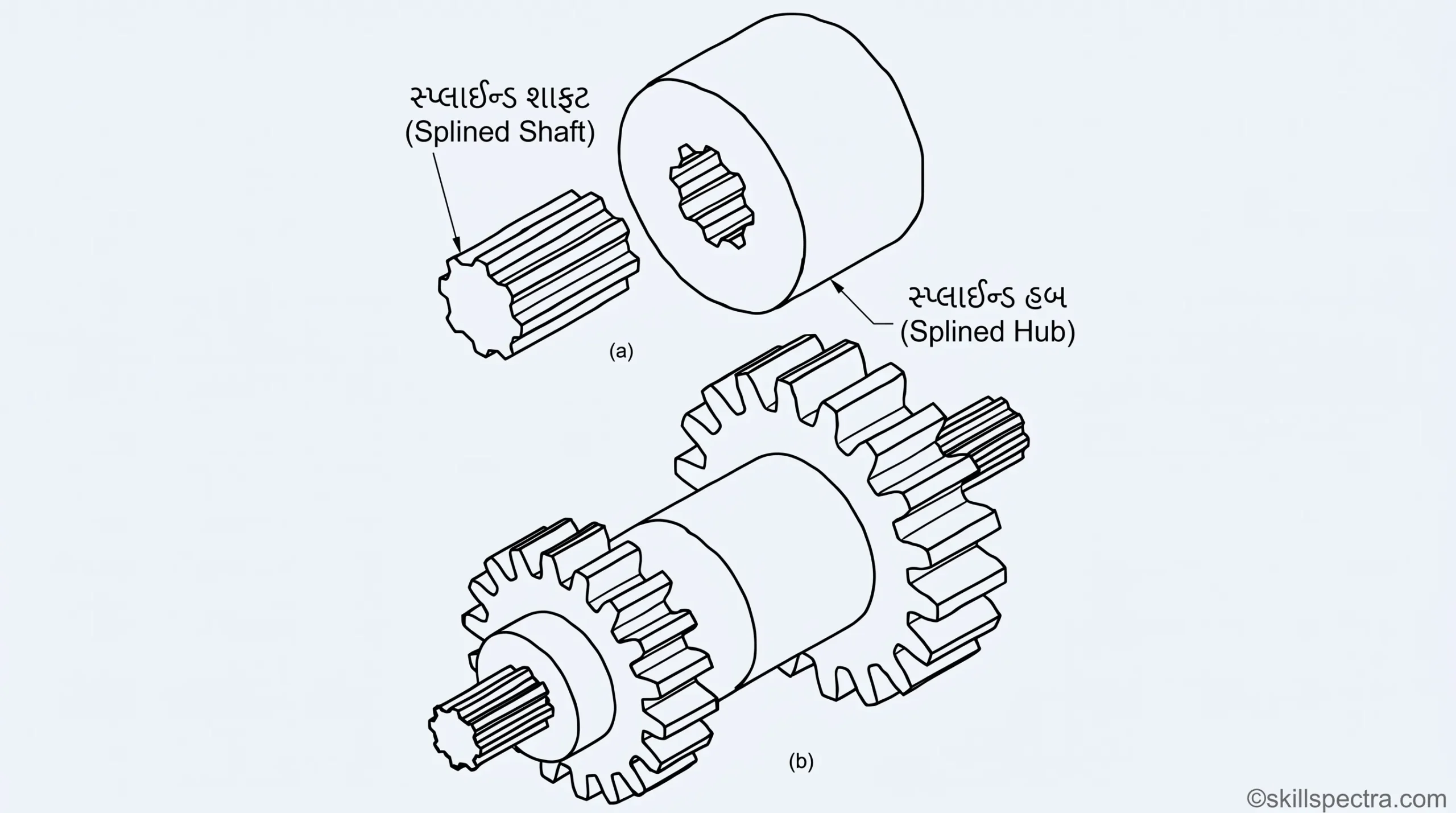
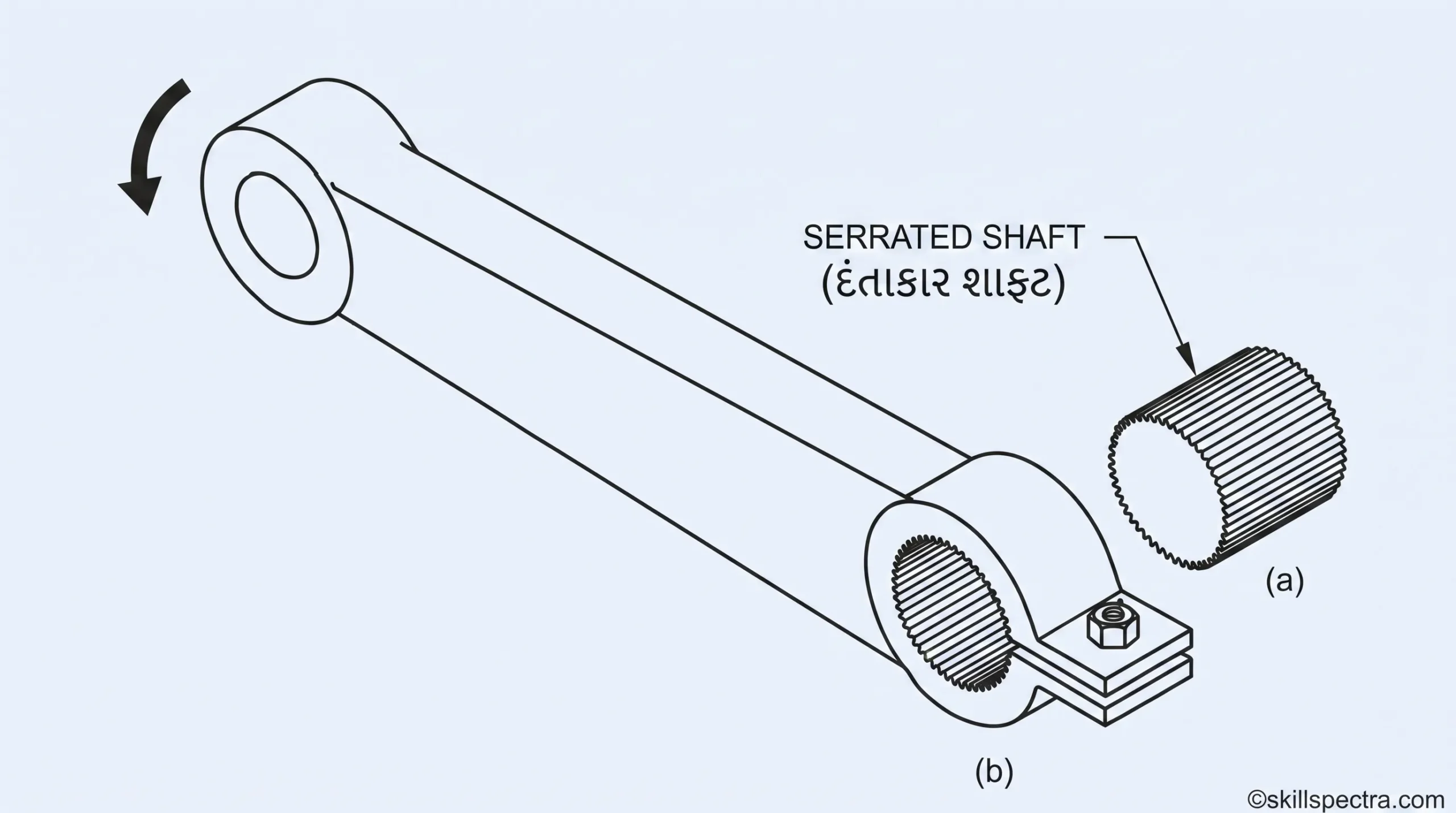
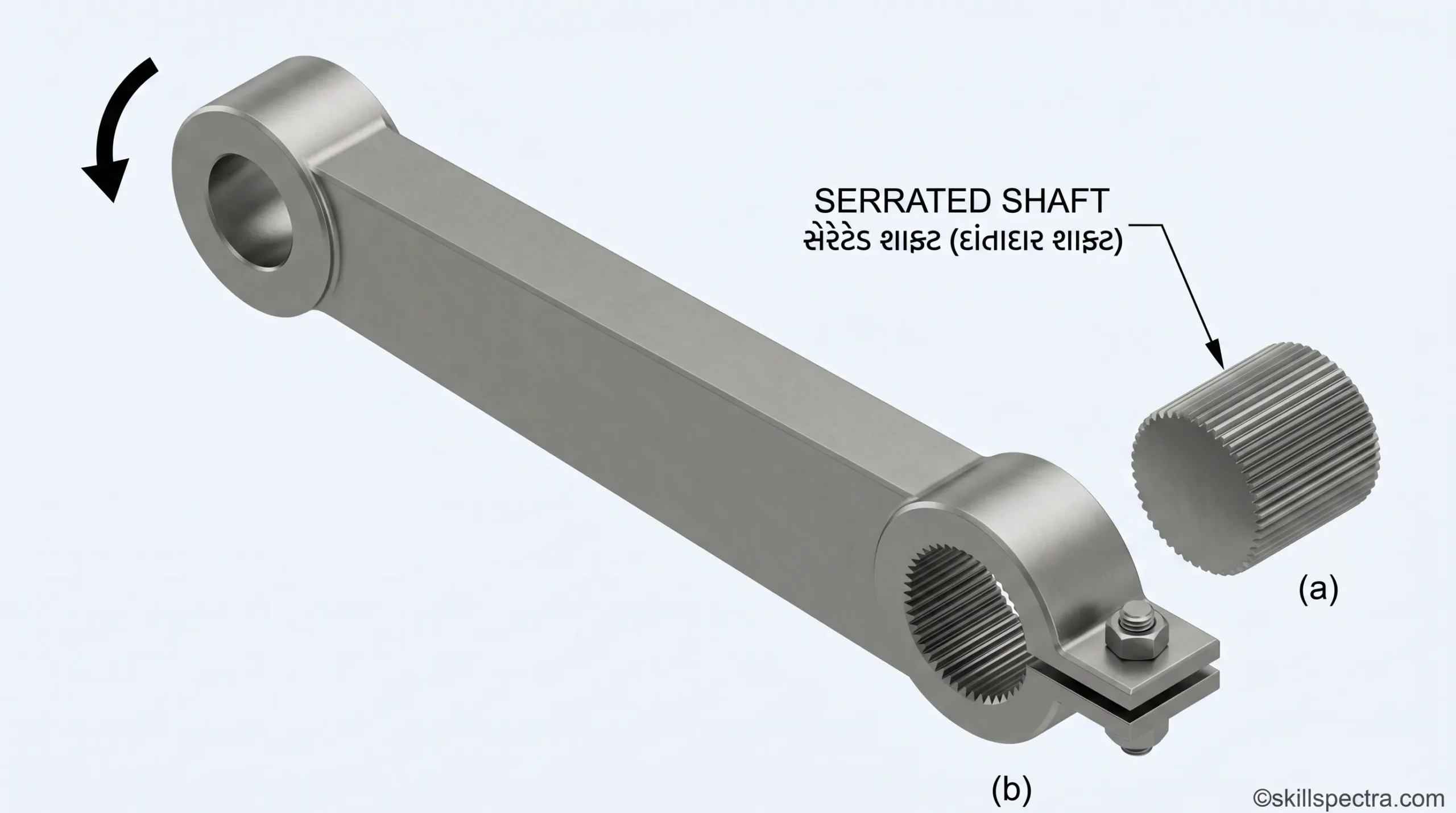
Serrated shafts (Fig 11): ચોક્કસ એસેમ્બલીઓમાં, ટ્રાન્સમિશન માટે serrated shafts નો પણ ઉપયોગ કરવામાં આવે છે.
🌐 Keywords:
- Mechanic Diesel Lesson Gujarati
- Types of Locking Devices in Gujarati
- What is Castle Nut and Wing Nut
- Keys and Splines Engineering Gujarati
- Sunk Key and Woodruff Key explanation
- ITIMechanic Diesel Theory Notes
- Mechanical Fasteners Gujarati Guide
- Automotive Locking Methods
- Difference between Slotted and Castle Nut
- Feather Key and Gib-head Key use cases
Instructor Note: આ મટીરીયલનો ઉપયોગ કરીને વિદ્યાર્થીઓને આકૃતિઓ (Figures) સાથે સમજાવવાથી તેઓ સરળતાથી એન્જિનિયરિંગ કમ્પોનન્ટ્સને ઓળખી શકશે. 🎓🔧
Circlips ⛓️
Objectives:
આ લેસનના અંતે તમે આ બાબતો શીખી શકશો:
- Circlips ના કાર્યો (functions) જણાવવા.
- Circlips ના અલગ-અલગ પ્રકારો (types) જણાવવા.
- અન્ય fastening devices ની સરખામણીમાં Circlips ના ફાયદા જણાવવા.
- Circlips માટે વપરાતા material જણાવવા.
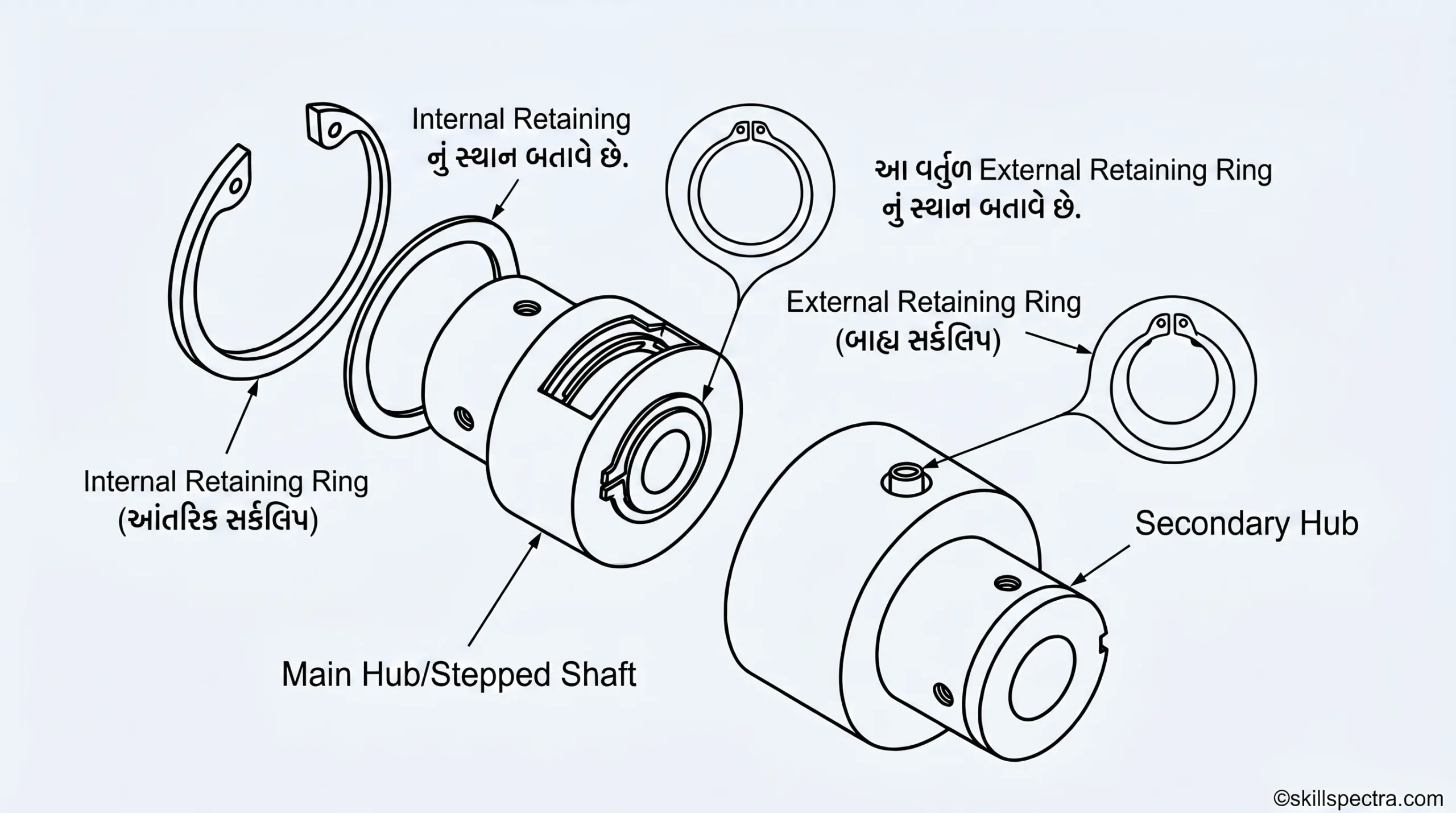
Circlips એ fastening devices છે જેનો ઉપયોગ assembly માં પાર્ટ્સના positioning માટે અથવા તેની movement ને limit કરવા માટે shoulders પૂરા પાડવા માટે થાય છે (Fig 1). Circlips ને ‘Retaining rings’ પણ કહેવામાં આવે છે. 💍
આ rings સામાન્ય રીતે એવા material માંથી બનાવવામાં આવે છે જેમાં good spring properties હોય, જેથી fastener ને નોંધપાત્ર હદ સુધી elastically deform (આકાર બદલવો) કરી શકાય અને તે ફરીથી તેના મૂળ આકારમાં આવી શકે. આ ગુણધર્મના કારણે Circlip કોઈ પાર્ટમાં રહેલા groove અથવા recess માં પાછી spring થઈ શકે છે અથવા તેને પાર્ટ પર એવી રીતે બેસાડી શકાય કે તે પાર્ટને મજબૂત રીતે પકડી રાખે. Circlips ને high tensile અને yield strength ધરાવતી spring steel માંથી બનાવવામાં આવે છે. 🏗️
- એક Circlip ઘણીવાર બે કે તેથી વધુ પાર્ટ્સની જગ્યા લઈ શકે છે.
- Circlips માટે વિકસાવવામાં આવેલા Assembly toolings અકુશળ કામદારો (unskilled workers) દ્વારા પણ ખૂબ જ ઝડપથી fasteners ની assembly કરવાની પરવાનગી આપે છે.
Material:
Retaining rings નું કાર્ય મુખ્યત્વે assembly અને disassembly દરમિયાન elastically deform થવાની તેમની ક્ષમતા પર આધાર રાખે છે, તેથી material માં સારી spring properties હોવી જોઈએ. Circlips એ high tensile અને yield strength ધરાવતા spring steel માંથી બનાવવામાં આવે છે.
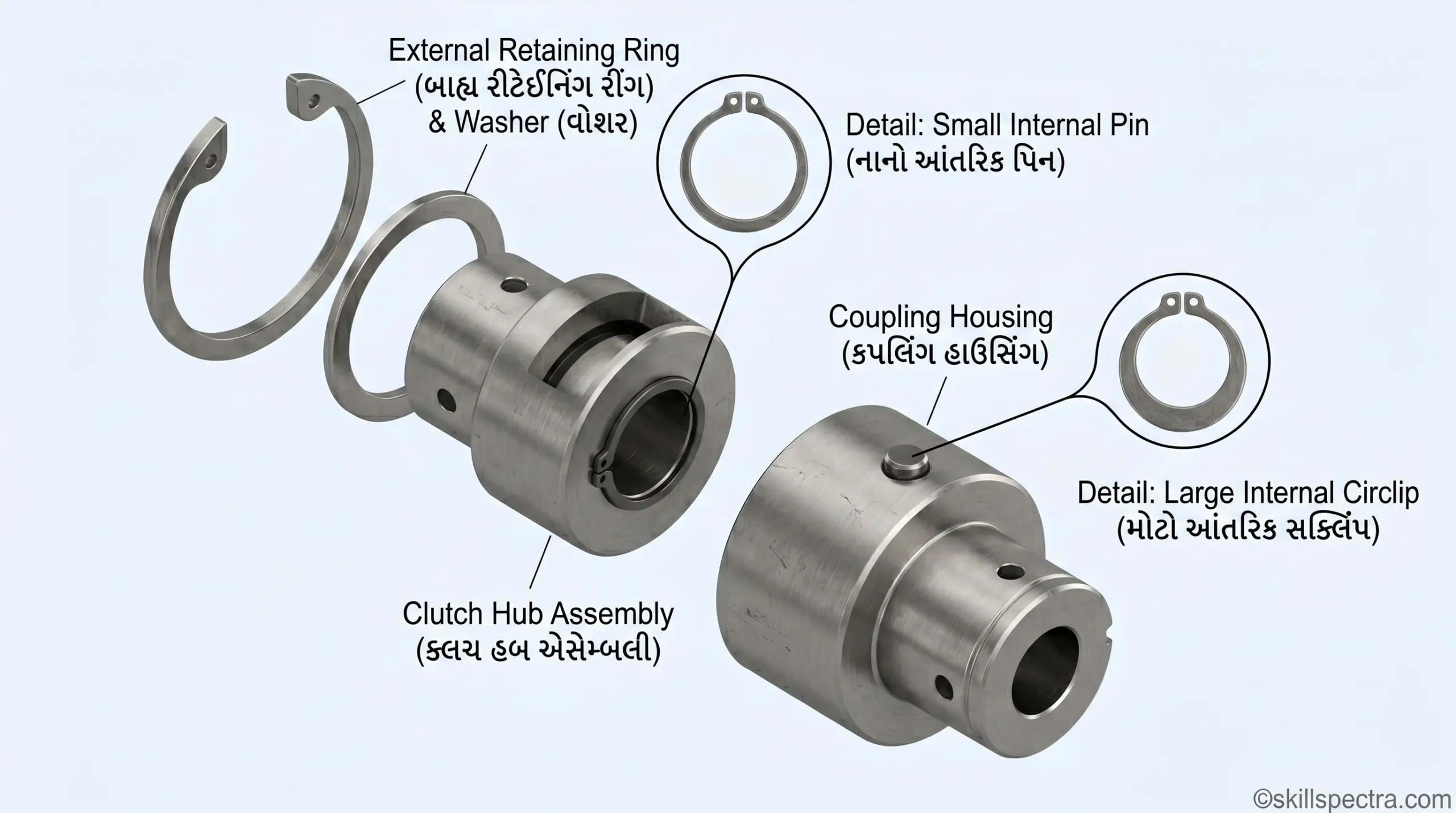
Types of Circlips (Circlips ના પ્રકારો):
બે પ્રકારના હોય છે. ✌️
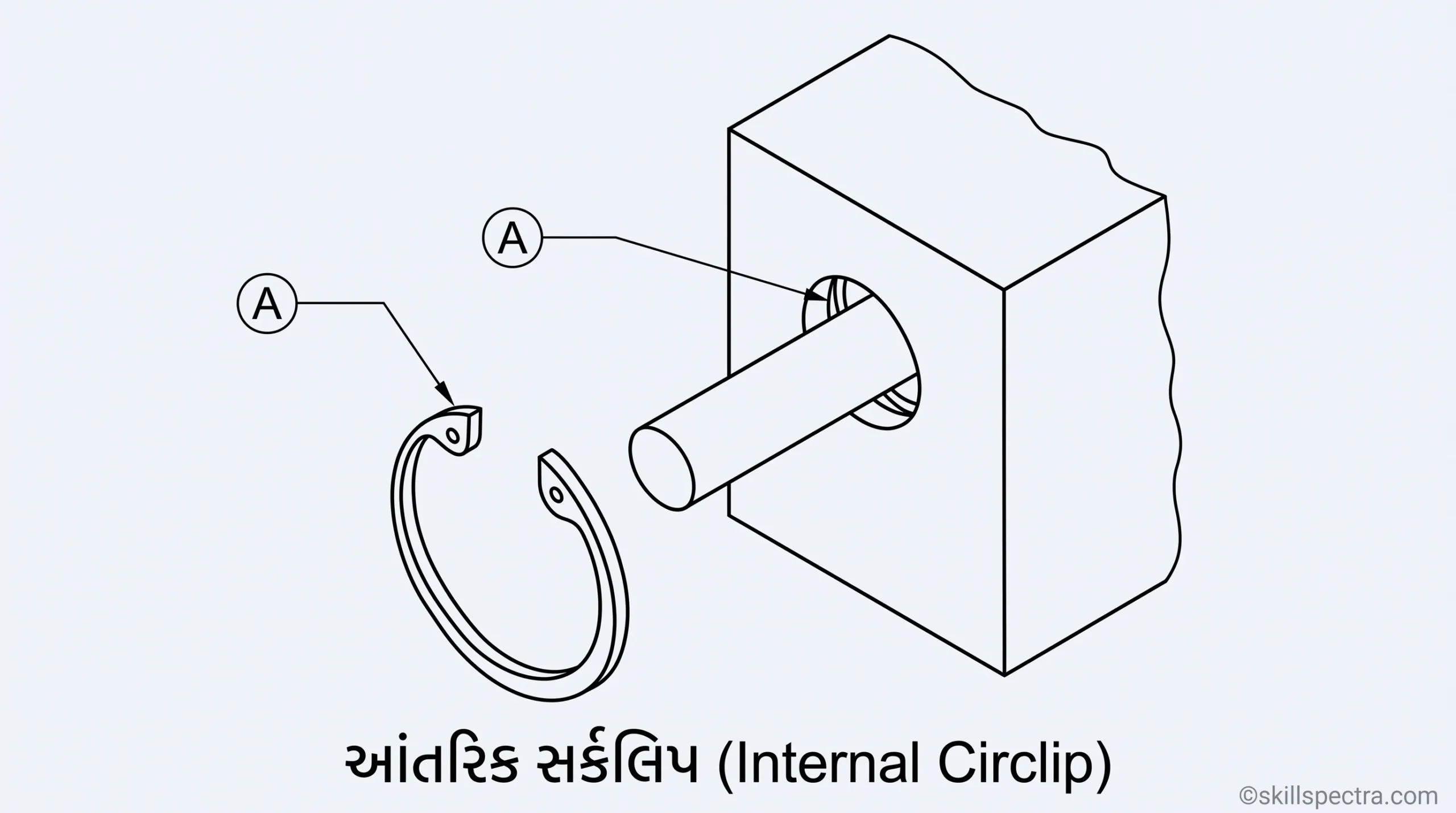
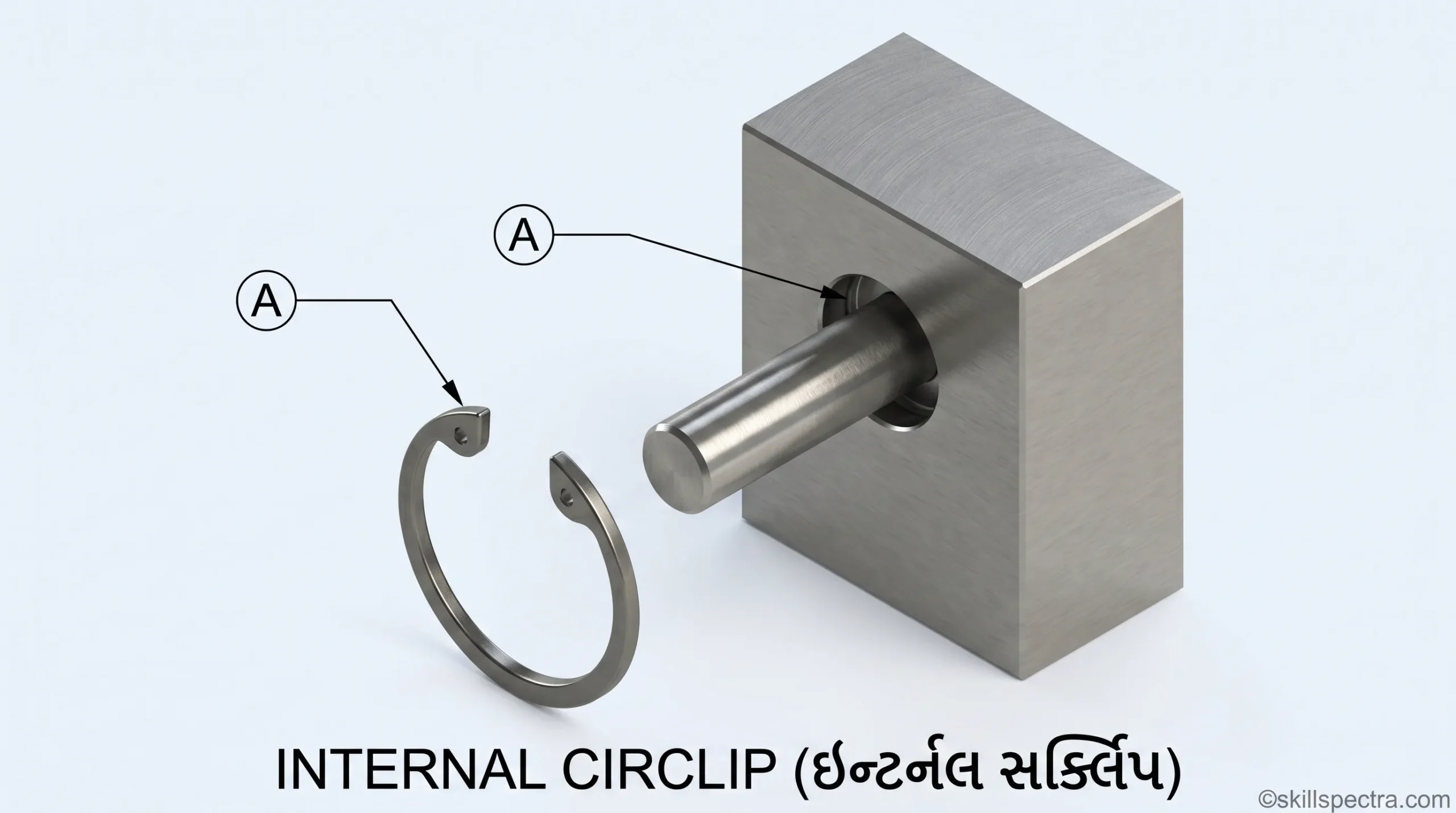
- Internal circlips (Fig 2): આ પ્રકારની rings ને holes, bores અથવા housing માં assemble કરવામાં આવે છે.
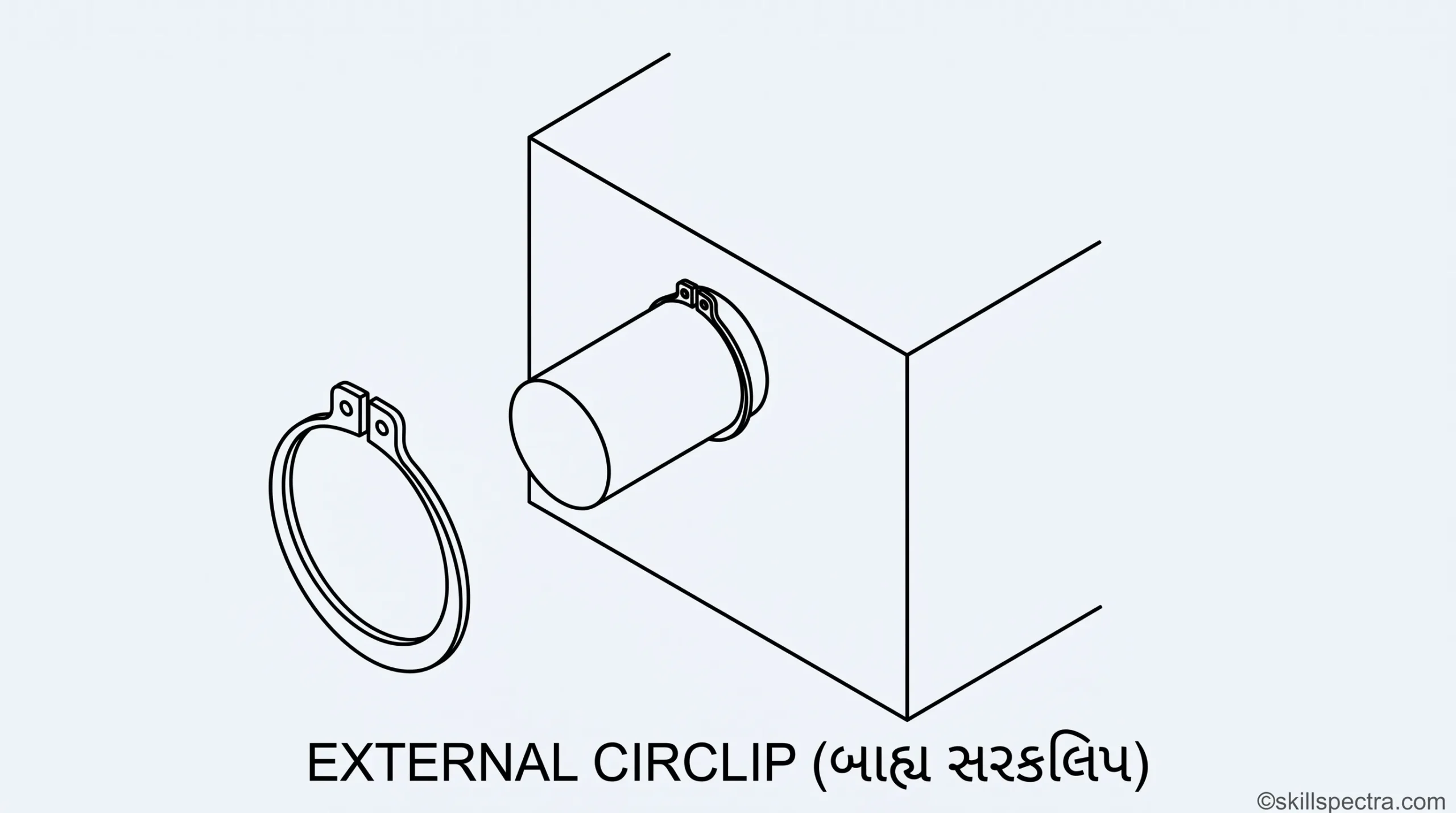
- External circlip (Fig 3): આ પ્રકારની rings ને shafts, pins, studs અને તેના જેવા પાર્ટ્સ પર install કરવામાં આવે છે.
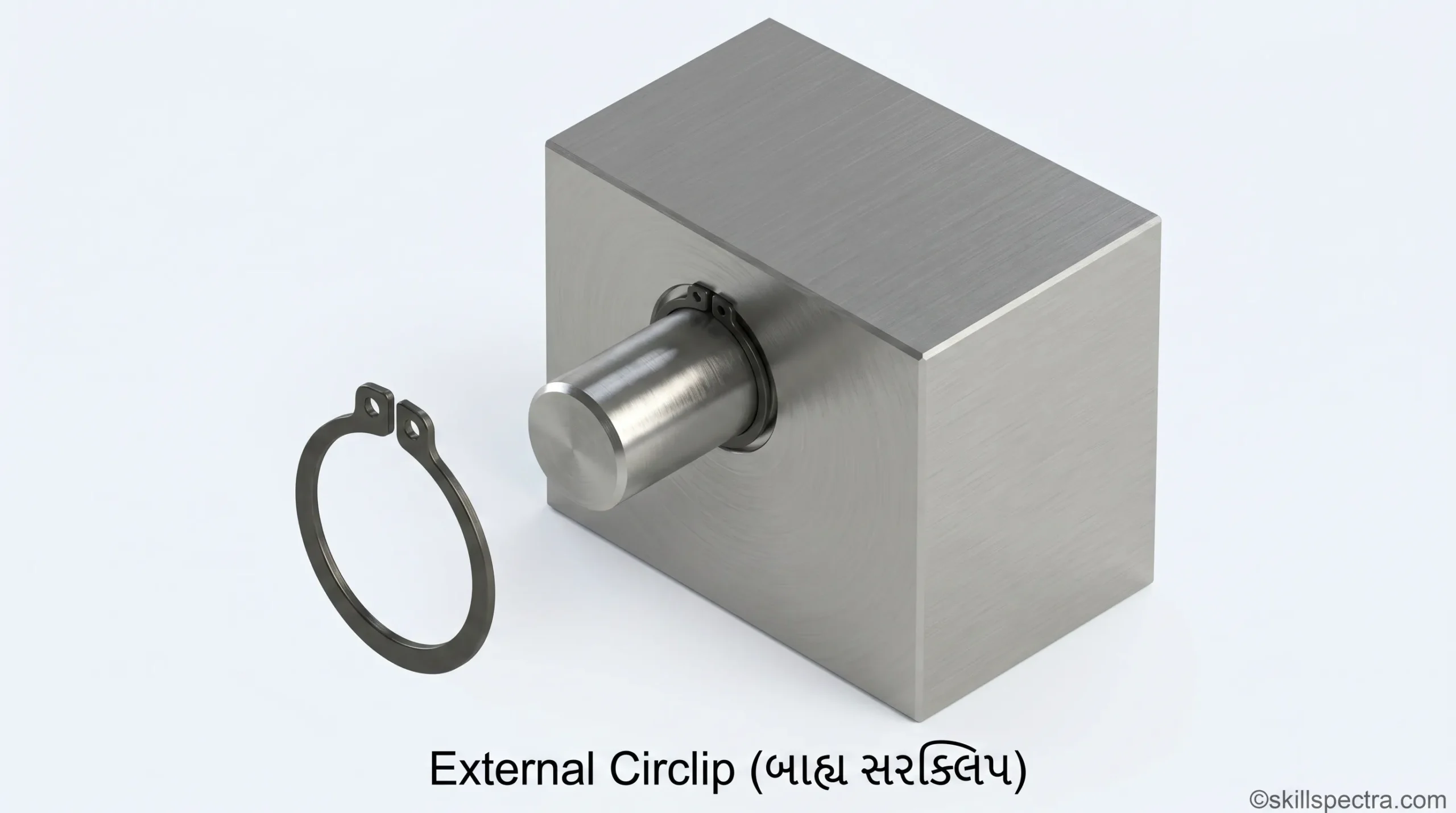
બંને પ્રકારો અન્ય fastening devices ની સરખામણીમાં અનેક ફાયદાઓ આપે છે:
- અન્ય પ્રકારના fasteners ની સરખામણીમાં તેમની કિંમત ઓછી છે.
- તેમના ઉપયોગથી raw material ની બચત થાય છે અને assembly માં અન્ય પાર્ટ્સ માટે machining operations સરળ બને છે.
Washers – Types and Uses 🔩
Objectives:
આ લેસનના અંતે તમે આ બાબતો શીખી શકશો:
- Washers નો હેતુ (purpose) જણાવવો.
- Washers ના પ્રકારોના નામ આપવા.
- દરેક પ્રકારના washers ના ઉપયોગો જણાવવા.
- B.I.S. મુજબ washers ને specify કરવા.
Purpose (હેતુ):
Bolted joints માં nuts ની નીચે washers આપવા તે એક સામાન્ય પ્રથા (common practice) છે.
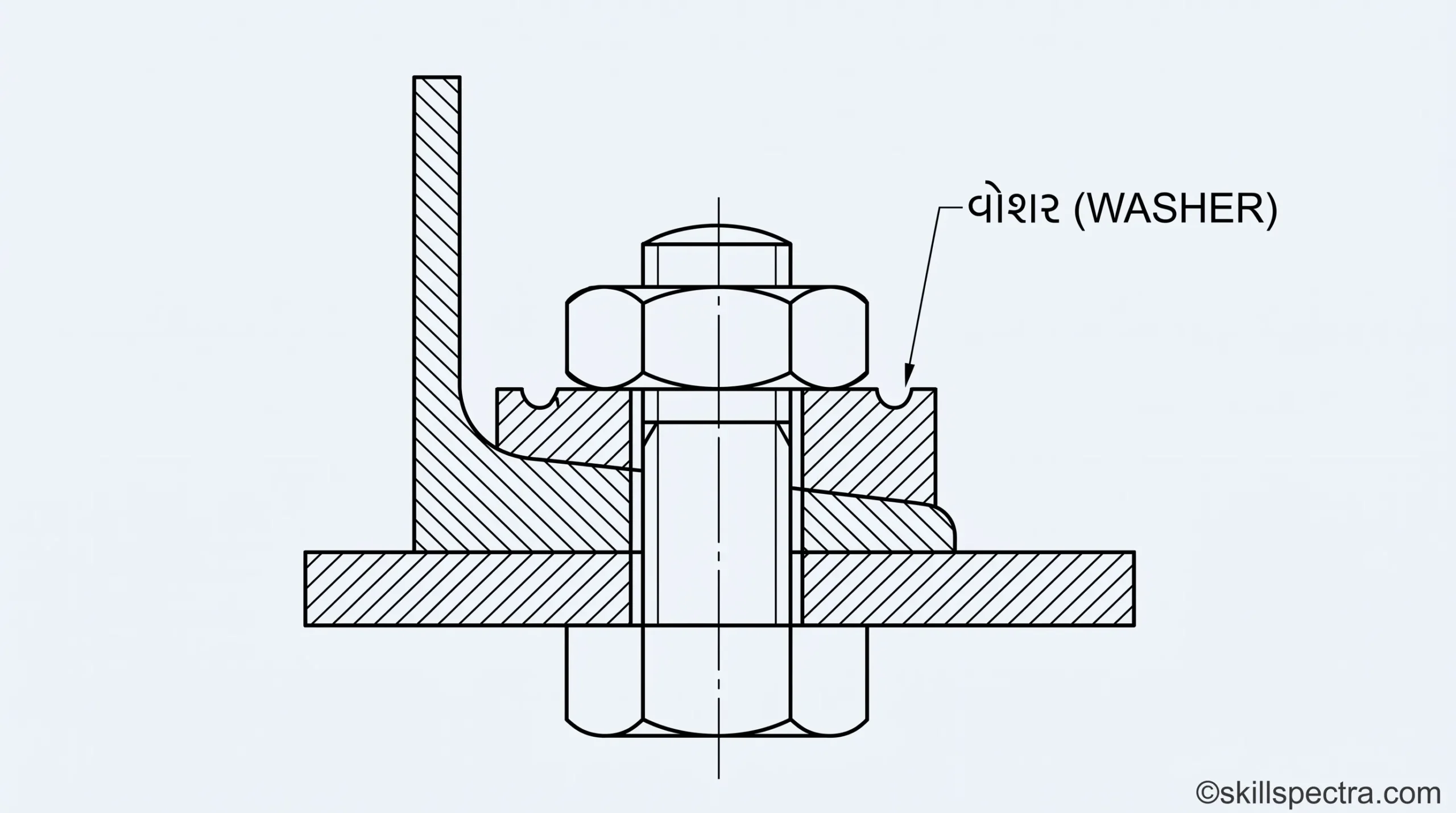
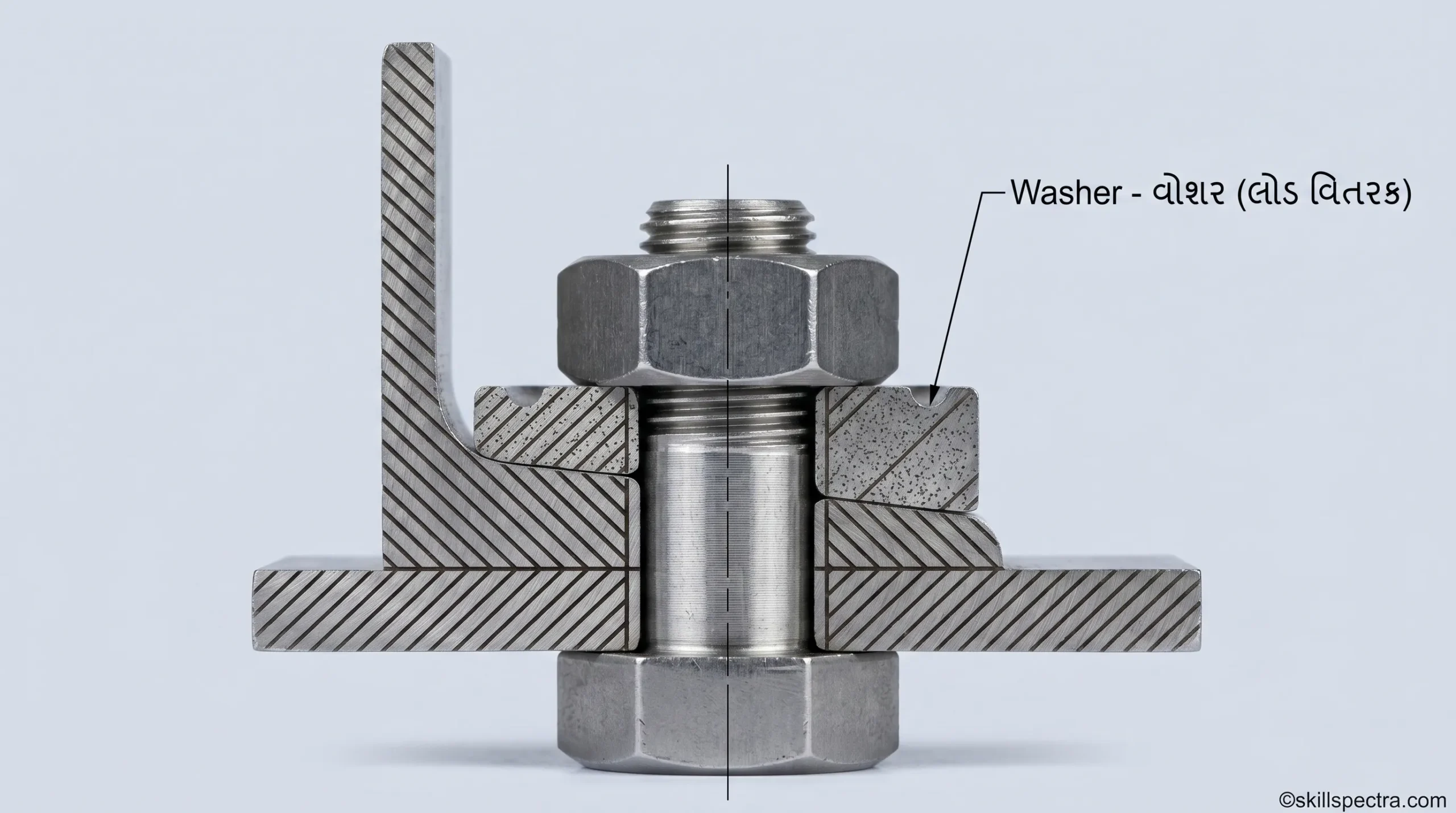
Washers આમાં મદદ કરે છે (Fig 1):
- Frictional grip વધારવામાં.
- Vibration ના કારણે nuts ઢીલા પડતા અટકાવવા (prevent loosening).
- Work piece ને નુકસાન થતું અટકાવવા.
- મોટા વિસ્તાર (larger area) પર force ને વહેંચવા (distribute).
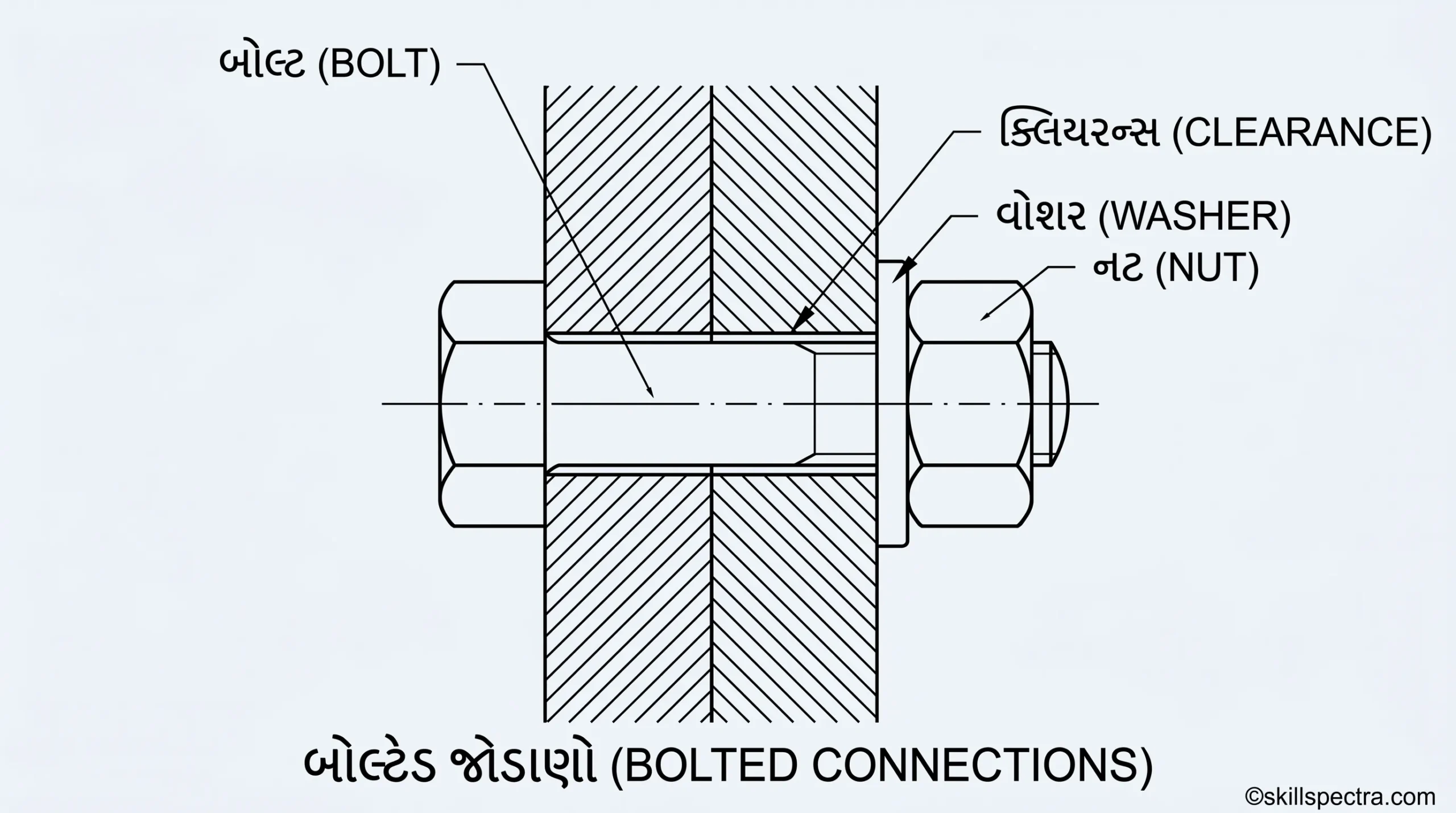
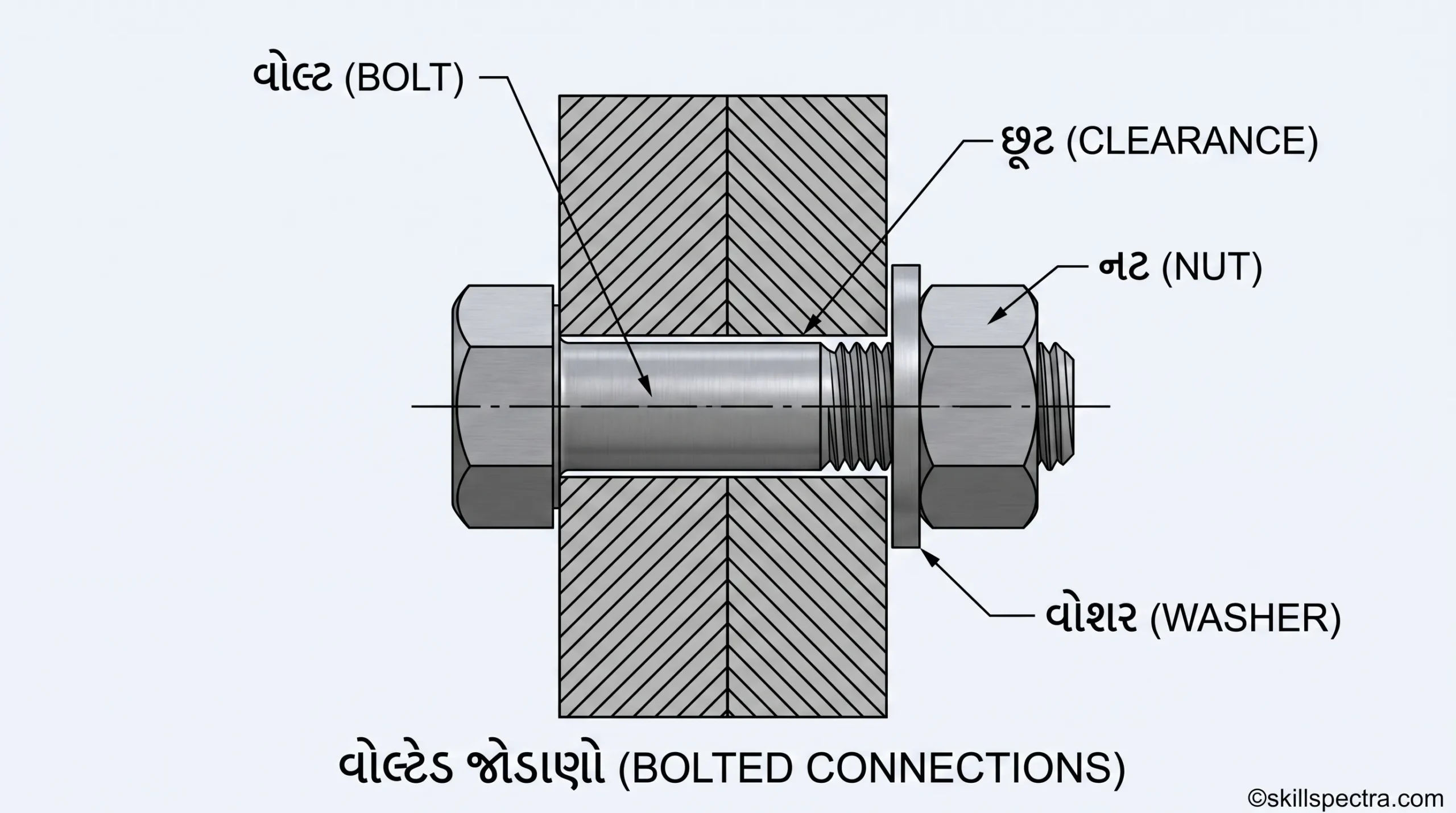
Types of washers: અલગ-અલગ પ્રકારના washers ઉપલબ્ધ છે:
- Plain or flat washers
- Taper washers
- Spring washers
- Tab washers
- Toothed lock washers
Plain or flat washers (Fig 2): આ washers નો ઉપયોગ flat surfaces ધરાવતી bolting assemblies માટે થાય છે. તેની જાડાઈ (thickness) અને bore diameter એ bolt ના diameter ના પ્રમાણમાં હોય છે (I.S. 2016). Plain washers એ machined અથવા punched washers તરીકે ઉપલબ્ધ હોય છે.
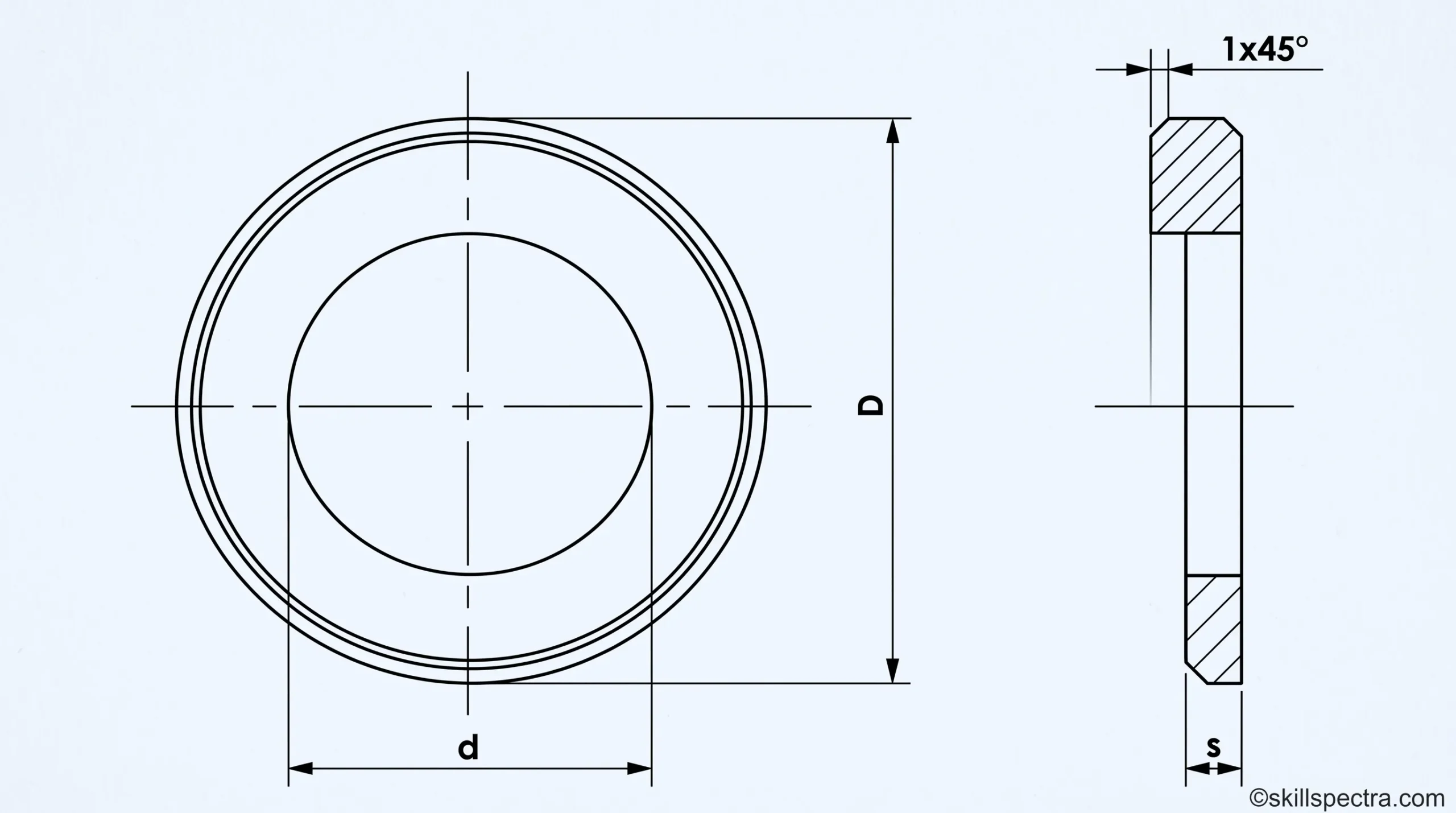
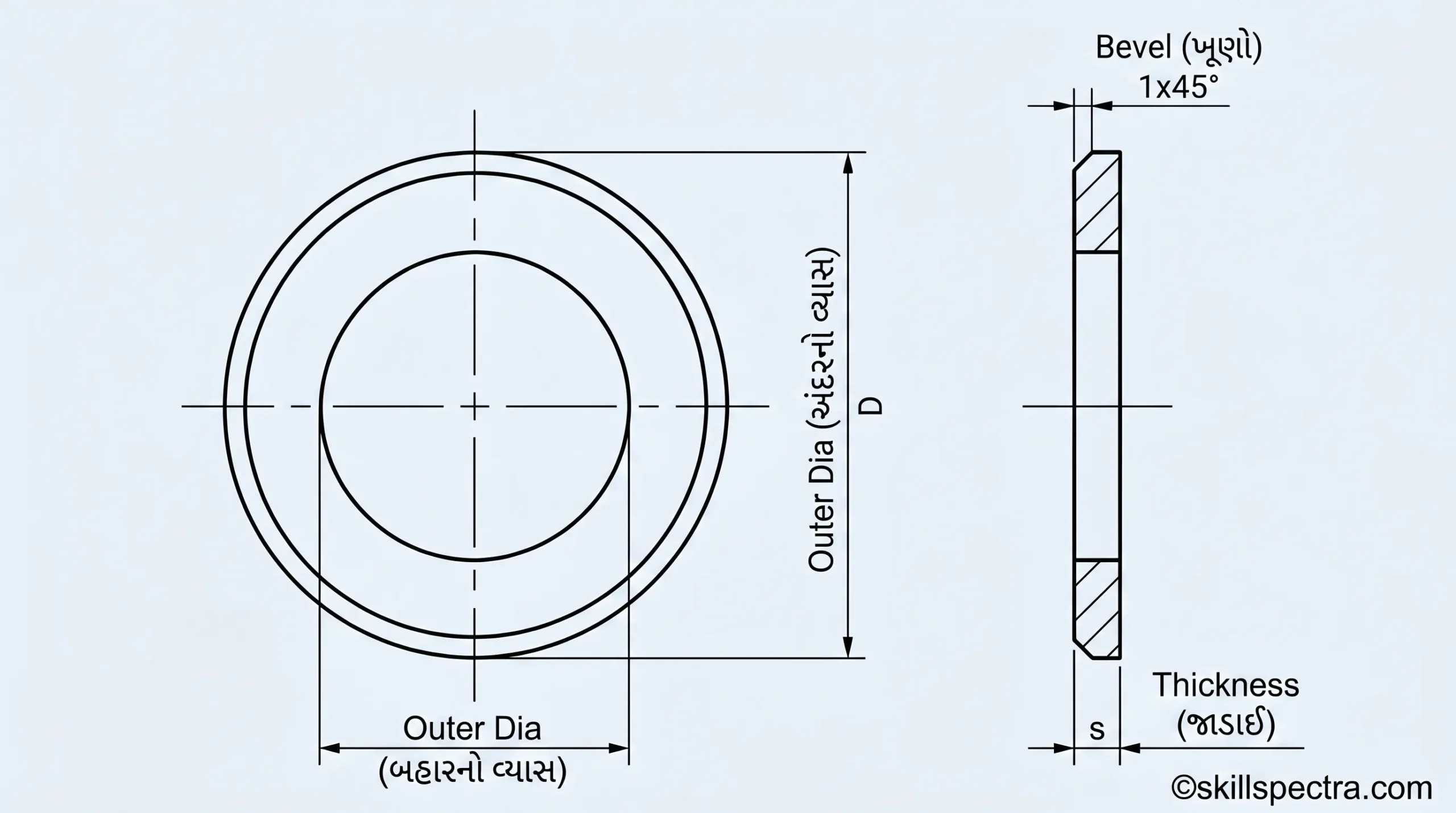
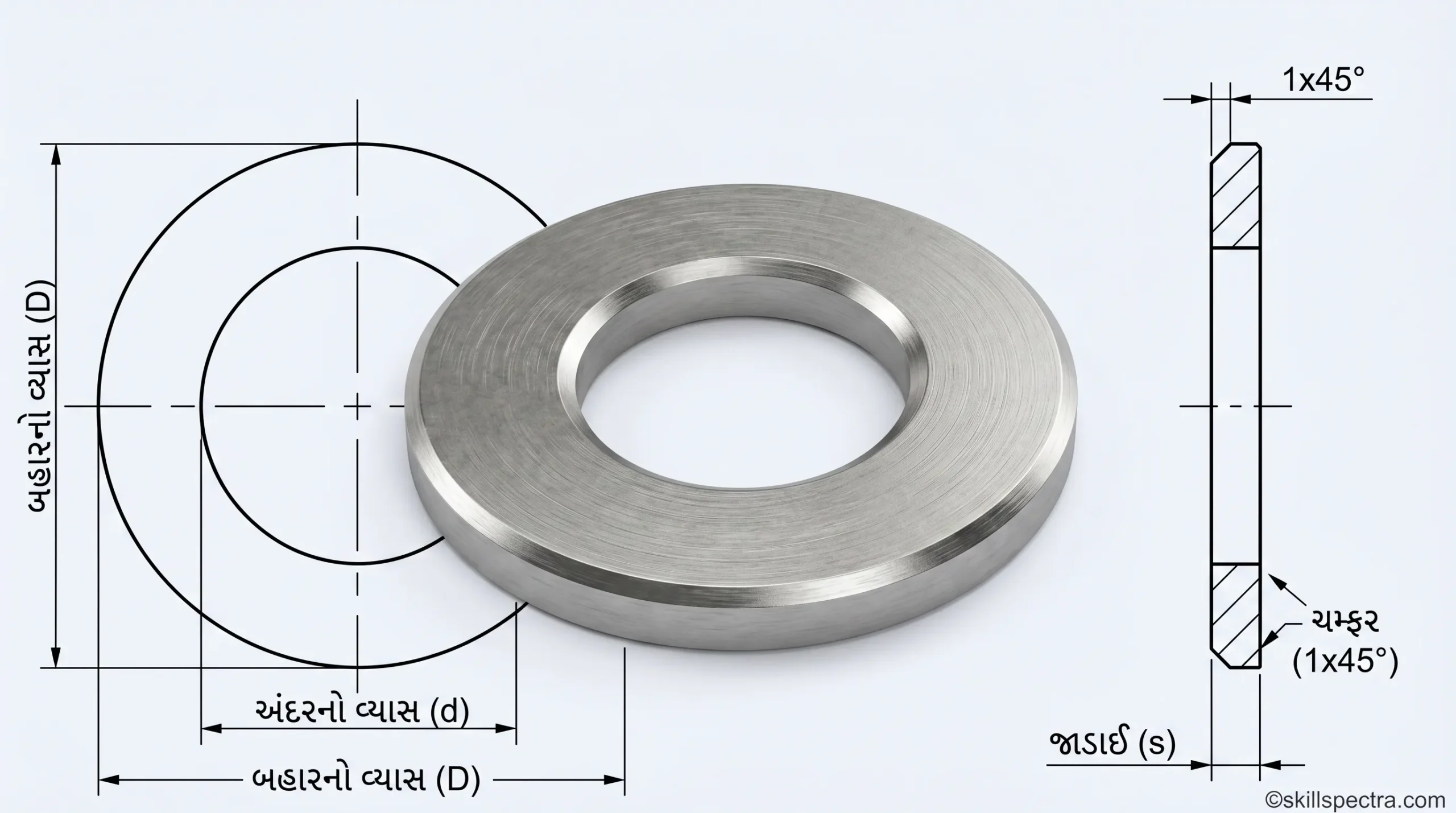
Machined washers (Fig 3): આ washers નો ઉપયોગ machined components ધરાવતી assemblies માટે થાય છે. આ washers એક બાજુ અથવા બંને બાજુ chamfer સાથે ઉપલબ્ધ હોય છે. તેમને heat treat કરવામાં આવે છે અને ground (ઘસવામાં) કરવામાં આવે છે.
Punched washers: આમાં chamfers હોતા નથી અને તે સામાન્ય રીતે structural fabrication કામમાં વપરાય છે. 🏭
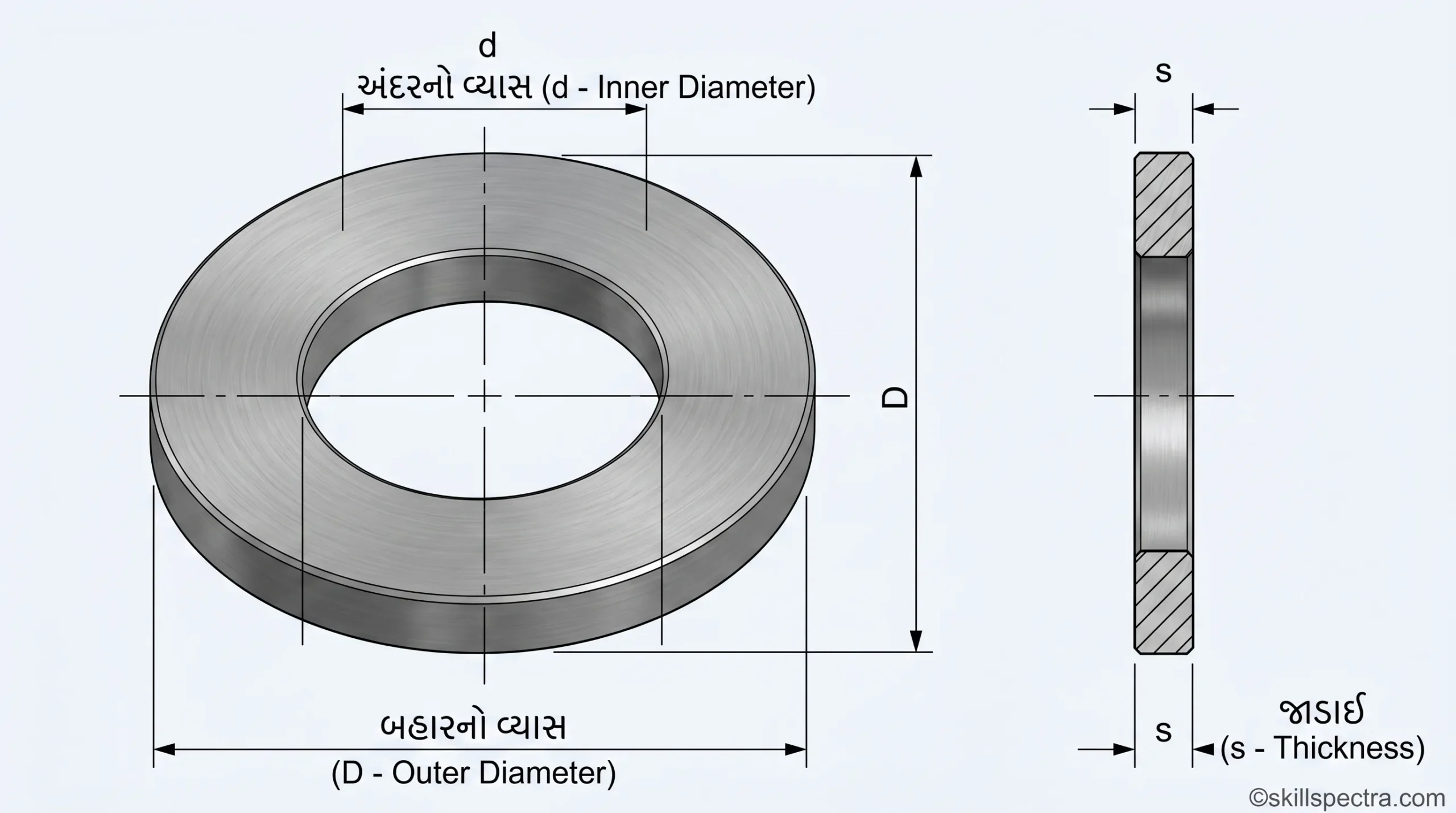
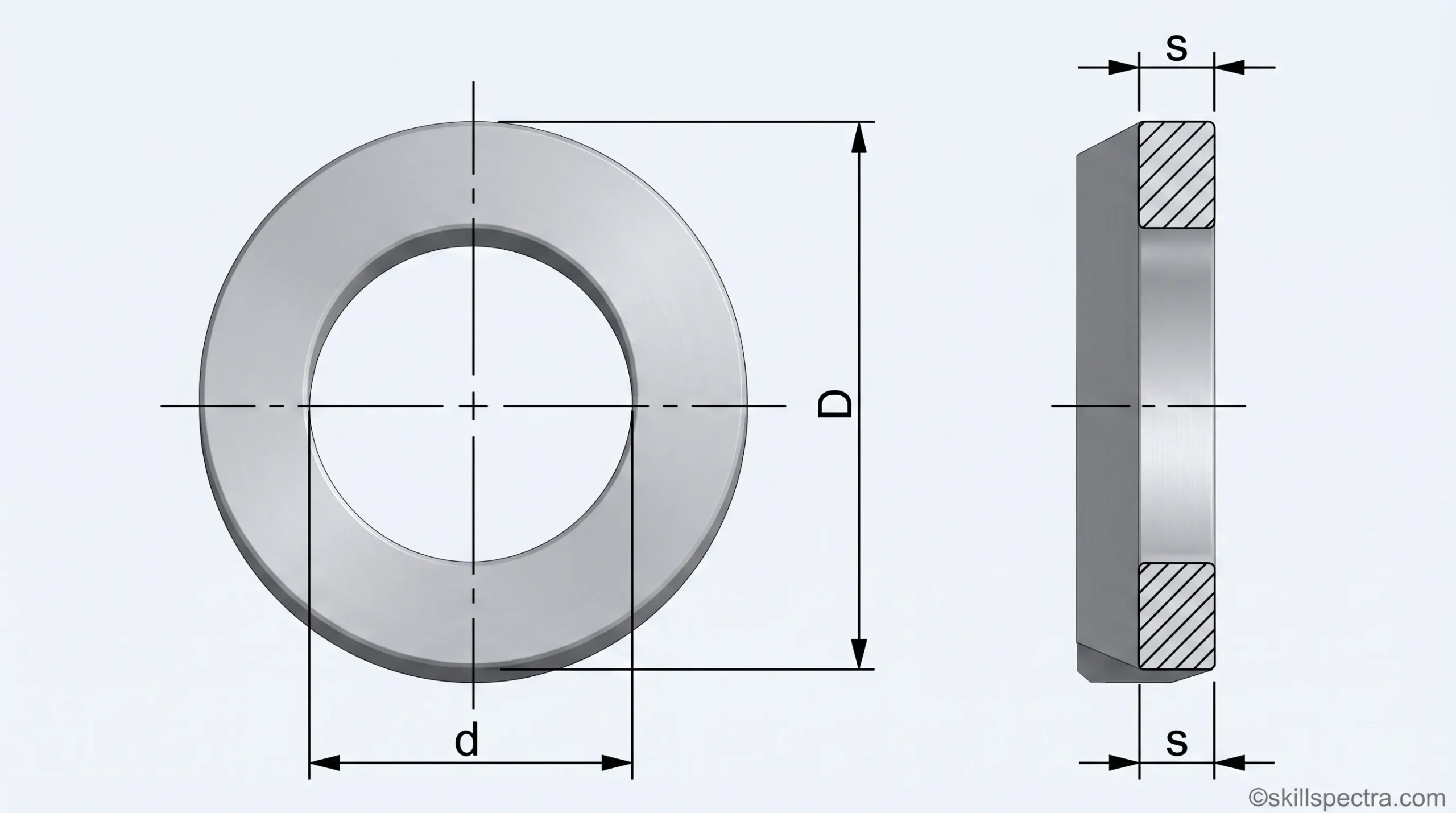
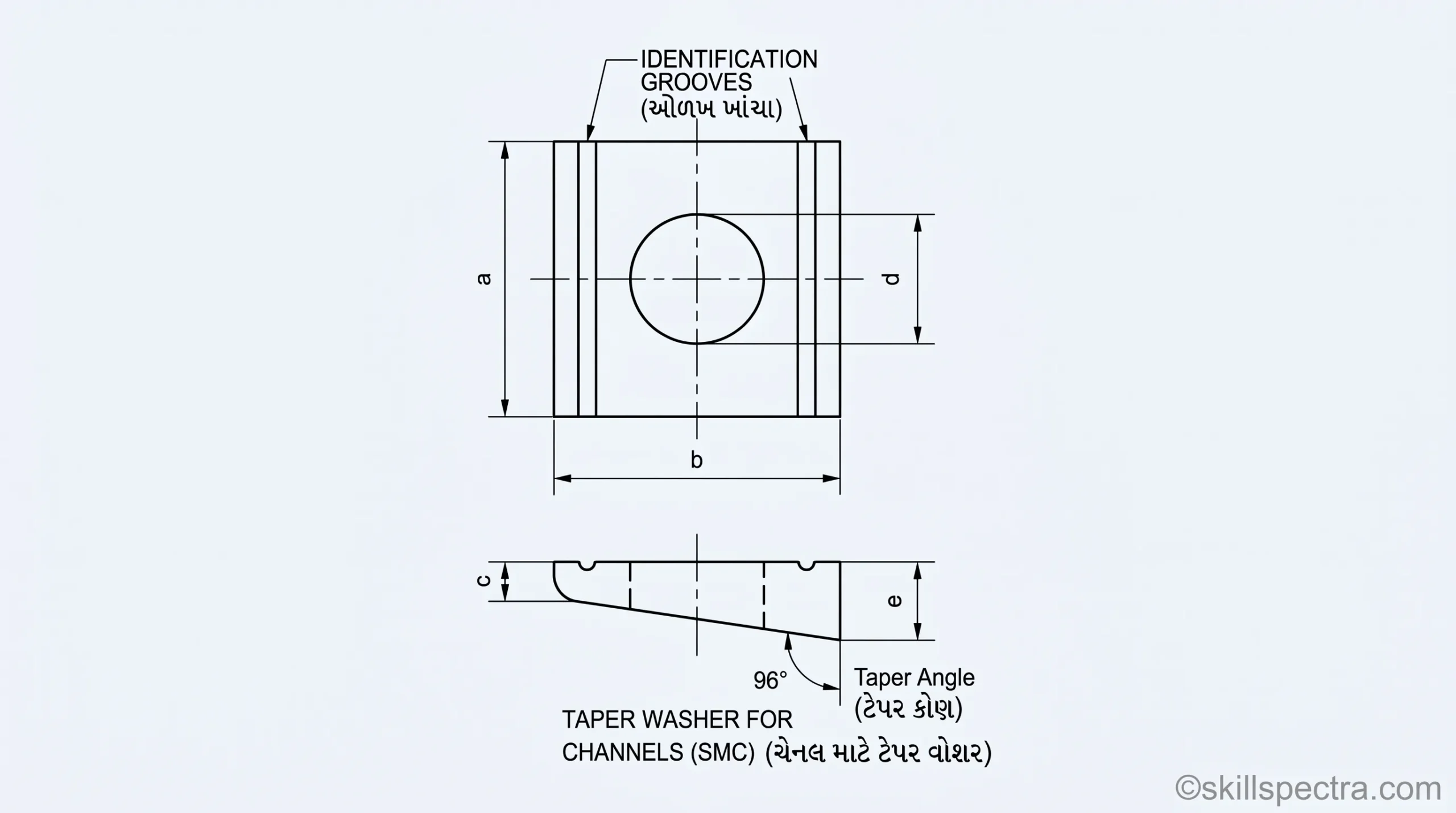
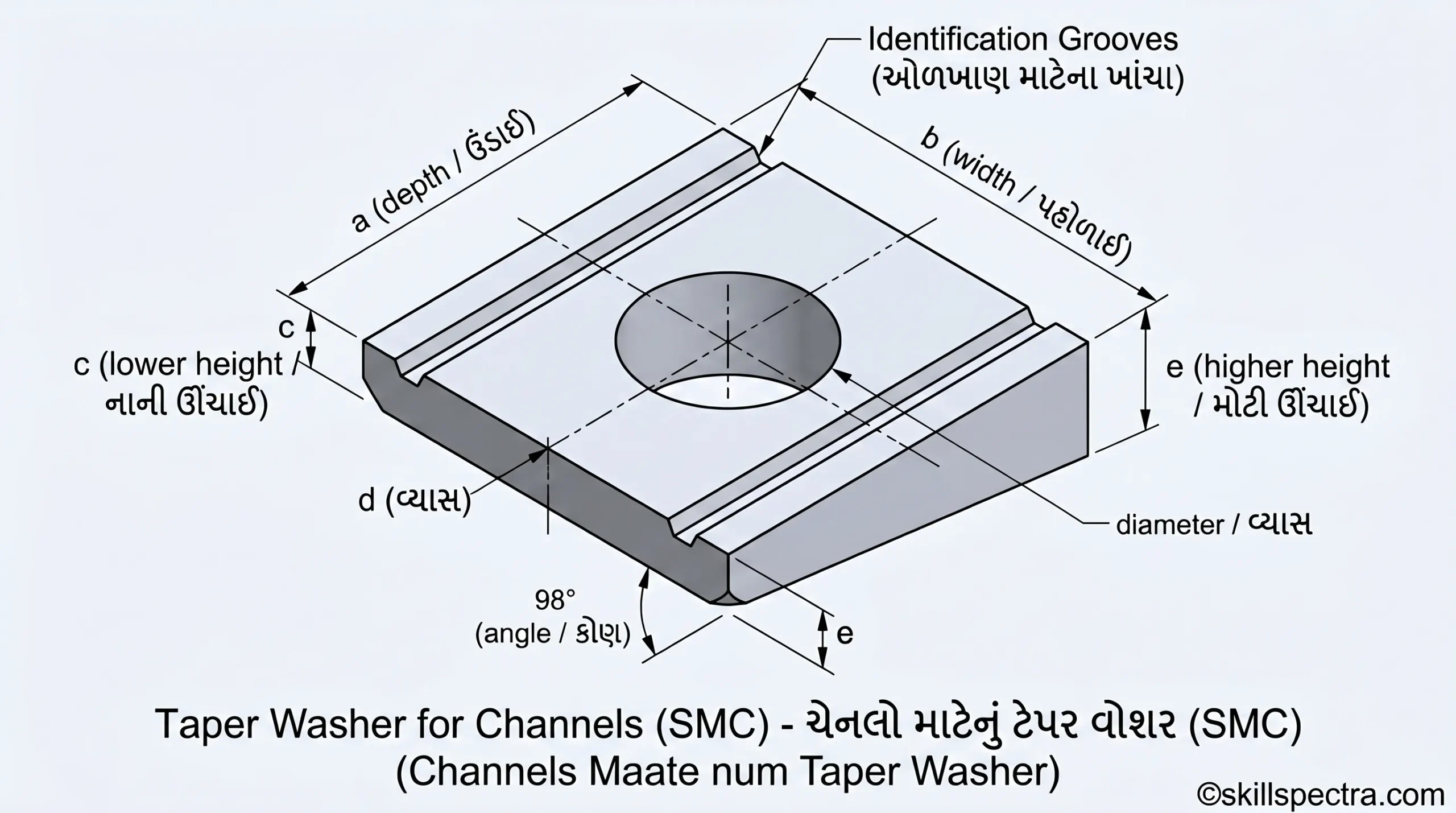
Tapered washers (Figs 4 & 5): આનો ઉપયોગ structural assemblies માં tapered surfaces (જેમ કે beams, channels ની અંદરની બાજુ) પર થાય છે. આ washers bolt ના head અથવા nut ને hole માં બરાબર (square) બેસવામાં મદદ કરે છે.
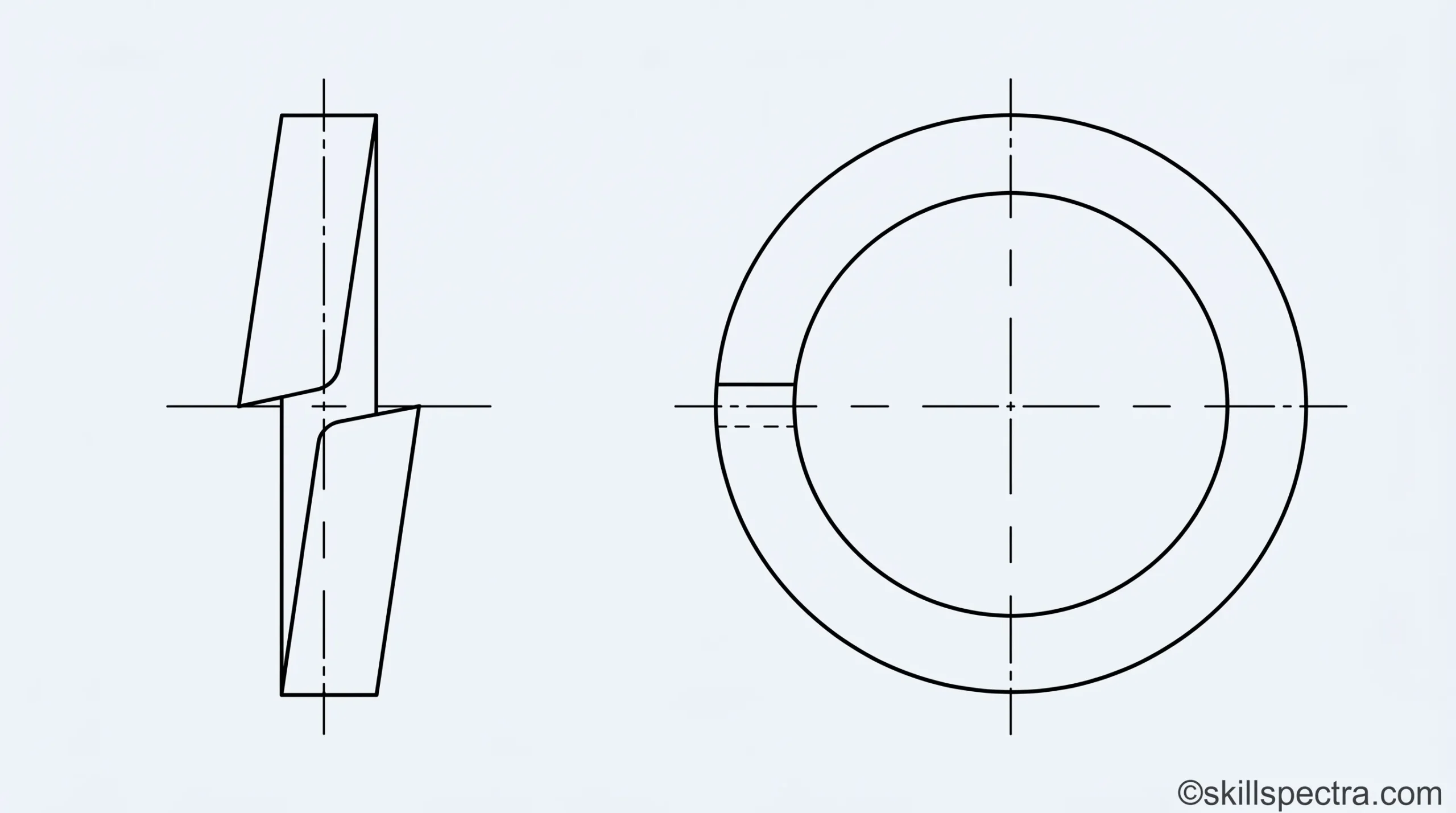
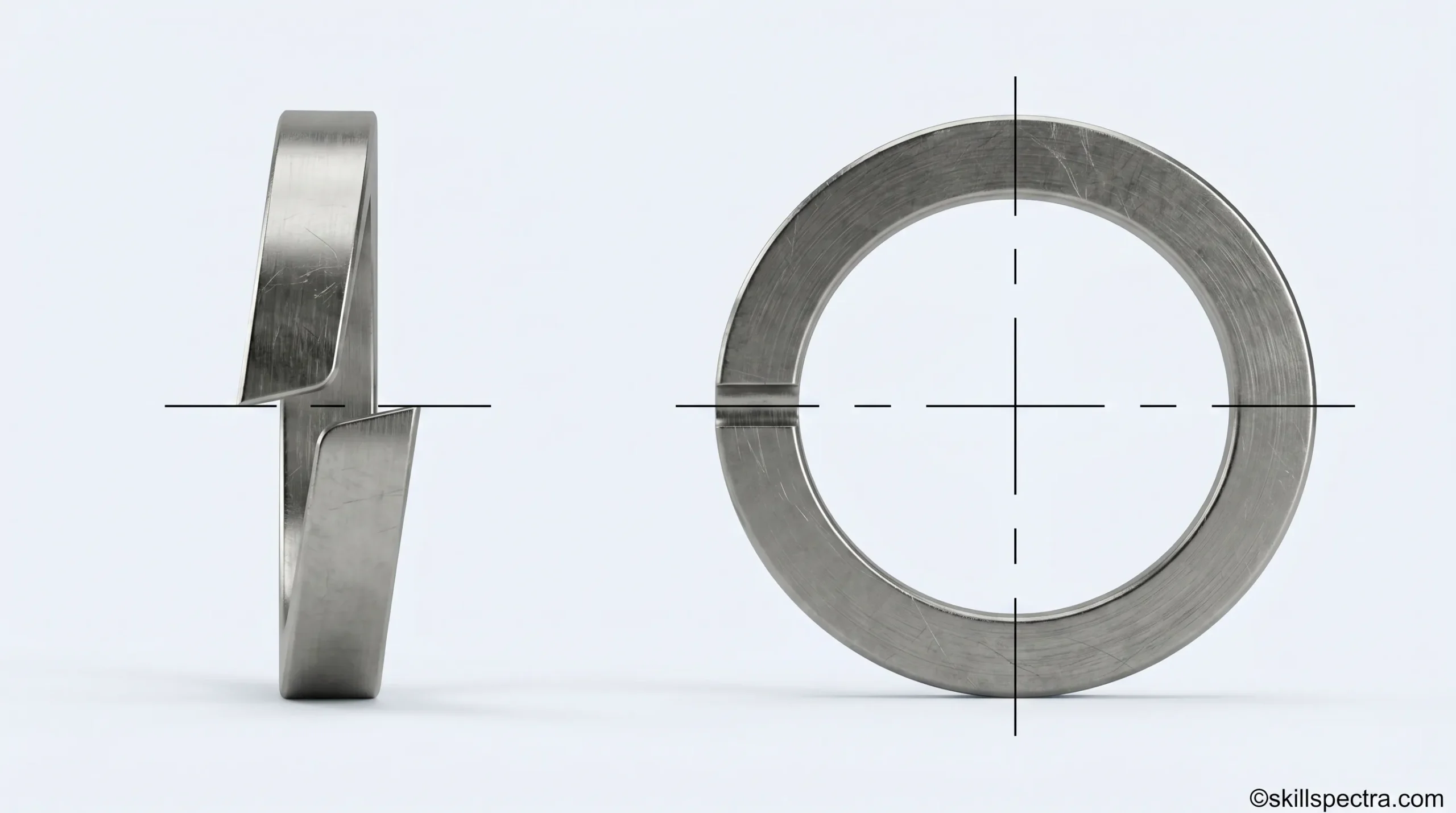
Spring washers (Figs 6 & 7): Spring washers નો ઉપયોગ nuts ની નીચે vibration ને કારણે nuts ઢીલા પડતા અટકાવવા માટે થાય છે. તે spring steel માંથી બનેલા હોય છે, અને જ્યારે તે compressed થાય છે, ત્યારે તે bolt અને nut વચ્ચે tension ઉભું કરે છે. 🔄
Tab washers (Fig 8): આ washers નો ઉપયોગ nuts ને lock કરવા માટે થાય છે. 🔒
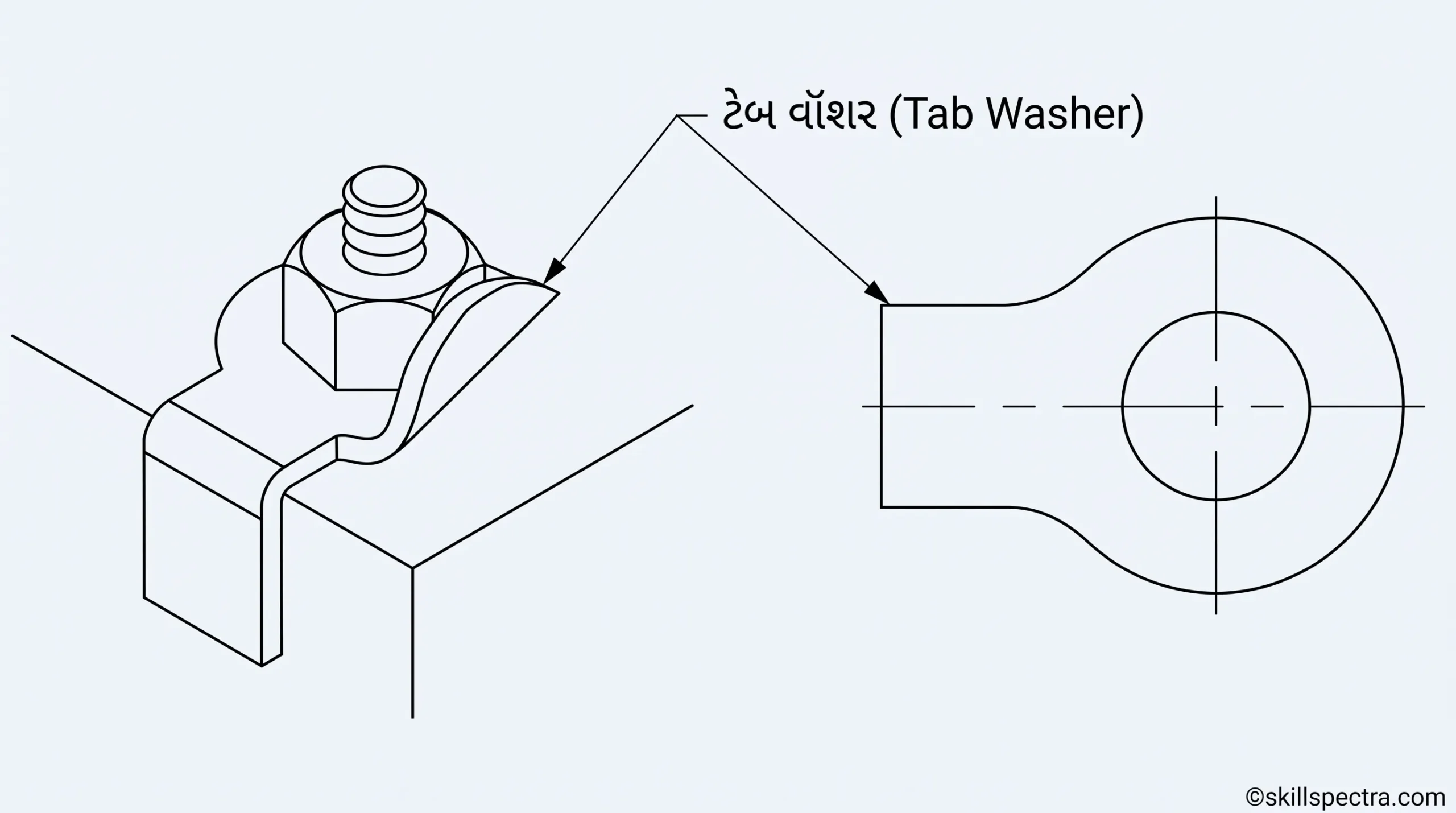
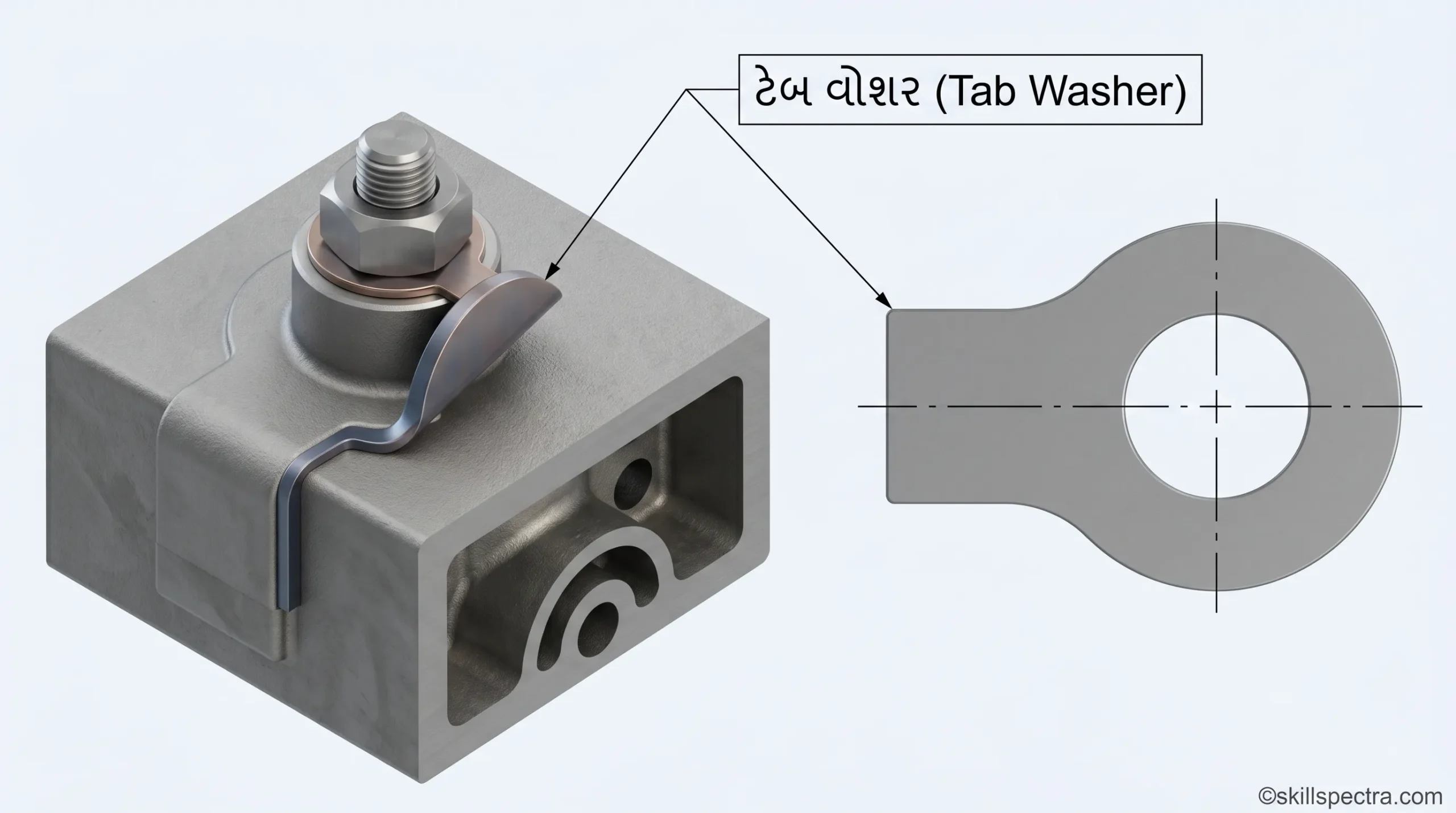
Toothed lock washers (Fig 9): આ washers માં serrations (દાંતા) હોય છે, જે કપાયેલા અને વળેલા હોય છે. જ્યારે nut અને assembly વચ્ચે મૂકવામાં આવે છે, ત્યારે આ washer બંને સંપર્ક સપાટીઓ પર friction પેદા કરે છે. આ nut ને ઢીલો પડતો અટકાવે છે.
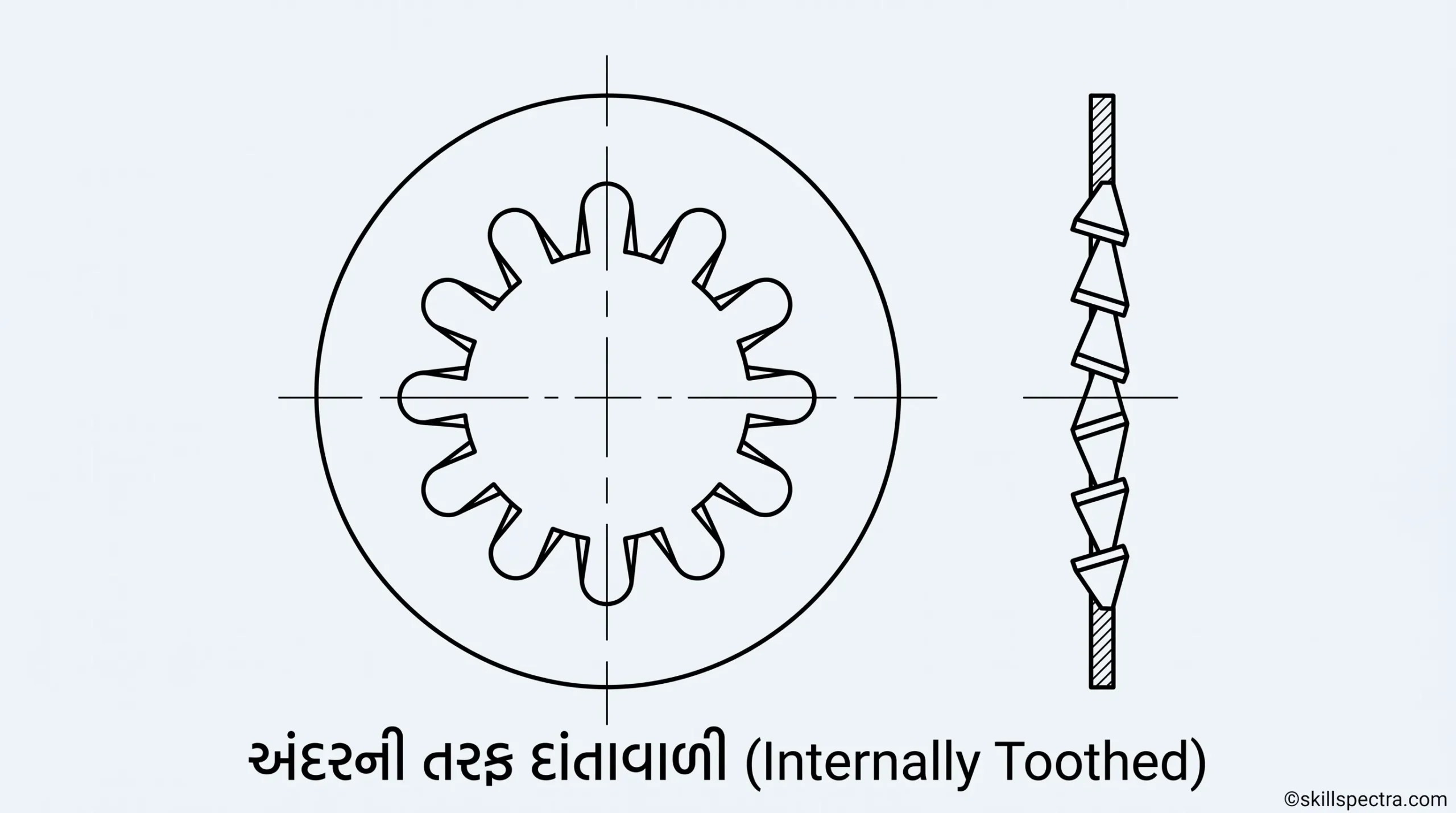
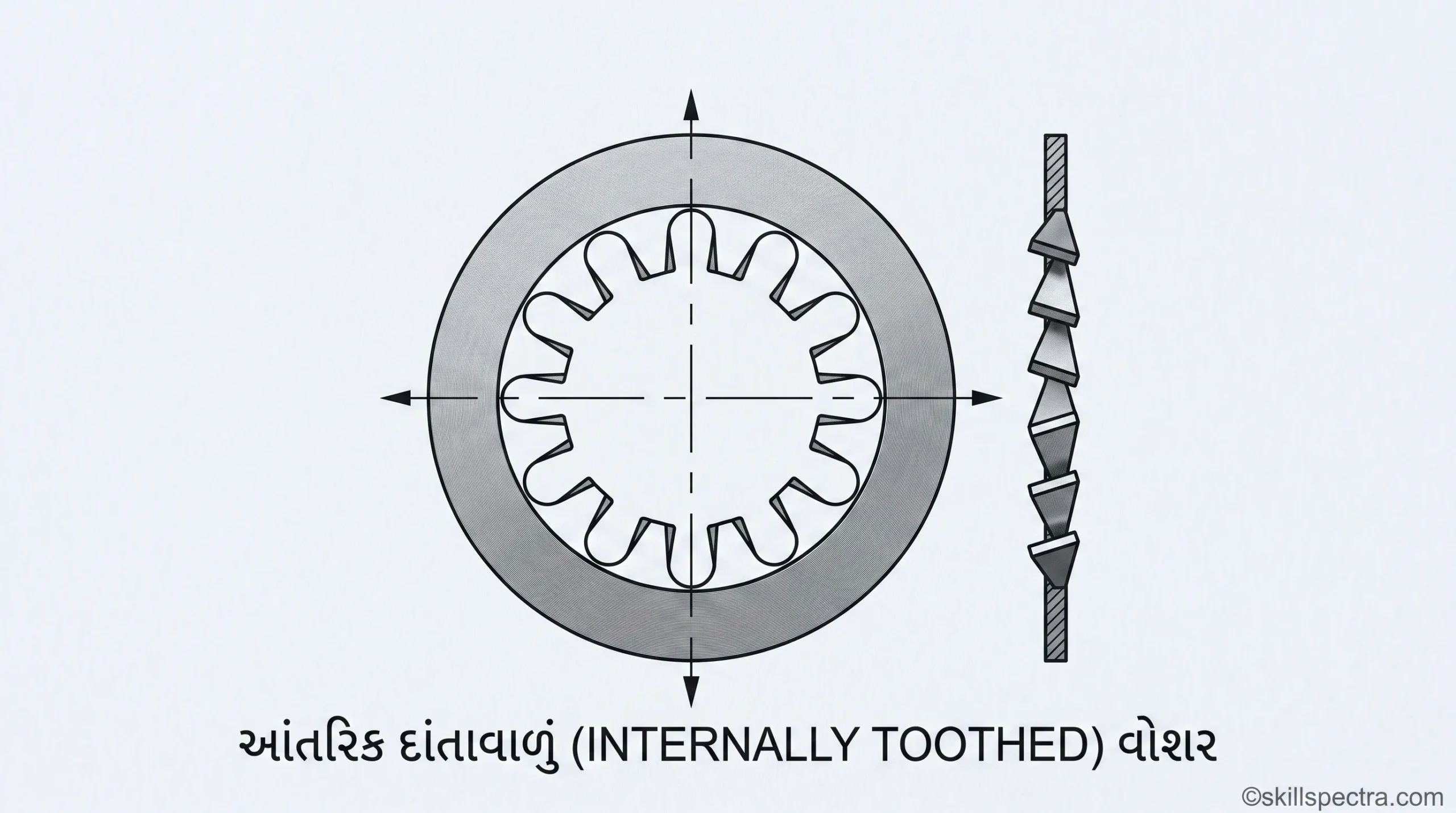
Note (નોંધ): અલગ-અલગ પ્રકારના washers ના વિગતવાર specification માટે નીચેના IS specifications જુઓ:
- Taper washer – IS: 5374 and IS: 5372
- Tab washer – IS: 8068
- Toothed lock washer – IS: 5371
- Plain washer – IS: 2016
Specifications: Indian standard IS:2016-1967 washer ને તેના નામ, પ્રકાર (type), size અને standard ના નંબર અને material દ્વારા ઓળખાવે છે. Example: 10.5 mm size નું brass માંથી બનેલું machined washer: Machined washer 10.5 IS: 2016 Brass.
Different types of screws, nuts, studs and bolts 🔧
Objectives:
આ લેસનના અંતે તમે આ બાબતો શીખી શકશો:
- Heavy duty assembly માં વપરાતા machine screws ના પ્રકારોના નામ આપવા.
- Light assembly કામમાં વપરાતા machine screws ના પ્રકારોના નામ આપવા.
- અલગ-અલગ પ્રકારના machine screws ના ઉપયોગો જણાવવા.
- Set screws ના પ્રકારોના નામ આપવા.
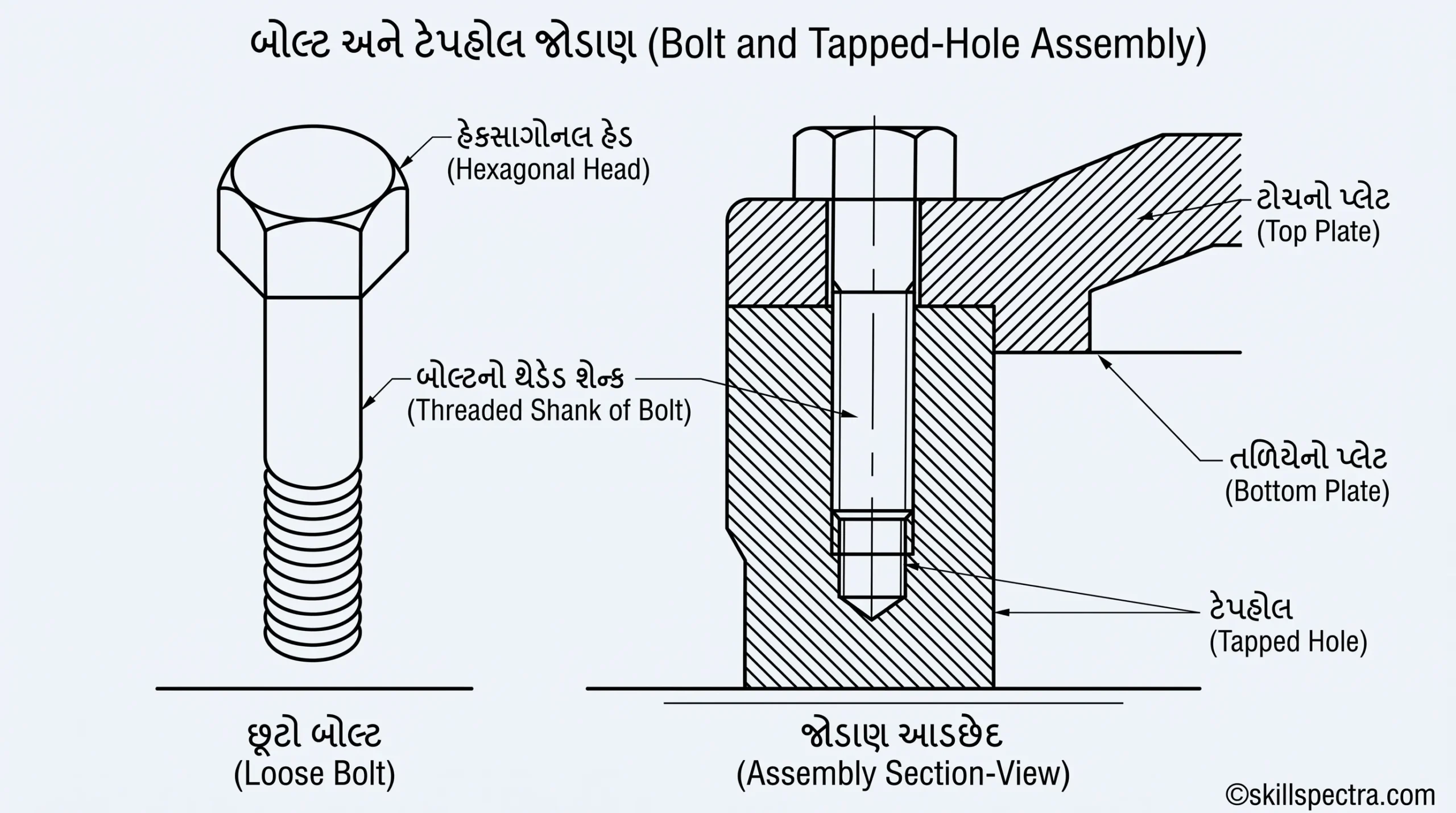
Machine screws નો ઉપયોગ ત્યારે થાય છે જ્યારે assembly માં nut નો ઉપયોગ ન કરી શકાય અને assembly ના component માં screws સ્વીકારવા માટે threaded hole હોય (Fig 1).
Types of machine screws (Heavy duty):
- Hexagon head screws
- Hexagon socket head cap screws
- Square head countersink head screws આ heavy duty screws છે.
Hexagon head screws: આનો ઉપયોગ ત્યારે થાય છે જ્યારે screw head નું બહાર નીકળવું (projection) assembly માં અવરોધરૂપ ન હોય (Fig 1).
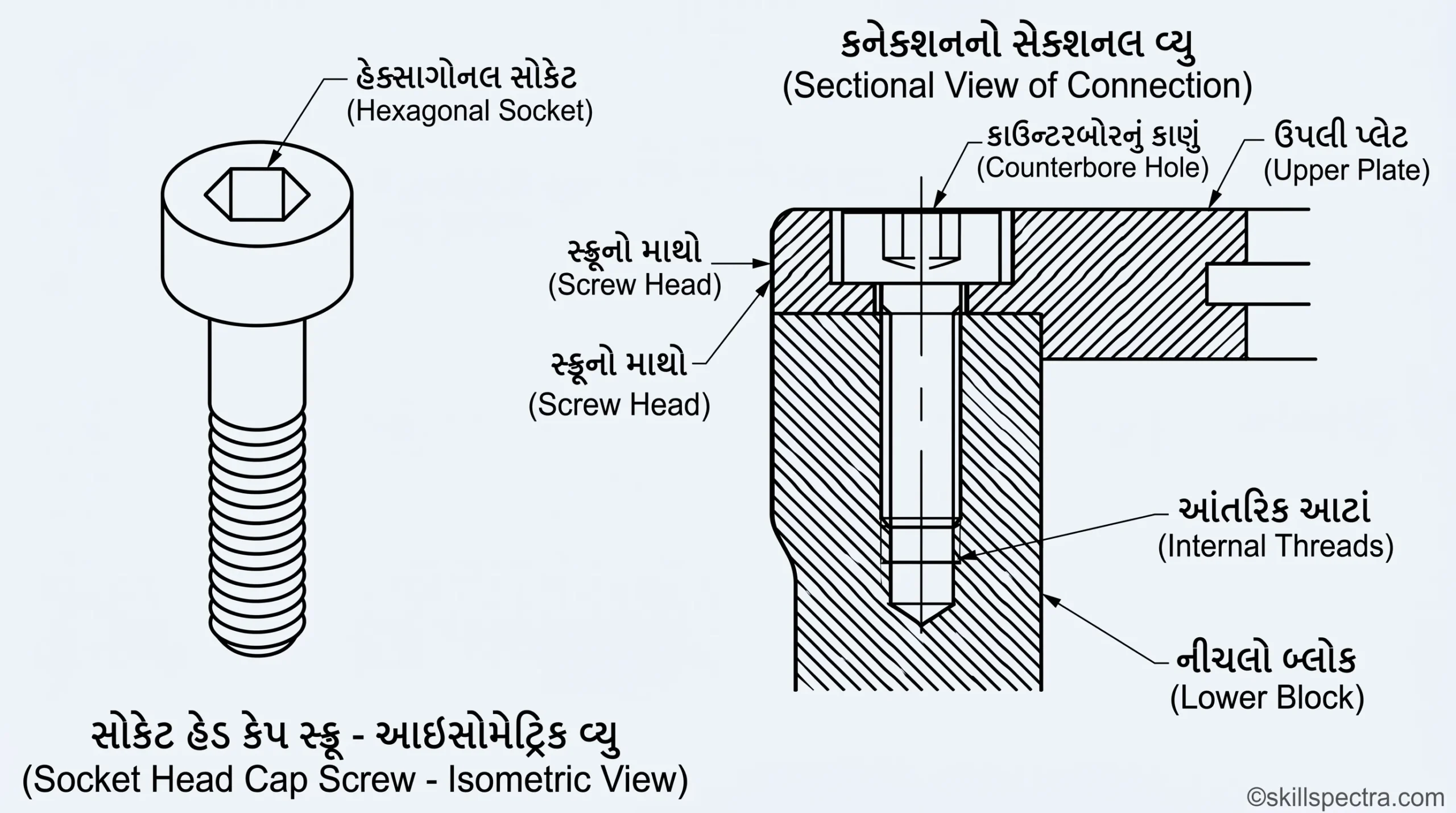
Hexagon socket head cap screws: આનો ઉપયોગ ત્યારે થાય છે જ્યારે screw head નું સપાટીની બહાર નીકળવું ટાળવું જરૂરી હોય (Fig 2). Indian standard મુજબ hexagon socket head cap screws 1.6 mm થી 36 mm ની range માં મળે છે.
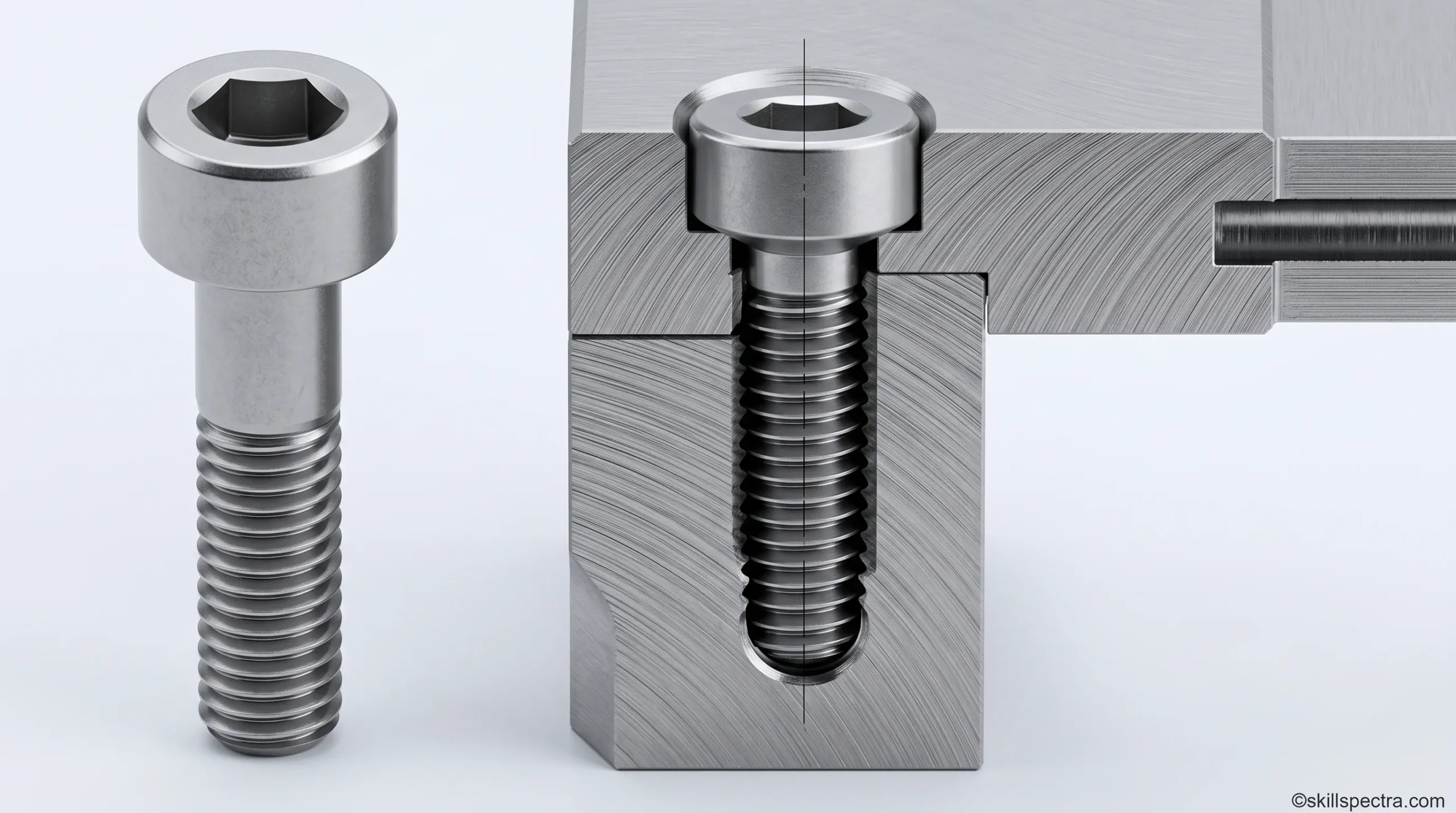
Hexagon head screws અને hexagon socket head cap screws steel માંથી બનેલા હોય છે. Electrical કામમાં વપરાતા hexagon head screws brass ના બનેલા હોય છે. ⚡
Countersink head screws: સામાન્ય વપરાશમાં ચાર પ્રકારના countersink head screws છે:
- Slotted countersink head screws (Fig 3)
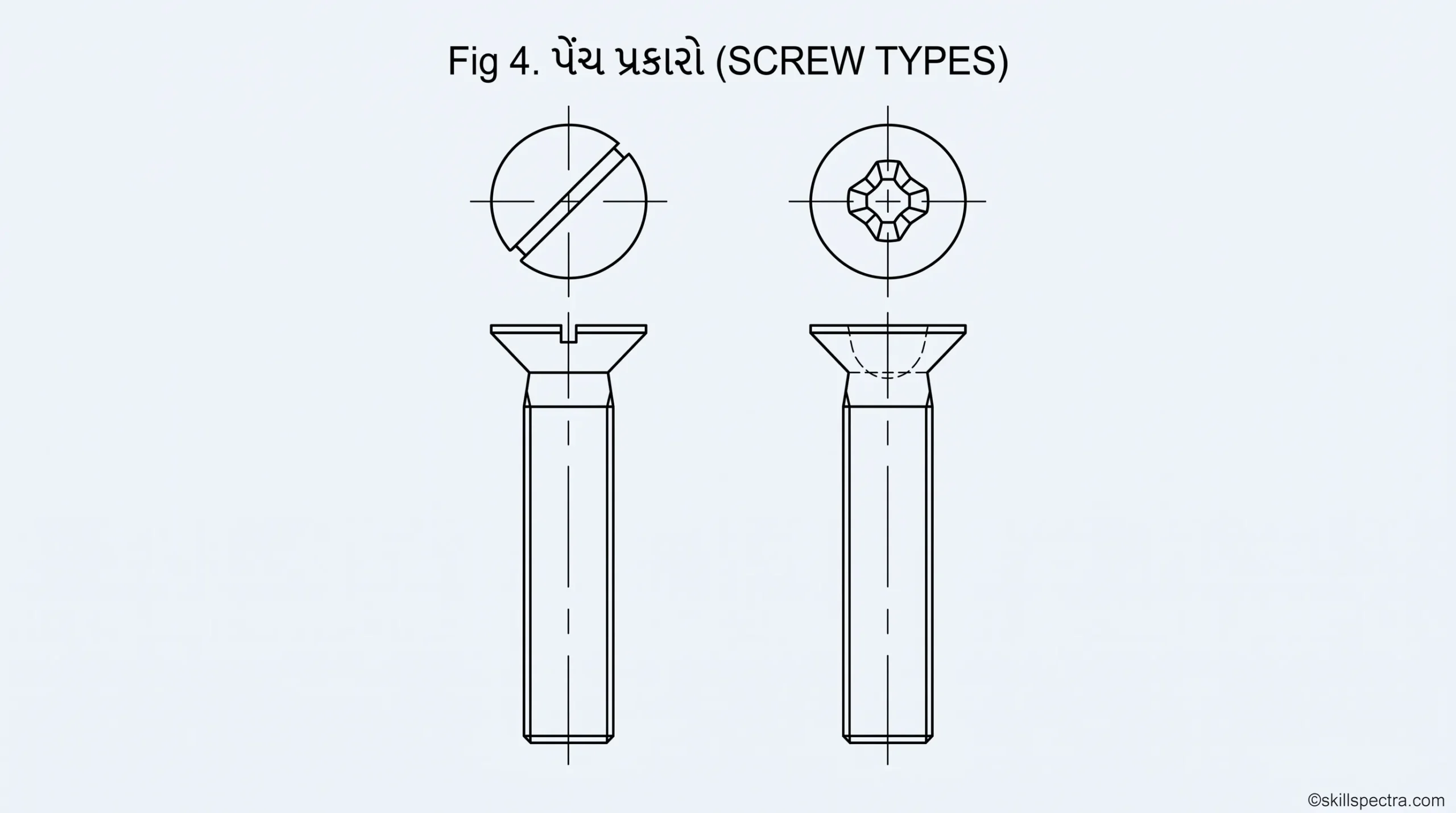
- Cross-recessed countersink head screws (Fig 4)
- Slotted raised countersink head screws (Fig 5)
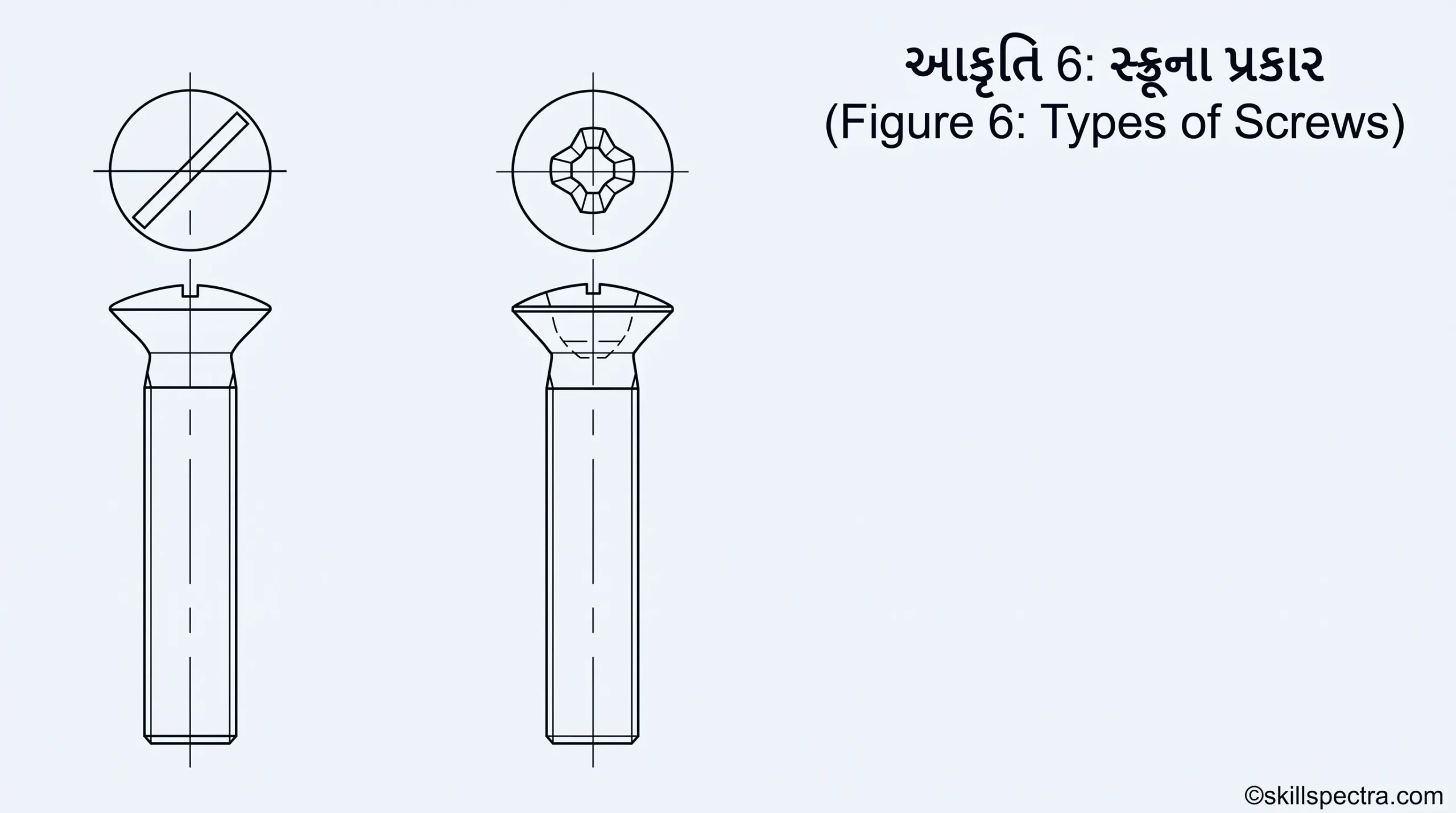
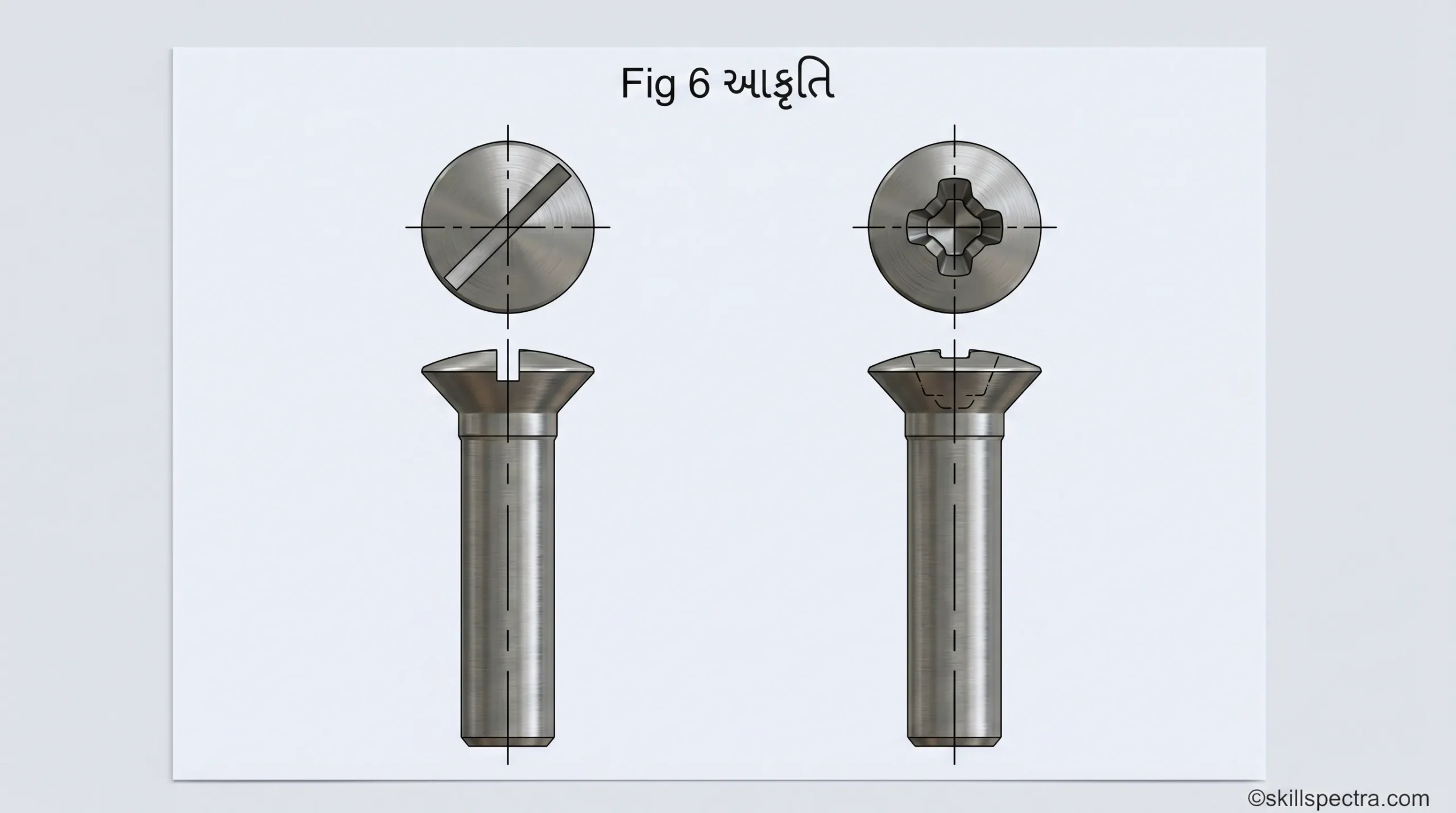
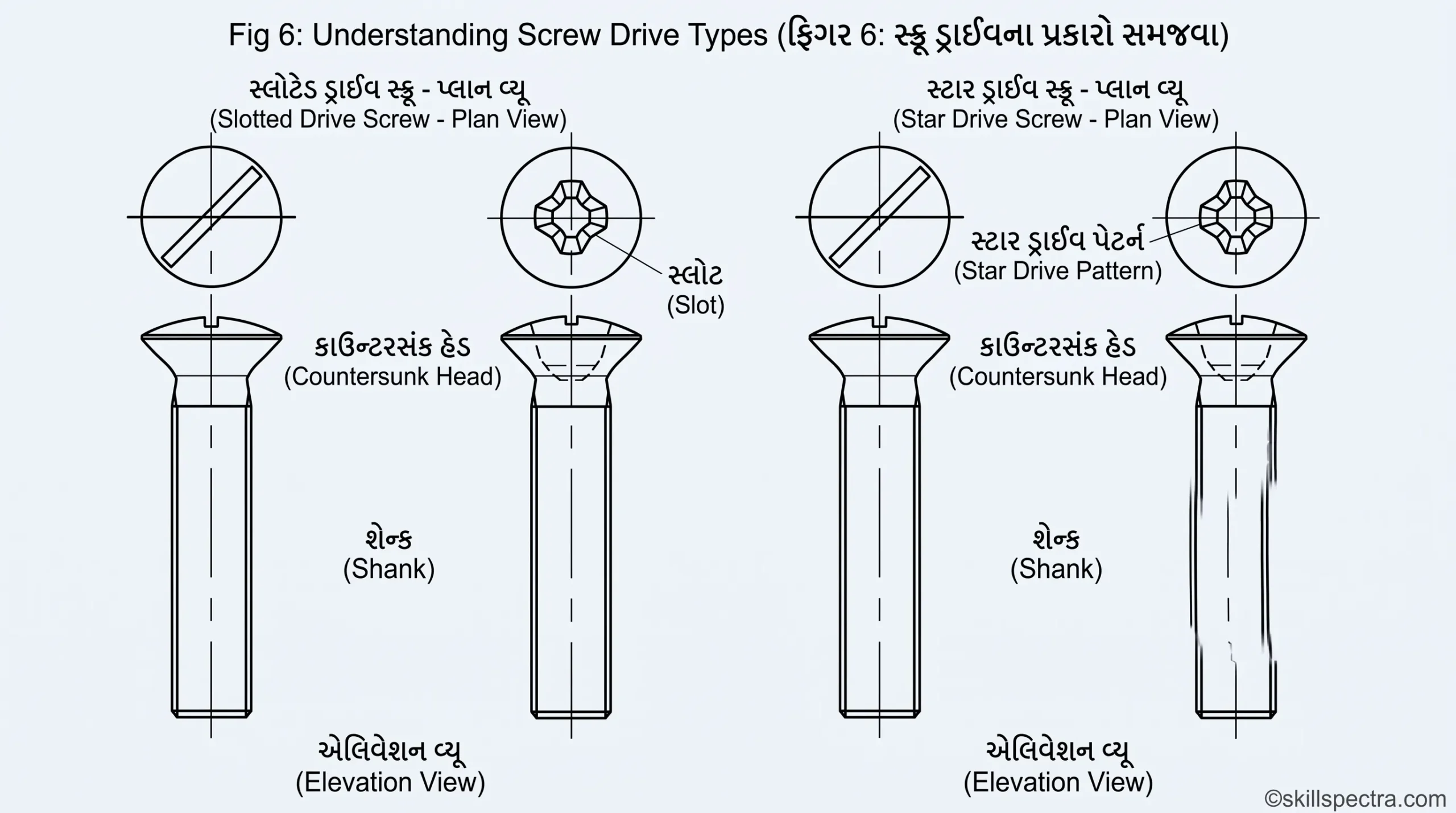
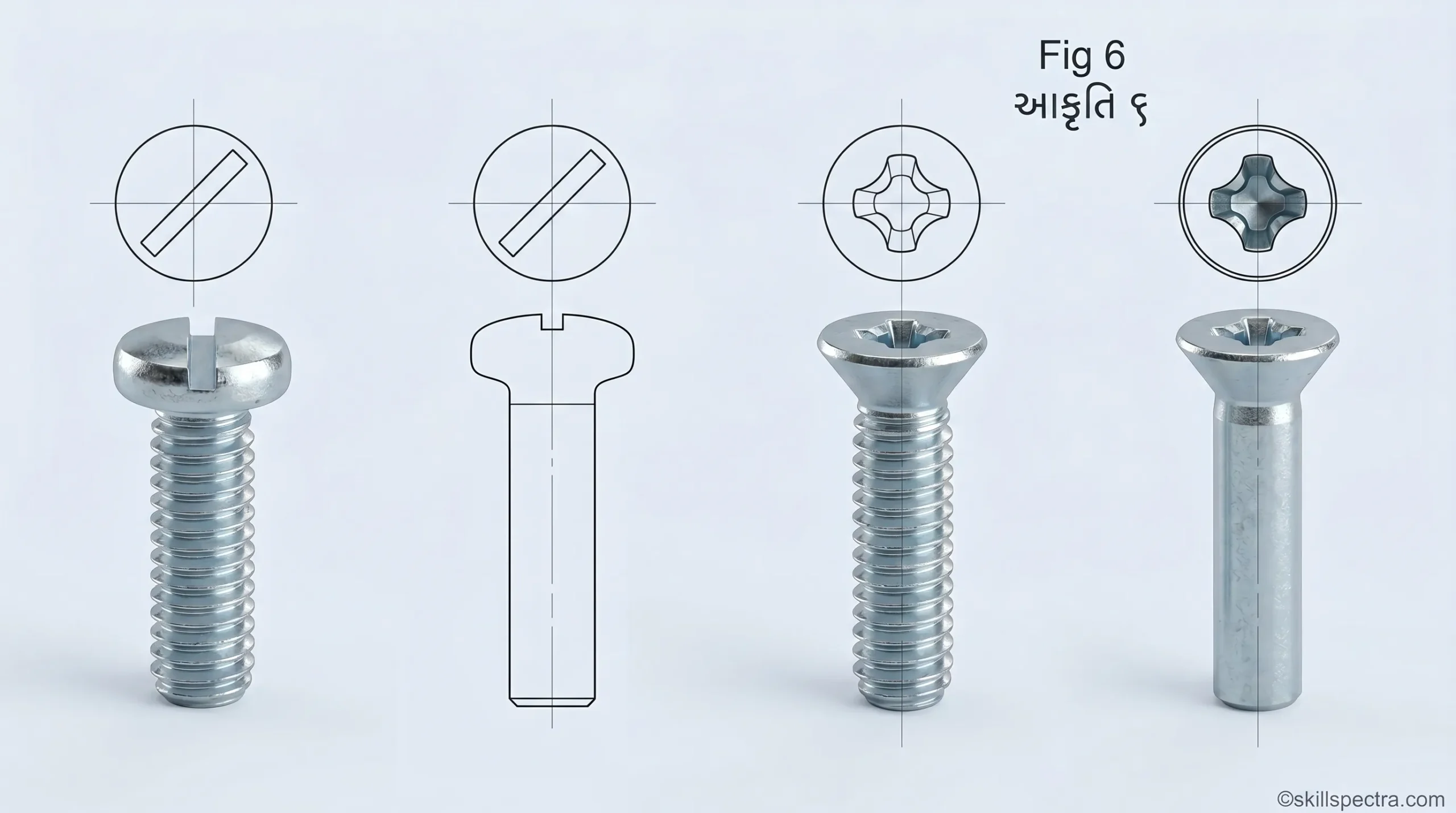
- Cross recessed, raised countersink head screws (Fig 6)
Countersink screws matching component ને threaded hole સાથે યોગ્ય રીતે align કરવામાં સક્ષમ છે (Fig 7). Assembly ની ઉપર screw head નું projection પણ ટાળવામાં આવે છે. B.I.S. specification મુજબ તેના કદ (sizes) આ મુજબ છે:
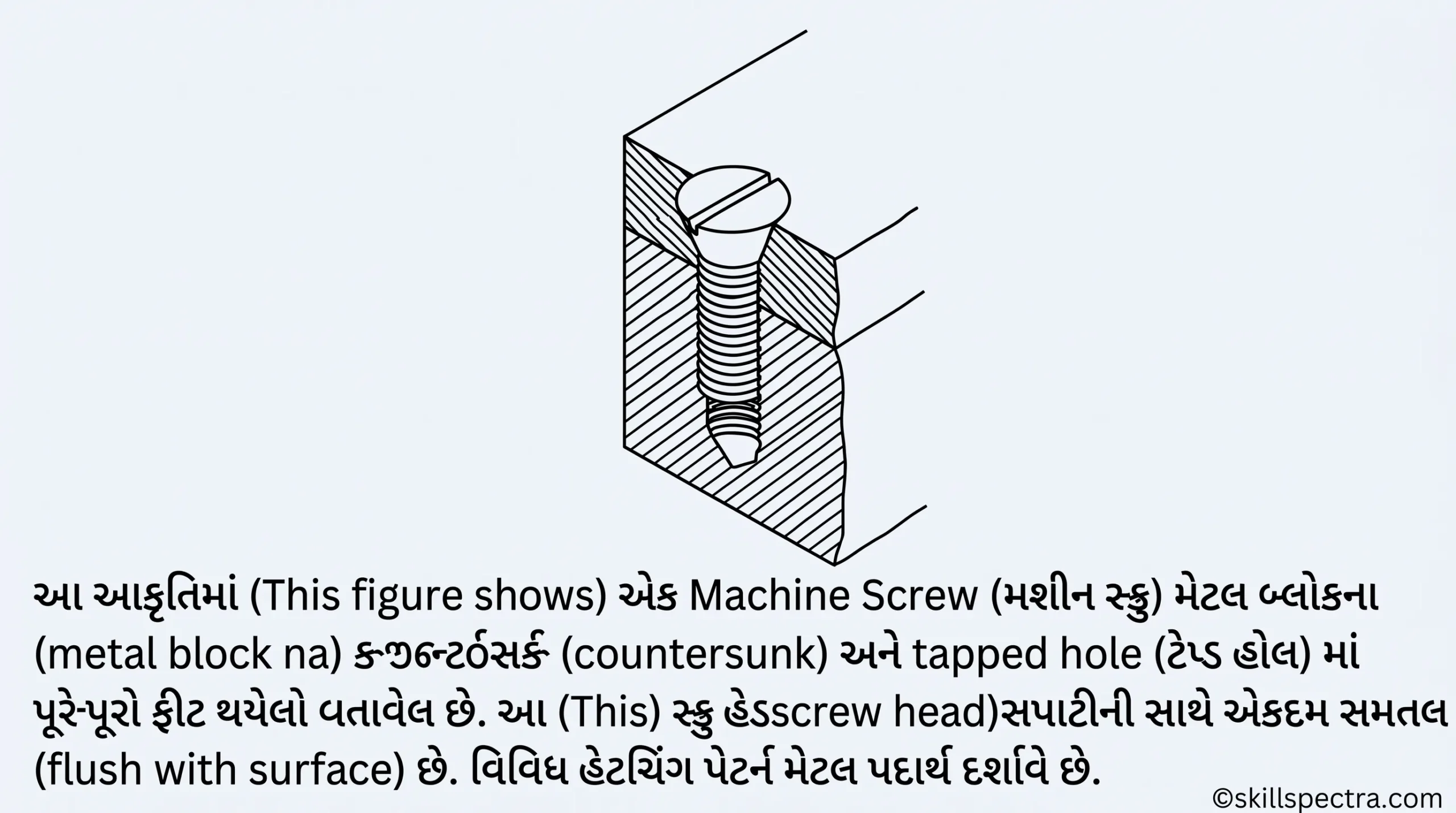
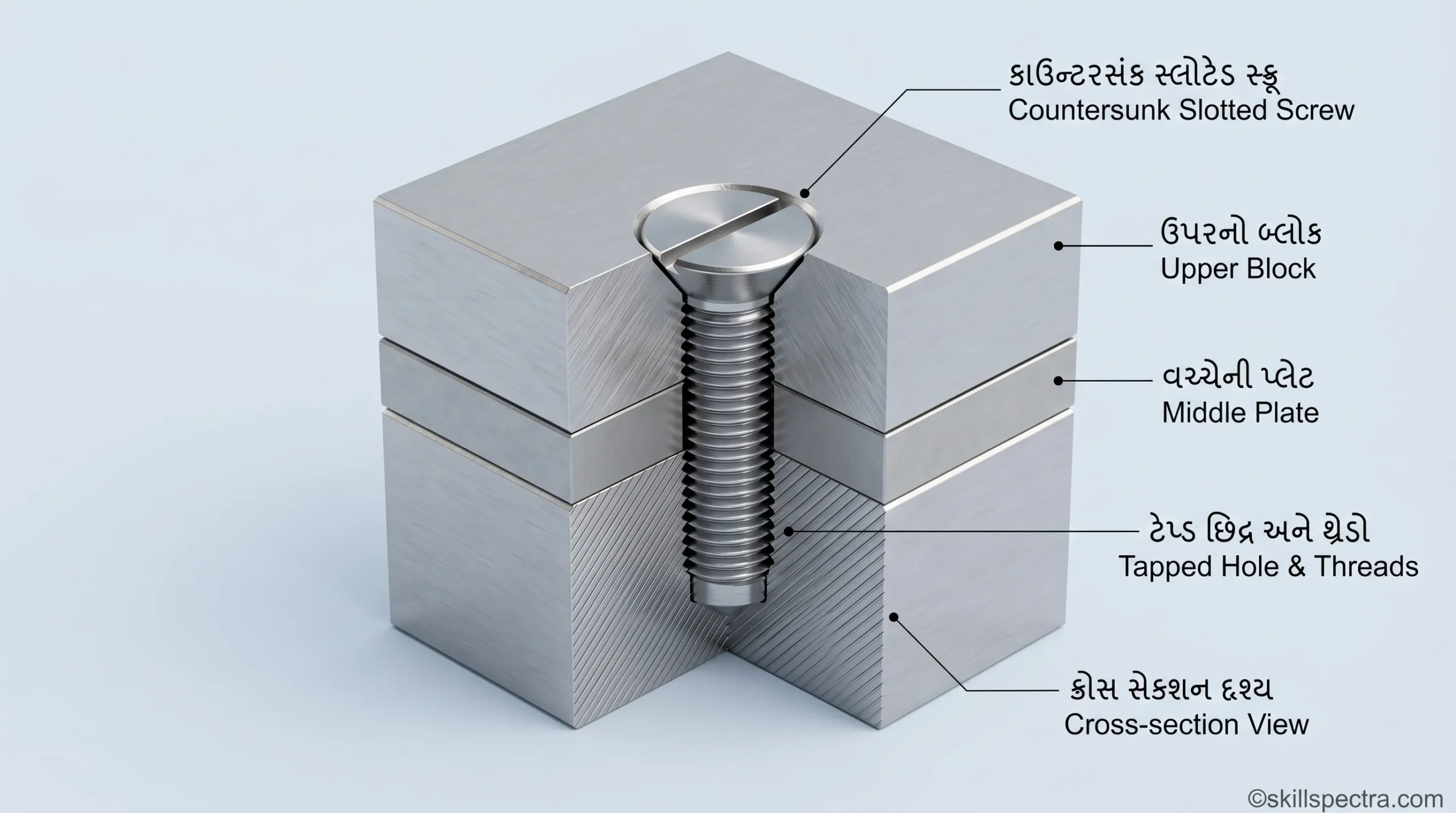
- Slotted countersink head screws: M1 – M20
- Cross-recessed countersink head screws: M1.6 to M10
- Slotted raised countersink head screws: M1 to M20
- Cross-recessed raised countersink head screws: M1.6 to M10
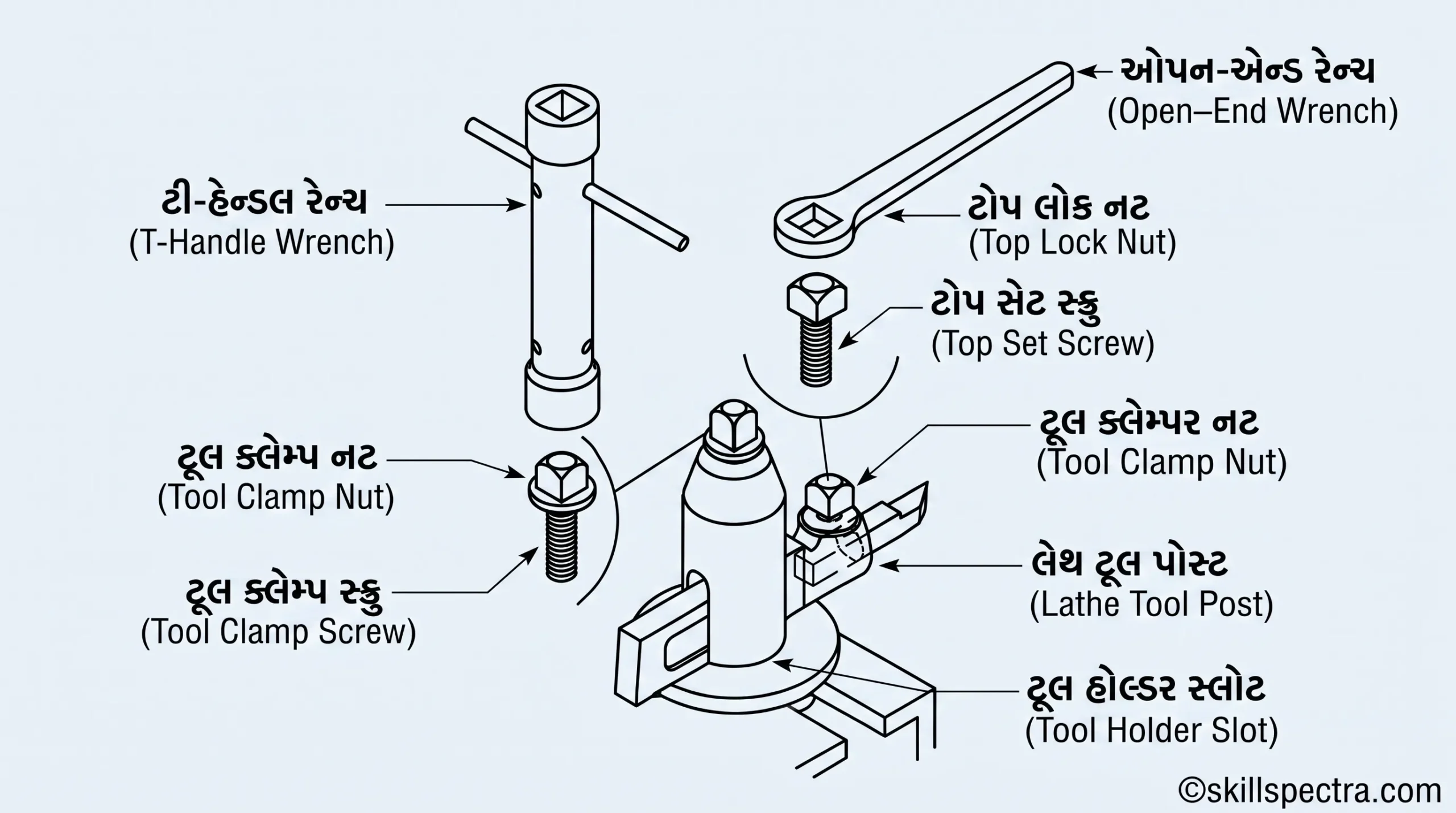
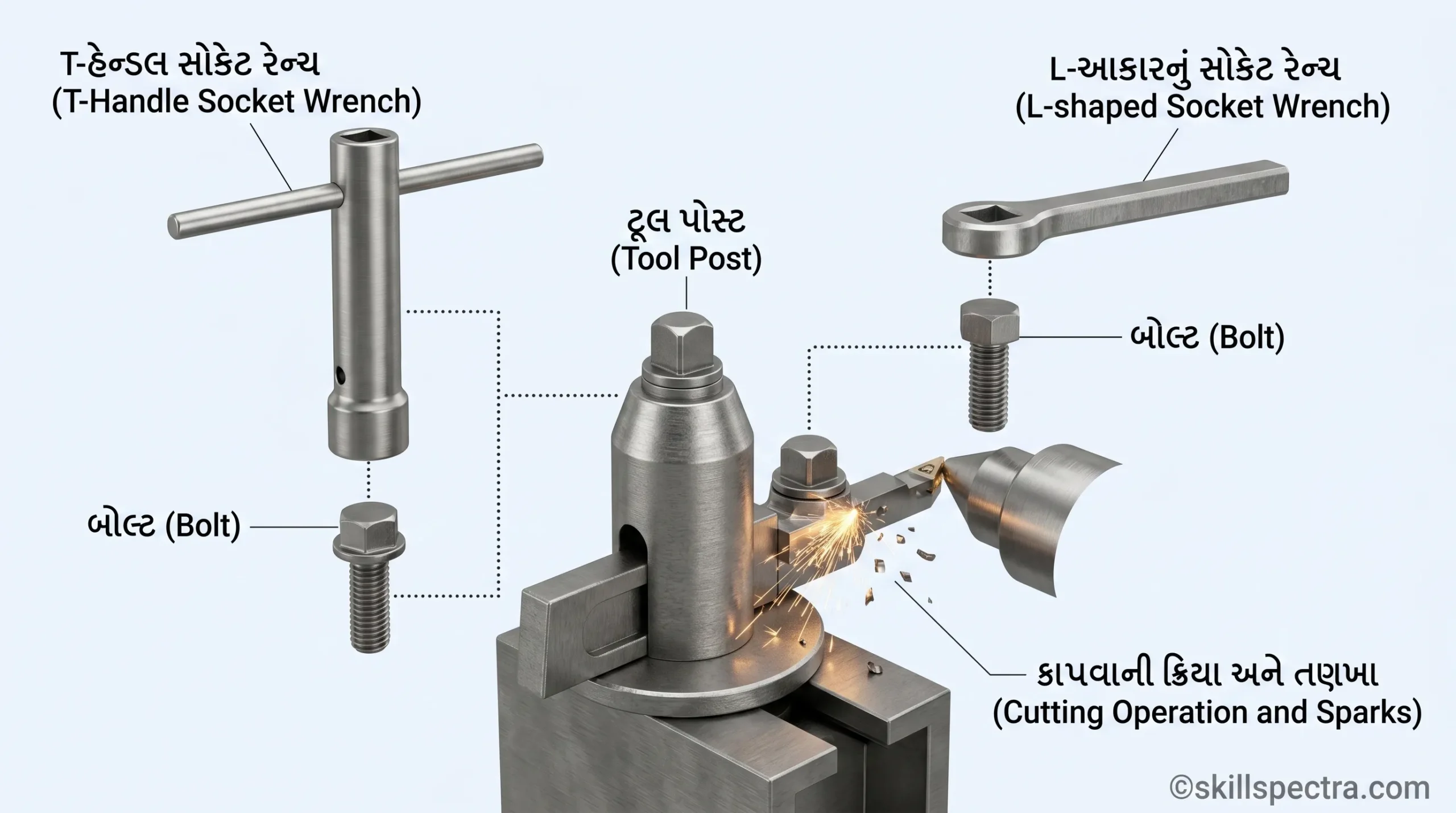
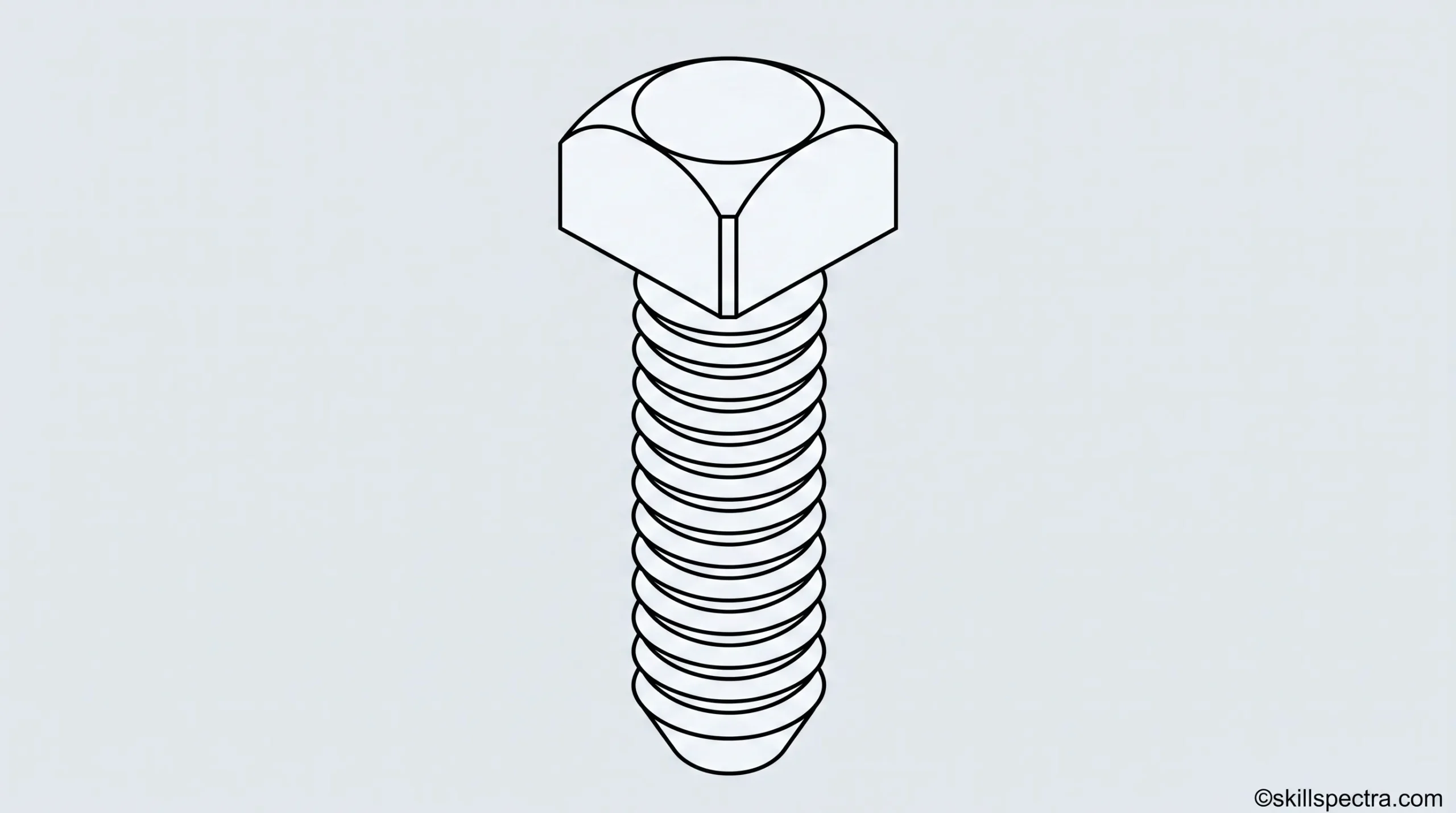
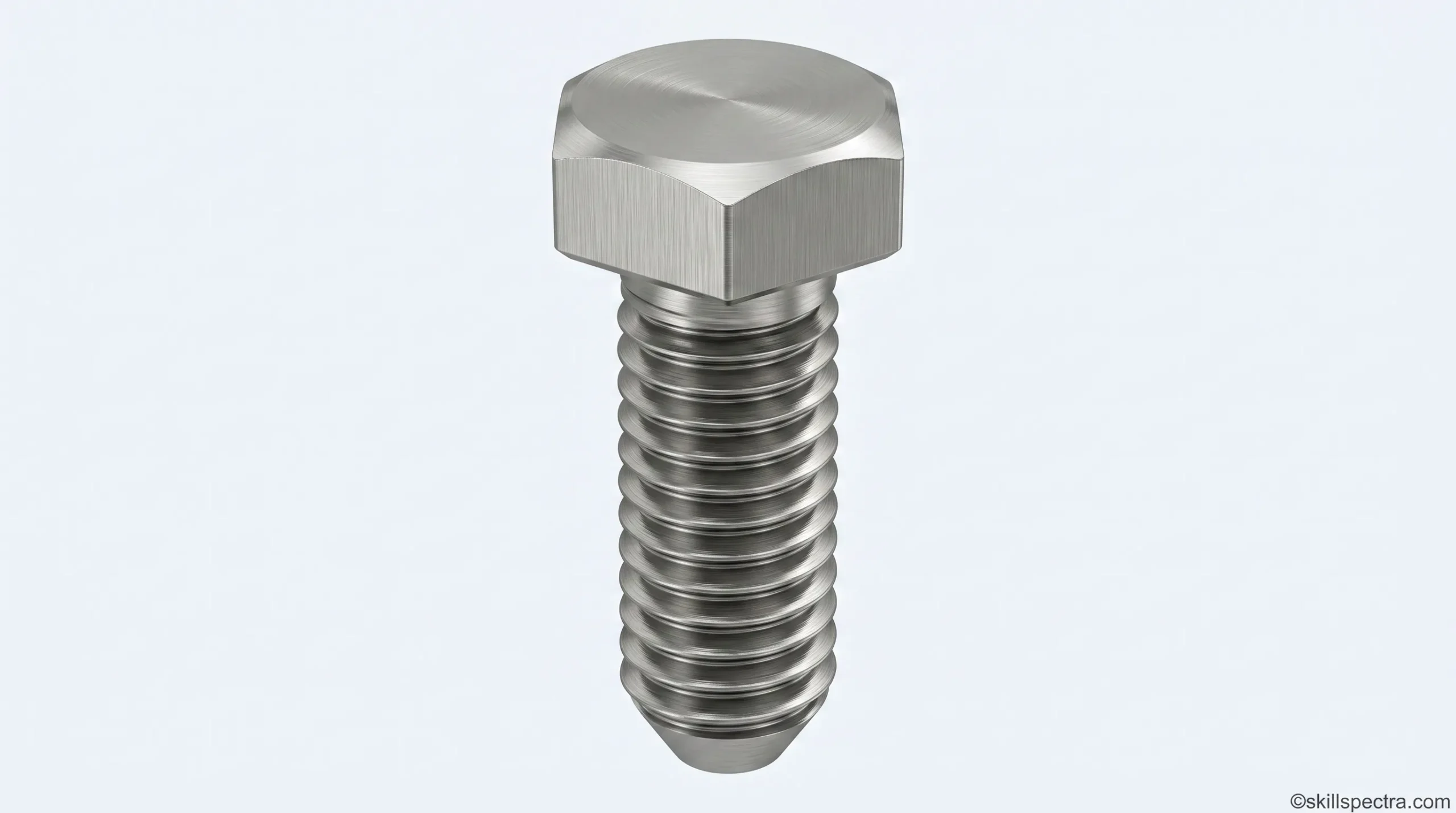
Square head screws (Fig 8): Square head screws નો ઉપયોગ એવી જગ્યાએ થાય છે જ્યાં વારંવાર assembly ખોલવાની (removal) અને ફરી બેસાડવાની (refitting) જરૂર હોય. આ screws ને wrench નો ઉપયોગ કરીને higher torque થી ટાઈટ કરવામાં આવે છે. Square head screws collar સાથે પણ ઉપલબ્ધ છે. આમાં base માં એક washer હોય છે જે head નો અવિભાજ્ય ભાગ છે. આ collar નો હેતુ wrench ના સતત ઉપયોગથી work-surface ને થતા નુકસાનથી બચાવવાનો છે. 🛠️
Other types of machine screws used in light assembly work:
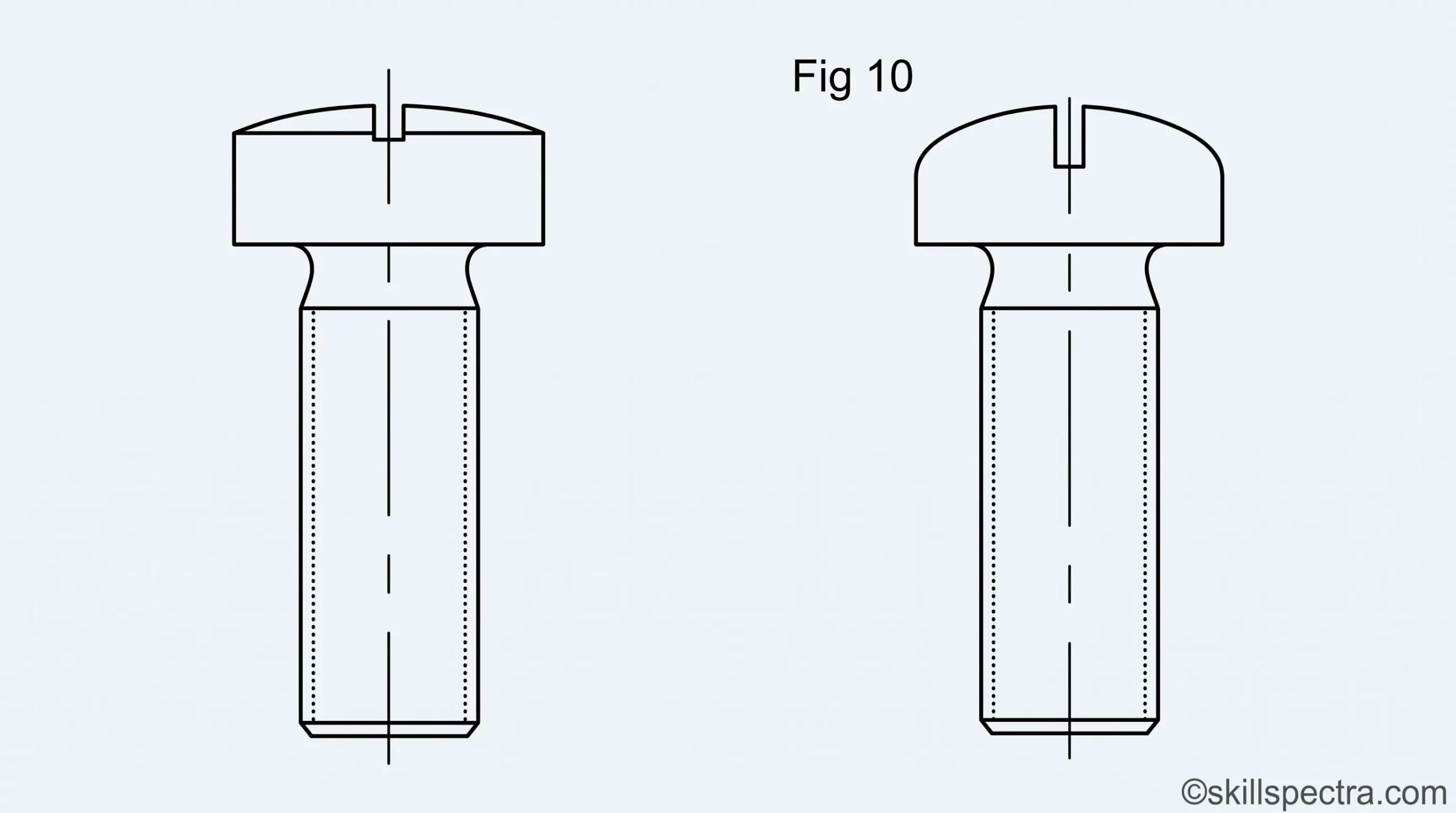
- Pan head (Fig 9)
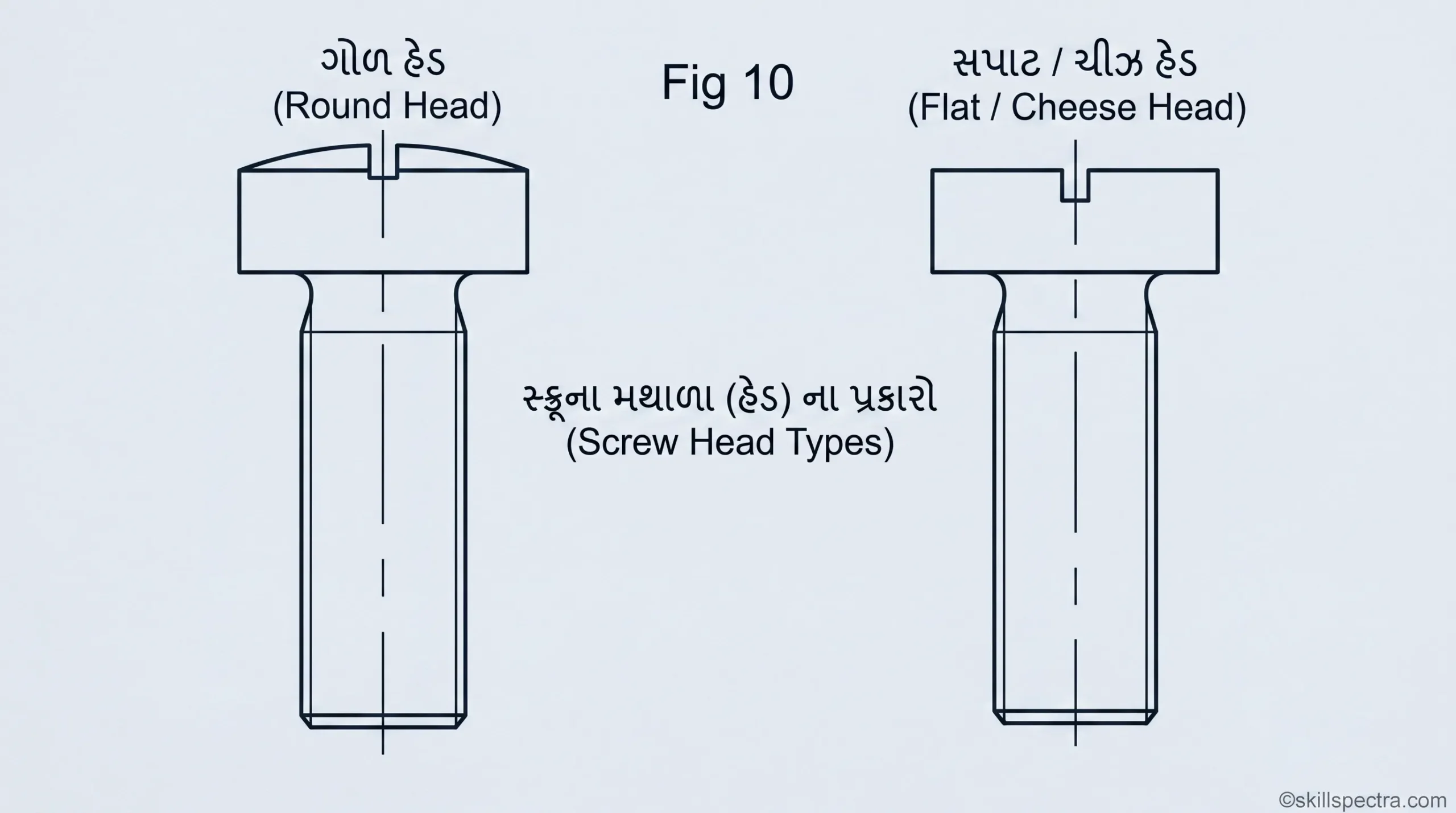
- Cheese head (Fig 10)
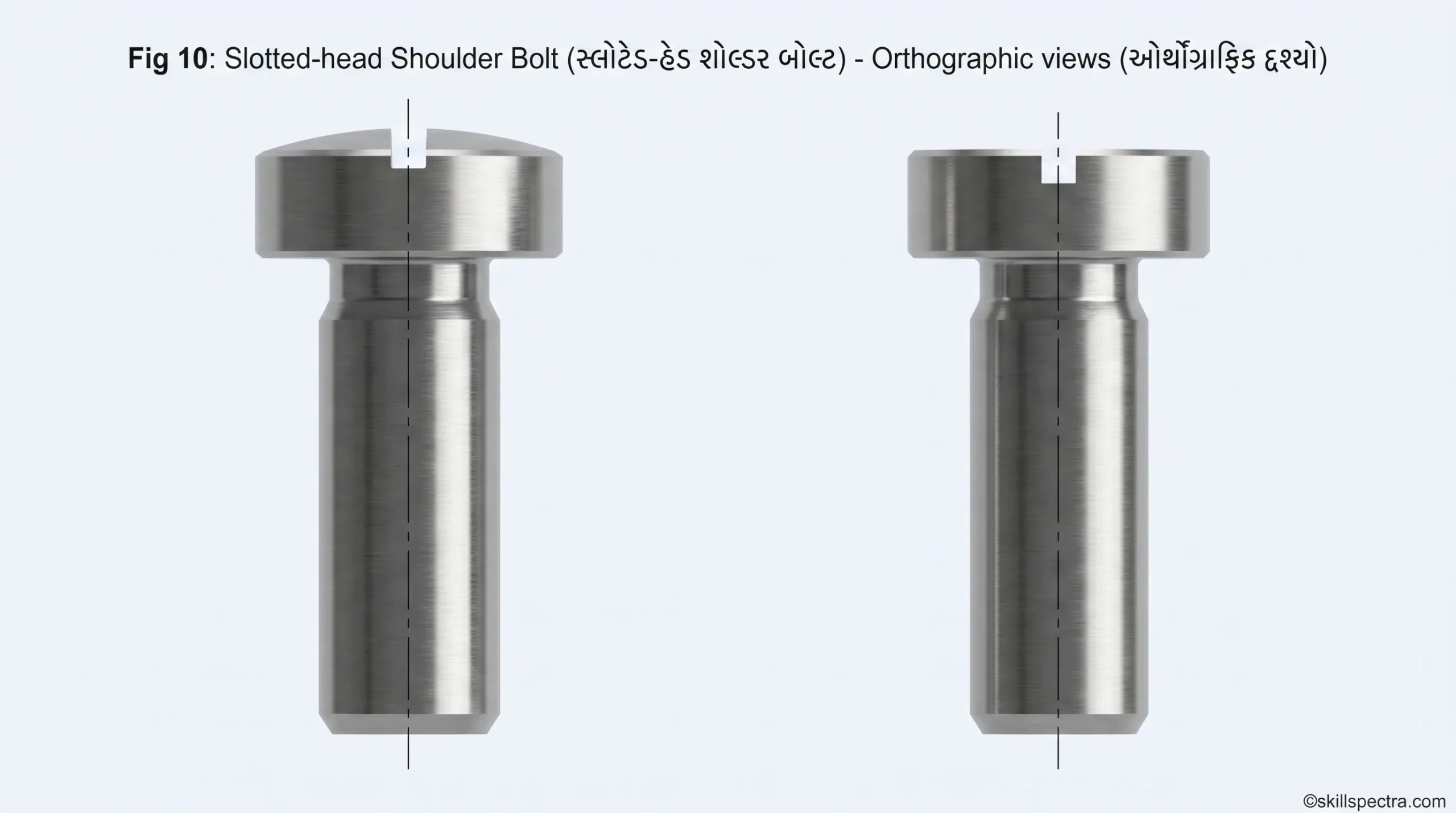
- Raised cheese head (Fig 11)
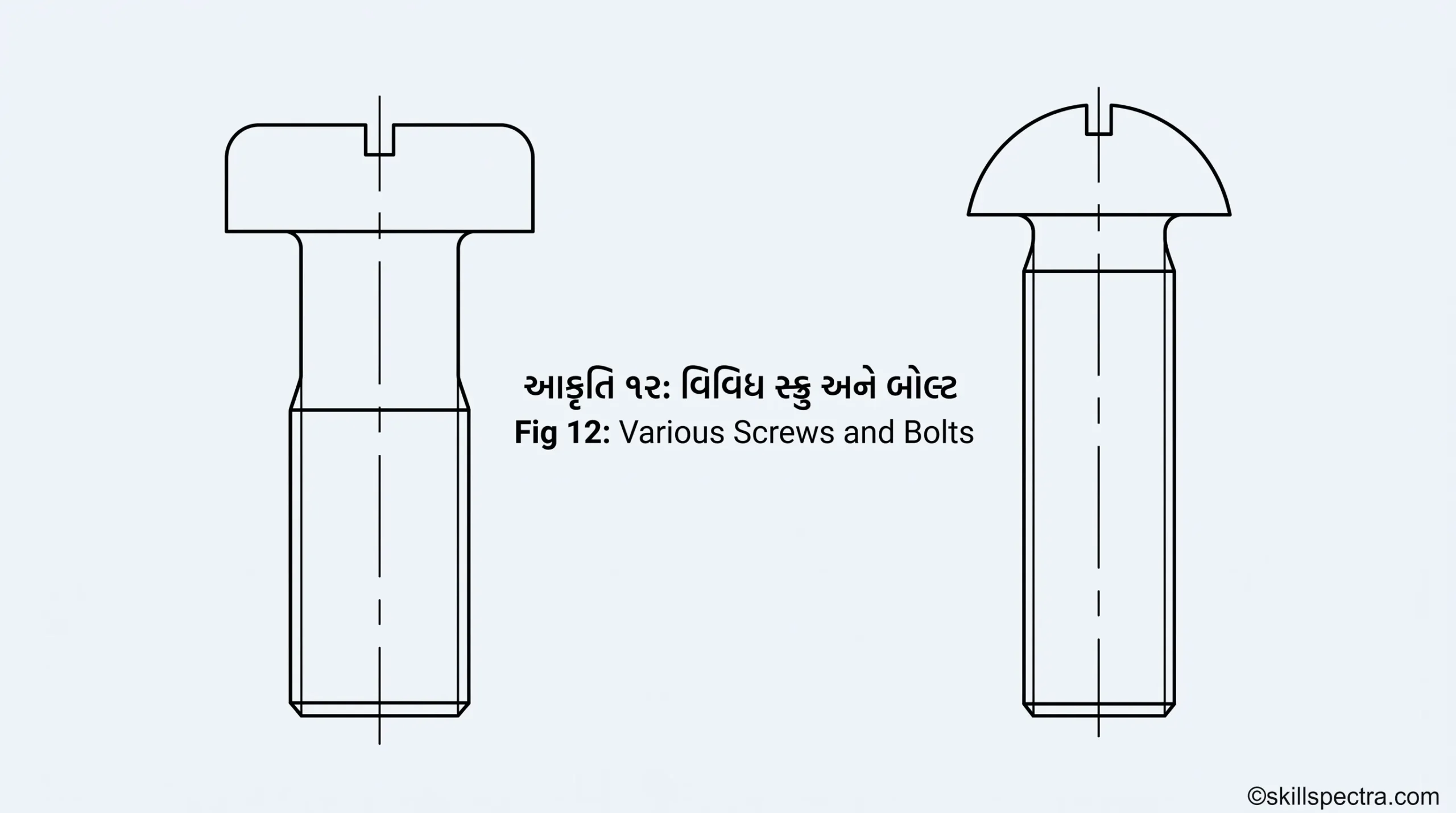
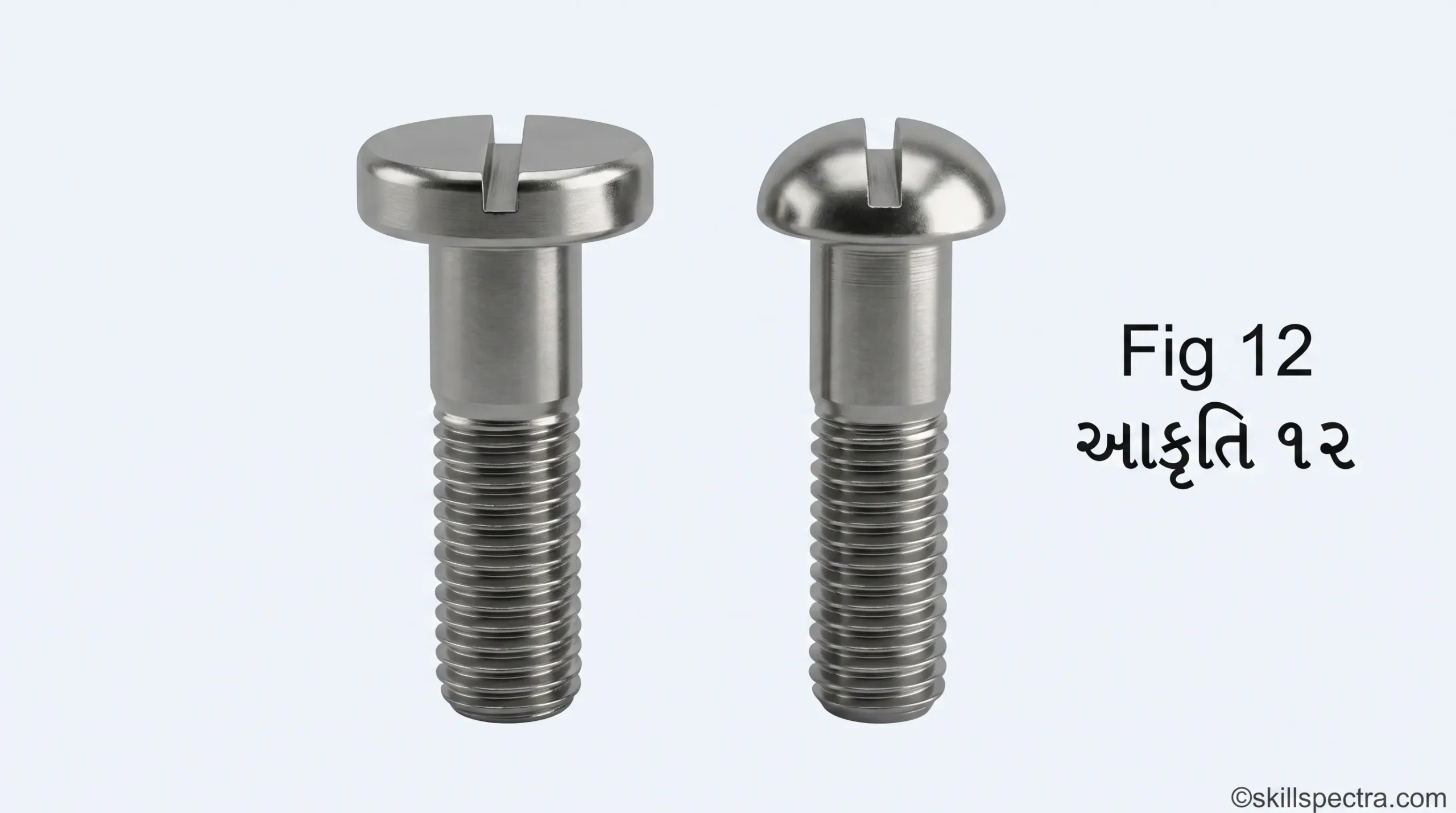
- Round head (Fig 12) આ screws slotted head અથવા cross-recessed તરીકે પણ ઉપલબ્ધ છે. Light duty માટે વપરાતા આ screws સામાન્ય રીતે 10mm thread diameter સુધી ઉપલબ્ધ હોય છે. આ screws steel, stainless steel અથવા brass ના બનેલા હોય છે.
Set screws and grub screws 🔩
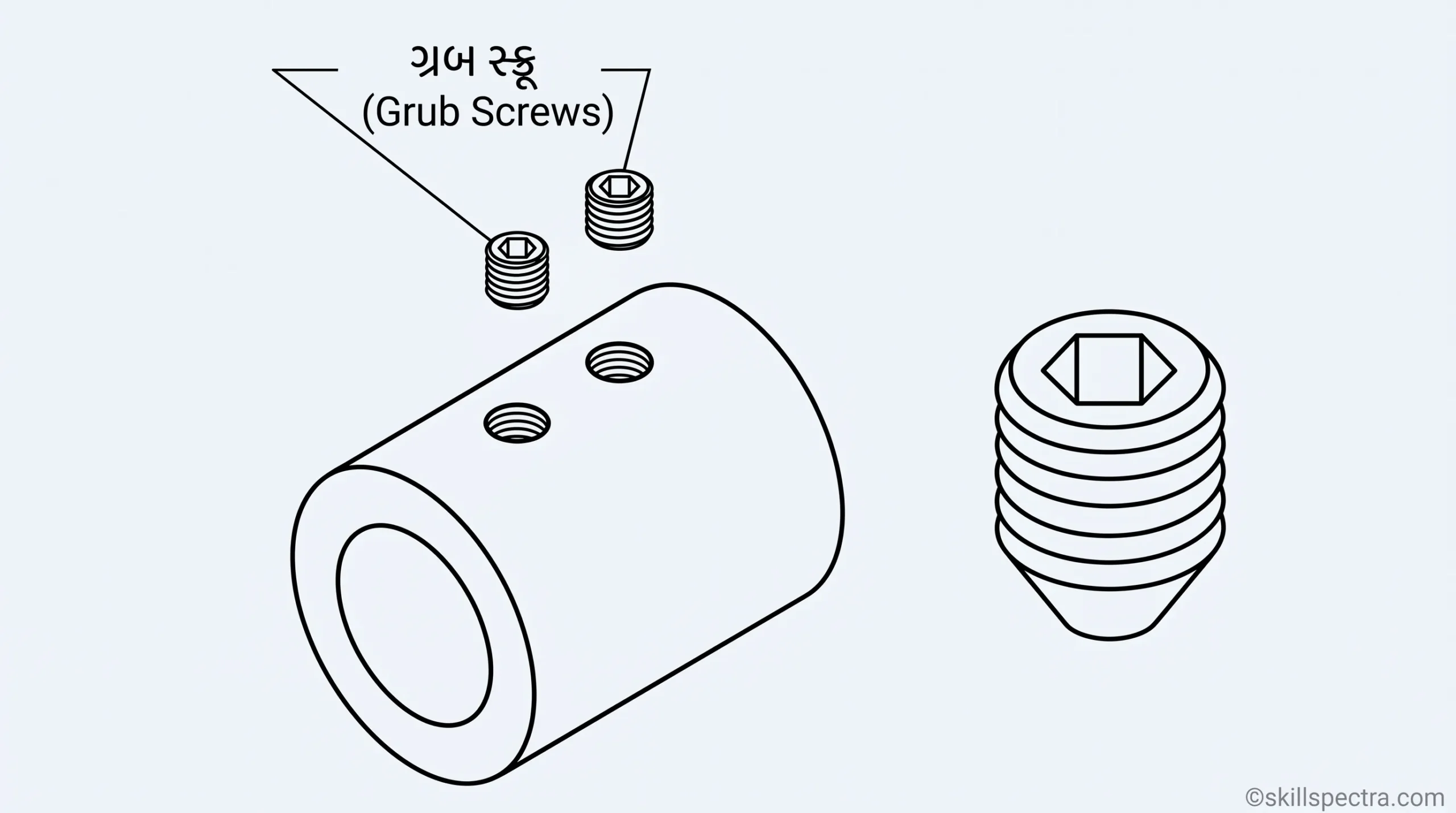
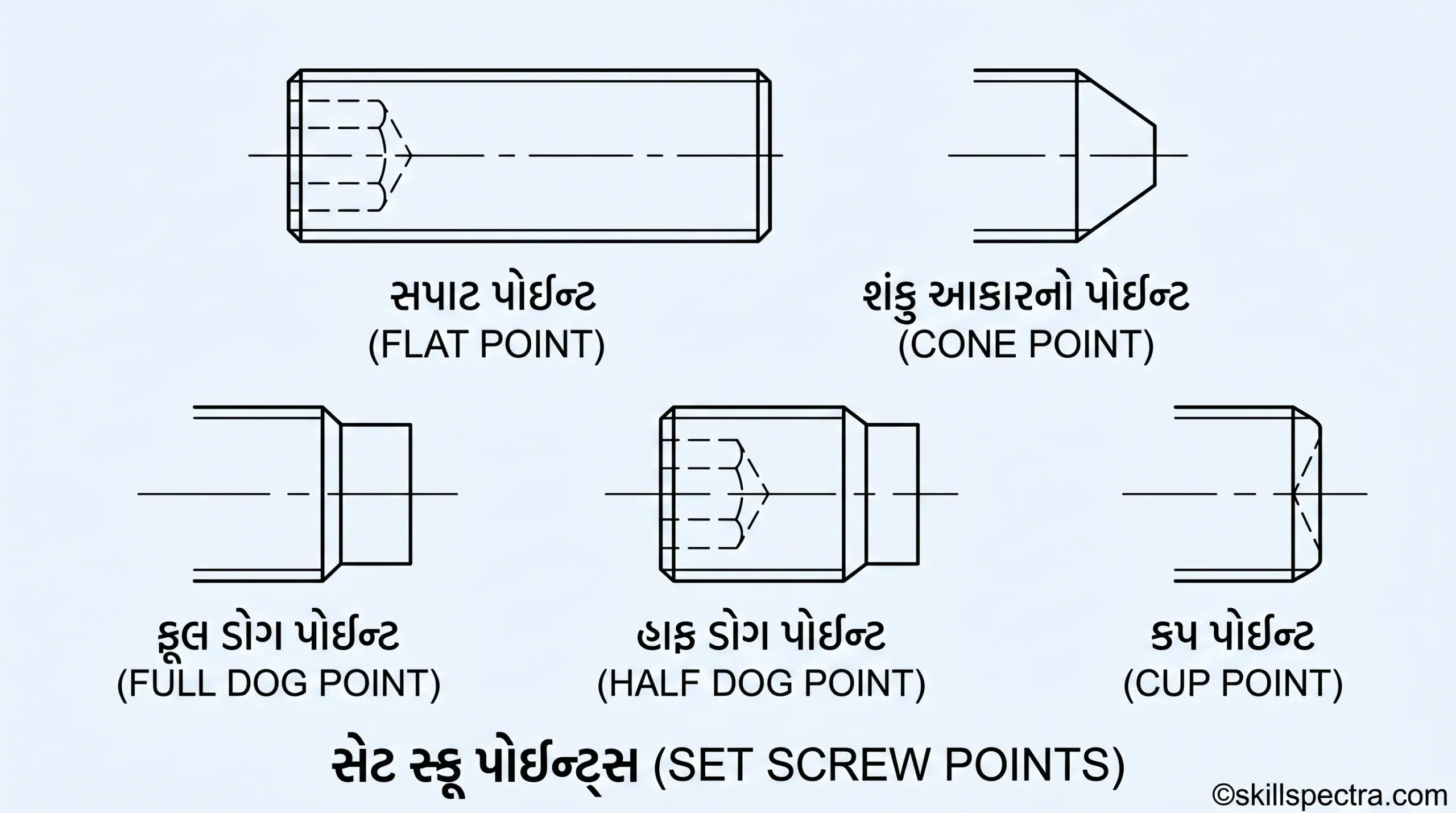
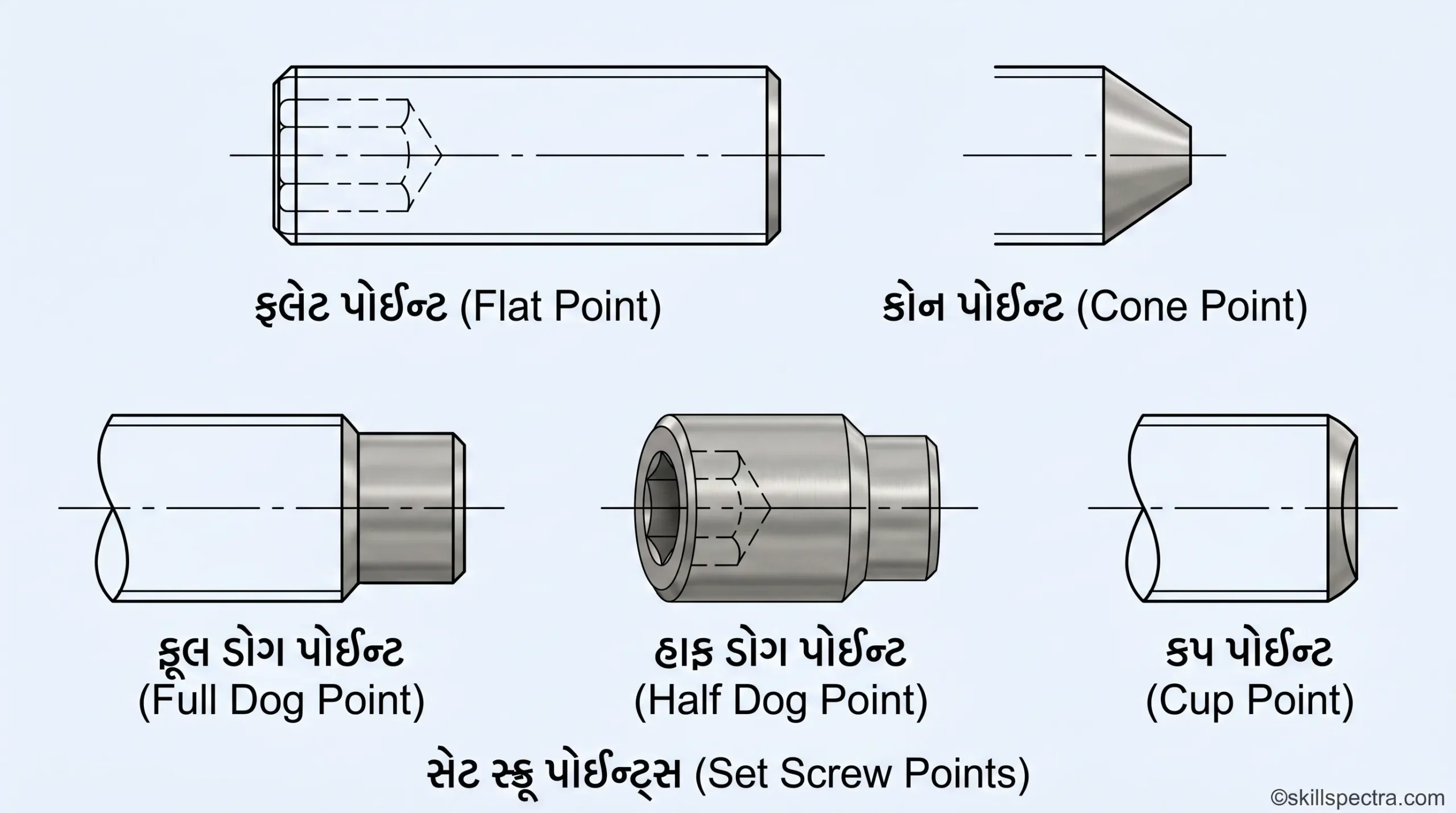
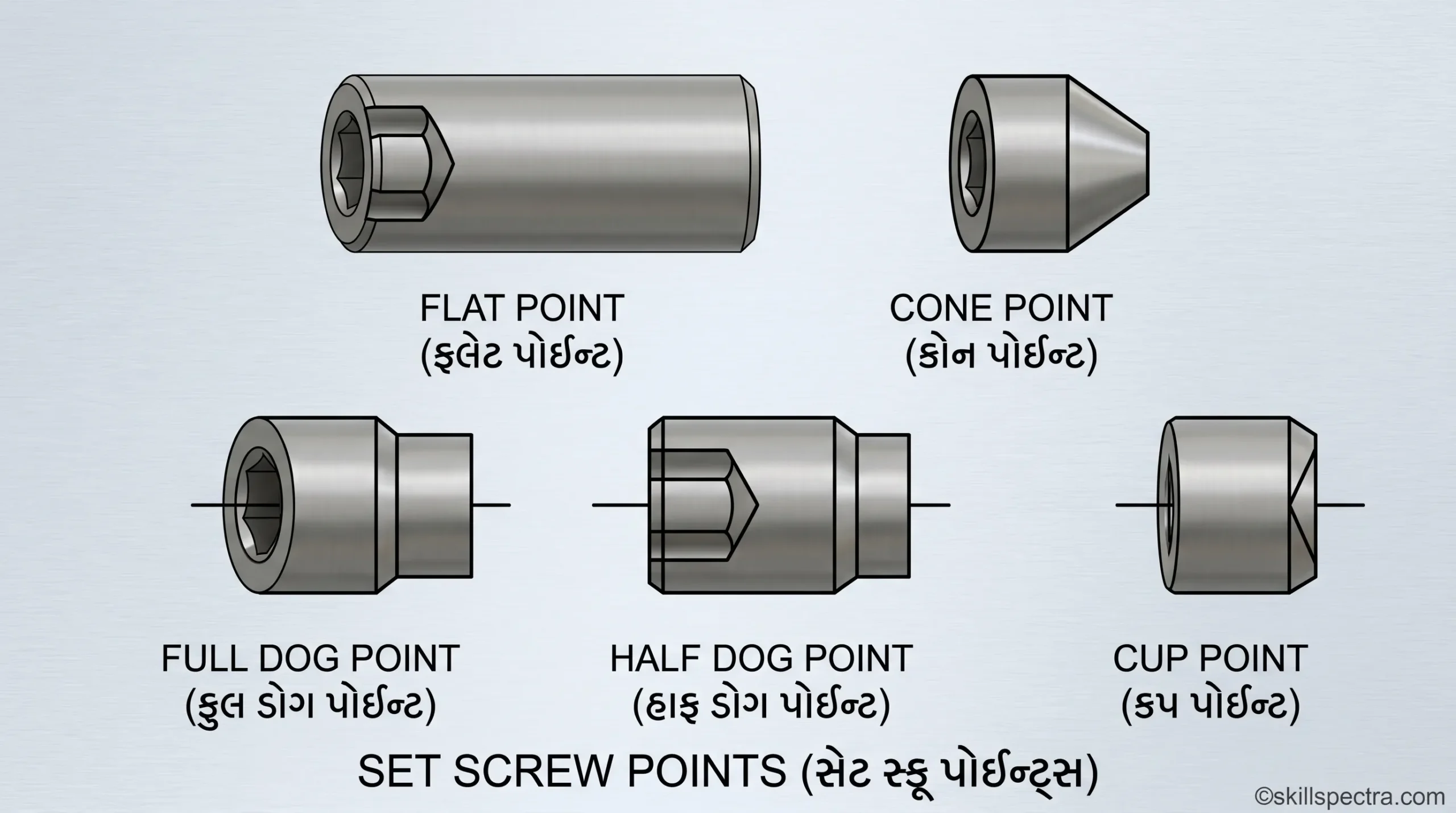
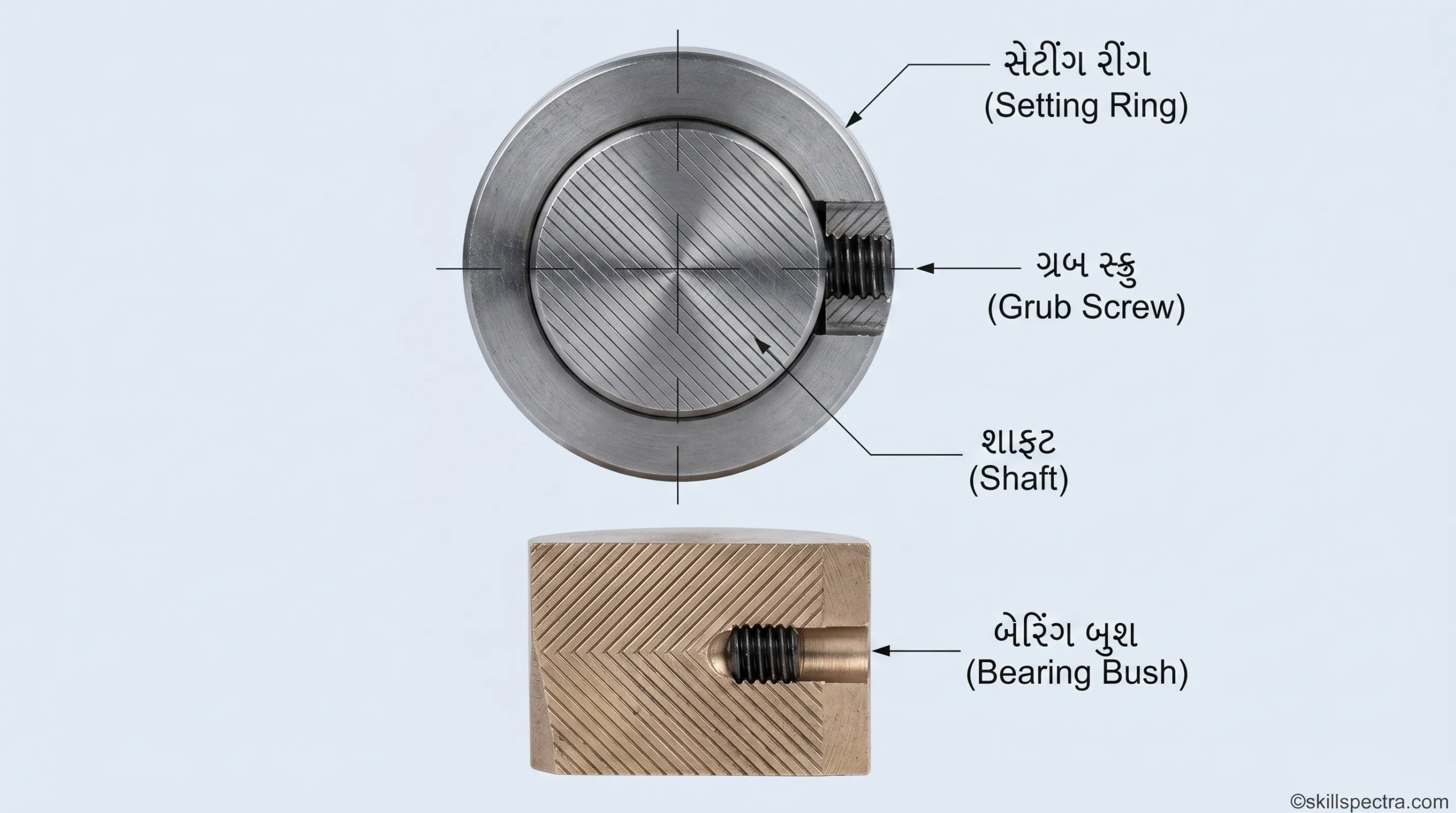
Hexagonal socket set screws (Fig 13): આ headless socket screws છે જે વિવિધ functional requirements માટે અલગ-અલગ points સાથે ઉપલબ્ધ છે (Fig 14). આ points કાં તો metal માં કરડવાની (bite) મંજૂરી આપે છે અથવા work-surface ને નુકસાન કર્યા વ્યાગર ટાઈટ થાય છે. તેનો ઉપયોગ pulleys, collars વગેરેને shafts પર બેસાડવા માટે થાય છે. જ્યાં જગ્યા મર્યાદિત હોય ત્યાં high strength applications માટે તેનો ઉપયોગ થાય છે.
Set screw points:
- Flat point, Cone point, Full dog point, Half dog point, Cup point.
Square set screws (Fig 15): આ set screws ના ઉપયોગો hexagon socket set screws જેવા જ છે પરંતુ તેમાં work-surface ની બહાર નીકળેલા square heads હોય છે. જ્યારે assembly ને વારંવાર ખોલવા-બેસાડવાની (disassembly and setting) જરૂર હોય ત્યારે આ ઉપયોગી છે.
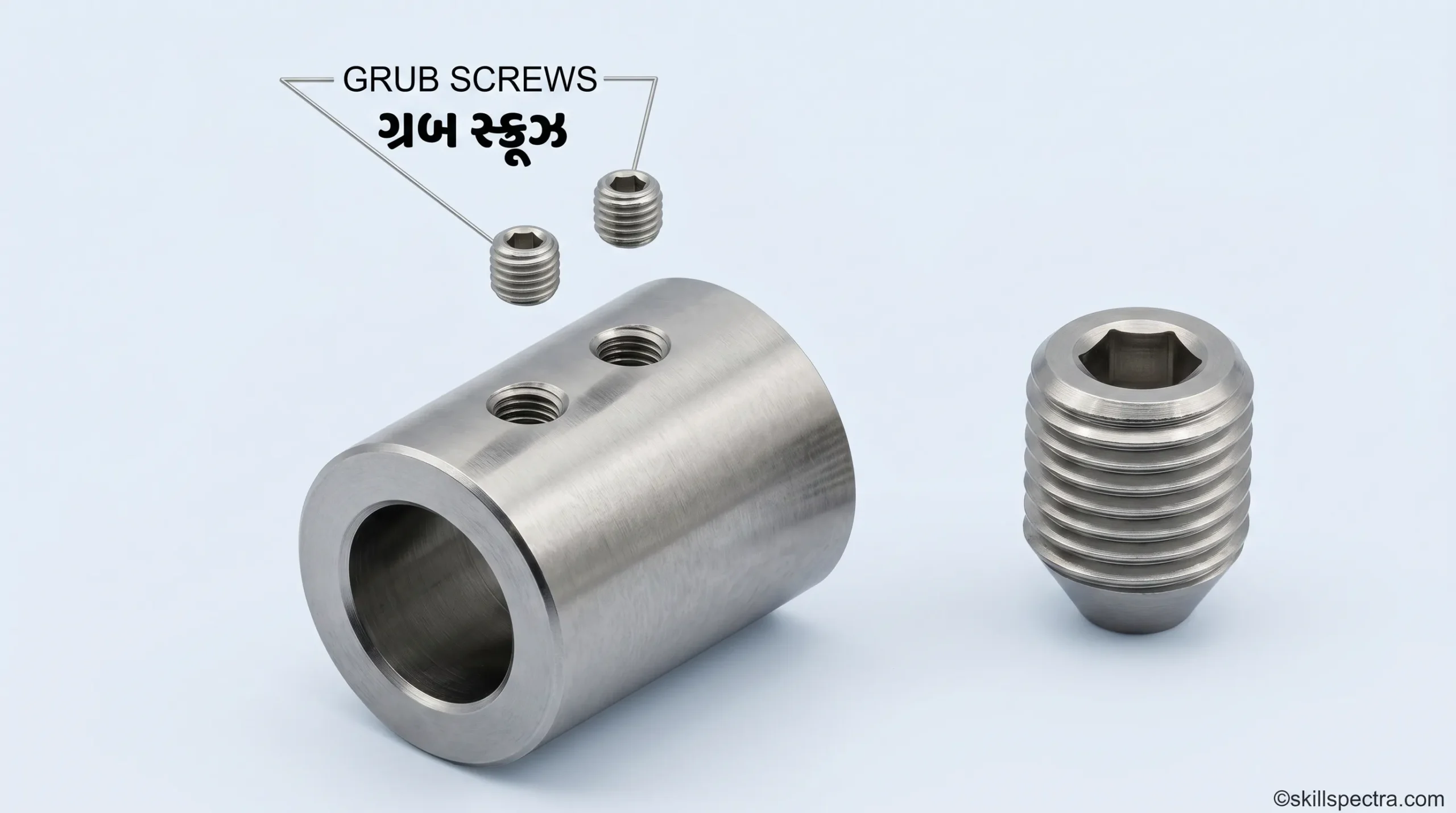
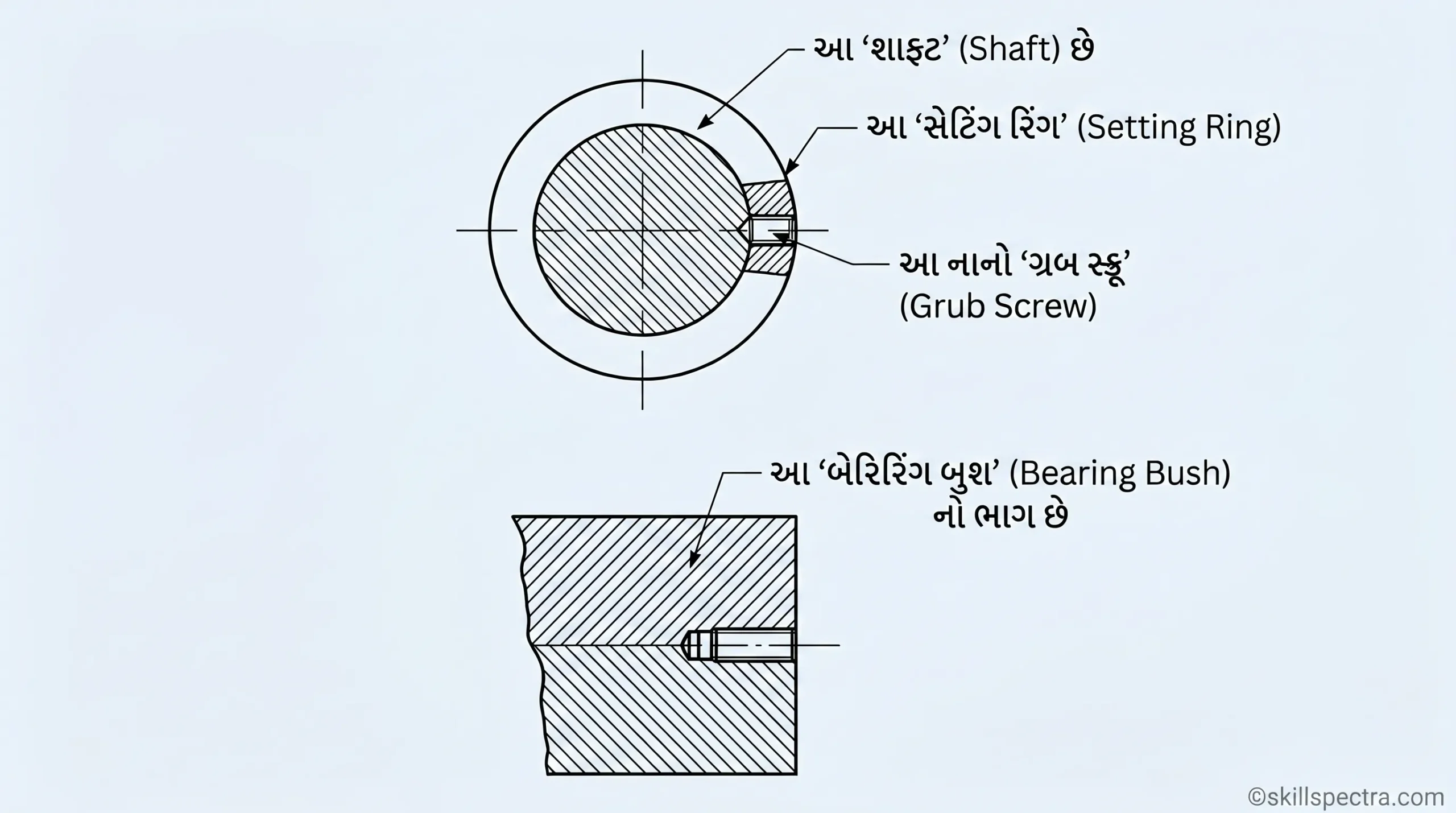
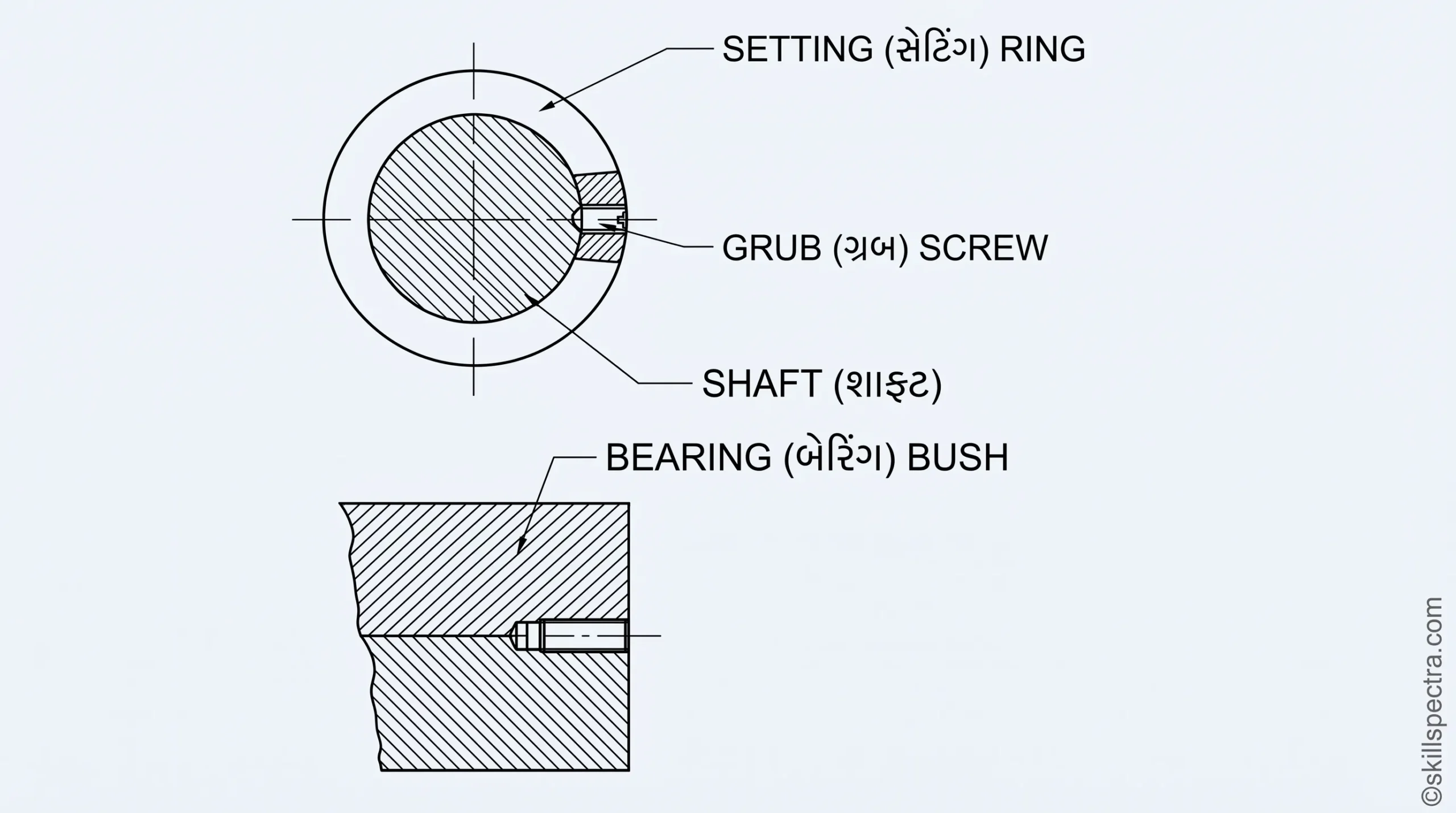
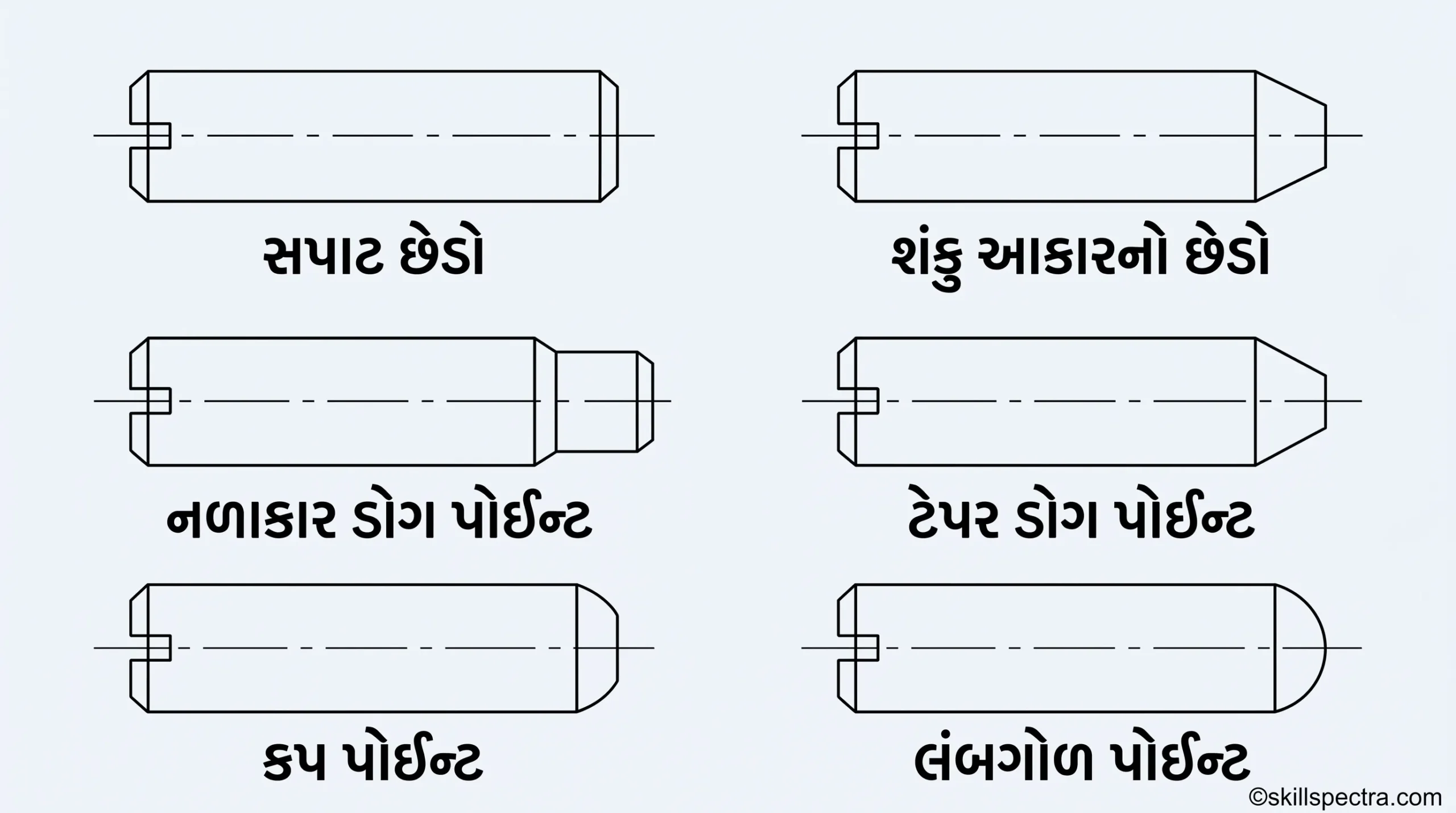
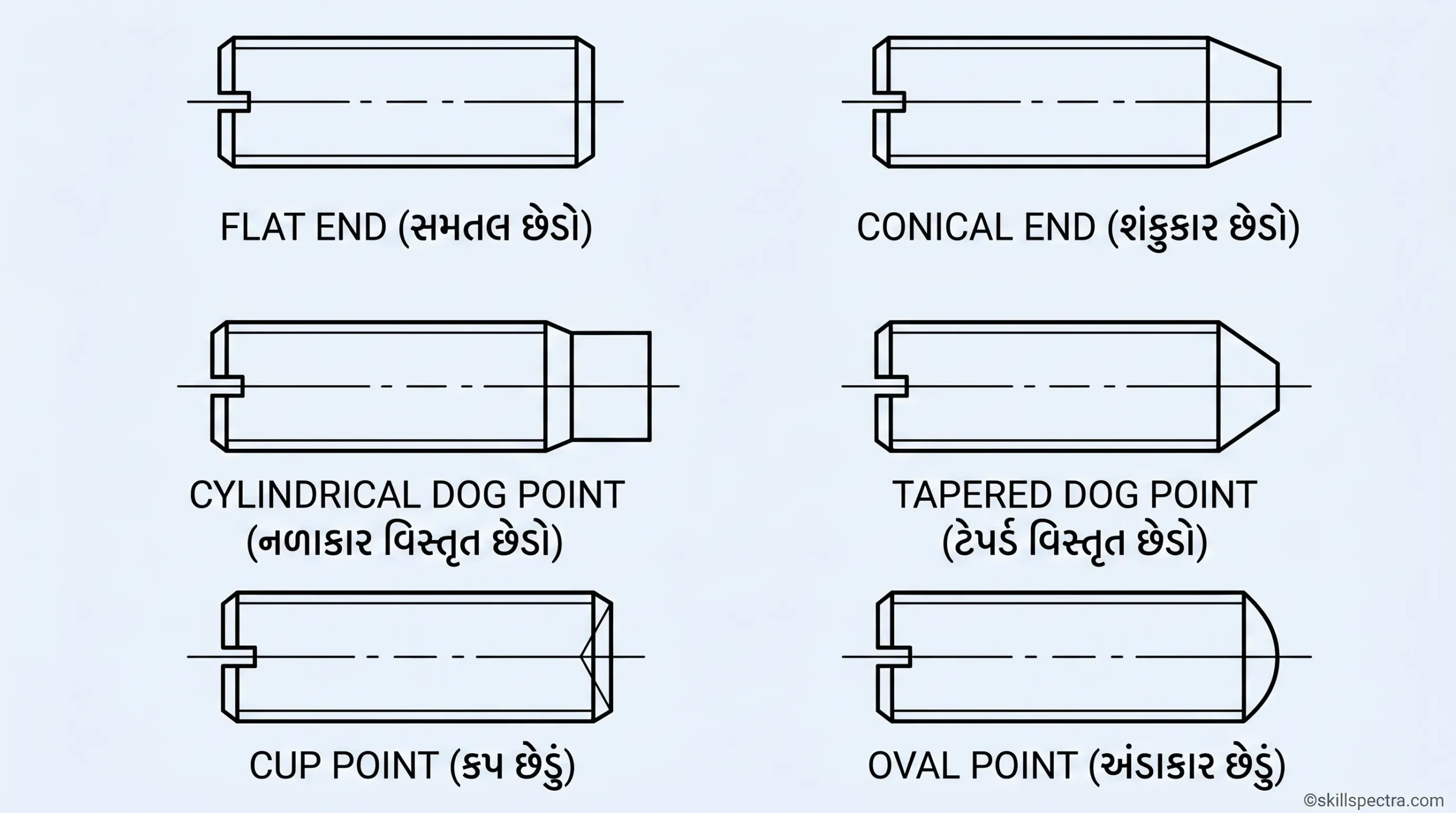
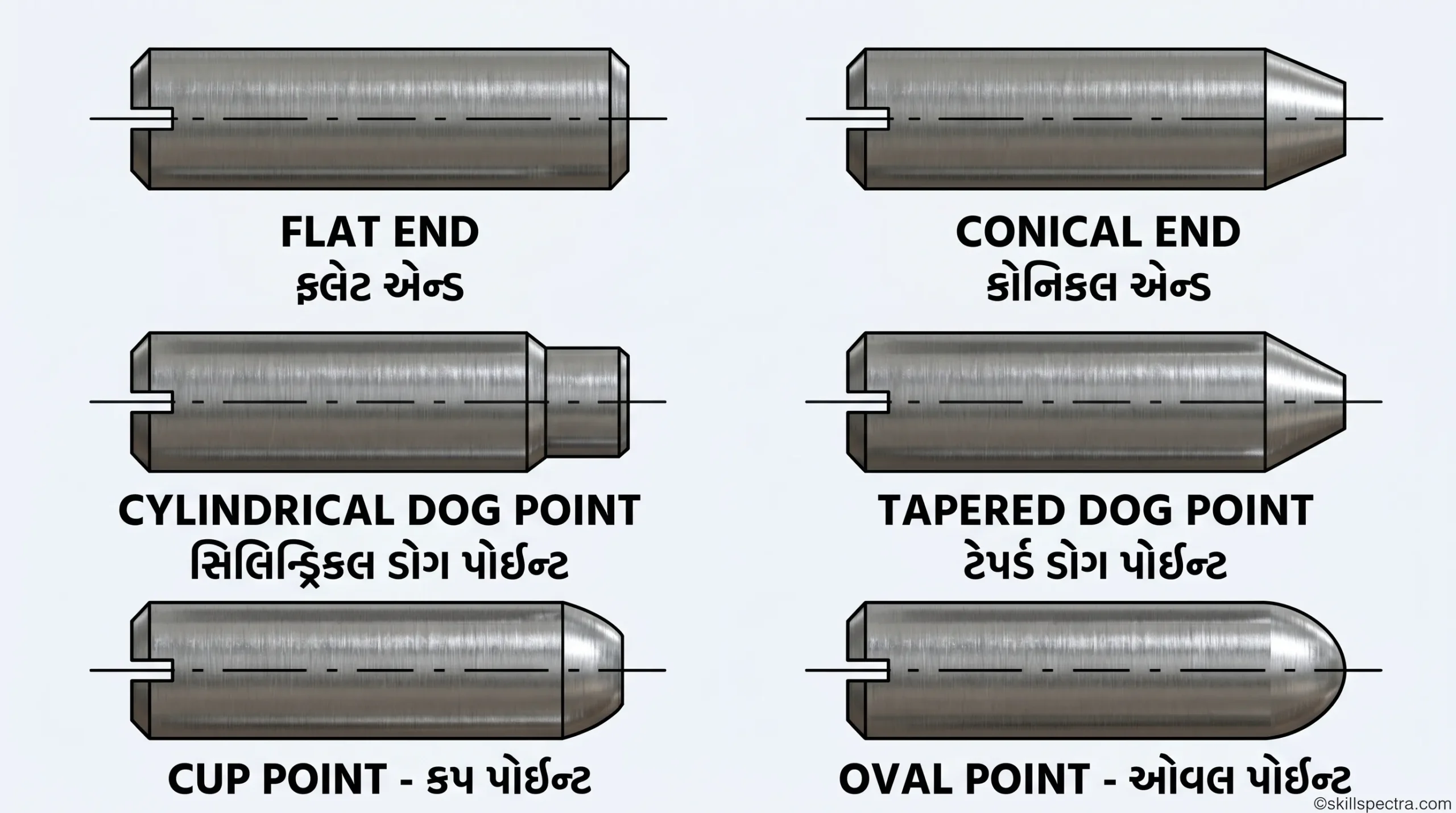
Grub screws: Grubs ના ઉપયોગો hexagon socket set screws જેવા જ છે પરંતુ તે light holding માટે વપરાય છે (Fig 16). Grub screws પણ અલગ-અલગ પ્રકારના points સાથે ઉપલબ્ધ છે (Fig 17):
- Flat end, Conical end, Cylindrical dog point, Tapered dog point, Cup point, Oval point.
Keywords 🔍
- Circlips and Retaining Rings Gujarati
- Types of Washers and Uses
- Machine Screws for Heavy Duty Assembly
- Mechanic Diesel Theory Lesson Circlips
- Difference between Internal and External Circlips
- Spring Washer vs Tab Washer Gujarati
- Hexagon Socket Head Cap Screws
- Grub Screws and Set Screws ITI Notes
- Mechanic Diesel NSQF Level 4 Theory
- Fastening Devices in Engineering Gujarati
Instructor Tips: 💡 વિદ્યાર્થીઓને Fig 1 થી Fig 17 સુધીના તમામ ડાયાગ્રામ ધ્યાનથી જોવા કહો, જેથી તેઓ વિવિધ types ના screws અને washers વચ્ચેનો તફાવત સમજી શકે. વર્કશોપમાં આ પાર્ટ્સને પ્રત્યક્ષ બતાવવા વધુ અસરકારક રહેશે.
Thumb screws (થમ સ્ક્રૂ) 🔩
Objectives (હેતુઓ):
આ લેસનના અંતે તમે સમર્થ હશો:
- Thumb screws ના પ્રકારો જણાવવા.
- Thumb screws ના ઉપયોગો જણાવવા.
- B.I.S. specification મુજબ thumb screws ને નિયુક્ત (designate) કરવા.
Thumb screws નો ઉપયોગ એવી જગ્યાએ થાય છે જ્યાં components (ભાગો) ને વારંવાર ફિક્સ કરવાના અને કાઢવાના હોય છે. આ એસેમ્બલીમાં Tightening (ટાઈટ કરવું) અને loosening (ઢીલું કરવું) માત્ર આંગળીઓ (fingers) દ્વારા જ કરવામાં આવે છે. 🖐️
Types (પ્રકારો) 📂
Indian standard specification IS:3726-1972 મુજબ પાંચ પ્રકારના thumb screws હોય છે:
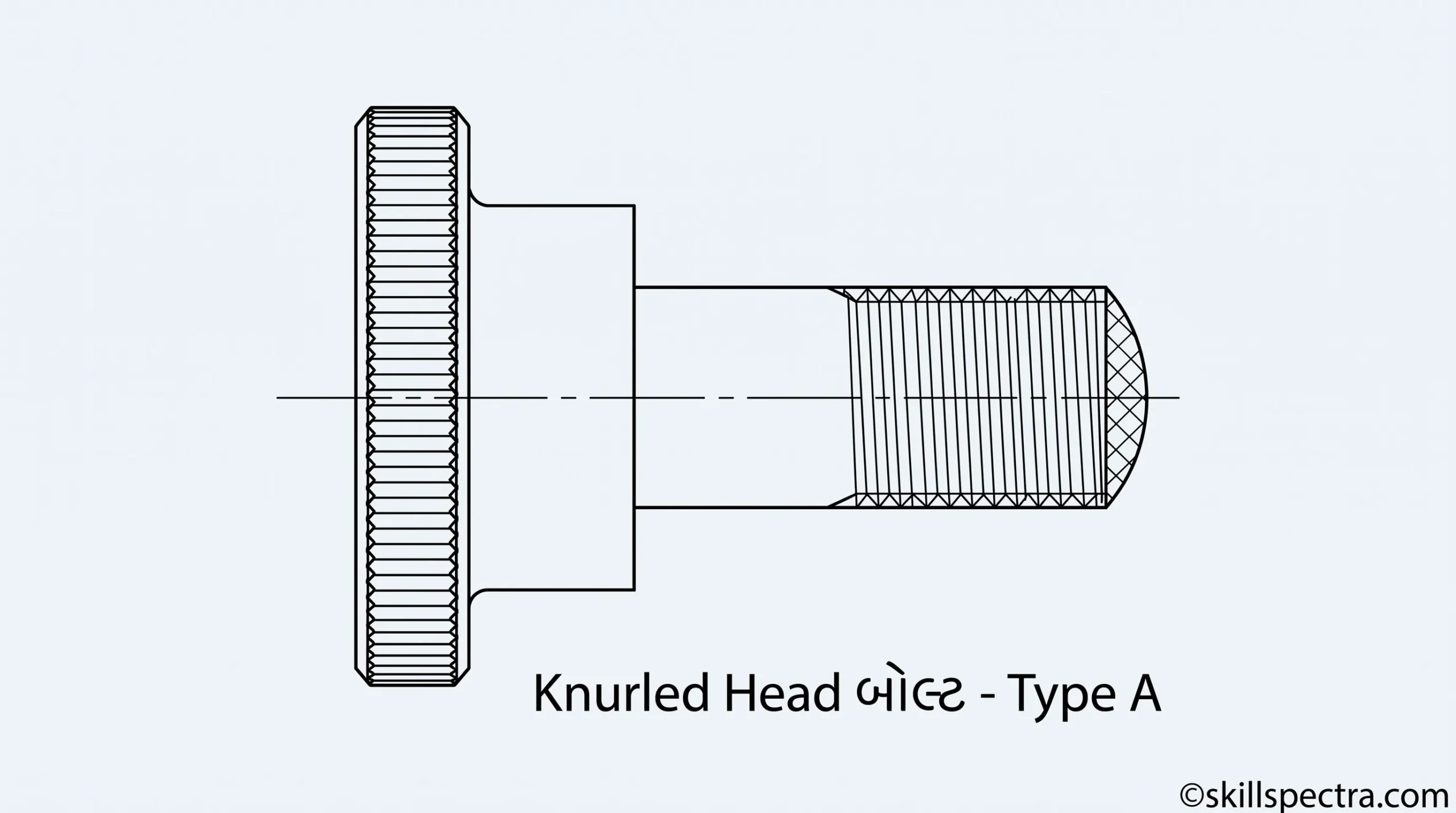
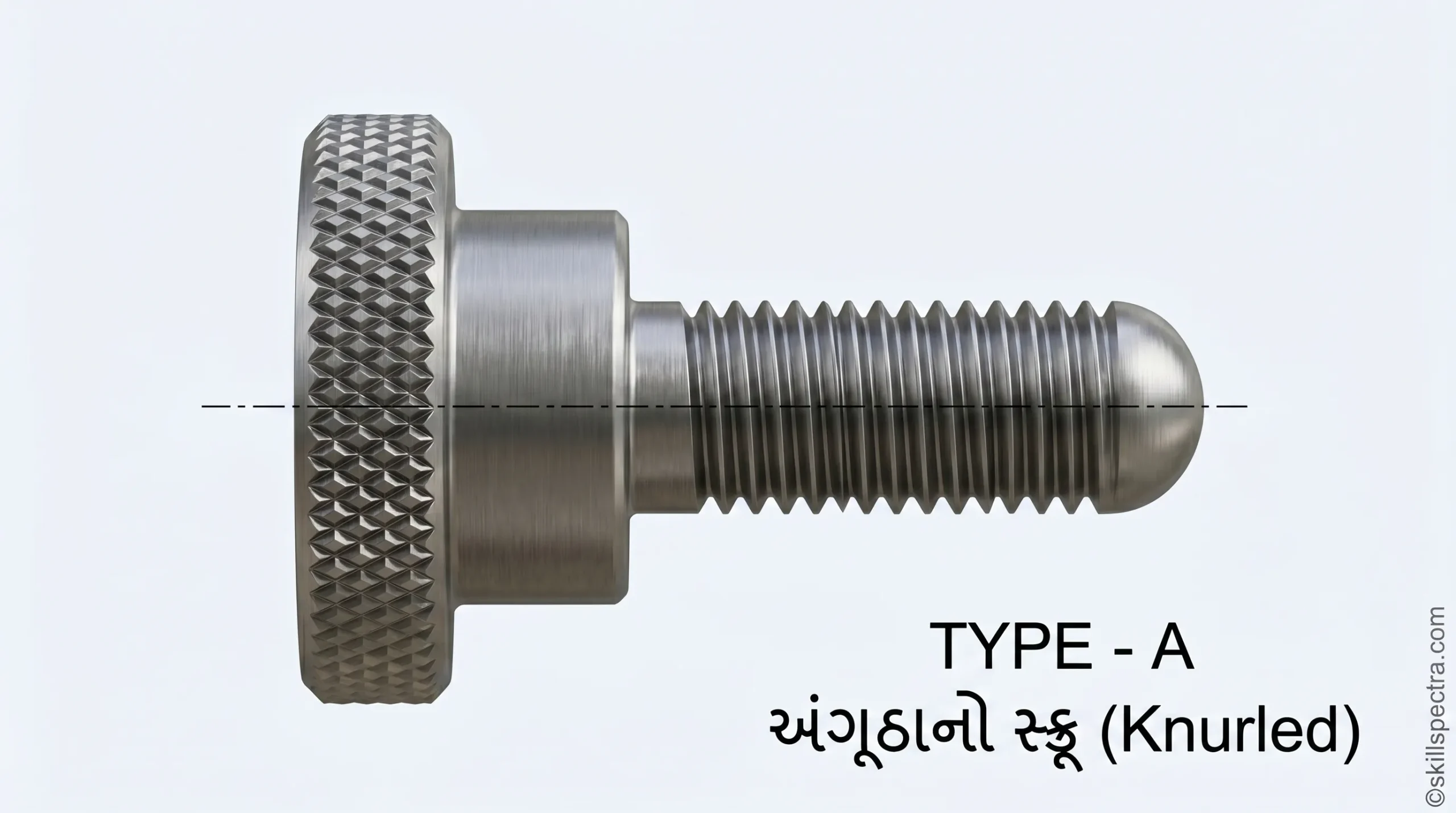
- Type-A: Thumb screws partially threaded (Fig 1) – અંશતઃ આંટાવાળા.
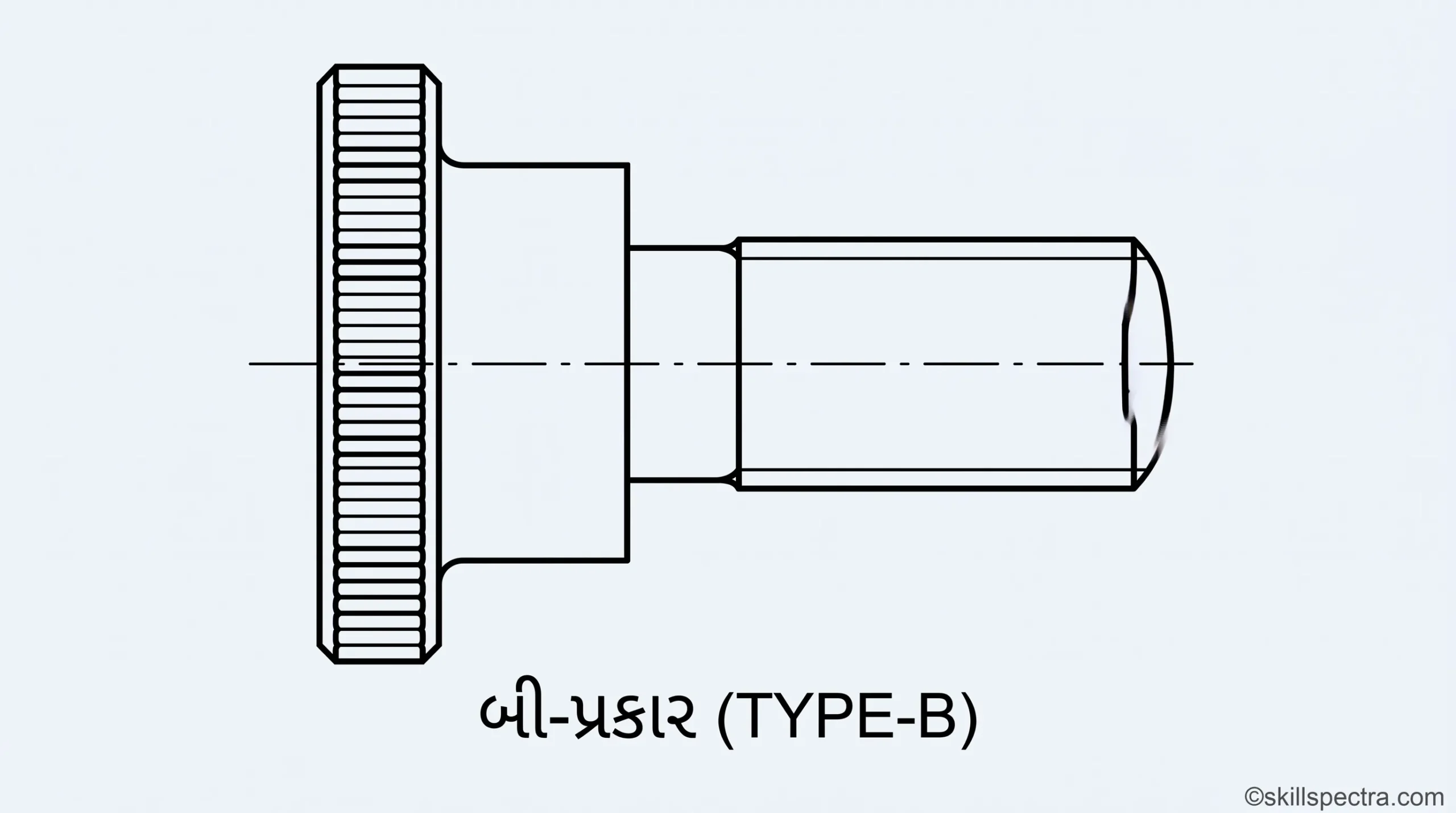
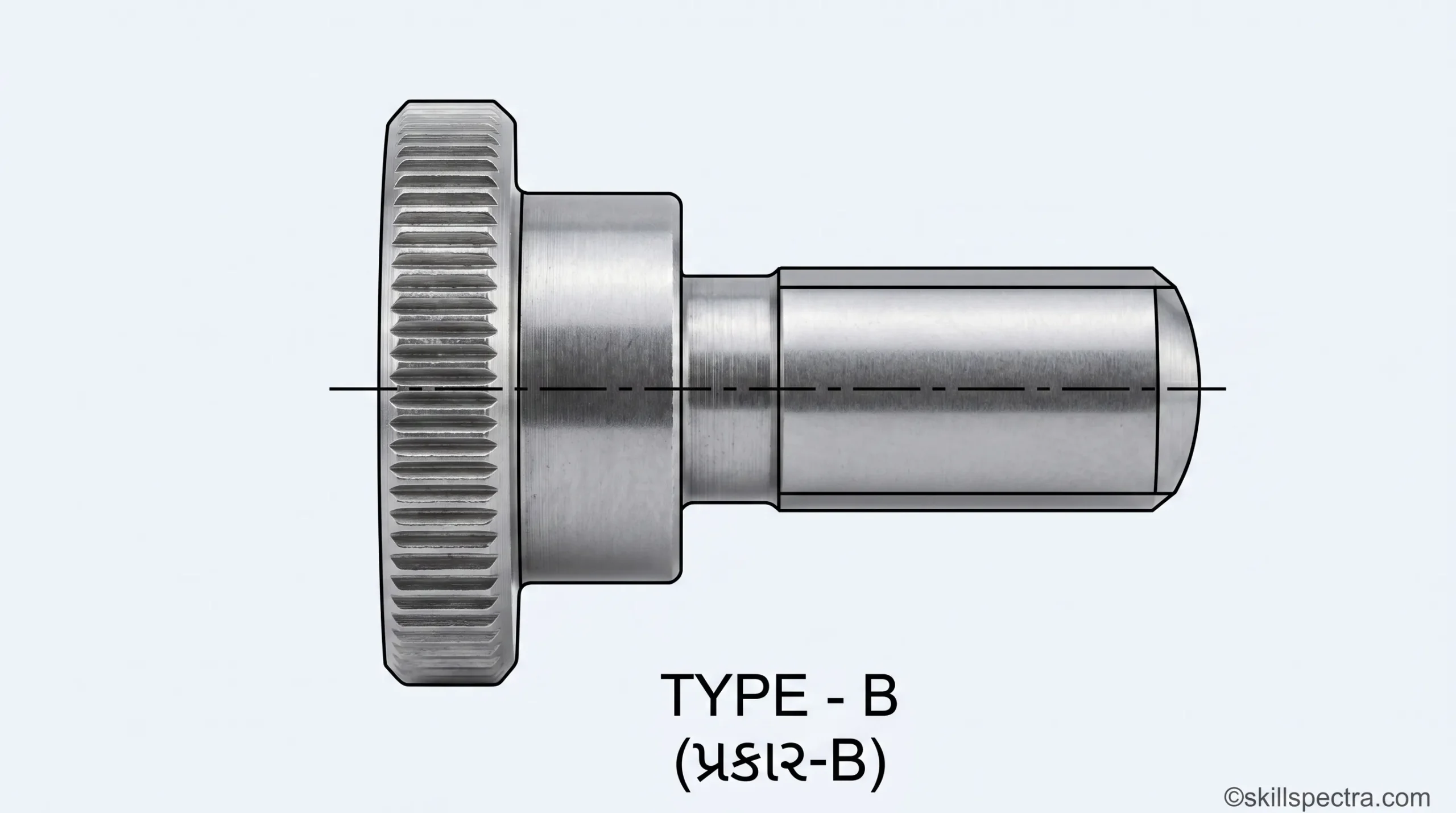
- Type-B: Thumb screws fully threaded (Fig 2) – પૂરેપૂરા આંટાવાળા.
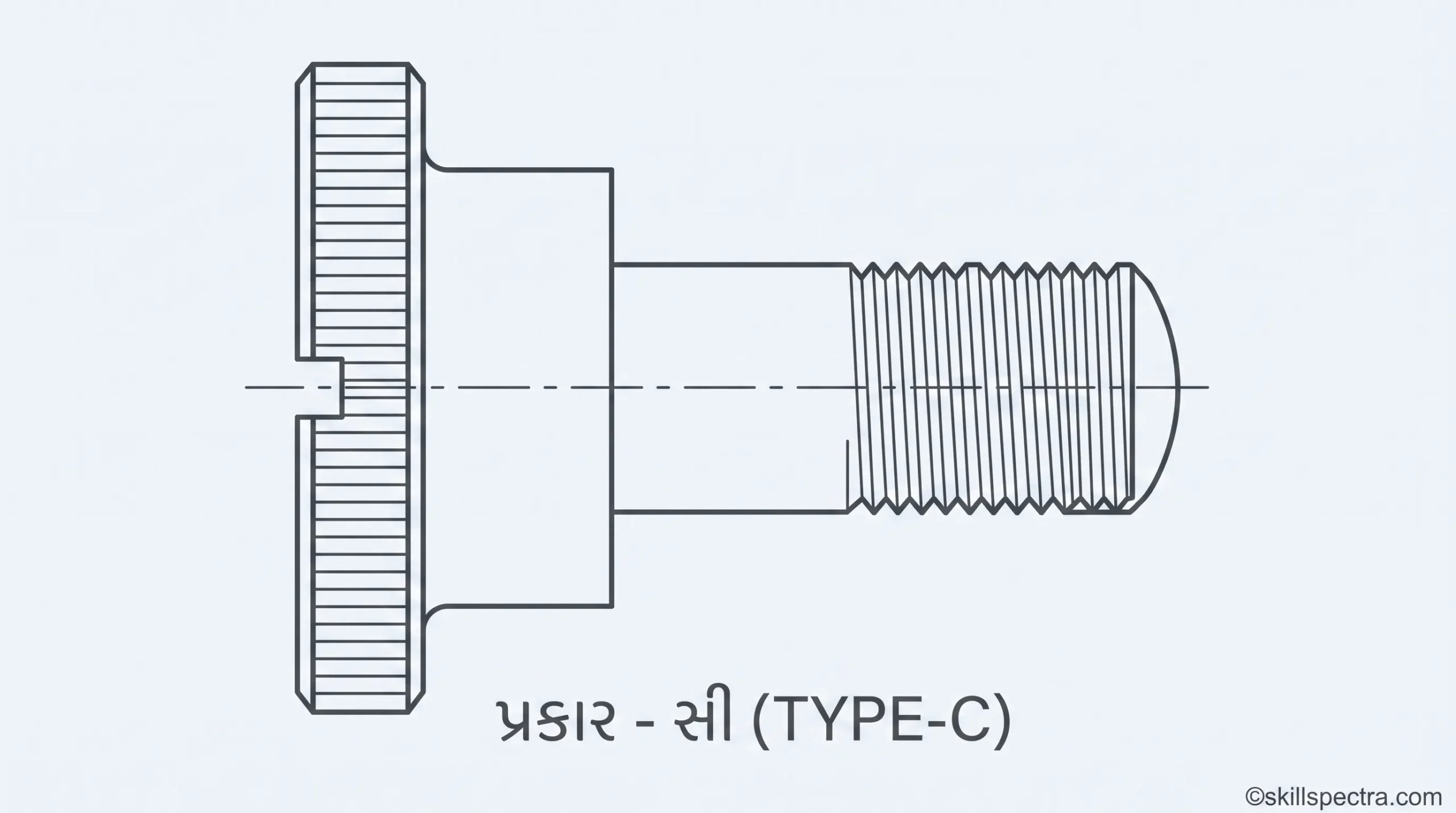
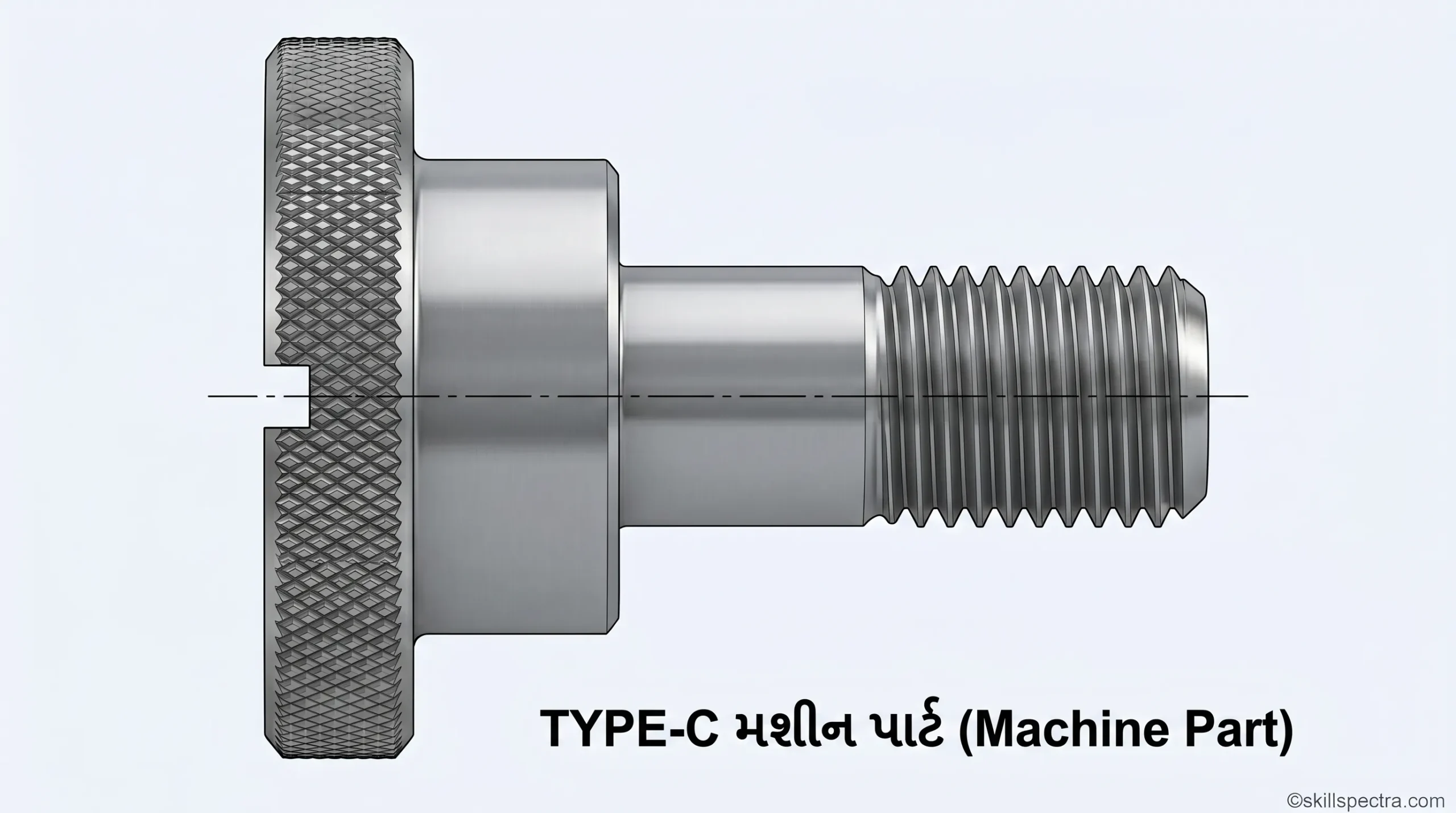
- Type-C: Slotted thumb screw partially threaded (Fig 3) – ખાંચાવાળા અને અંશતઃ આંટાવાળા.
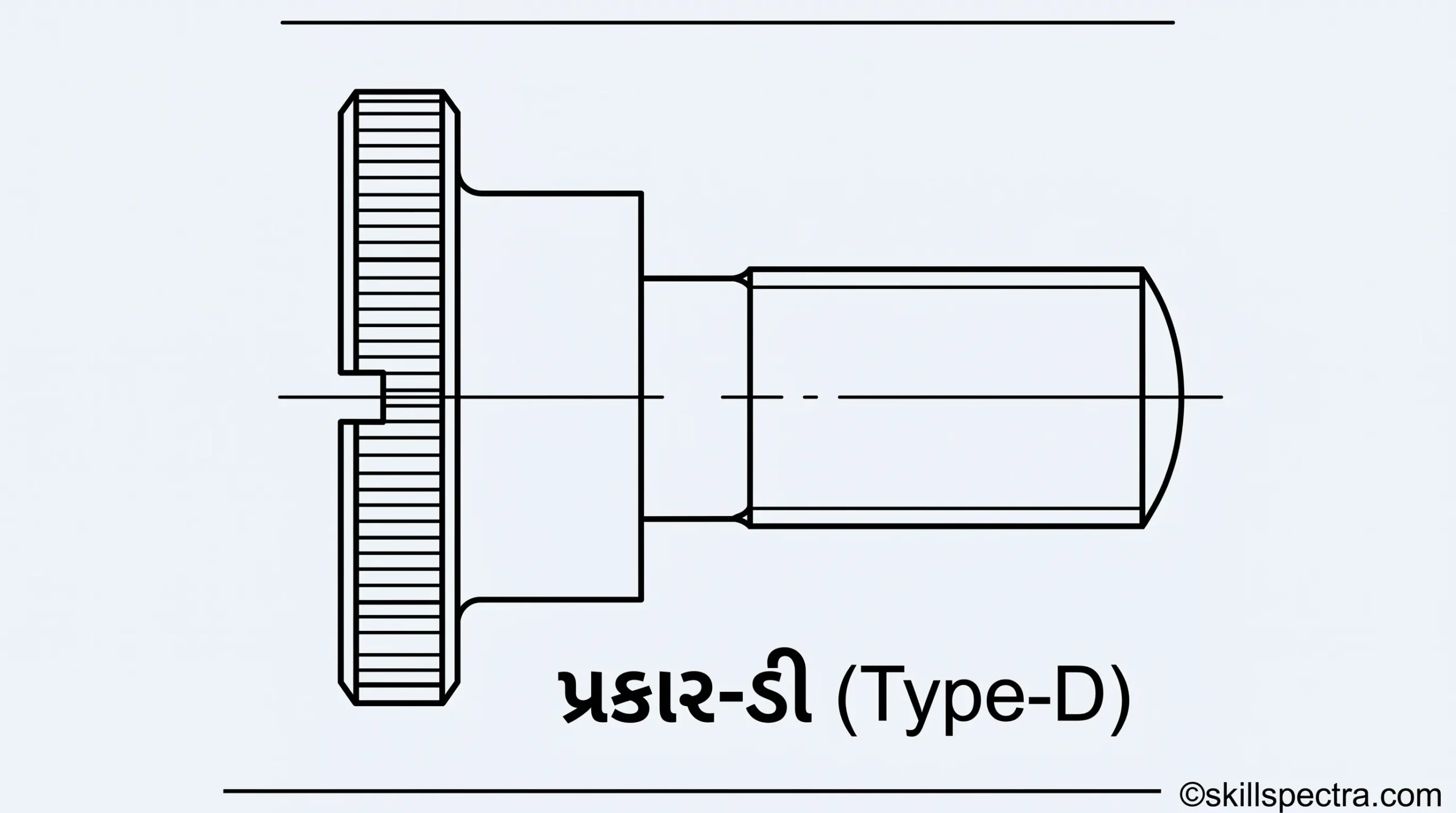
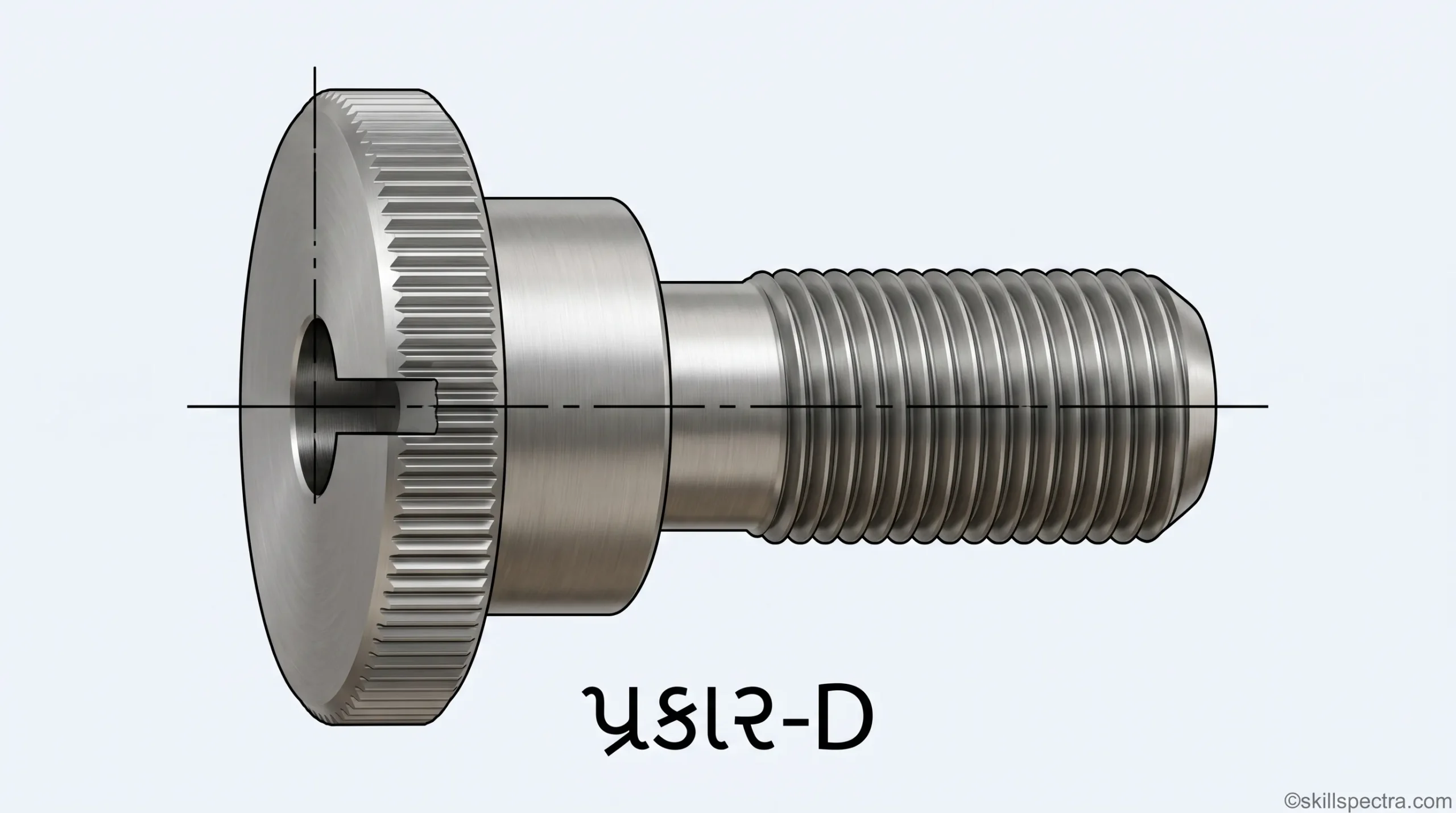
- Type-D: Slotted thumb screw fully threaded (Fig 4) – ખાંચાવાળા અને પૂરેપૂરા આંટાવાળા.
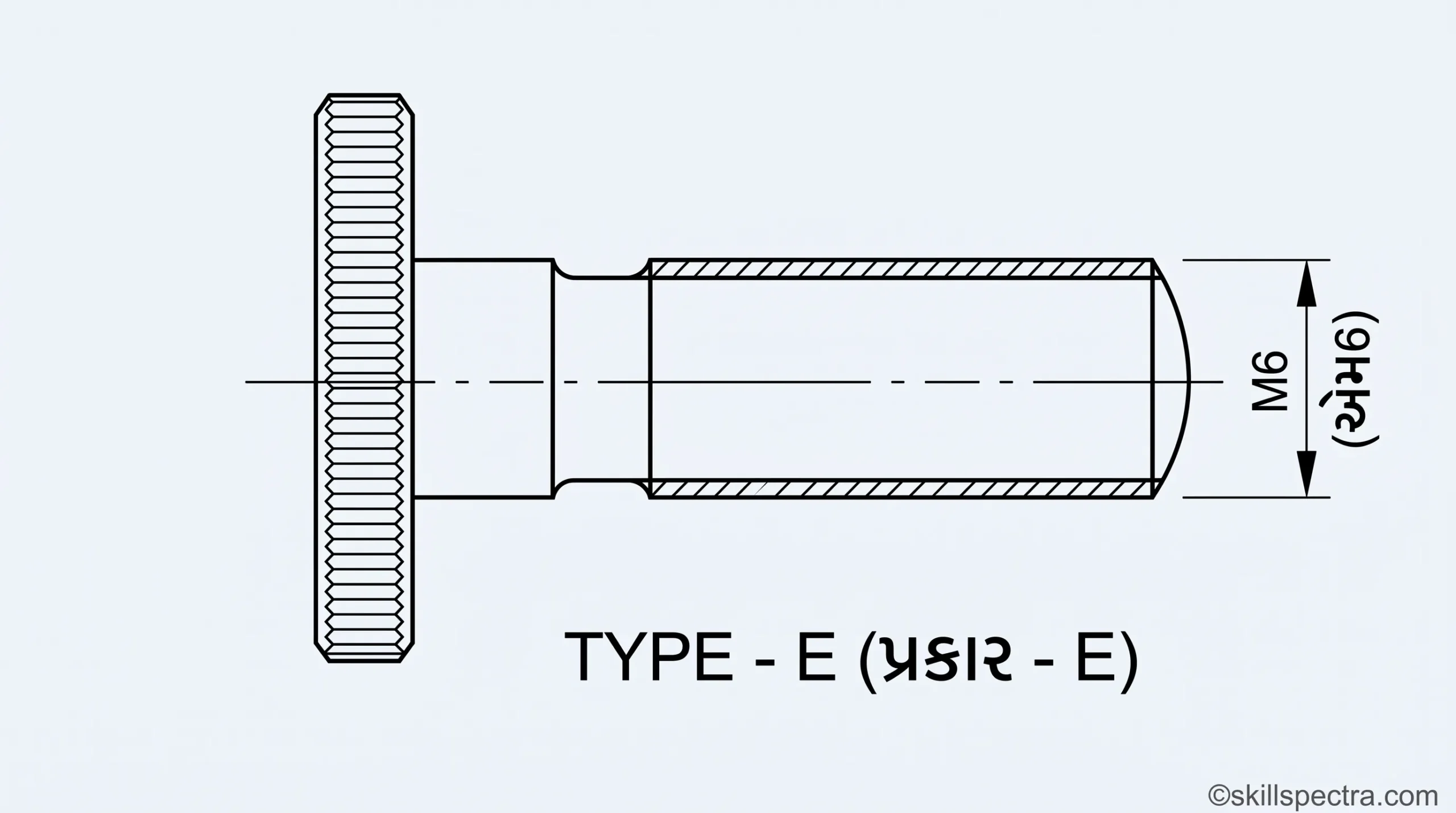
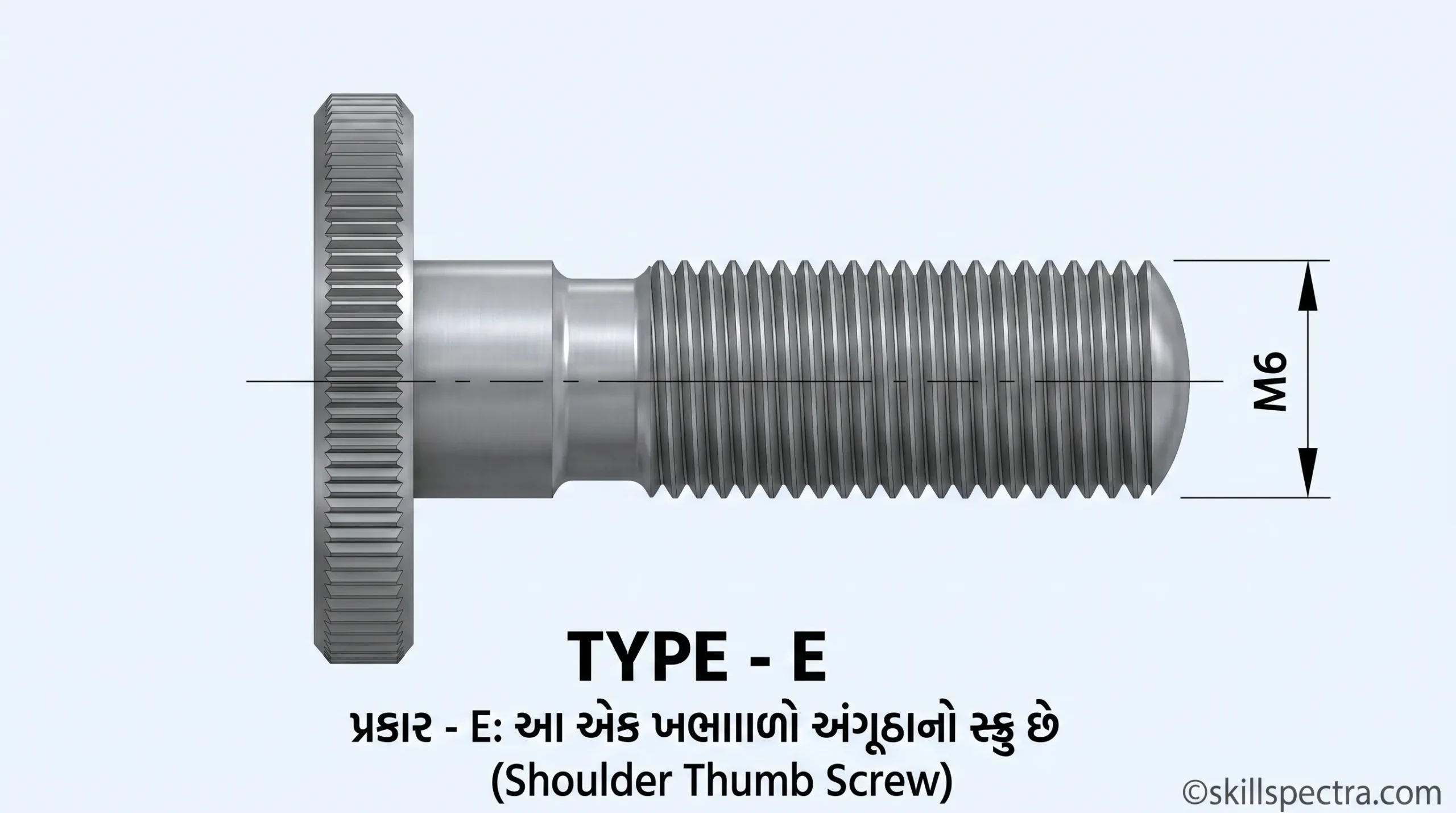
- Type-E: Flat thumb screws (Fig 5) – સપાટ થમ સ્ક્રૂ.
એસેમ્બલીમાં કયા પ્રકારનો thumb screw પસંદ કરવો તેનો આધાર વાસ્તવિક જરૂરિયાત (actual requirement) પર રહેલો છે.
Sizes (માપ) 📏
B.I.S. મુજબ Thumb screws નીચે મુજબના માપમાં ઉપલબ્ધ છે: M1.6, M2, M2.5, M3, M4, M5, M6, M8 અને M10.
Designation of thumb screws (નામકરણ) 🏷️
Thumb screws ને તેની nomenclature (નામ), type (પ્રકાર), thread size (આંટાનું માપ), nominal length (લંબાઈ), number of Indian Standard અને mechanical properties માટેના symbol દ્વારા દર્શાવવામાં આવે છે.
Example (ઉદાહરણ): જો Thumb screw ‘Type A’ નો હોય, size M6 હોય, લંબાઈ 12mm હોય અને property class 4.6 હોય, તો તેને આ રીતે લખાય: Thumb screws A M6 x 12 IS: 3726-4.6
જ્યારે thumb screws બનાવવા માટે પિત્તળ (brass) અથવા અન્ય non-ferrous ધાતુનો ઉપયોગ થાય, ત્યારે designation માં ‘Brass’ શબ્દ અથવા ધાતુનું નામ property class નંબરની જગ્યાએ લખવામાં આવે છે.
Types of nuts (નટ્સના પ્રકારો) 🔩⚙️
Objectives (હેતુઓ):
આ લેસનના અંતે તમે સમર્થ હશો:
- સામાન્ય પ્રકારના nuts ના નામ આપવા.
- સામાન્ય પ્રકારના nuts ના લક્ષણો અને ઉપયોગો જણાવવા.
એસેમ્બલીની જરૂરિયાત મુજબ અલગ અલગ પ્રકારના nuts વપરાય છે.
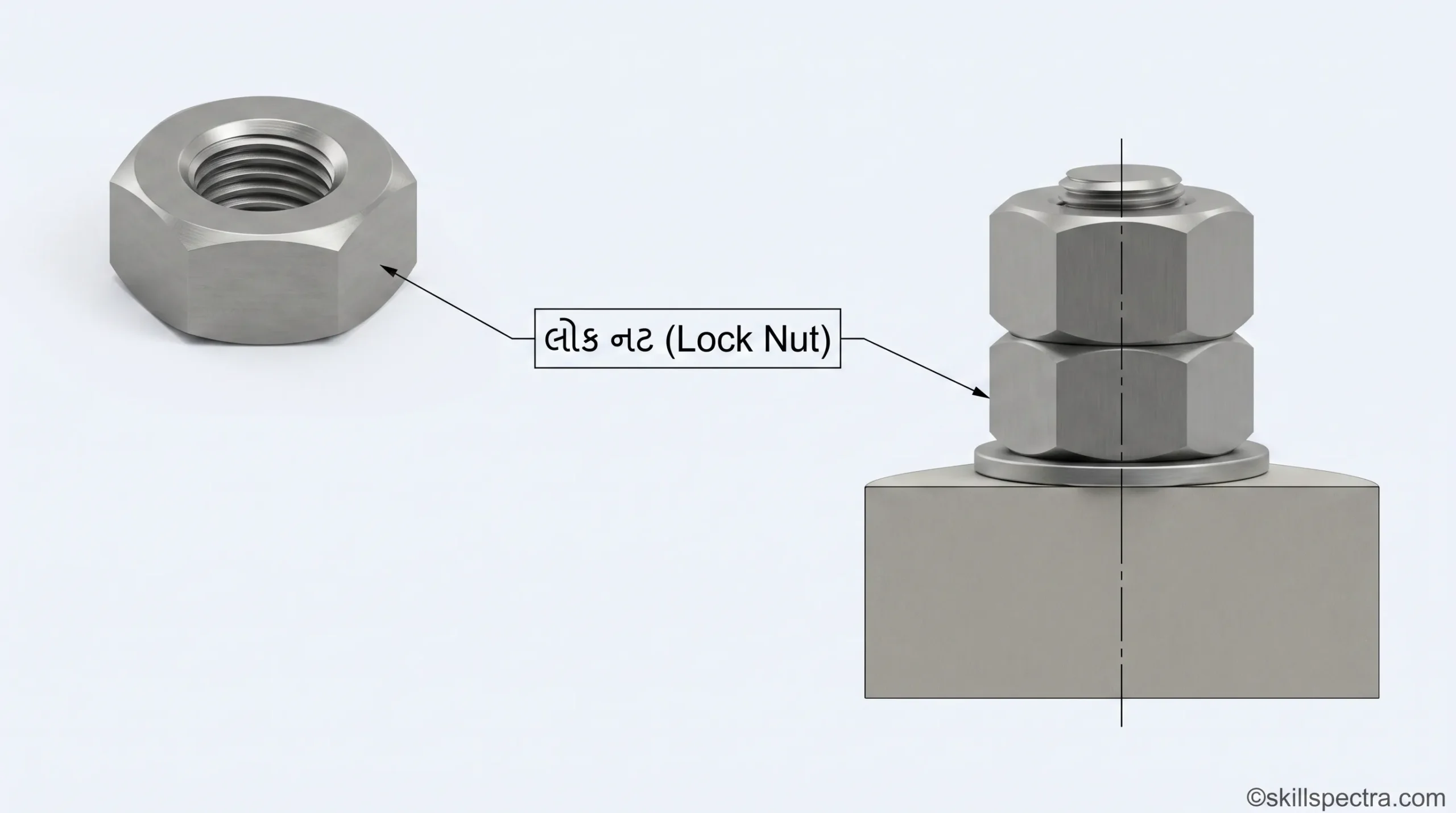
1. Hexagonal nuts (Fig 1 & 2) ⬡
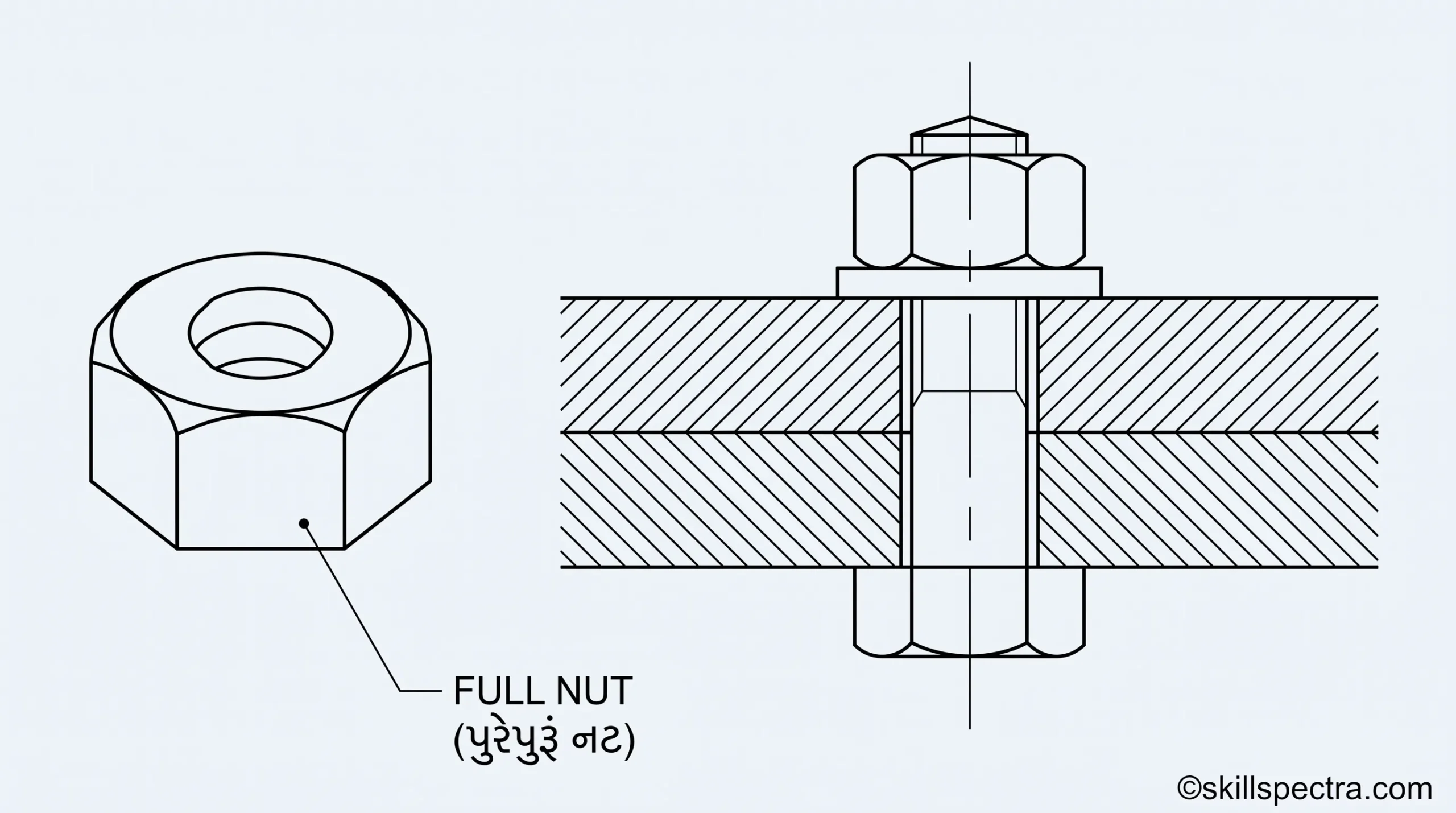
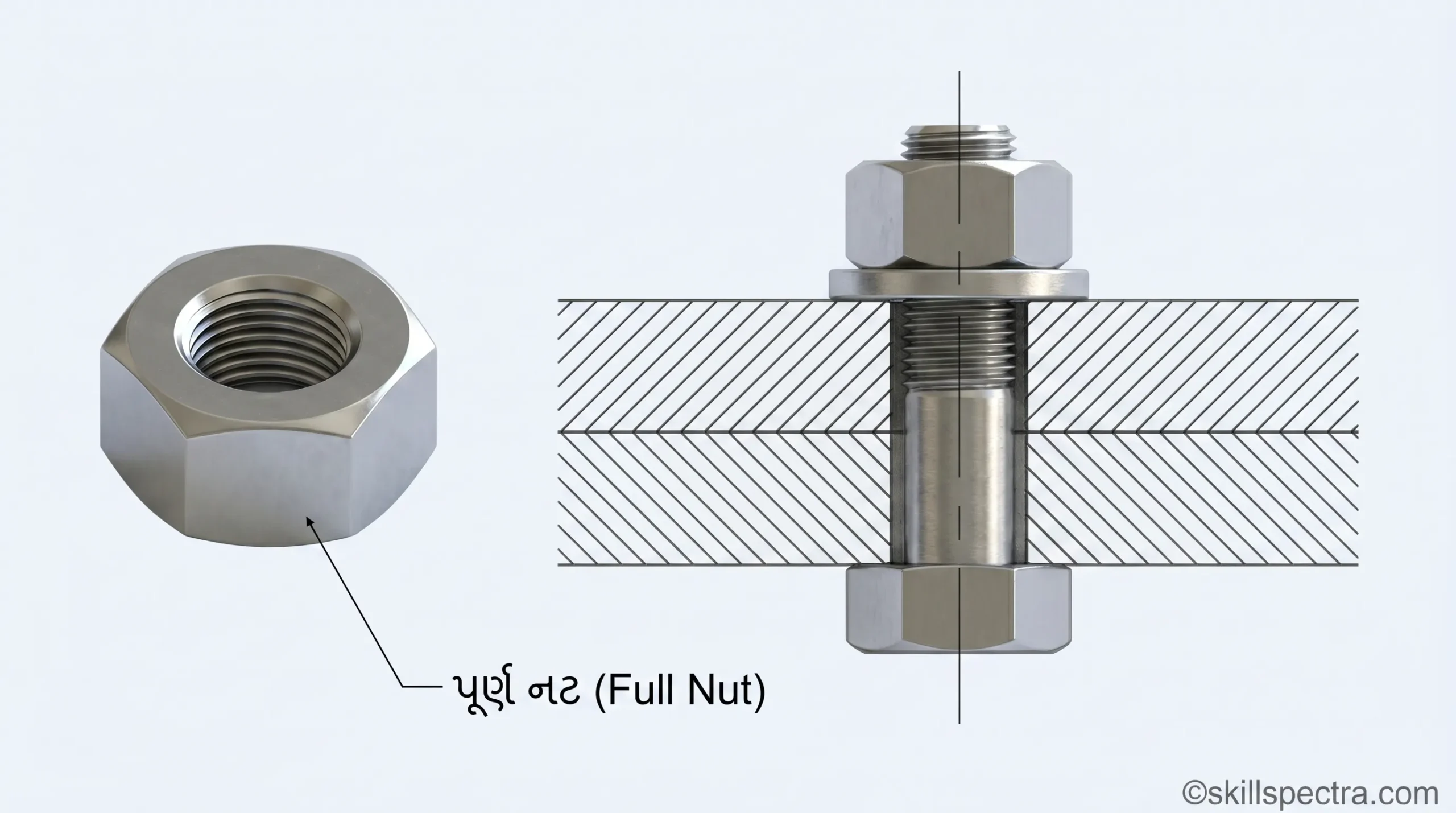
આ સ્ટ્રક્ચરલ અને મશીન ટૂલ કન્સ્ટ્રક્શનમાં સૌથી વધુ વપરાતો નટ છે. Hexagonal nuts અલગ-અલગ જાડાઈમાં મળે છે. પાતળા (Thin) nuts નો ઉપયોગ lock-nuts તરીકે થાય છે.
2. Square nut (Fig 3) ⬛
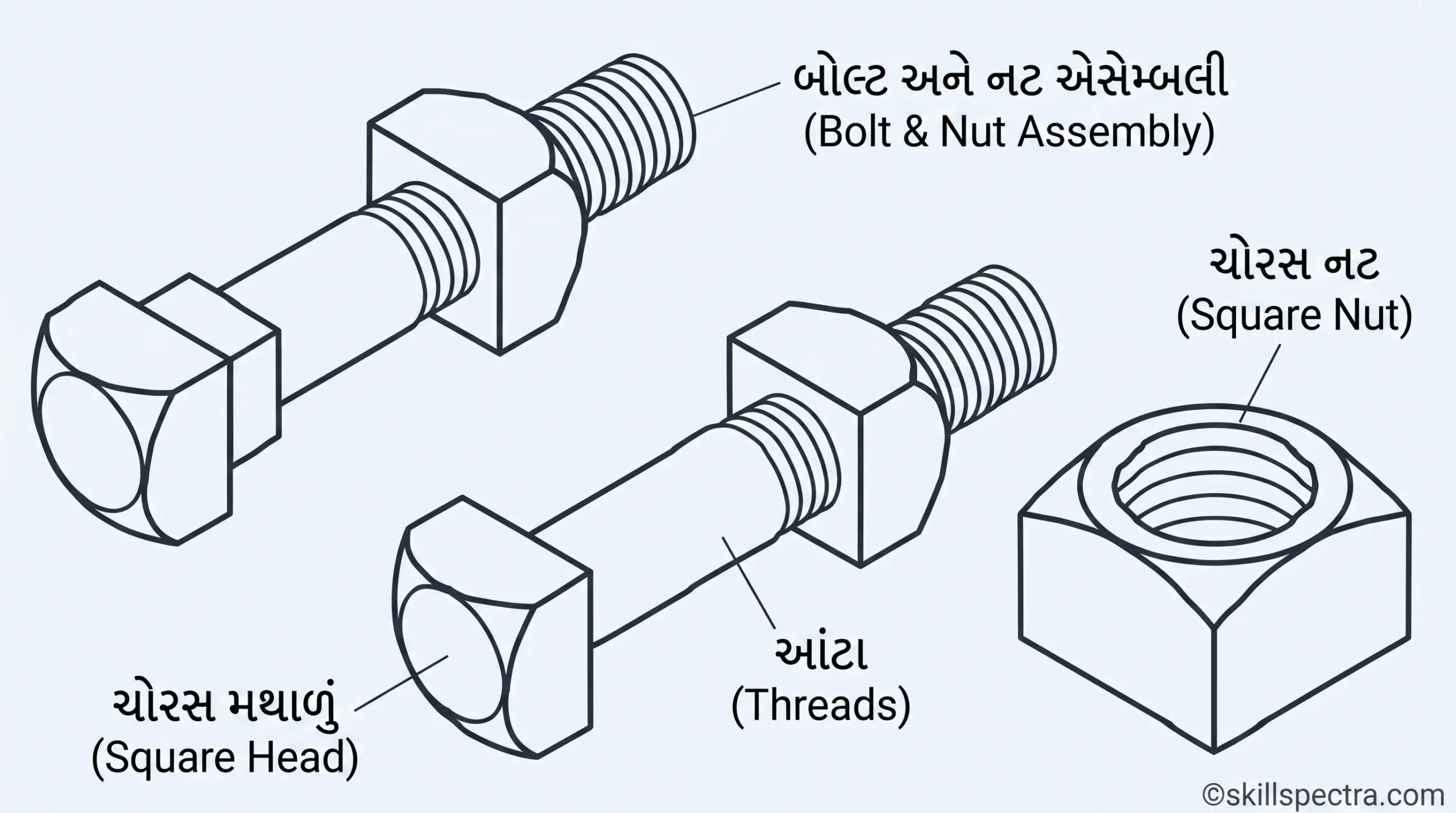
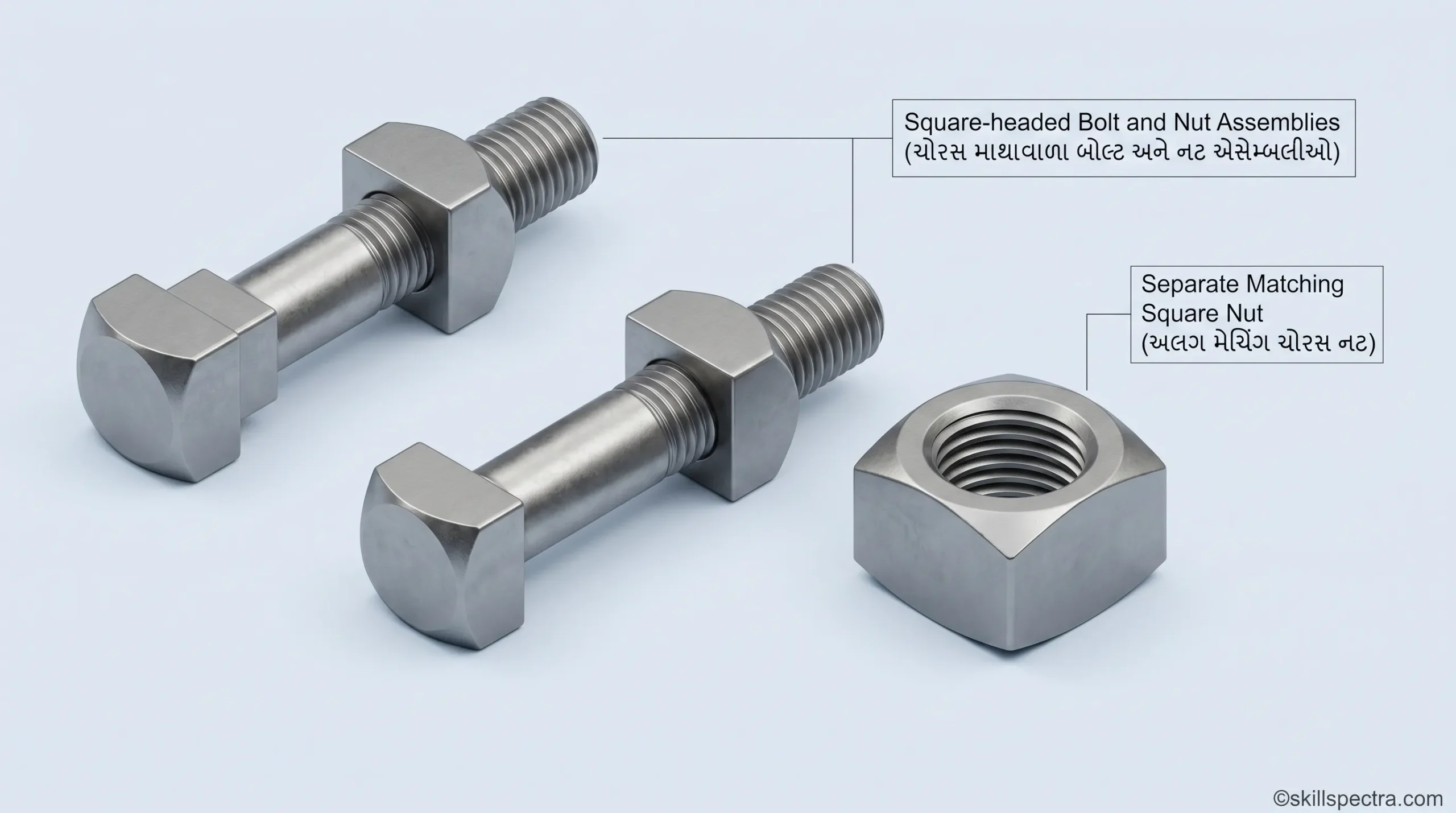
Square bolts સાથે square nuts આપવામાં આવે છે. કોચ (coaches) માટેના બોલ્ટમાં મોટે ભાગે square nuts વપરાય છે.
3. Self-locking nuts (Simmonds lock-nut) (Fig 4) 🔒
આ નટમાં અંદરની બાજુએ એક ખાંચો (groove) હોય છે જેમાં fiber અથવા nylon ની રિંગ બેસાડેલી હોય છે. આ રિંગ નટને બોલ્ટ પર મજબૂતીથી પકડી રાખે છે અને locking device તરીકે કામ કરે છે. Self-locking nuts નો ઉપયોગ studs સાથે કરવામાં આવતો નથી.
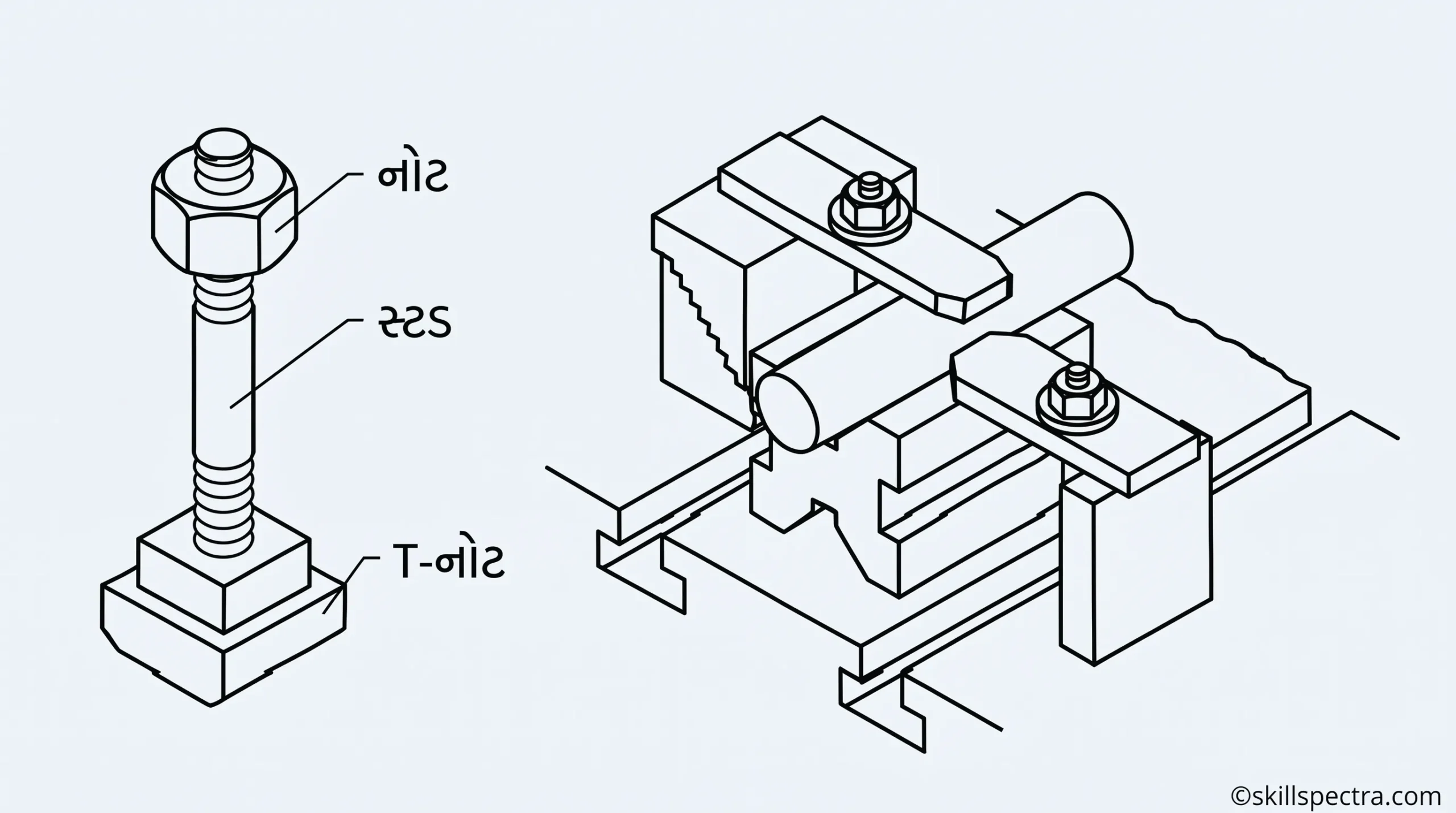
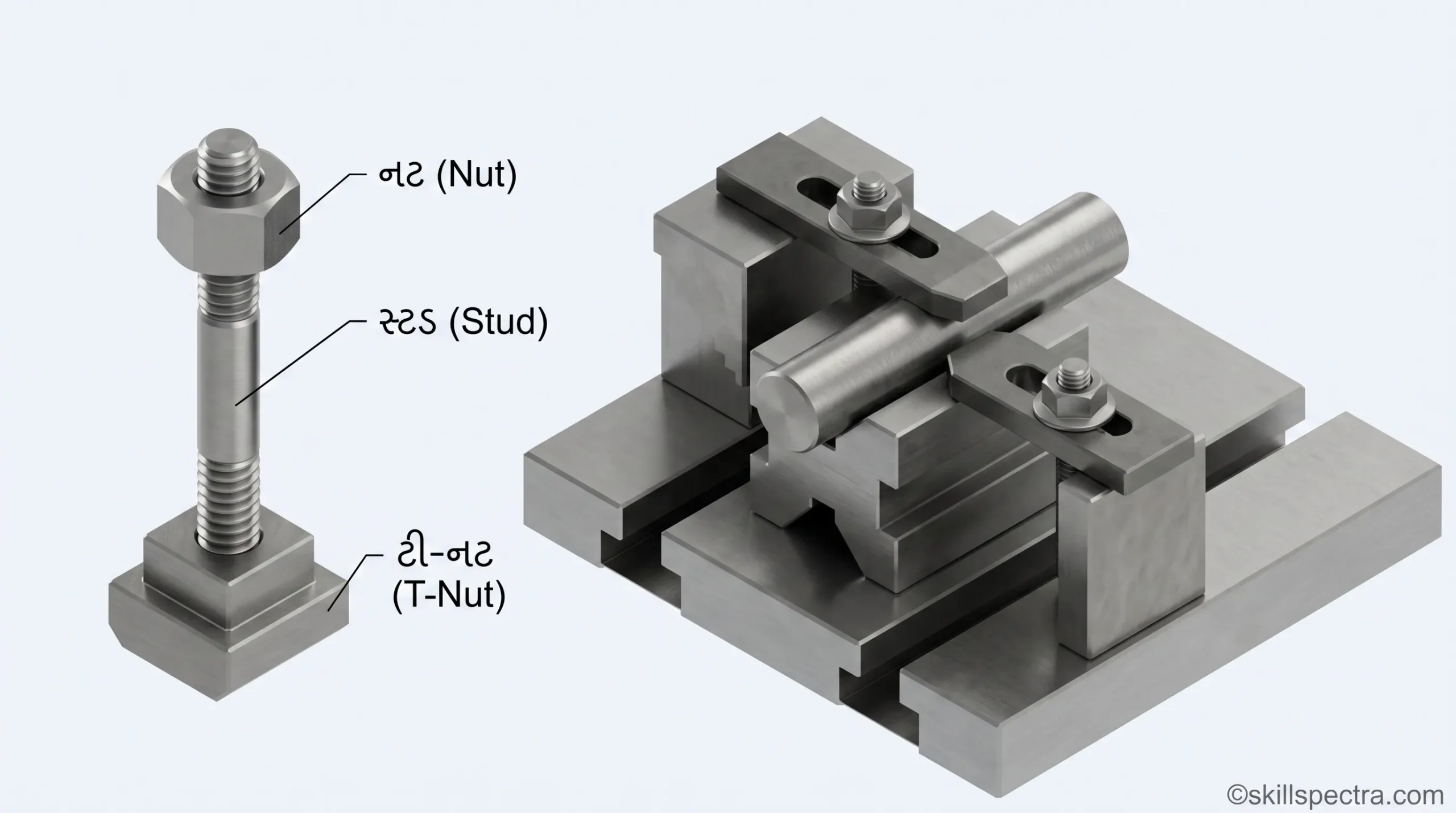
4. T-nuts (Fig 5) 🏗️
T-nuts નો ઉપયોગ મશીન ટૂલ્સ પર ફિક્સિંગ/હોલ્ડિંગ ડિવાઇસ અથવા વર્કપીસને પકડવા માટે studs ની સાથે કરવામાં આવે છે.
5. Slotted and castle nuts (Fig 6) 🏰
આ નટ્સનો ઉપયોગ વાઈબ્રેશનવાળી જગ્યાએ સુરક્ષા માટે થાય છે જેથી નટ જાતે ખુલી ન જાય.
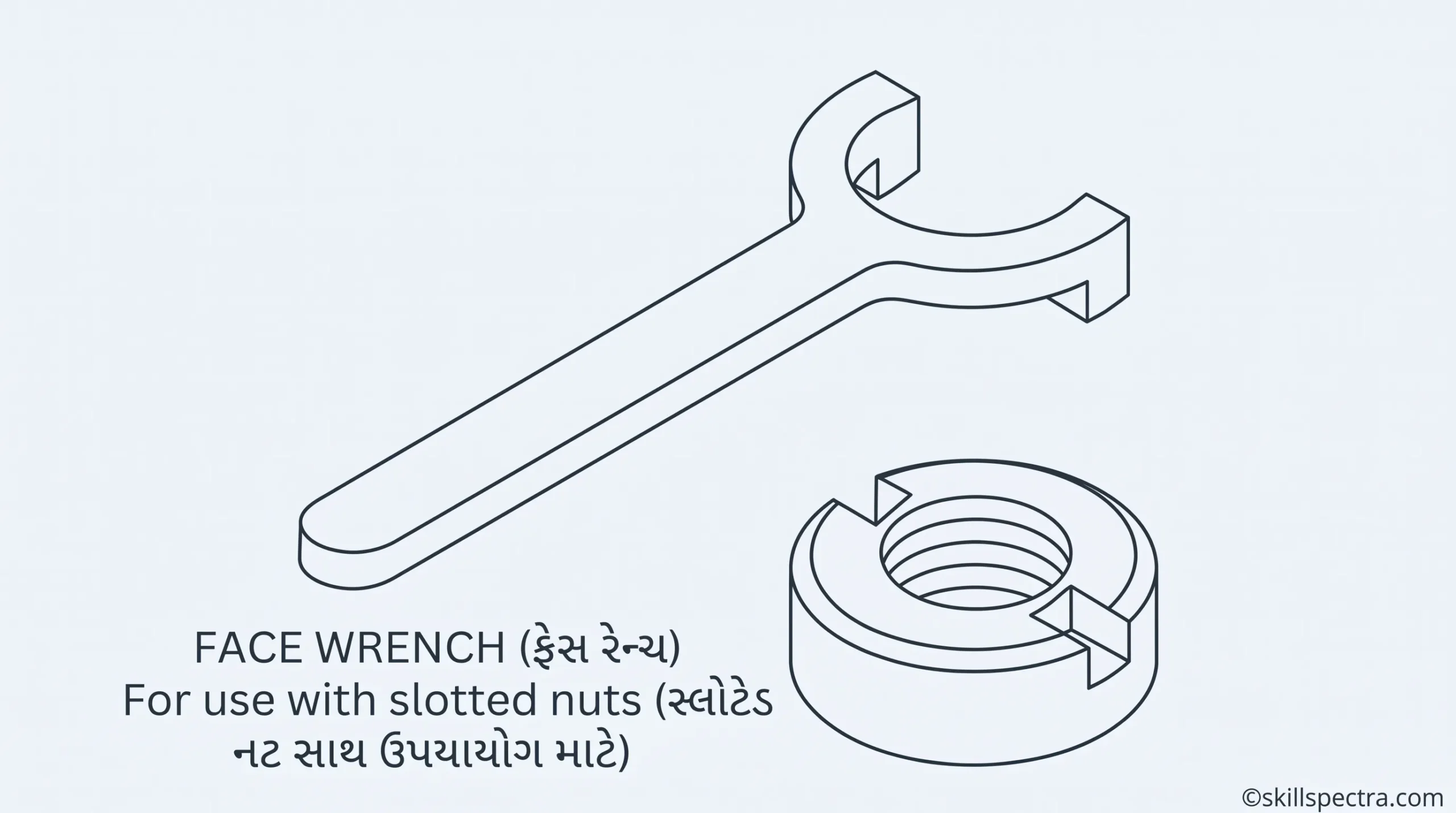
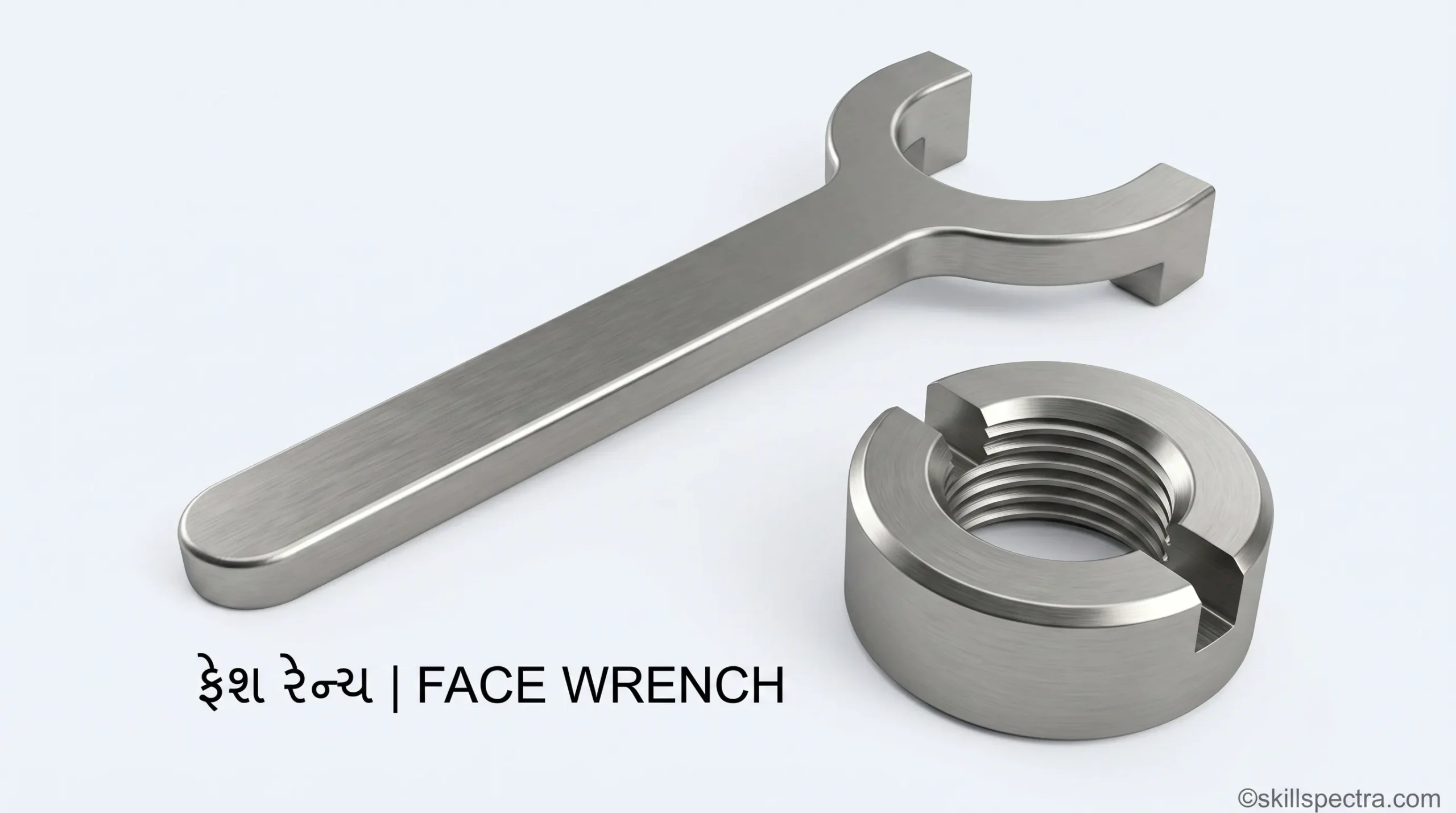
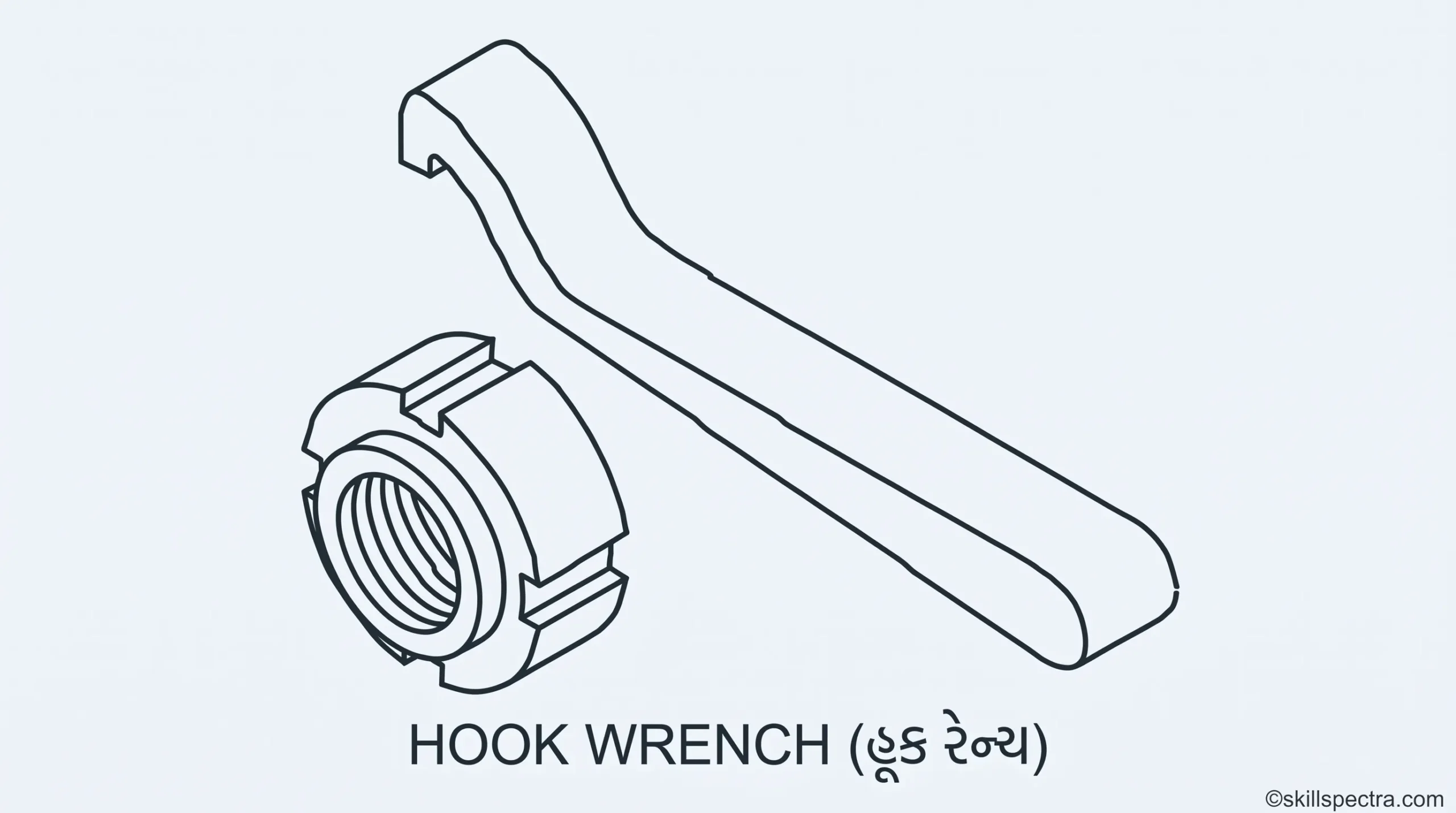
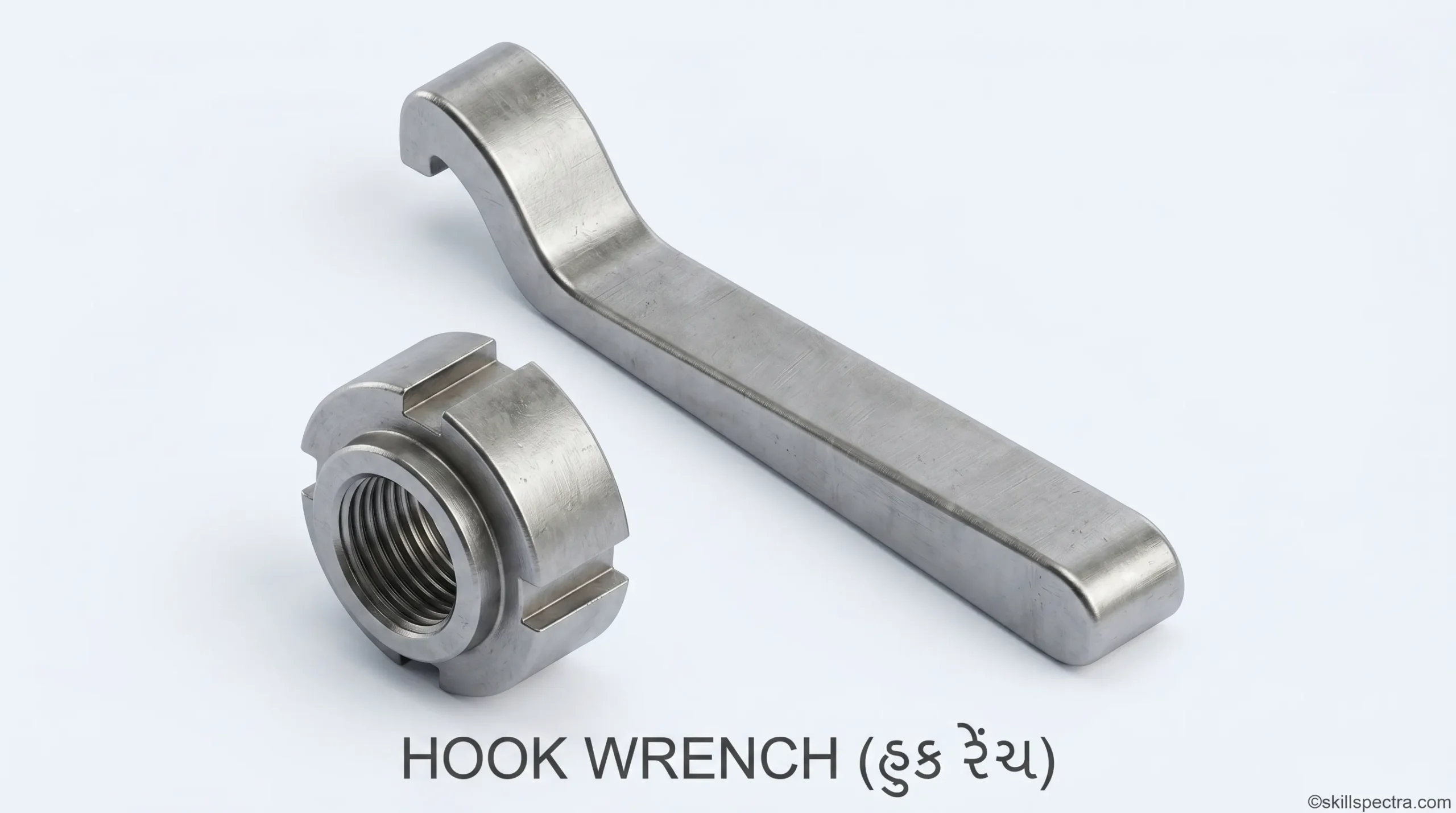
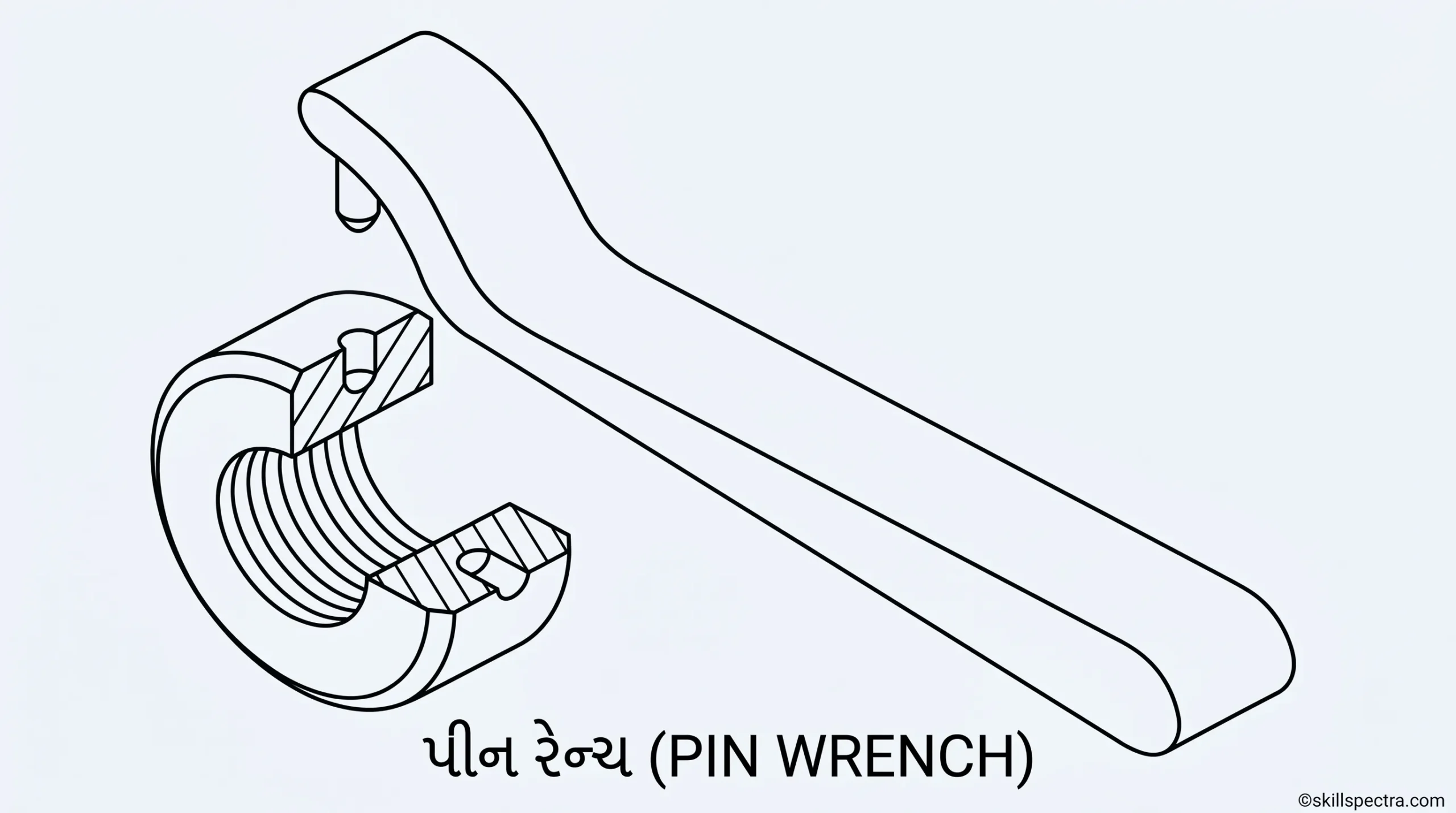
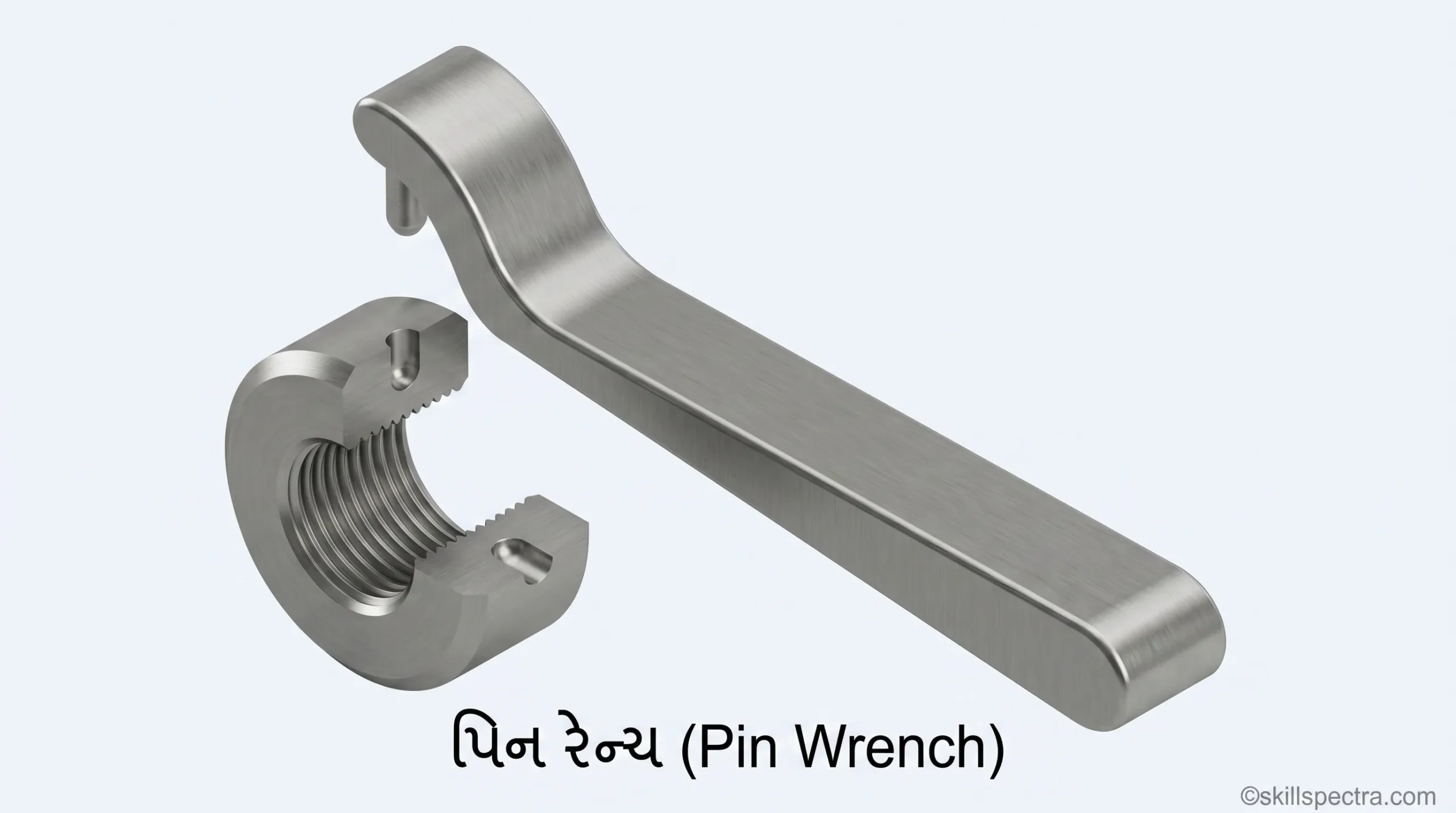
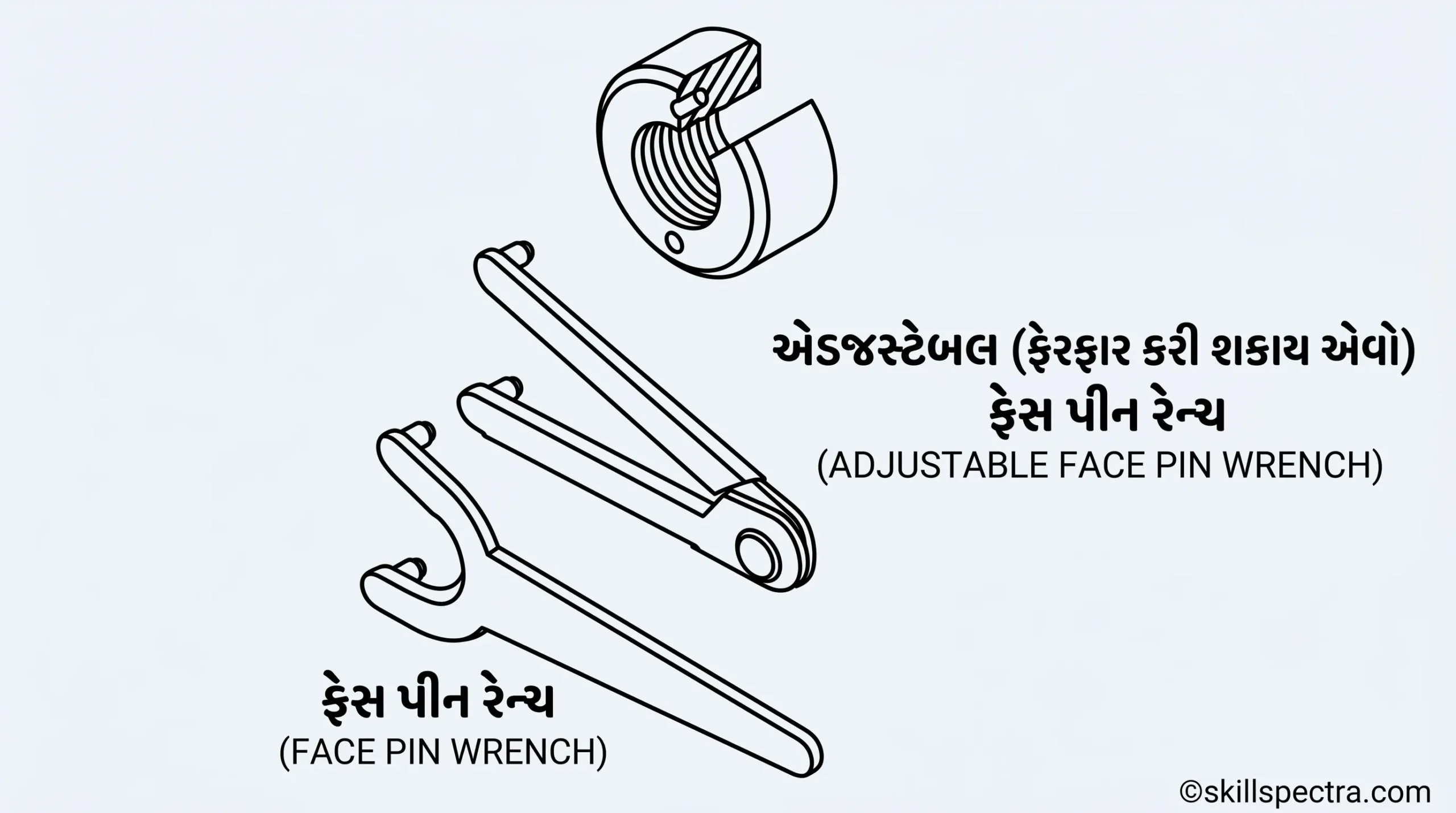
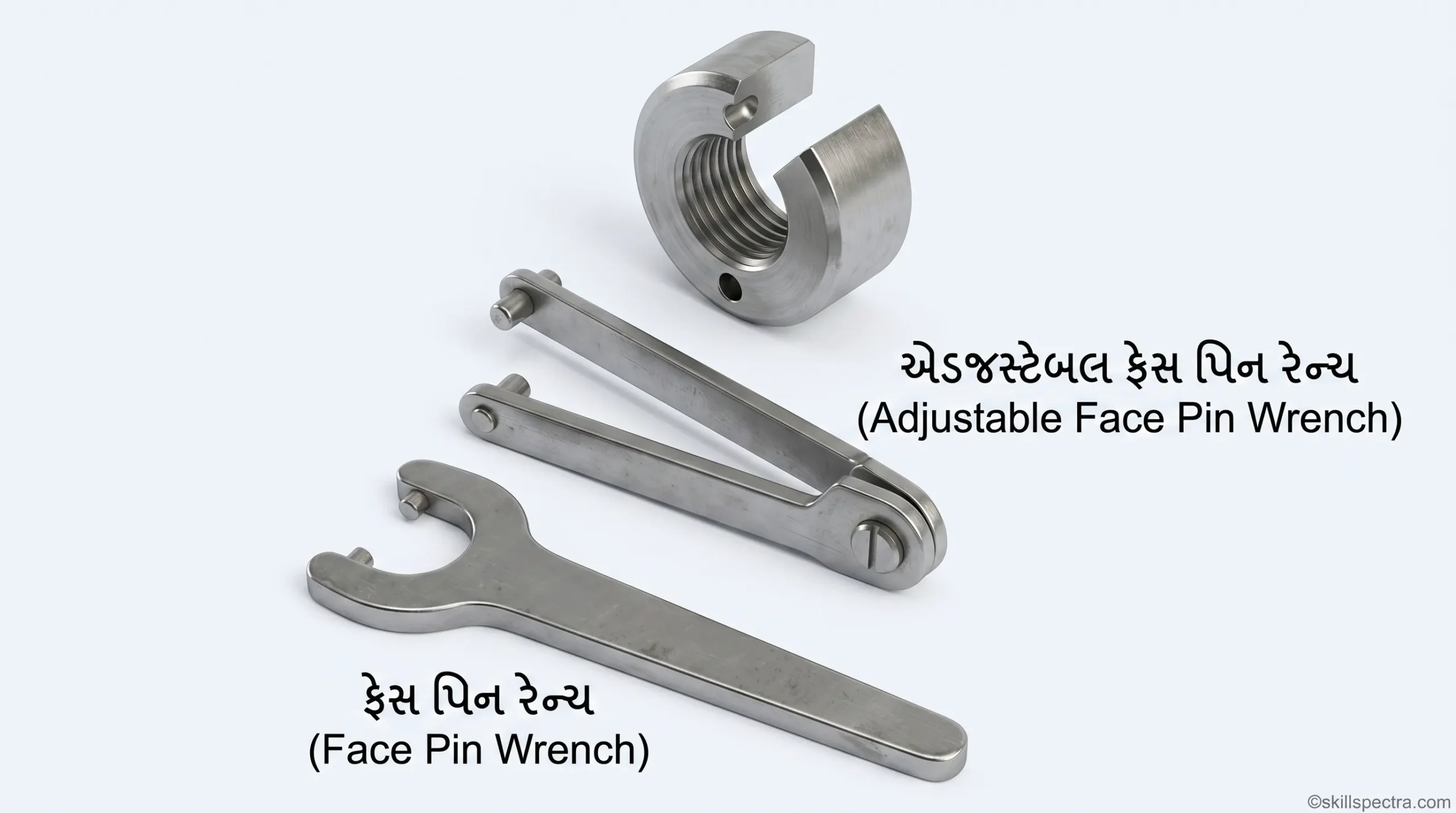
6. Round nuts (Fig 5) ⭕
ખાસ પ્રકારના એપ્લિકેશન માટે અલગ અલગ પ્રકારના Round nuts ઉપલબ્ધ છે.
- Slotted round nut (Figs 6 to 10): હૂક રેન્ચ (hook wrench) માટે સ્લોટેડ રાઉન્ડ નટ.
- બાજુઓ પર સેટ પિન હોલ્સ (set pin holes) ધરાવતો રાઉન્ડ નટ.
- ફેસ (face) પર હોલ્સ ધરાવતો રાઉન્ડ નટ.
Methods of removing broken studs (તૂટેલા સ્ટડ કાઢવાની રીતો) 🛠️🔧
Objectives (હેતુઓ):
આ લેસનના અંતે તમે સમર્થ હશો:
- Studs તૂટવાના કારણો જણાવવા.
- તૂટેલા studs કાઢવાની વિવિધ રીતો જણાવવા.
Stud નો ઉપયોગ બોલ્ટની જગ્યાએ થાય છે જ્યાં બોલ્ટ પસાર થવા માટે જગ્યા ન હોય. એન્જિન સિલિન્ડરમાં કવર પ્લેટ્સ અથવા સિલિન્ડર કવર્સને જોડવા માટે studs વપરાય છે.
Reasons for breakage of stud/bolt (સ્ટડ/બોલ્ટ તૂટવાના કારણો): 💥
- હોલમાં સ્ટડ બેસાડતી વખતે કે નટ ટાઈટ કરતી વખતે વધુ પડતું torque (બળ) લગાવવું.
- આંટા (threads) ખૂબ વધારે કાટ ખાઈ ગયા હોય (corroded).
- મેચિંગ આંટા યોગ્ય રીતે બનેલા ન હોય.
- આંટા જામ (seized) થઈ ગયા હોય.
Methods of removing broken studs:
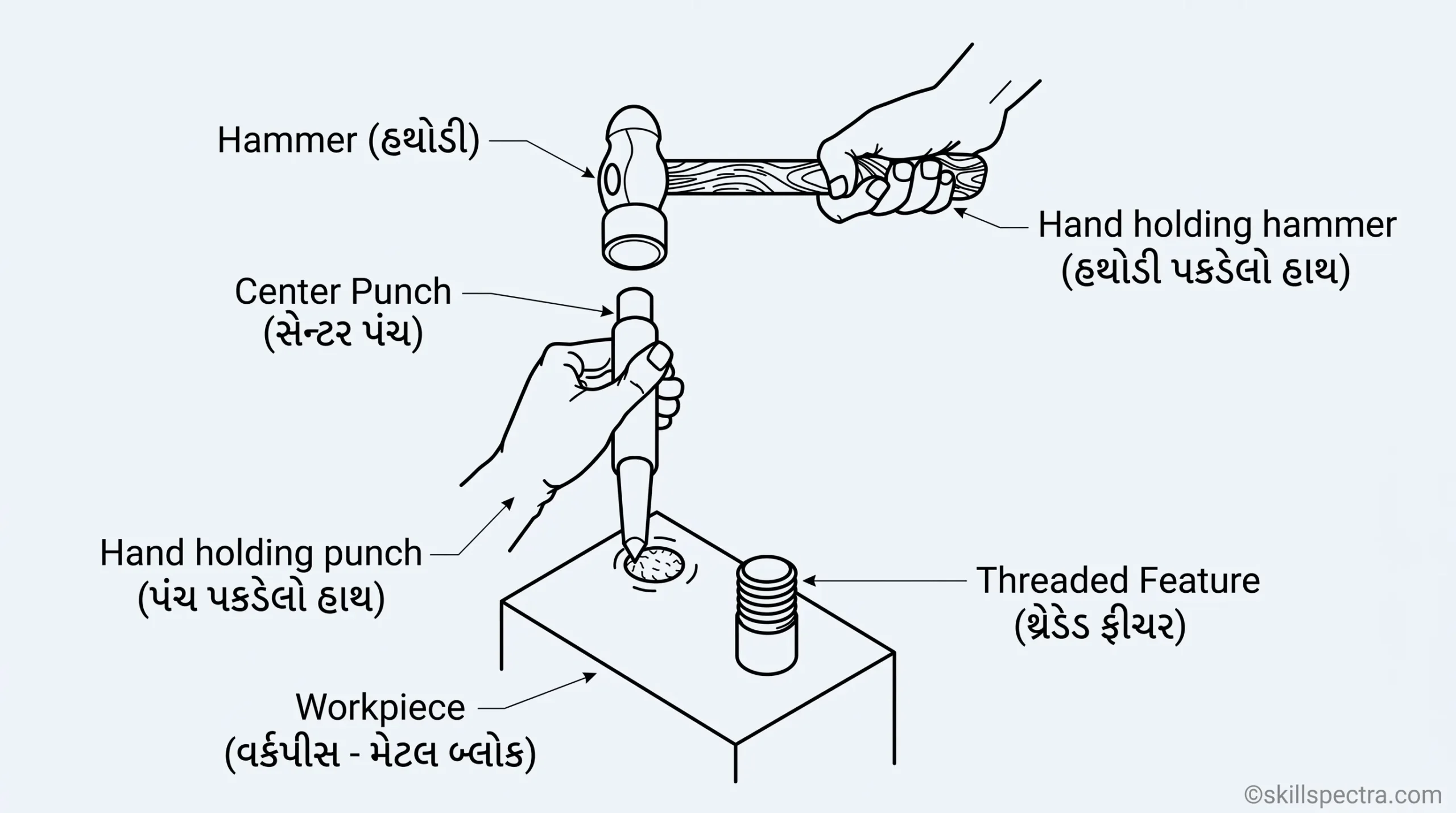
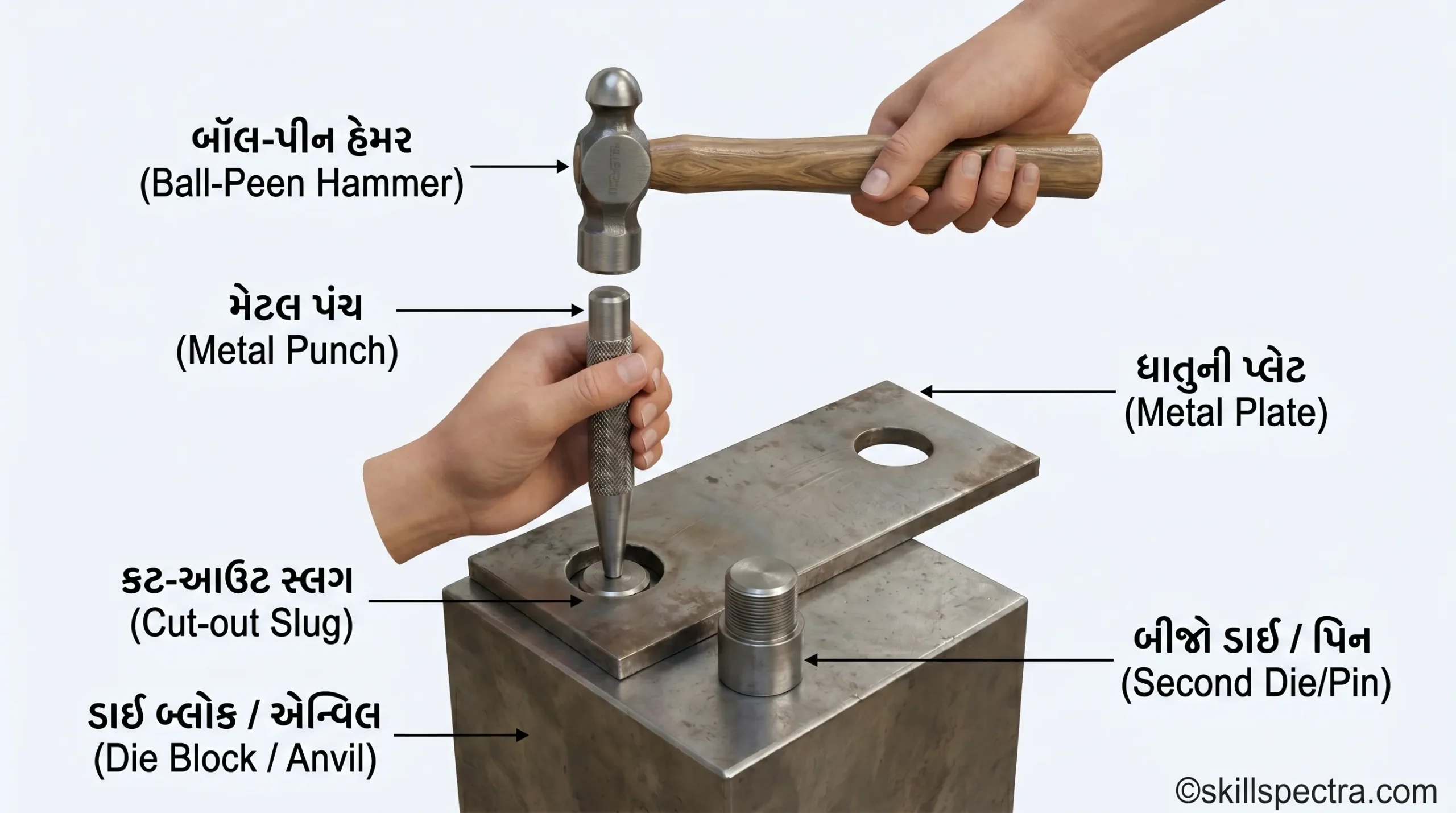
- Prick punch method (Fig 1): જો સ્ટડ સપાટીની ખૂબ નજીકથી તૂટ્યો હોય, તો તેને prick punch અને હથોડી (hammer) વડે anti-clockwise દિશામાં ફેરવીને કાઢવામાં આવે છે. 🔨
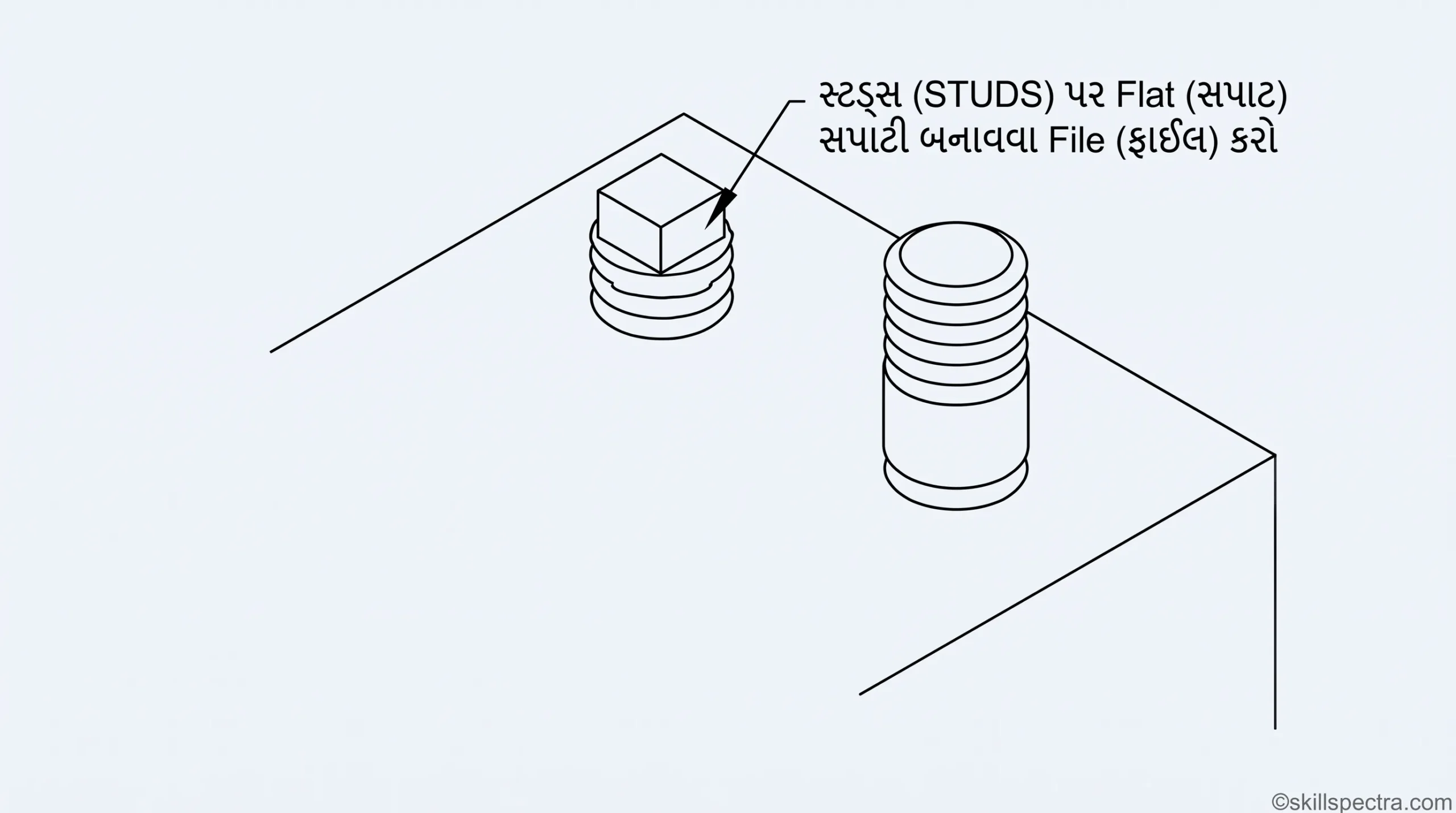
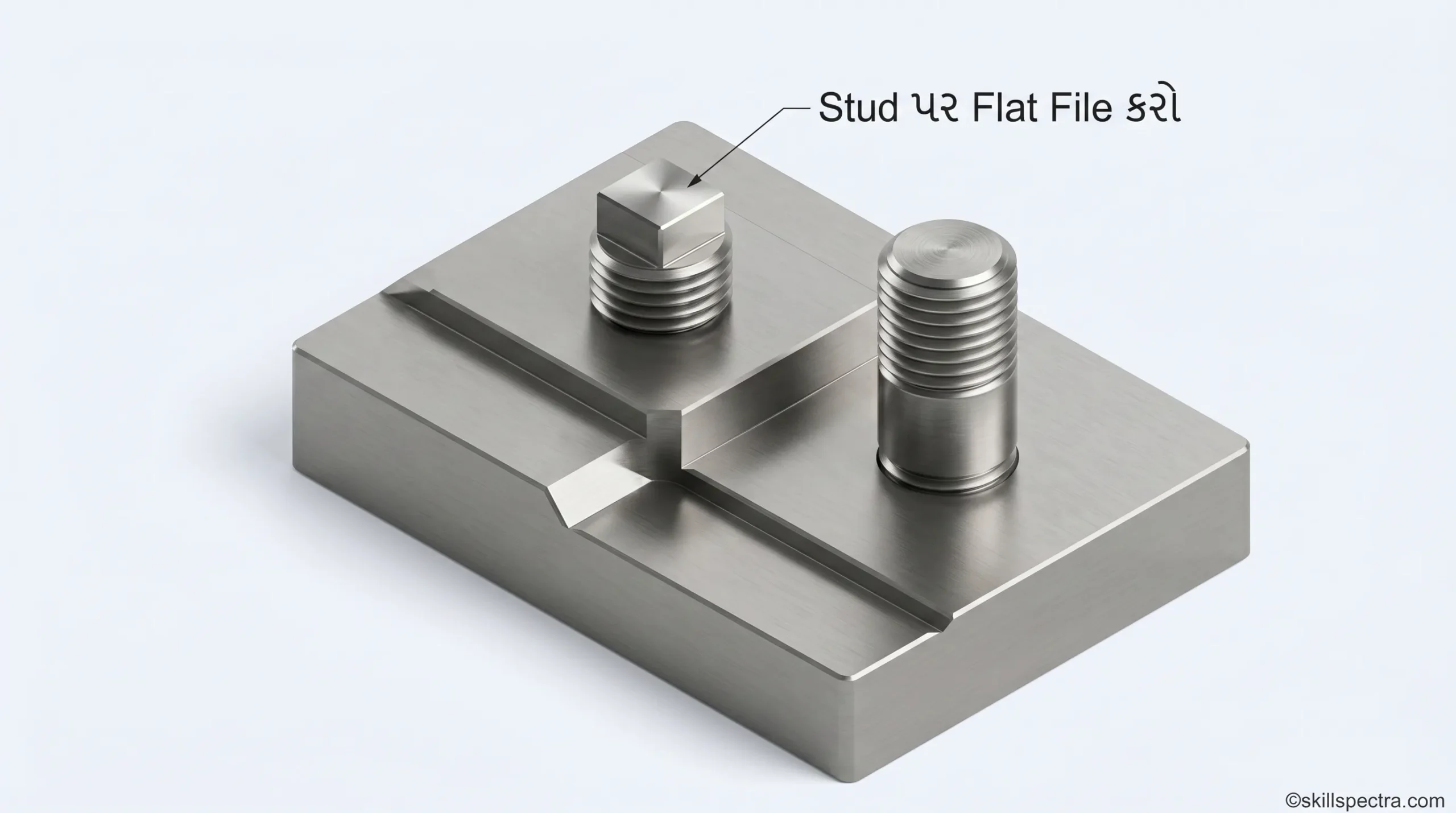
- Filing square form (Fig 2): જ્યારે સ્ટડ સપાટીથી થોડો ઉપરથી તૂટ્યો હોય, ત્યારે તેના બહાર નીકળેલા ભાગ પર ફાઈલિંગ કરીને ચોરસ આકાર (square form) બનાવો અને પછી spanner વડે anti-clockwise ફેરવીને કાઢો.
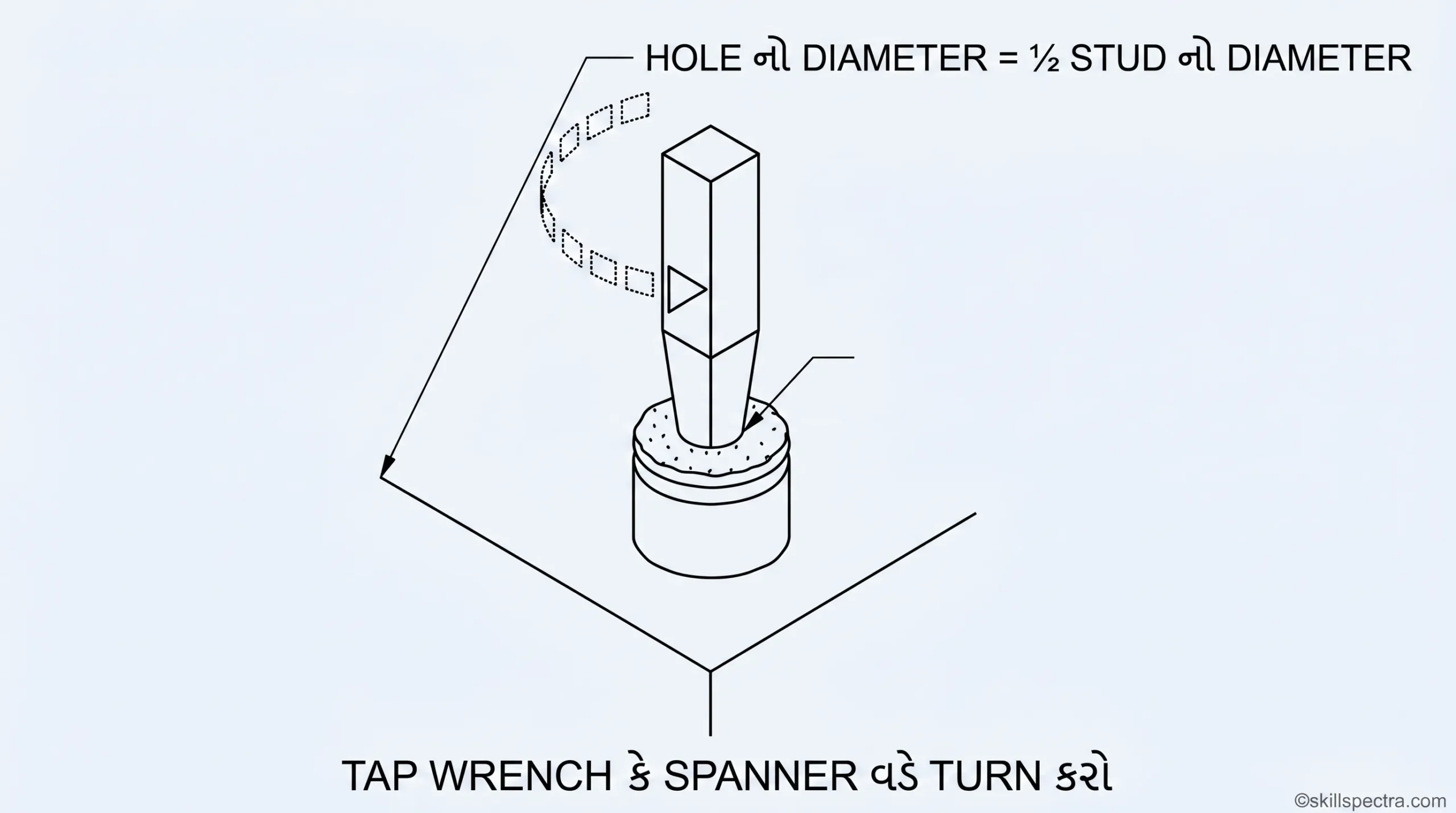
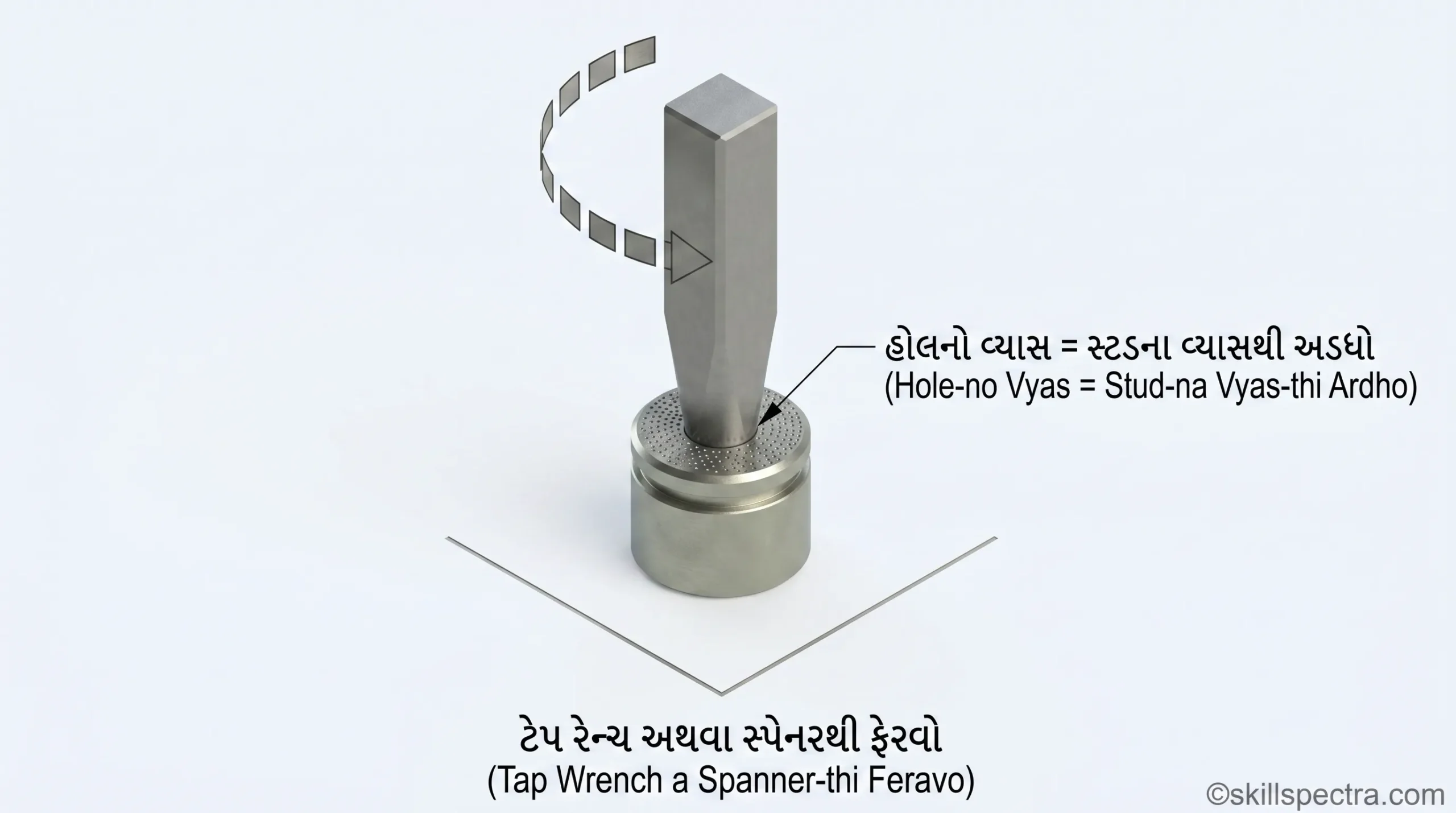
- Using square taper punch (Fig 3): સ્ટડમાં હોલ પાડીને તેમાં ચોરસ ટેપર પંચ બેસાડીને સ્પેનરની મદદથી કાઢવામાં આવે છે.
- Ezy-out method (Fig 4): Ezy-out એ એક હાથનું સાધન છે, જે taper reamer જેવું દેખાય છે પણ તેમાં left-hand spiral (ડાબા હાથના આંટા) હોય છે. તે 5 પીસના સેટમાં મળે છે. યોગ્ય ડ્રિલ સાઈઝ Ezy-out પર લખેલી હોય છે. 🛠️
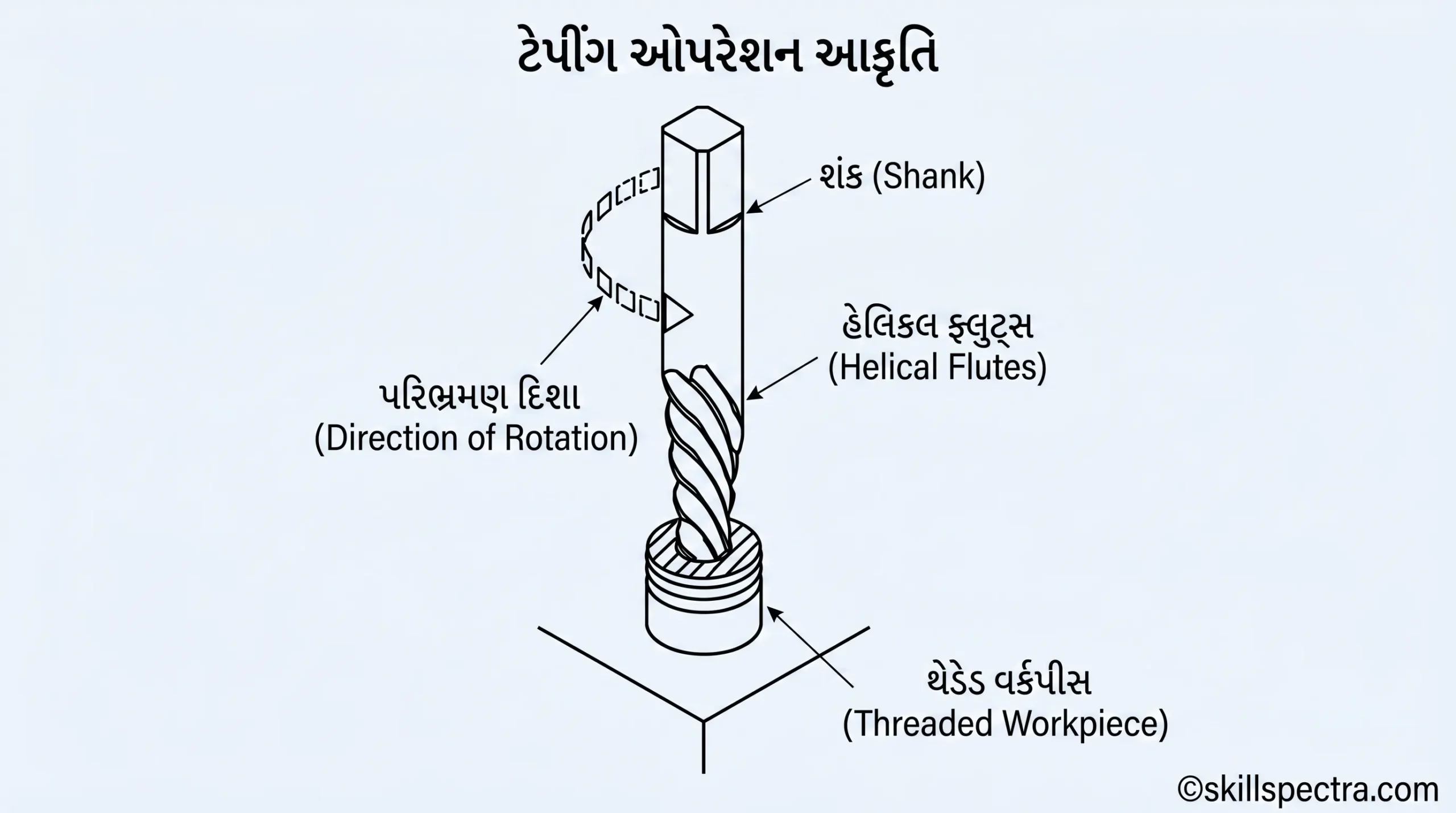
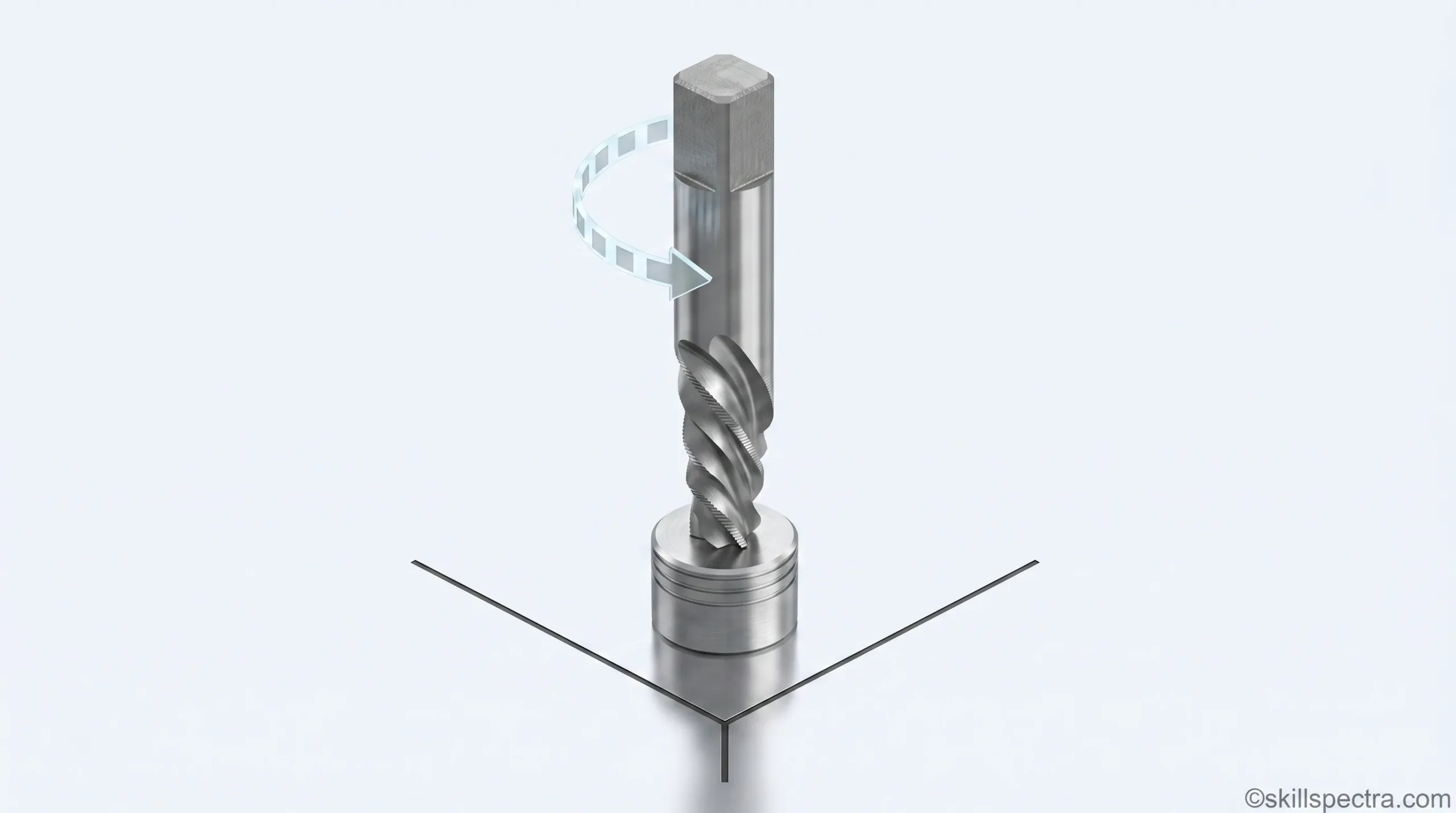
Making drill hole (ડ્રિલ હોલ બનાવવો) 🕳️
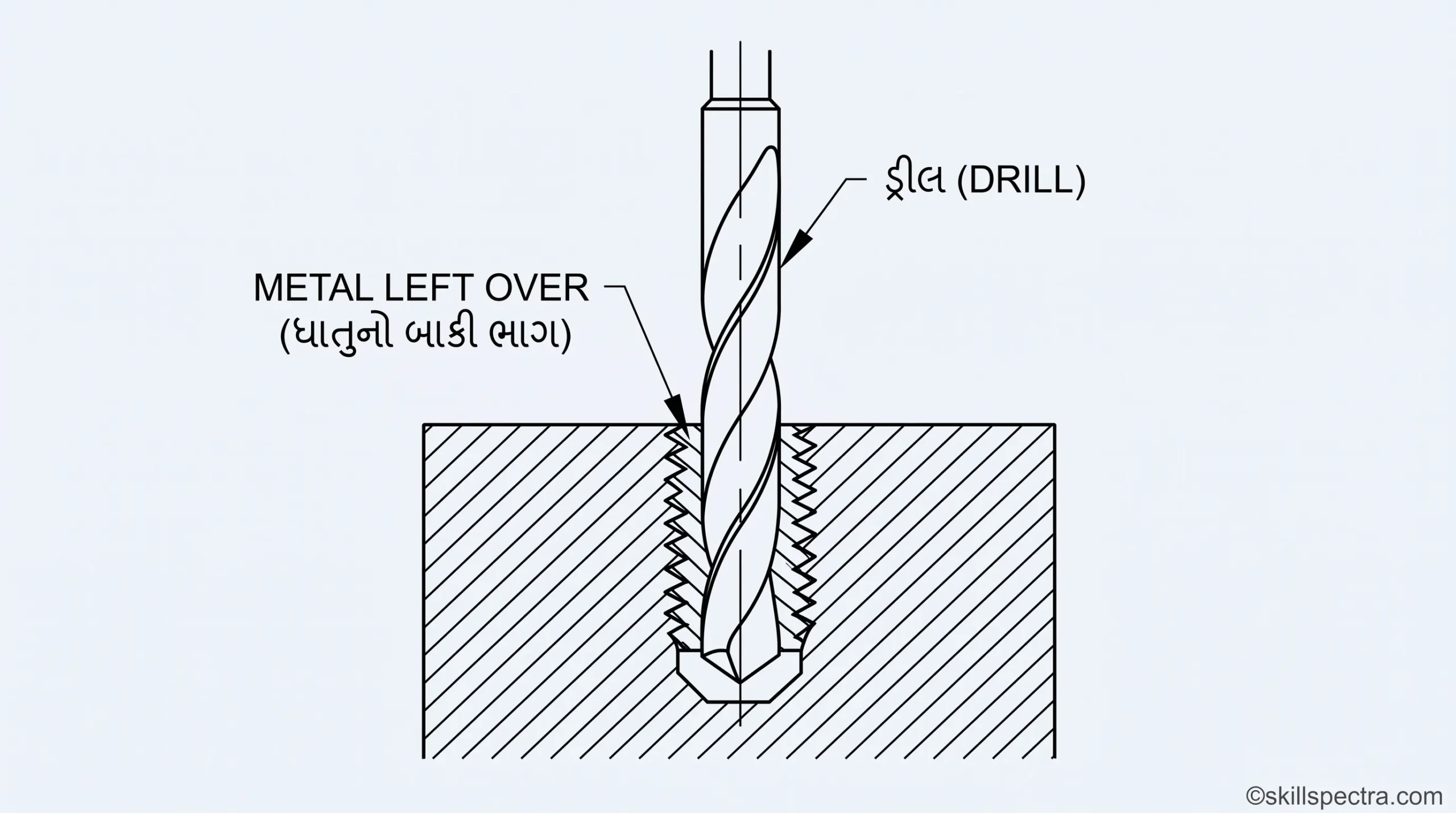
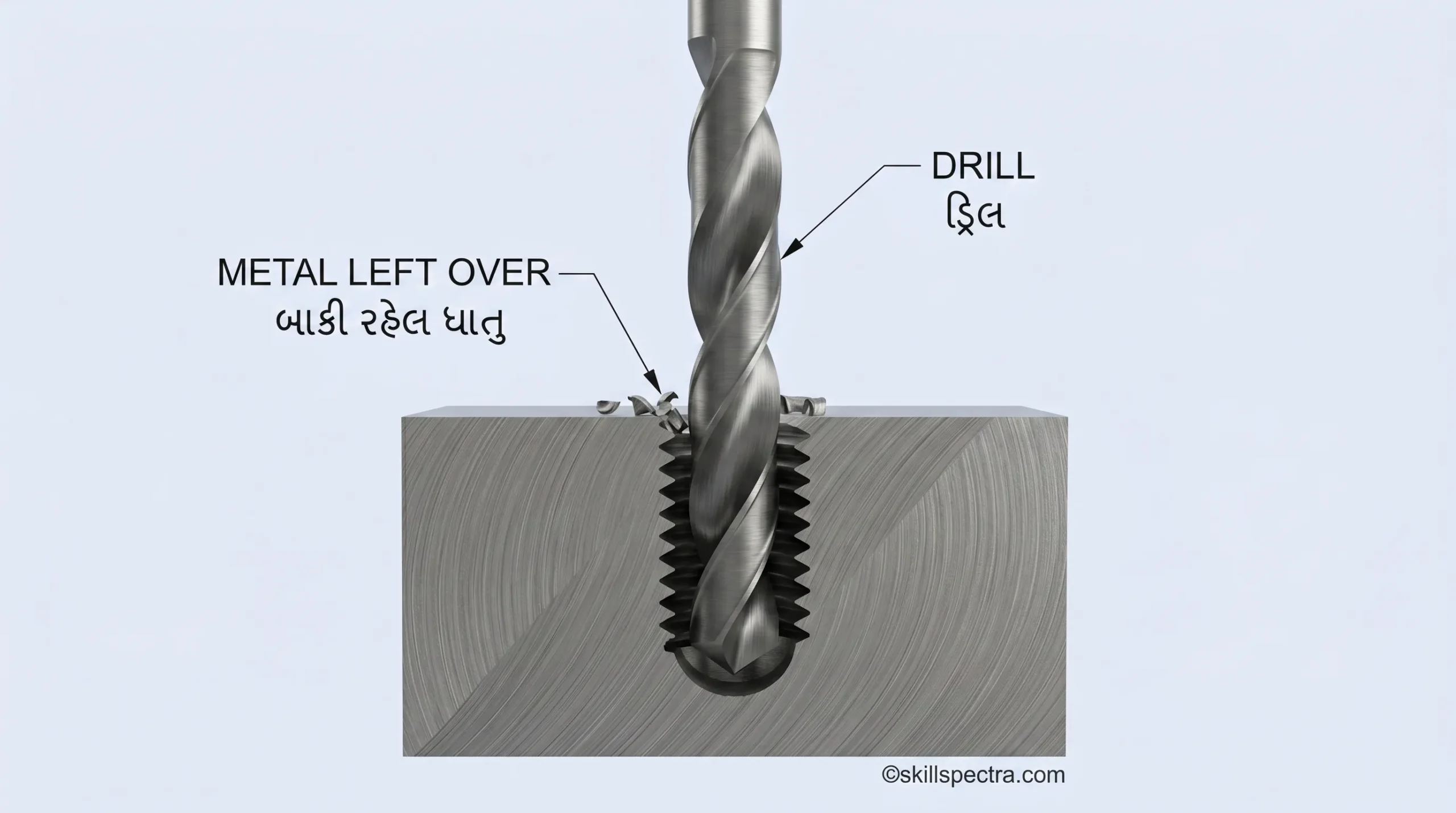
તૂટેલા સ્ટડના સેન્ટરને બરાબર શોધો અને સ્ટડના core diameter જેટલો હોલ ડ્રિલ કરો (Fig 5). ત્યારબાદ scriber ની અણીથી આંટાના બાકી રહેલા ભાગને ચિપ્સ સ્વરૂપે કાઢી નાખો. હોલને સાફ કરવા માટે ફરીથી ટેપ (re-tap) ફેરવો.
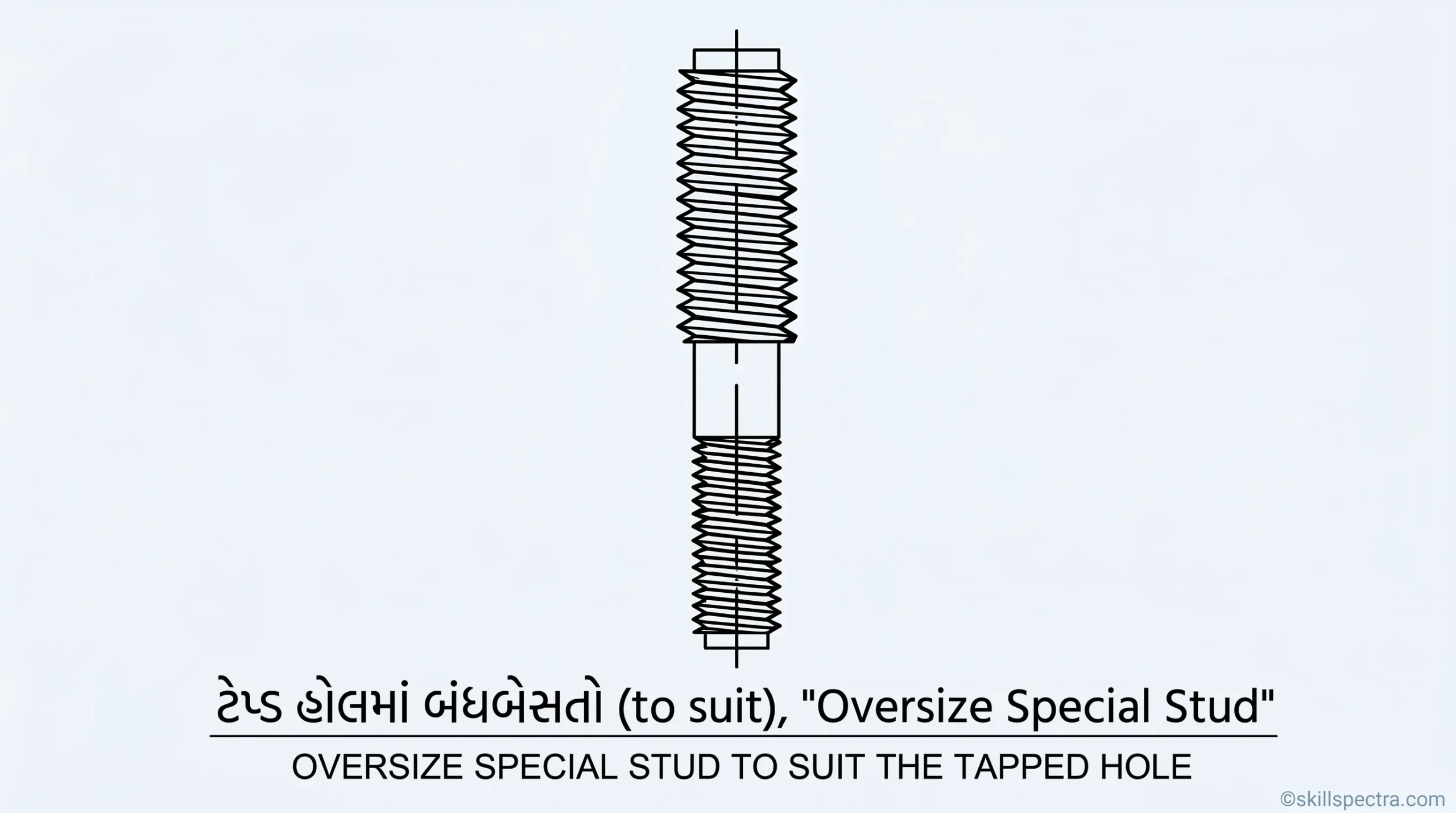
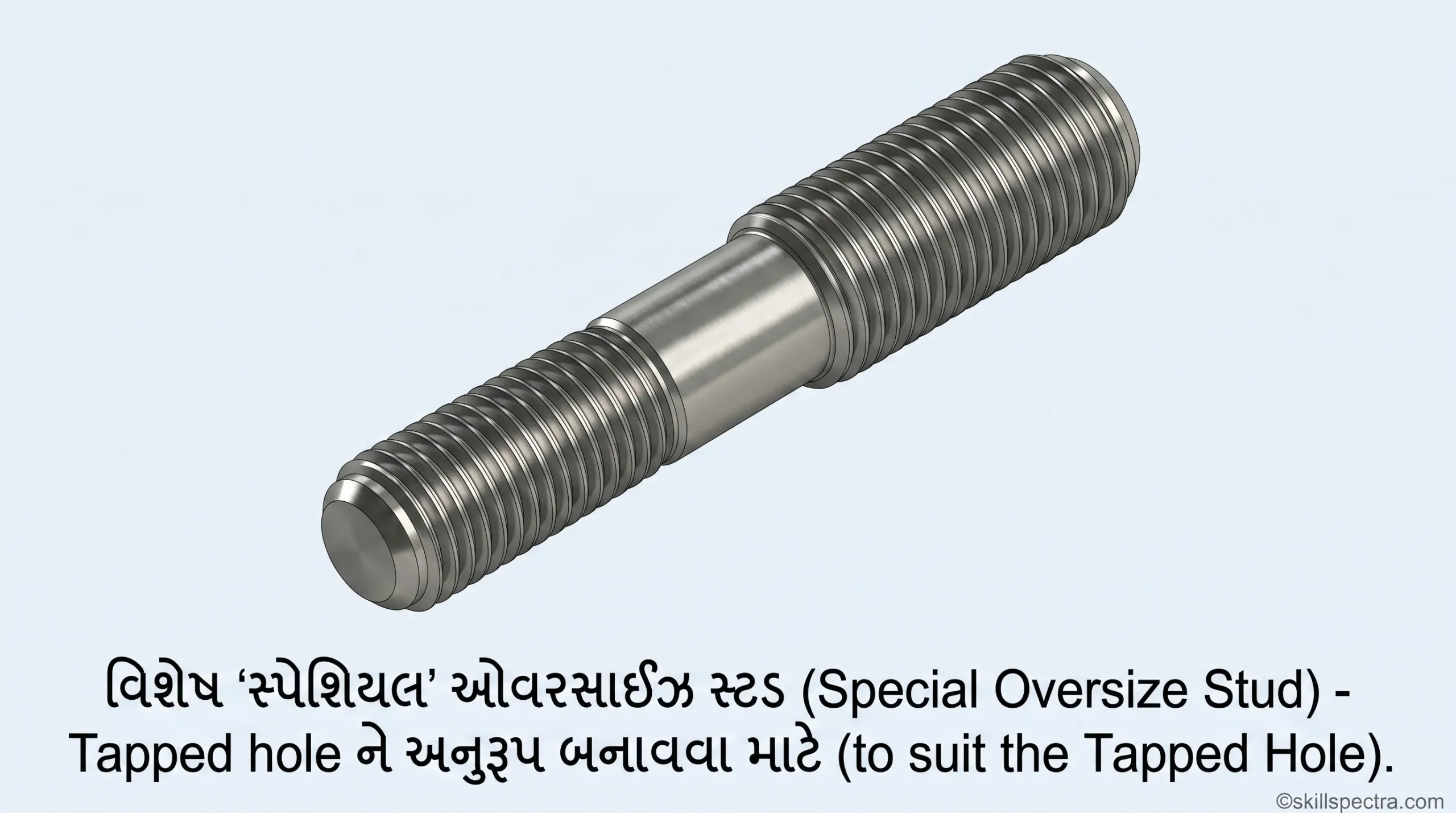
જો બધી પદ્ધતિઓ નિષ્ફળ જાય, તો સ્ટડની સાઈઝ કરતા થોડો મોટો હોલ ડ્રિલ કરો અને oversize tap વડે આંટા પાડો. હવે આકૃતિ 6 માં બતાવ્યા પ્રમાણે એક વિશેષ oversize stud બનાવીને ફિટ કરો.
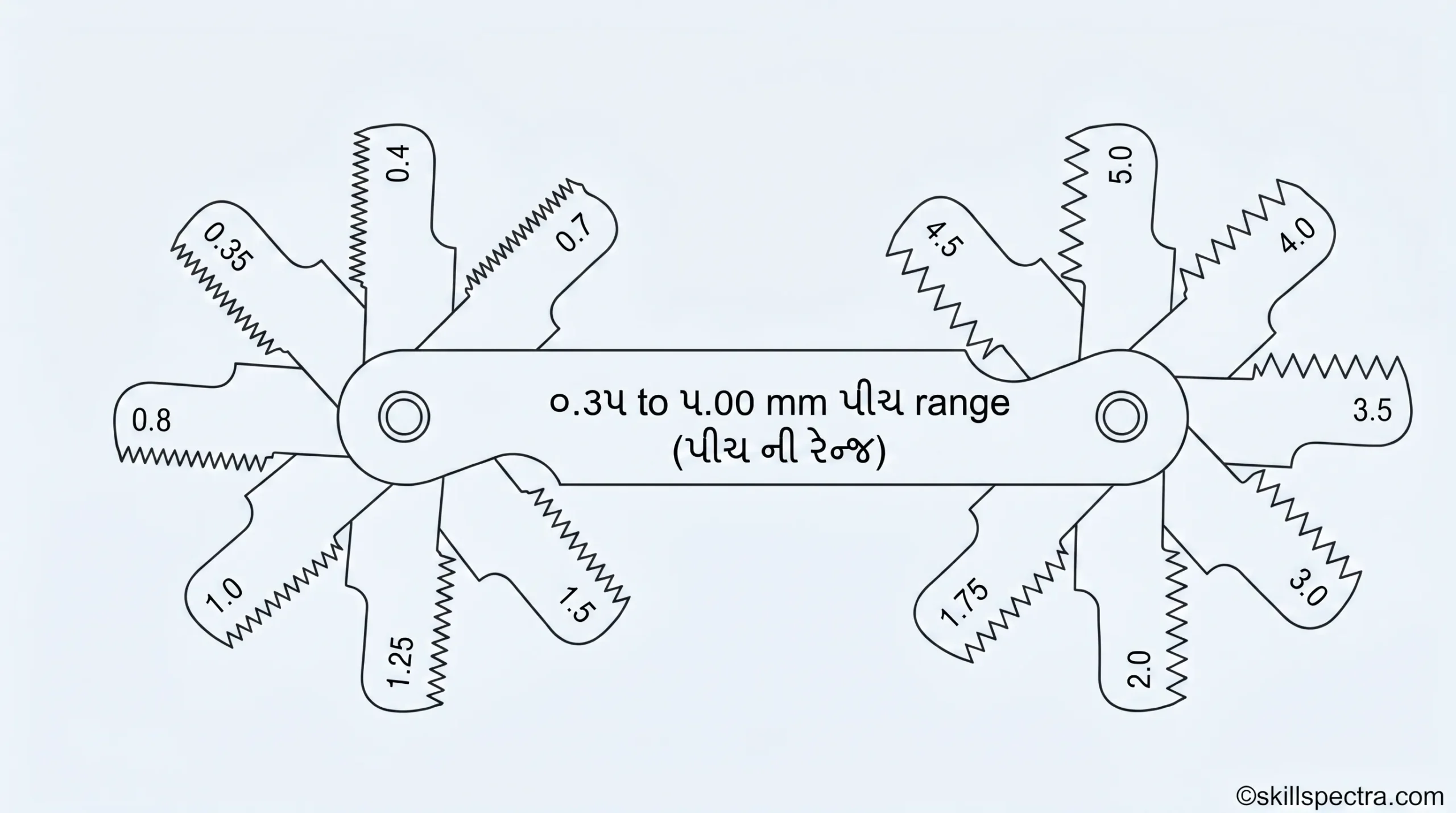
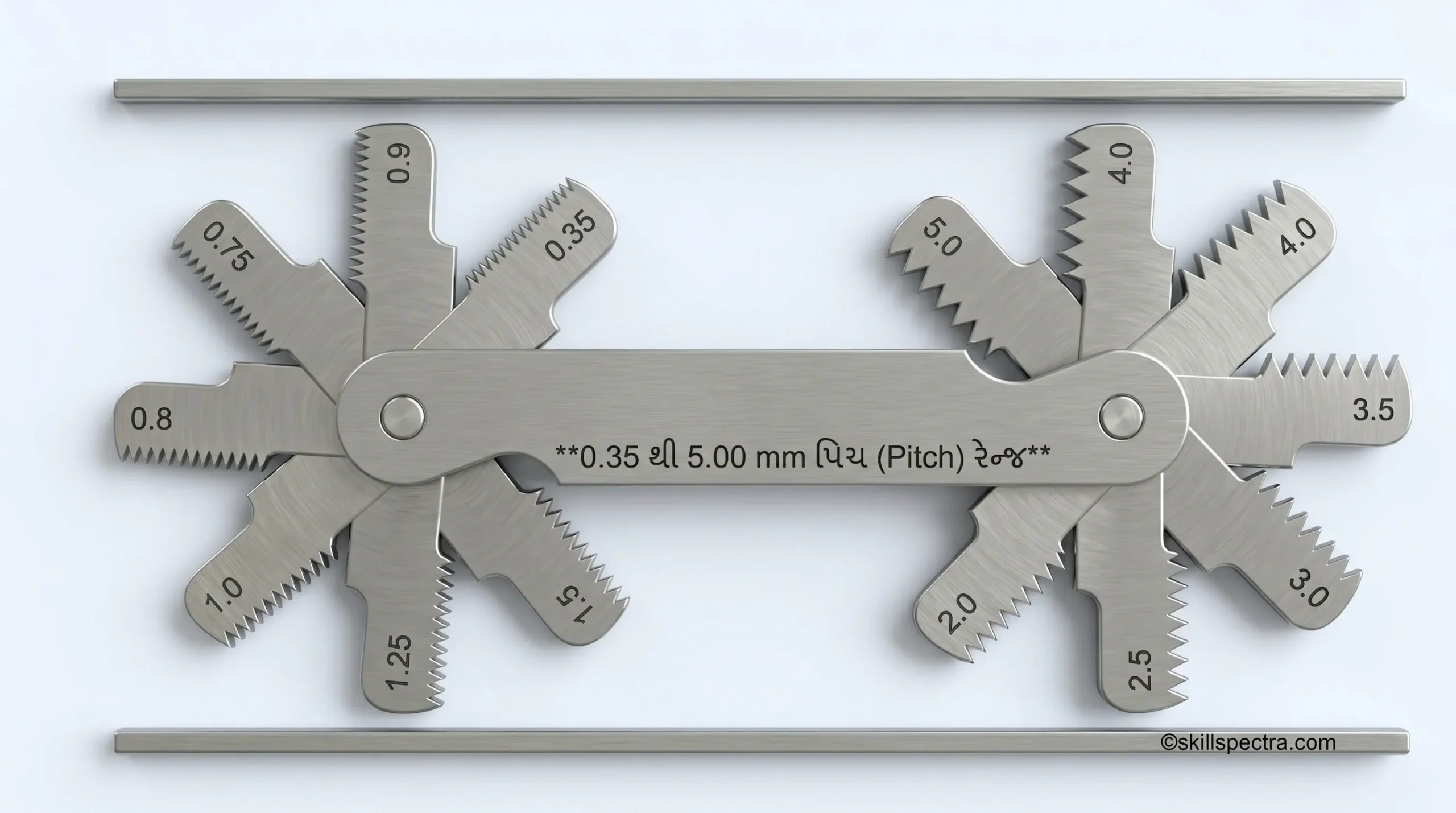
Screw pitch gauge (સ્ક્રૂ પિચ ગેજ) 📐
Objectives (હેતુઓ):
આ લેસનના અંતે તમે સમર્થ હશો:
- Screw pitch gauge નો હેતુ જણાવવા.
- Screw pitch gauge ના લક્ષણો જણાવવા.
Purpose (હેતુ): 🎯
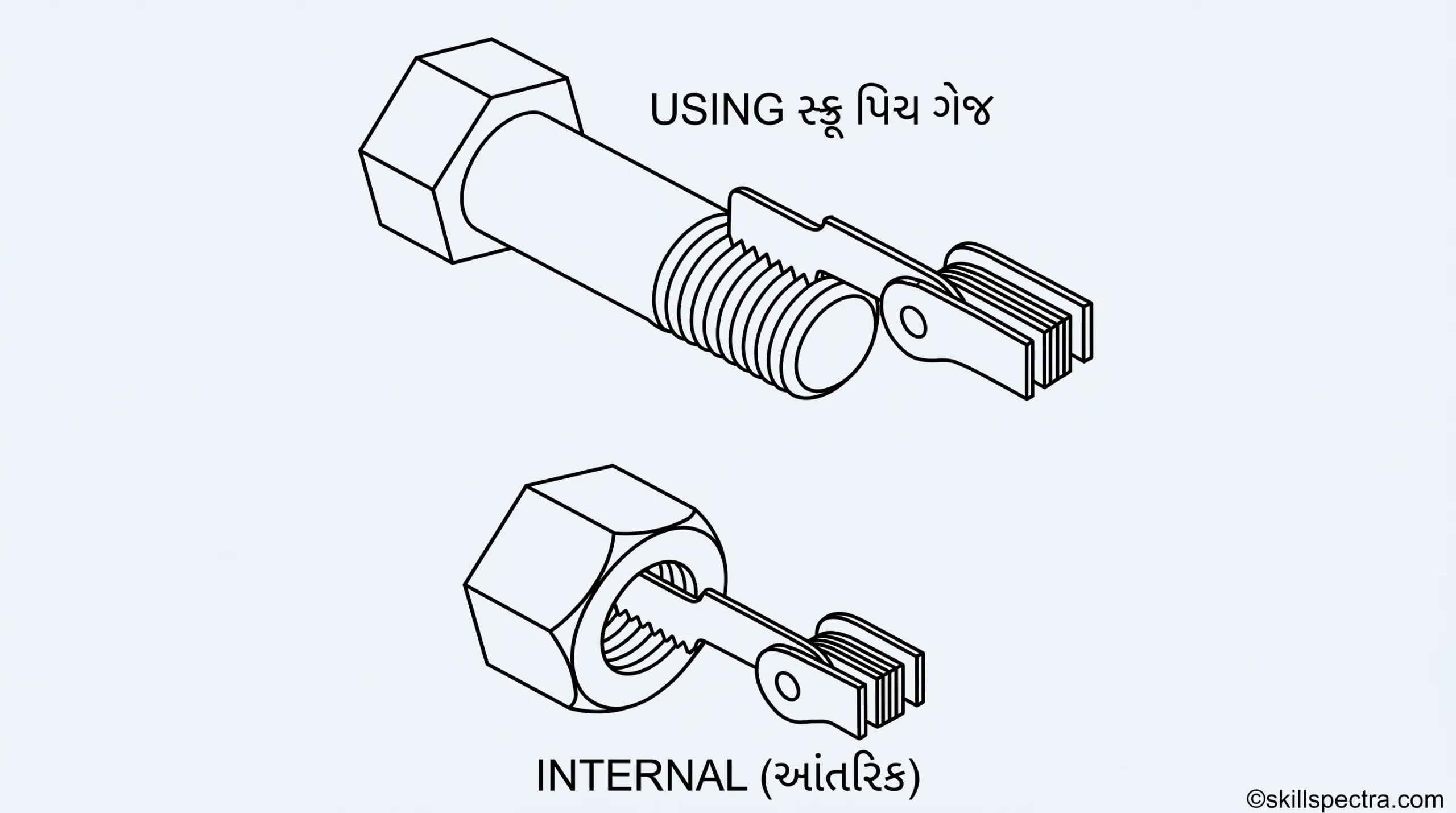
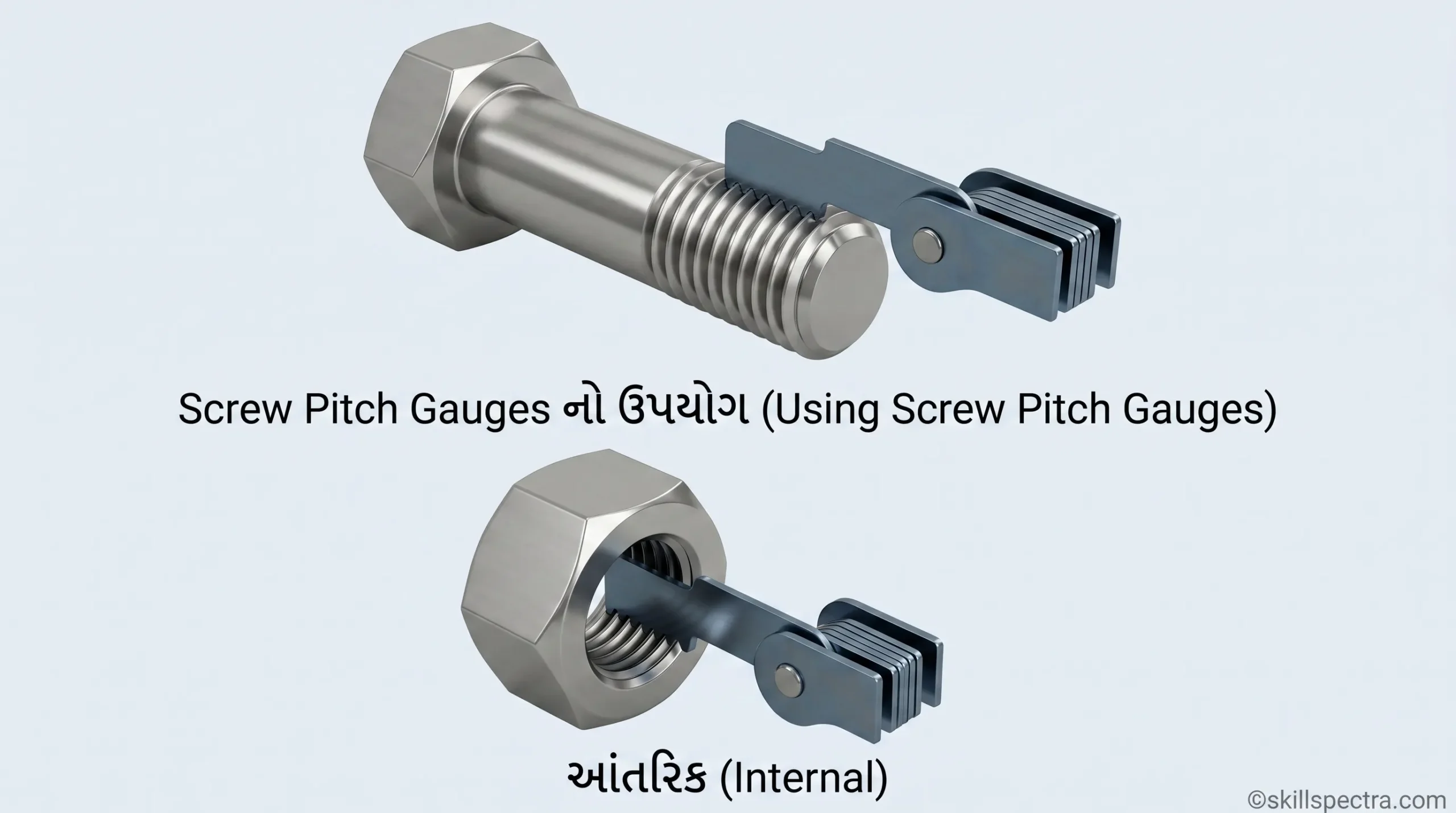
- આંટા (thread) ની pitch નક્કી કરવા માટે.
- આંટાની પ્રોફાઈલ (profile) સરખાવવા માટે.
Constructional features (રચનાત્મક લક્ષણો): 🛠️
- Pitch gauges માં ઘણી બધી બ્લેડ્સ હોય છે જે સેટ તરીકે જોડાયેલી હોય છે.
- દરેક બ્લેડ એક ચોક્કસ સ્ટાન્ડર્ડ થ્રેડ પિચ ચેક કરવા માટે હોય છે.
- બ્લેડ પાતળા સ્પ્રિંગ સ્ટીલ (spring steel) માંથી બનેલી અને હાર્ડન (hardened) કરેલી હોય છે.
- કેટલાક સેટમાં બ્રિટિશ સ્ટાન્ડર્ડ (BSW, BSF વગેરે) અને બીજી બાજુ મેટ્રિક સ્ટાન્ડર્ડ (Metric Standard) ની બ્લેડ હોય છે.
- દરેક બ્લેડ પર પિચનું માપ સ્ટેમ્પ કરેલું હોય છે. (Fig 1)
- ચોક્કસ પરિણામ માટે, ચેક કરતી વખતે બ્લેડની આખી લંબાઈ આંટા પર બરાબર બેસવી જોઈએ (Fig 2).