
Automotive – Related Theory for Exercise 1.8.47
Mechanic Diesel – Diesel Engine Components
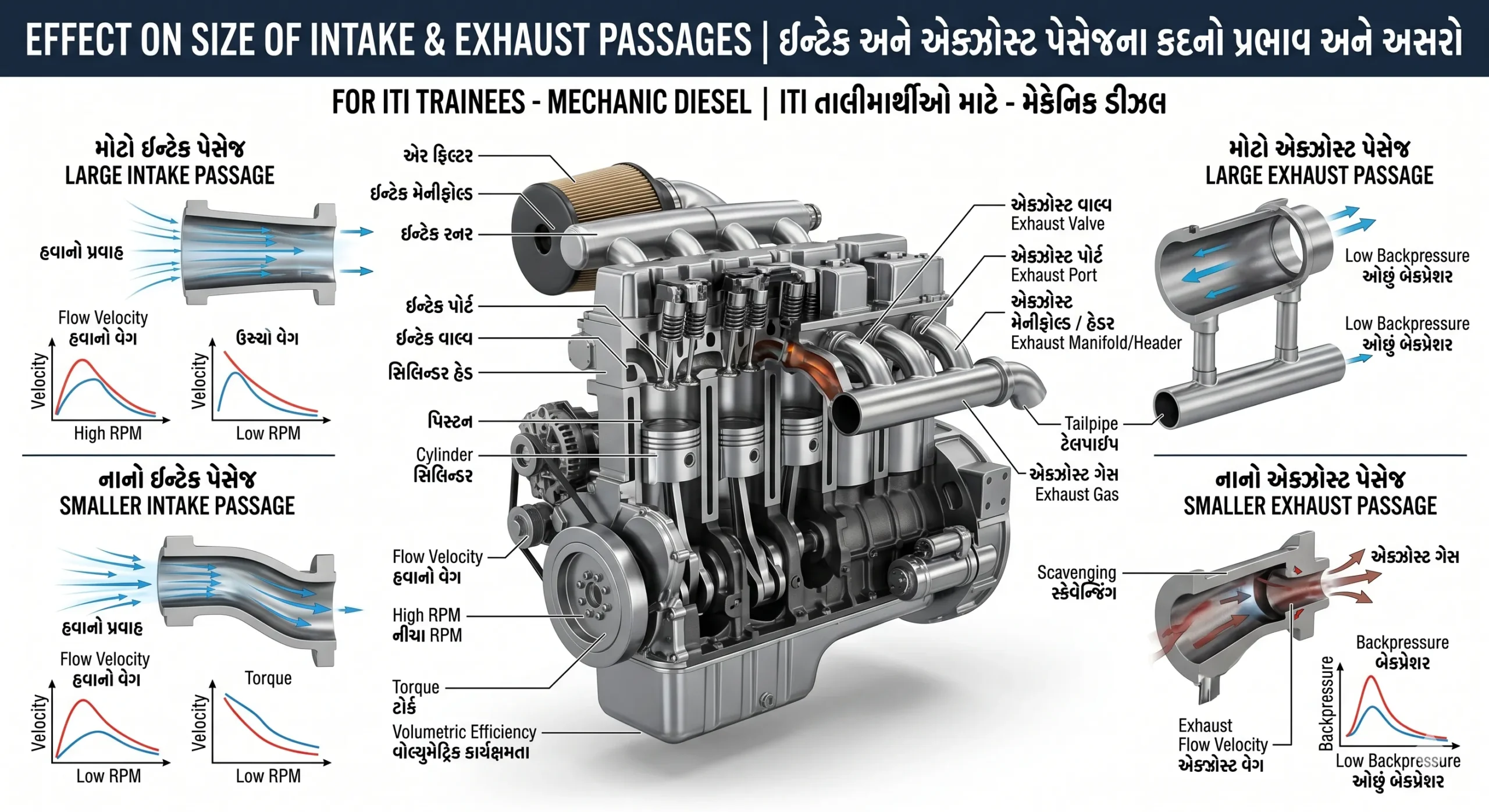
Effect on size of intake and exhaust passages
(Intake અને Exhaust Passages ના કદ પર થતી અસર) Objectives: આ પાઠના અંતે તમે આ બાબતો શીખી શકશો:
- Intake અને exhaust passages ની size અને તેની અસર જણાવવી. 📏
- Cylinder head gasket નું મહત્વ (Importance) સમજવું.
- Cylinder head gasket materials ના પ્રકારો (Types) જાણવા.
Detailed Explanation (વિગતવાર સમજૂતી) 📖
સામાન્ય રીતે, inlet valves નો વ્યાસ (diameter) exhaust valves કરતા મોટો રાખવામાં આવે છે, જેથી suction stroke દરમિયાન engine cylinder માં વધુ પ્રમાણમાં charge (હવા અથવા air-fuel mixture) આવી શકે. આના પરિણામે engine ની volumetric efficiency વધે છે અને engine નું power output પણ સુધરે છે. 🚀 કદમાં આ તફાવત રાખવાનું મુખ્ય કારણ pre-ignition અને knocking જેવી સમસ્યાઓને ટાળવાનું છે.
Cylinder head gaskets (Fig 1): 🧩
Cylinder head gasket એ engine માં cylinder head અને engine block deck વચ્ચેનું સૌથી મહત્વનું (critical) seal છે. Head gasket એ combustion pressures ને seal કરવા જોઈએ, જે gasoline engines માં 1,000 psi અને turbocharged diesel engines માં 2,700 psi સુધી હોઈ શકે છે.
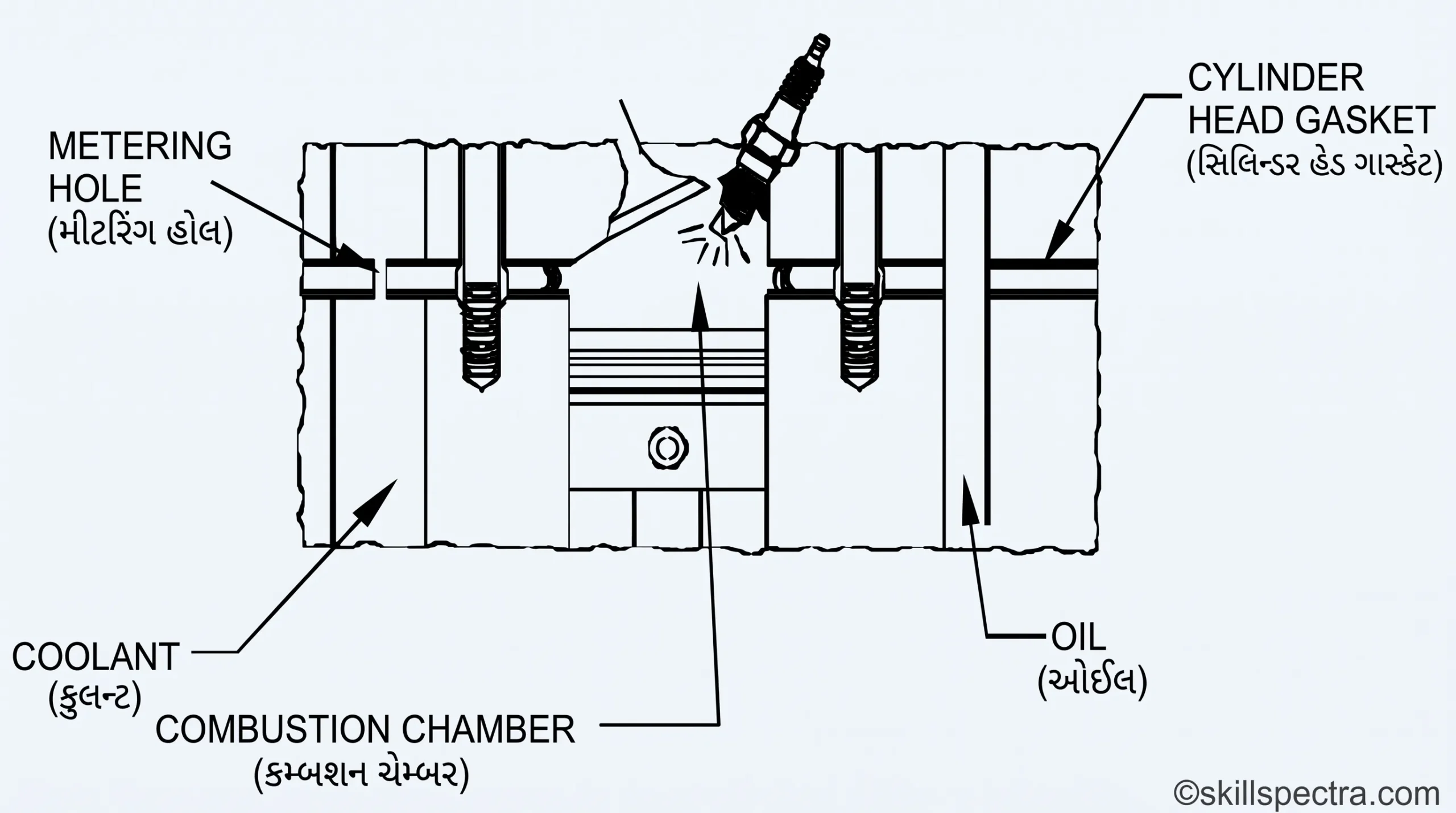
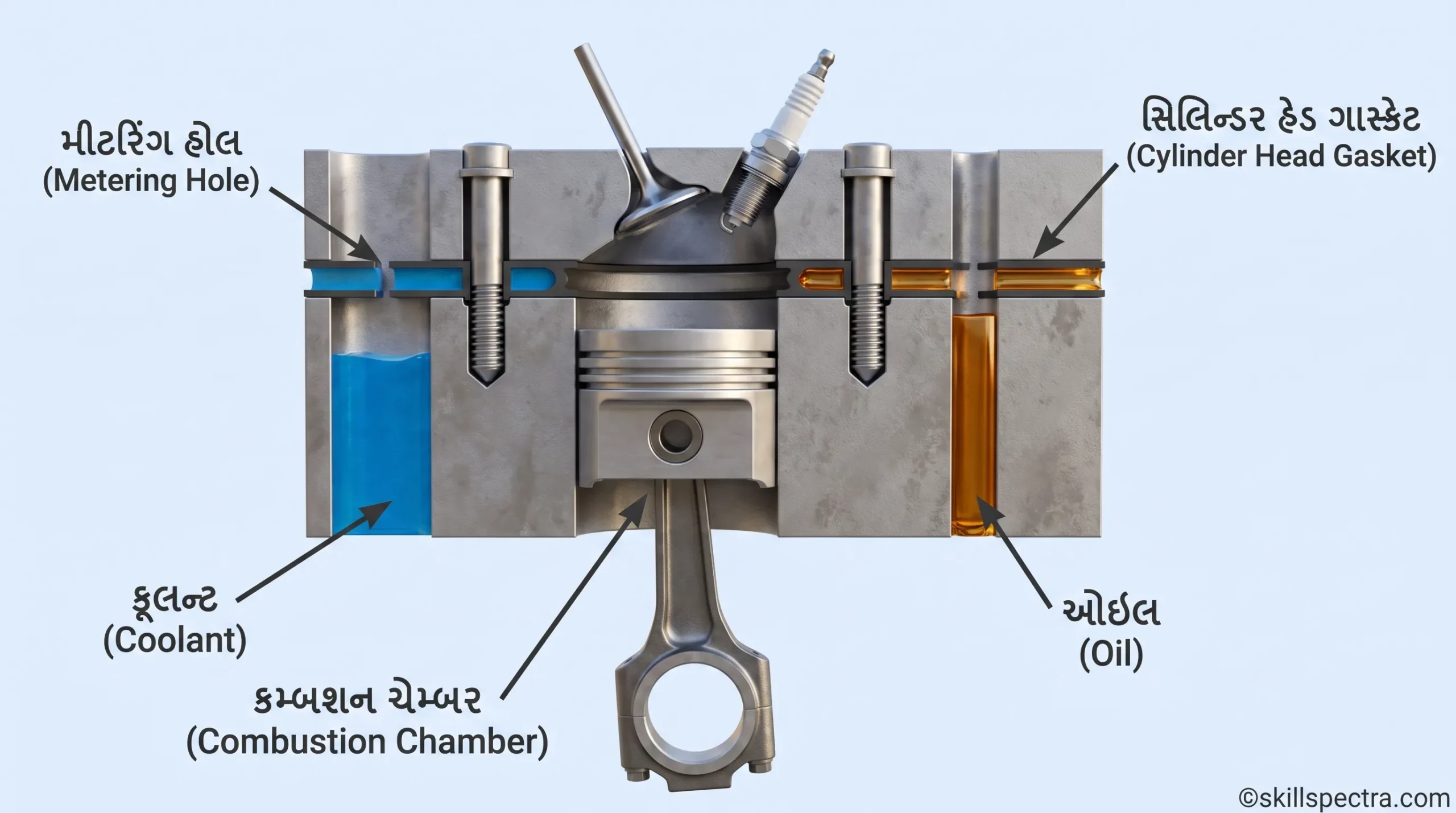
આ ઉપરાંત, head gasket એ 2,000°F (1,100°C) થી પણ વધુ તાપમાન સહન કરવાની ક્ષમતા ધરાવતું હોવું જોઈએ. Head gasket એ block અને head વચ્ચે વહેતા coolant અને ગરમ પાતળા ઓઈલ (hot oil) ને પણ પ્રેશર હેઠળ seal કરવું જોઈએ. આધુનિક coolant અને ઓઈલના additives સપાટી પર ચોંટી જવાની અને gaskets માં સોષાઈ જવાની વૃત્તિ ધરાવે છે. તેથી, gasket નું material એવું હોવું જોઈએ જે આ પ્રવાહીઓનો પ્રતિકાર કરી શકે અને લાંબા સમય સુધી seal જાળવી રાખે. 💧 Engine head gasket માં આવેલા coolant holes એ યોગ્ય circulation માટે coolant ના પ્રવાહને માપે (meter) છે. Head gaskets એ એવા બળોનો પ્રતિકાર કરવો જોઈએ જે gasket ની સપાટીને ઘસી નાખે (scuff) છે. Engine vibration અને combustion pressure ને કારણે થતું head shifting આનું મુખ્ય કારણ છે. બીજું કારણ bi-metal engines (જેમ કે aluminum head અને cast iron block) ના અલગ-અલગ expansion rates છે. એલ્યુમિનિયમ એ કાસ્ટ આયર્ન કરતા બમણું પ્રસરે છે. આ અસમાન પ્રસરણ (uneven expansion) ને કારણે shearing action પેદા થાય છે જે gasket એ સહન કરવી પડે છે. Head gaskets એ head પર લાગતા ખેંચાણ બળો (clamping forces) દ્વારા થતા કચડાઈ (crushing) જવાનો પણ પ્રતિકાર કરવો જોઈએ. આ clamping force 200,000 lbs જેટલો વધુ હોઈ શકે છે.
Types of Cylinder Head Gasket Materials 🛠️
The following materials are used in cylinder head gasket: નીચેના મટીરીયલ્સનો ઉપયોગ head gasket બનાવવા માટે થાય છે:
- Copper – asbestos gasket (કોપર – એસ્બેસ્ટોસ ગેસ્કેટ)
- Steel – asbestos – copper gasket (સ્ટીલ – એસ્બેસ્ટોસ – કોપર ગેસ્કેટ)
- Steel – asbestos gasket (સ્ટીલ – એસ્બેસ્ટોસ ગેસ્કેટ)
- Single steel ridged gasket (સિંગલ સ્ટીલ રિજ્ડ ગેસ્કેટ)
Keywords 🌐
EO Title: Mechanic Diesel Theory: Intake Exhaust Passages & Cylinder Head Gaskets (Gujarati-English) Focus Key: Cylinder Head Gasket Materials Mechanic Diesel Keywords (Tags): Mechanic Diesel Engine Components, Intake and Exhaust Passage Size, Cylinder Head Gasket Importance, Diesel Engine Volumetric Efficiency, Gasket Materials in Gujarati, ITI Mechanic Diesel Theory Gujarati, Automotive Engineering Notes, Combustion Pressure Gasket, Diesel Engine Maintenance. Meta Description: Learn about the effect of intake and exhaust passage sizes and the critical role of cylinder head gaskets in diesel engines. This lesson covers materials like copper-asbestos and steel gaskets in an easy-to-understand Gujarati-English mix